The Puck Building: How a Satirical Magazine Built a NoHo Landmark
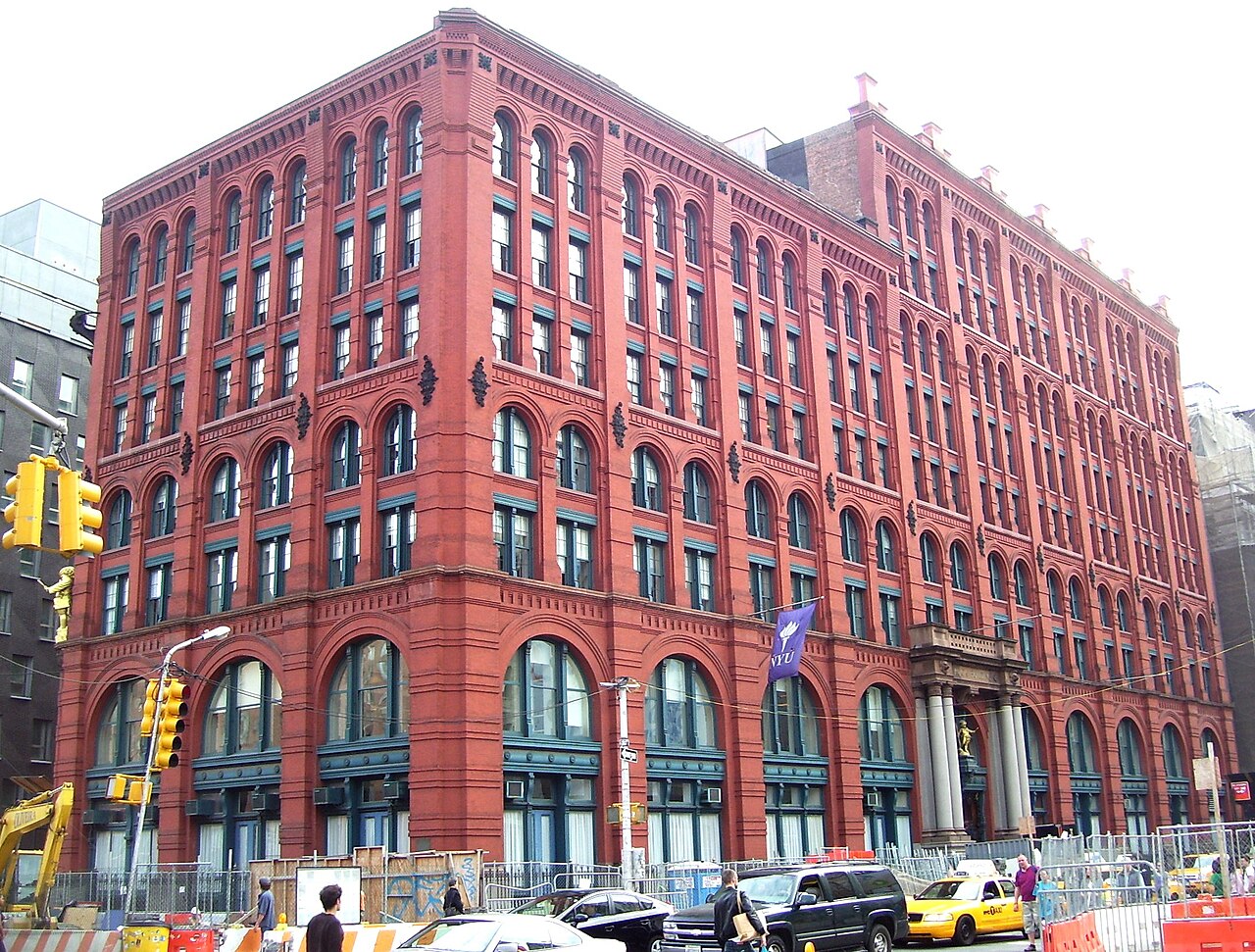
The Puck Building at 295-309 Lafayette Street. Photograph by Beyond My Ken, via Wikimedia Commons. CC BY-SA 4.0.
The red brick giant at the corner of Lafayette and Houston Streets takes its name from a magazine that once made presidents sweat. Puck was America's first successful humor magazine, a weekly of color lithograph cartoons that mocked politicians of both parties, and for three decades it was printed, drawn and published inside this building.
The magazine came first. Joseph Keppler, an Austrian-born cartoonist, and his partner Adolph Schwarzmann founded Puck in German in 1876 and added an English edition in March 1877. According to the New York City Landmarks Preservation Commission, its savage color cartoons, made possible by the new art of lithography, quickly made it a national institution. Keppler drew many of the most famous ones himself.
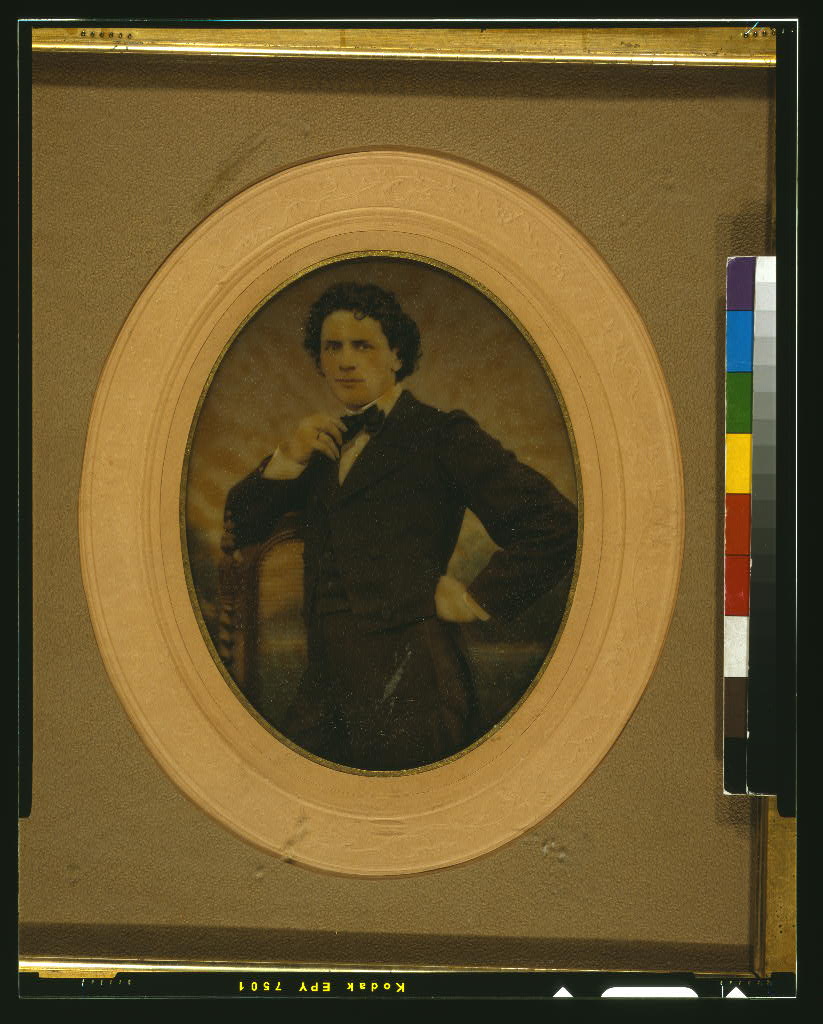
By 1885 the magazine needed a home of its own. Keppler and Schwarzmann, together with their printer J. Ottmann, whose lithographing company shared the enterprise, put up the Puck Building at 295-309 Lafayette Street between 1885 and 1886. Their architect was Albert Wagner, and they liked his work enough to have him design a large addition along Mulberry Street in 1892-93. The style is Romanesque Revival, though the Landmarks Preservation Commission notes its strong debt to the German Rundbogenstil, the round-arched manner Keppler and Schwarzmann would have known from home: tier after tier of brick arches over a rough stone base.
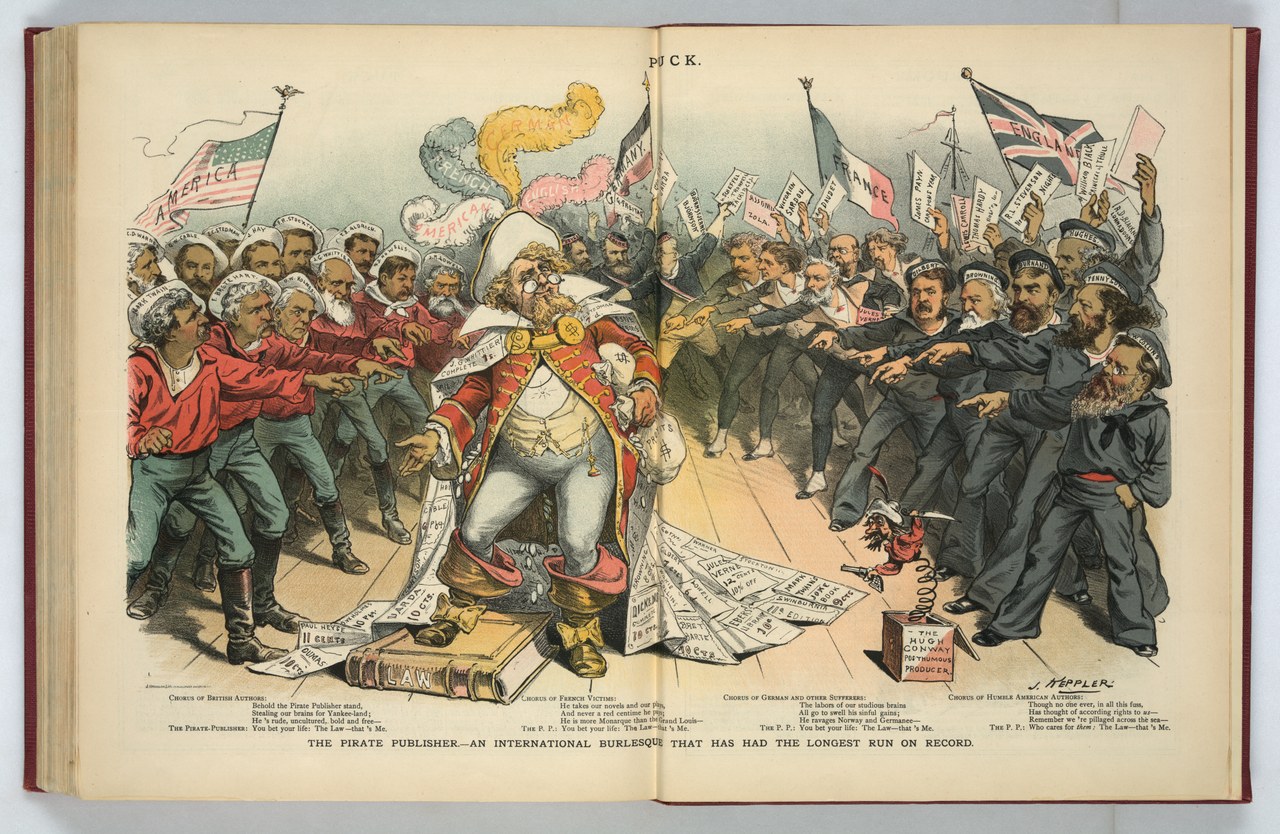
"The Pirate Publisher," one of Keppler's cartoons for Puck, 1886. Library of Congress, via Wikimedia Commons. Public domain.
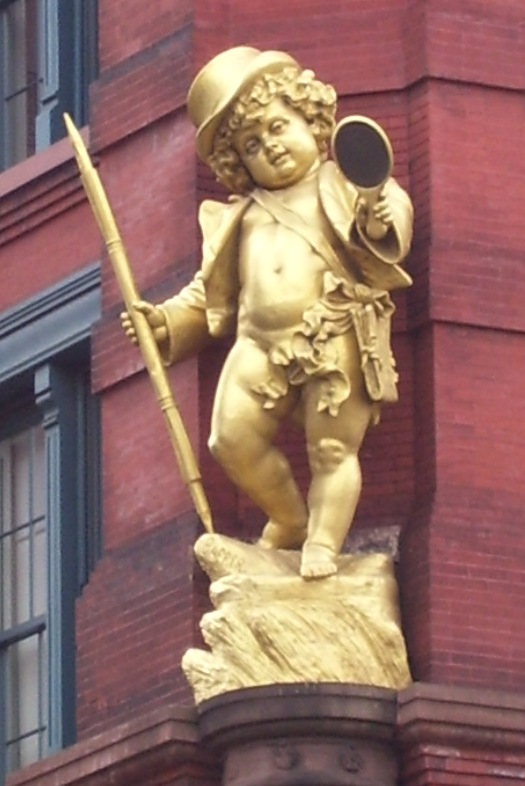
This was the heart of New York's printing district, and the building was its showpiece. King's Handbook of New York City, published in 1892, called it the largest building in the world devoted to lithographing and publishing, with nearly eight acres of floor space. The magazine's impish mascot watched over it all: gilded statues of Puck, the Shakespearean sprite, still perch at the Lafayette Street entrance and at the corner of Mulberry and East Houston. The Landmarks Preservation Commission counts them among the most conspicuous pieces of architectural sculpture in the city. At the 1893 World's Columbian Exposition in Chicago, Puck even had its own exhibition building, designed by Stanford White.
The building itself was nearly cut down in its prime. When the city extended Lafayette Street through the neighborhood at the end of the century, the new street sliced through the Puck Building's western end. Between 1897 and 1899 the structure was cut back, and a new west facade, matching Wagner's design, was built by the architects Herman Wagner and Richard Jahn.
The magazine did not outlast the building. William Randolph Hearst bought Puck in 1917, and it ceased publication the next year. The presses eventually left, and the building settled into life as a loft and office property. The Landmarks Preservation Commission designated it a New York City landmark on April 12, 1983, calling it one of the great surviving buildings of the city's nineteenth-century publishing and printing district.
Who owns the Puck Building today?
Kushner Companies does. The real estate firm took over the building after the previous ownership syndicate ran into financial trouble in the 1980s, and it still lists the Puck Building in its portfolio; a penthouse in the building sold for $32.5 million in 2024, as The Real Deal reported. New York University is the largest office tenant: in 2003 the university signed a fifteen-year lease for three floors, about 75,000 square feet, for its Robert F. Wagner Graduate School of Public Service.
So the old printing palace now houses graduate students of public policy, a few floors of offices, and some of the most expensive apartments in NoHo. The gilded troublemaker on the corner still grins down at Houston Street, a reminder of the years when the sharpest cartoons in America rolled off the presses inside.
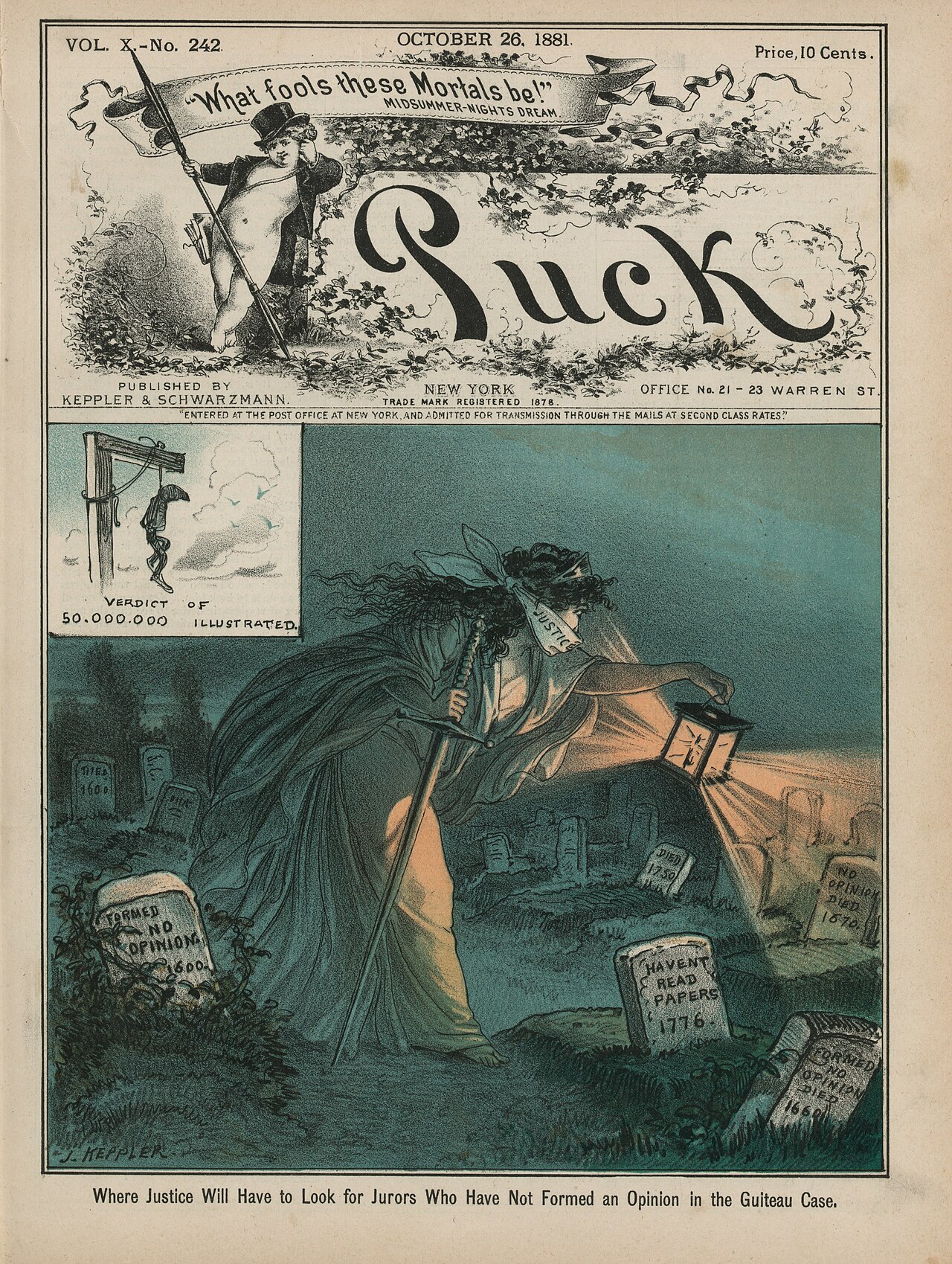
The cover of Puck, October 26, 1881, drawn by Keppler. Library of Congress, via Wikimedia Commons. Public domain.
Sources
- NYC Landmarks Preservation Commission, Puck Building designation report (1983)
- Kushner Companies, The Puck Building property page
- The Real Deal, "Puck Building Penthouse Sold For $33M" (2024)
- New York University, "NYU Inks Deal for 'Dream Space' in Puck Building" (2003)
- The New York Times, "N.Y.U. Leases 3 Floors at Puck Building" (2003)
- Wikimedia Commons, Puck Building by Beyond My Ken (CC BY-SA 4.0)
- Wikimedia Commons, corner Puck statue by Beyond My Ken (CC BY-SA 4.0)
- Library of Congress, portrait of Joseph Keppler (public domain)
- Wikimedia Commons, "The Pirate Publisher" (1886, public domain)
- Wikimedia Commons, Puck cover, October 26, 1881 (public domain)


