The New York Public Library: A Marble Palace on an Old Reservoir
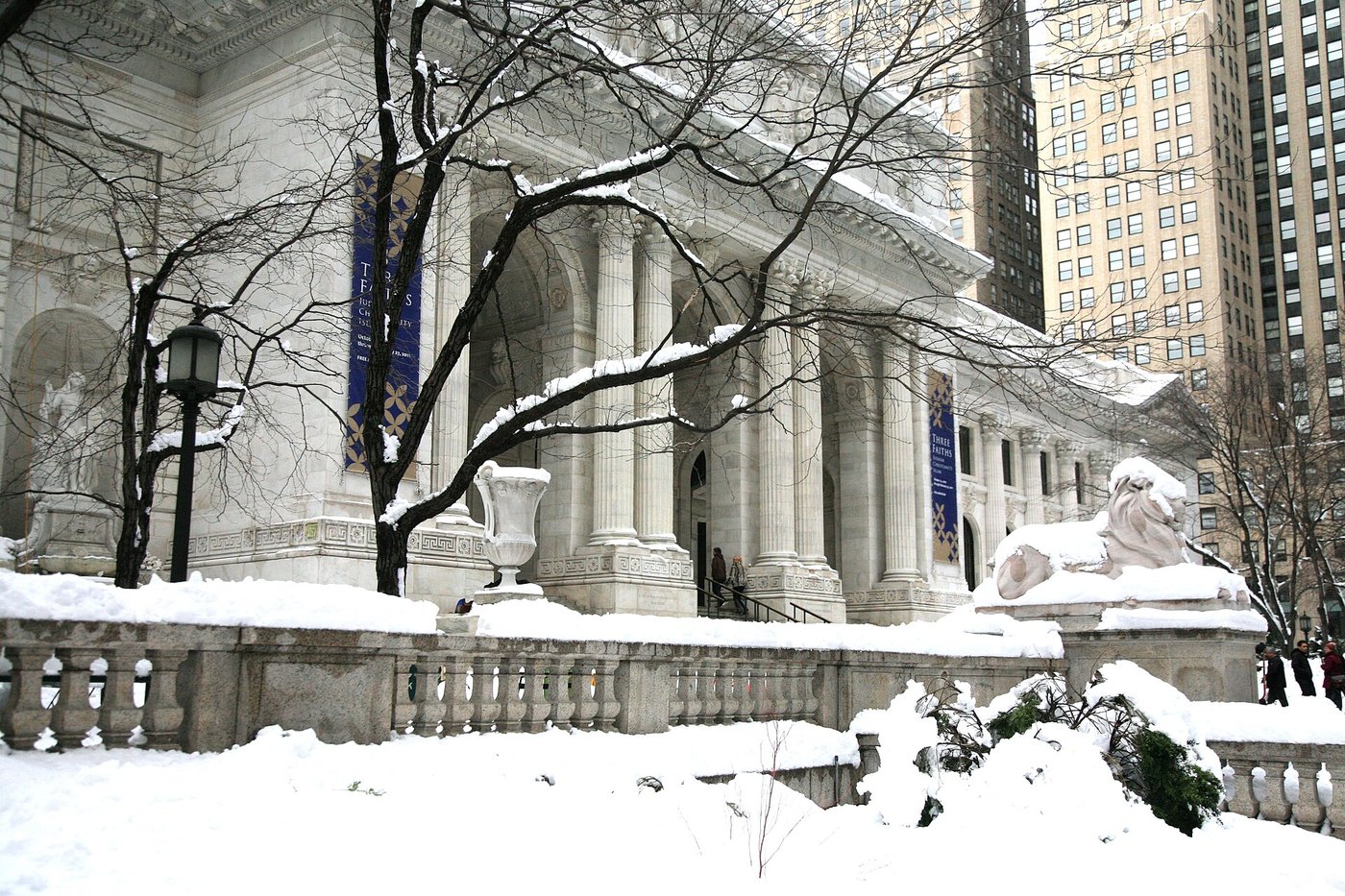
The Stephen A. Schwarzman Building on Fifth Avenue in 2011. Photograph by Vincent Desjardins, via Wikimedia Commons. CC BY 2.0.
The New York Public Library was formed in 1895 from three private institutions: the Astor Library, the Lenox Library and the Tilden Trust. The Astor had a large collection but did not lend books, and the National Park Service notes that its librarians discouraged all but well-to-do readers. The former governor Samuel J. Tilden left the bulk of his fortune to "establish and maintain a free library and reading room" in the city. Combining the three gave New York the money and the books for a great public library. It still needed a building.
The site came from the city's water system. The trustees looked at several locations but favored the abandoned Croton Distributing Reservoir on Fifth Avenue between 40th and 42nd Streets, built in 1837-42, for its size and central location. On December 8, 1897, the library and the city reached an agreement: the city would put up the building, and the library would run a free circulating library. Clearing the reservoir took time. According to the Landmarks Preservation Commission, it took seven weeks just to tunnel through its 25-foot-thick walls. The National Park Service notes that some of its stone foundations were built into the library and can still be seen in the cellar.
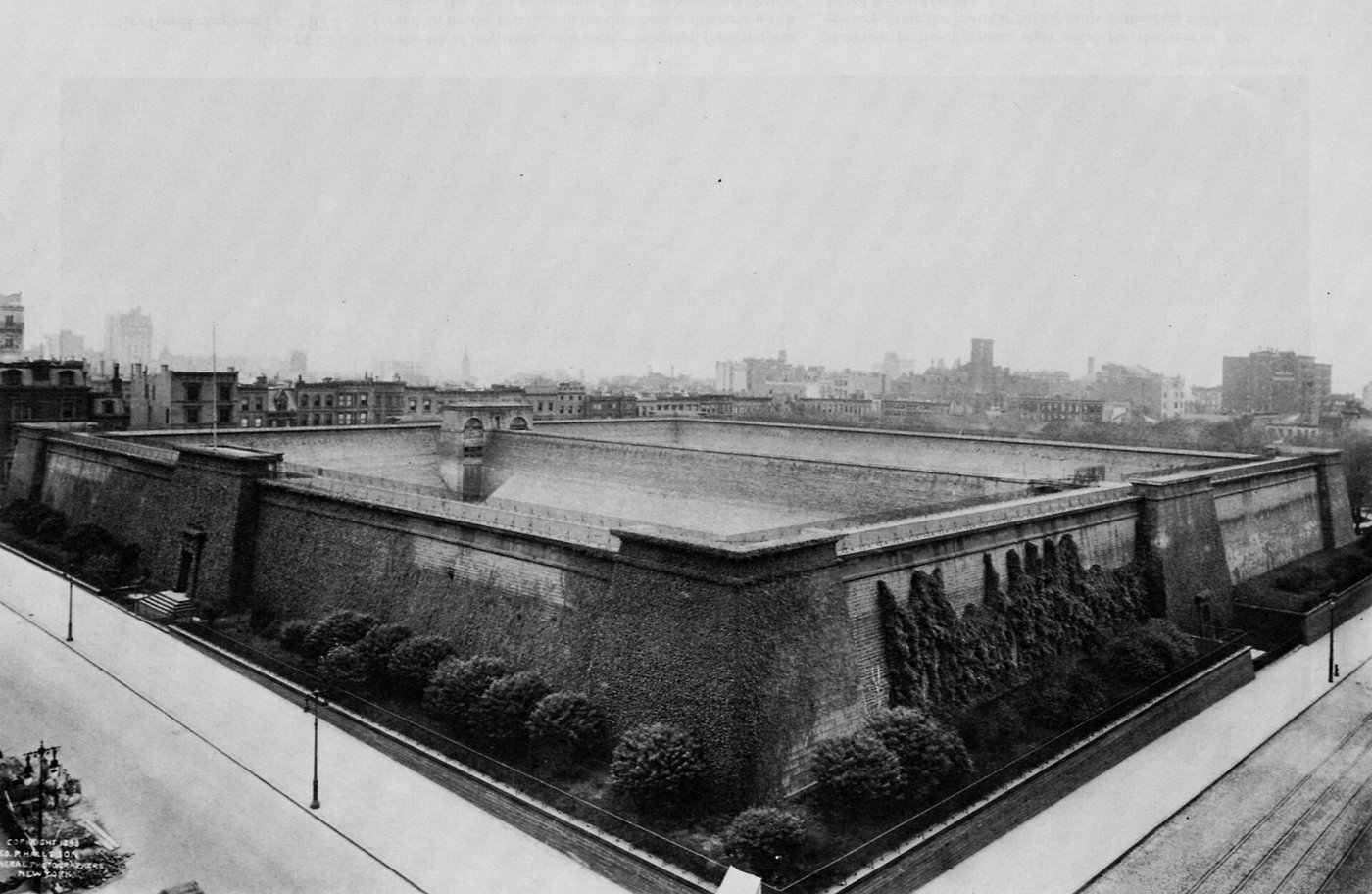
The Croton Distributing Reservoir, the future library site, in 1898. Photograph by George P. Hall. Public domain.
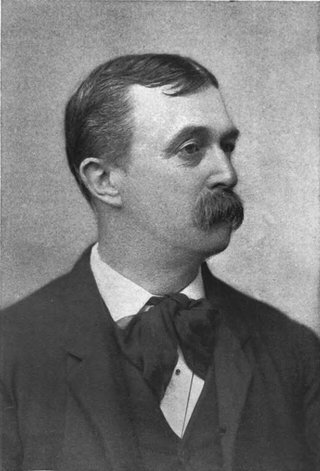
The plan came from the library's first director, John Shaw Billings. In a sketch dating to 1897, he laid out the general arrangement of the building, with the main reading room on the third floor, raised above the street and set on top of the book stacks. His plan became the basis of an architectural competition, and in November 1897 the firm of Carrère & Hastings won it. The jury called their entry "distinctly the best of the designs submitted." John M. Carrère and Thomas Hastings had met as students at the Ecole des Beaux-Arts in Paris.
Construction took most of a decade. The first block of Vermont marble was set in August 1902, and the cornerstone was laid in a public ceremony on November 10, 1902. The Landmarks Preservation Commission reports that the building cost the city about $9 million, more than three times the original estimate. President William Howard Taft dedicated it on May 23, 1911, calling the opening a "matter of national importance." The next morning the doors opened to the public, and an estimated 30,000 to 50,000 people came in on the first day.
Billings's reading room is the heart of the building. It is a half-acre room without columns, 297 feet long and 78 feet wide under a 52-foot ceiling, and the Commission compares its size to the Main Concourse at Grand Central Terminal. A renovation paid for by Frederick Phineas Rose and Sandra Rose reopened it in 1998 as the Rose Main Reading Room. The ceiling was restored again in 2014-16, and in 2017 the city made the reading room and the catalog room interior landmarks.
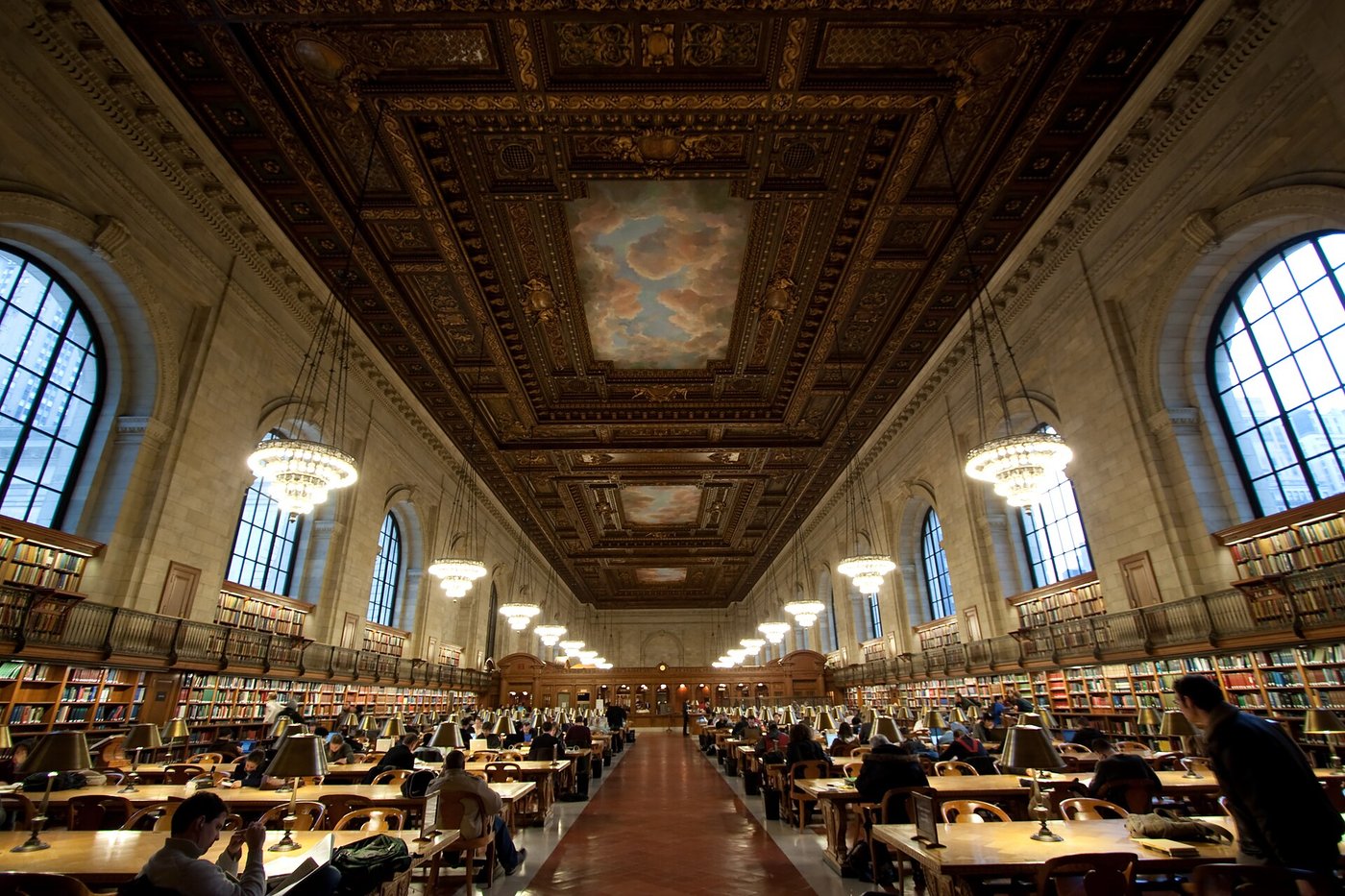
The Rose Main Reading Room in 2011. Photograph by Julien Chatelain, via Wikimedia Commons. CC BY-SA 2.0.
Outside, the building's best-known residents are its lions. The library says they were modeled by the sculptor Edward Clark Potter and carved by the Piccirilli Brothers from pink Tennessee marble. Their nicknames have changed. They were first called Leo Astor and Leo Lenox, after two of the library's founders. In the 1930s Mayor Fiorello La Guardia named them Patience and Fortitude, the qualities he felt New Yorkers would need to get through the Depression.
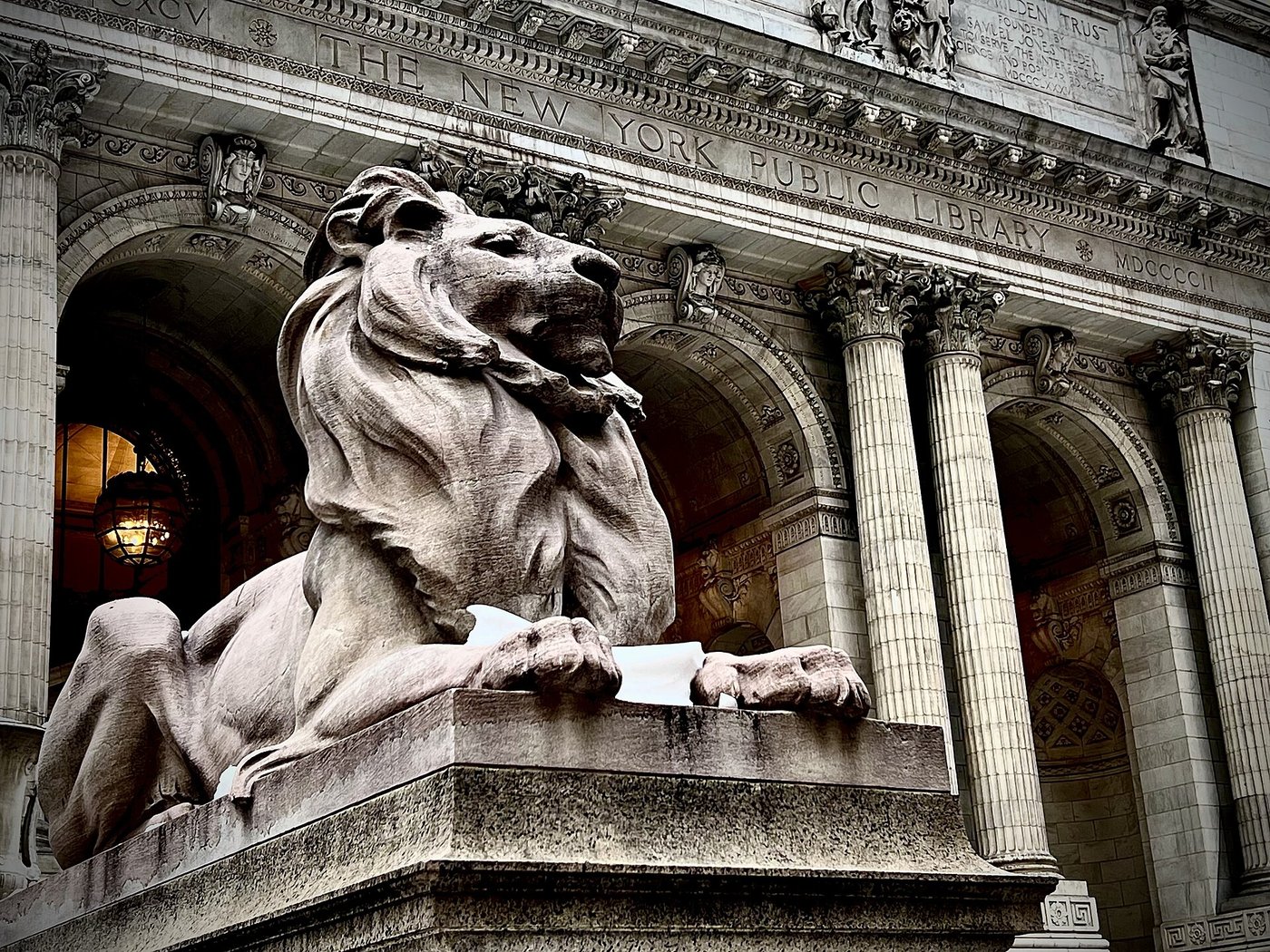
Patience, one of the library's two marble lions, in 2026. Photograph by John Dillenbeck, via Wikimedia Commons. CC0.
The building has a donor's name as well. In 2008 the library announced a $100 million gift from the financier Stephen A. Schwarzman, and the Fifth Avenue building was renamed for him. The city had designated its exterior a landmark on January 11, 1967.
Who owns the New York Public Library building today?
The public does. The library is a private nonprofit, not a government agency, but its own financial statements explain that it occupies its landmark building under arrangements in which the City and State keep legal title. The building is provided to the library free of charge for as long as it is used as a library. That is the same bargain struck in 1897: the city built the palace, and the library fills it.
Today the Schwarzman Building holds some 15 million items, from medieval manuscripts to comic books. More than a century after Taft opened it, the old reservoir site still serves the whole city, as Tilden intended.
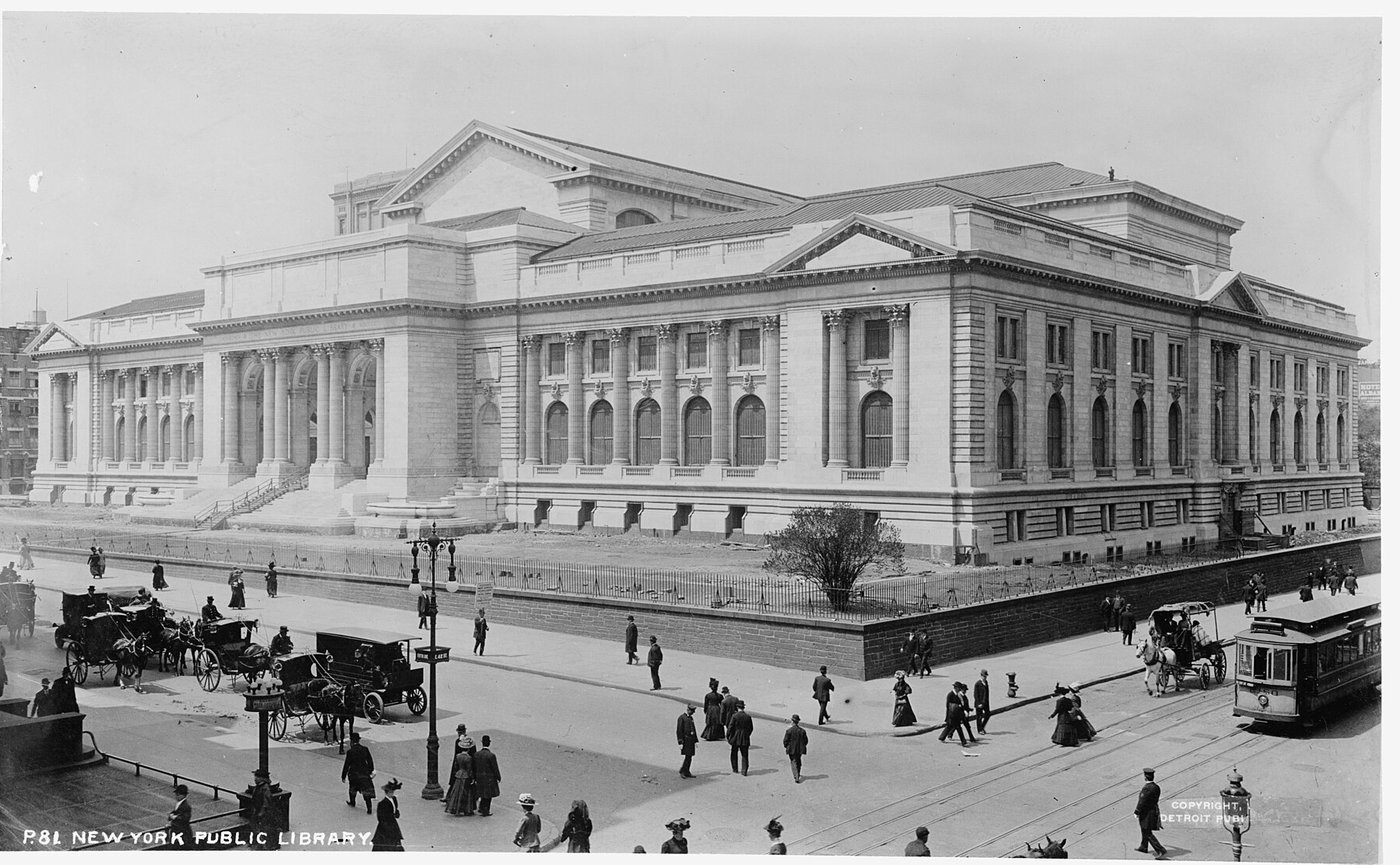
The library nearing completion, 1908. Detroit Publishing Co. Library of Congress, via Wikimedia Commons. Public domain.
Sources
- NYC Landmarks Preservation Commission, New York Public Library designation report (1967)
- NYC Landmarks Preservation Commission, Main Reading Room and Catalog Room interior designation report (2017)
- National Park Service, National Historic Landmark documentation
- The New York Public Library, About the Stephen A. Schwarzman Building
- The New York Public Library, The Library Lions
- The New York Times, "A $100 Million Donation to the N.Y. Public Library" (2008)
- The New York Public Library, financial statements (2025)
- Wikimedia Commons, Schwarzman Building by Vincent Desjardins (CC BY 2.0)
- Wikimedia Commons, George P. Hall photograph of the Croton Reservoir (1898)
- Wikimedia Commons, portrait of John Shaw Billings (public domain)
- Wikimedia Commons, Rose Main Reading Room by Julien Chatelain (CC BY-SA 2.0)
- Wikimedia Commons, library lion by John Dillenbeck (CC0)
- Wikimedia Commons, Detroit Publishing Co. photograph (1908)
.jpg)
.jpg)


