The Waldorf Astoria: How a Park Avenue Palace Became the World's Most Famous Hotel
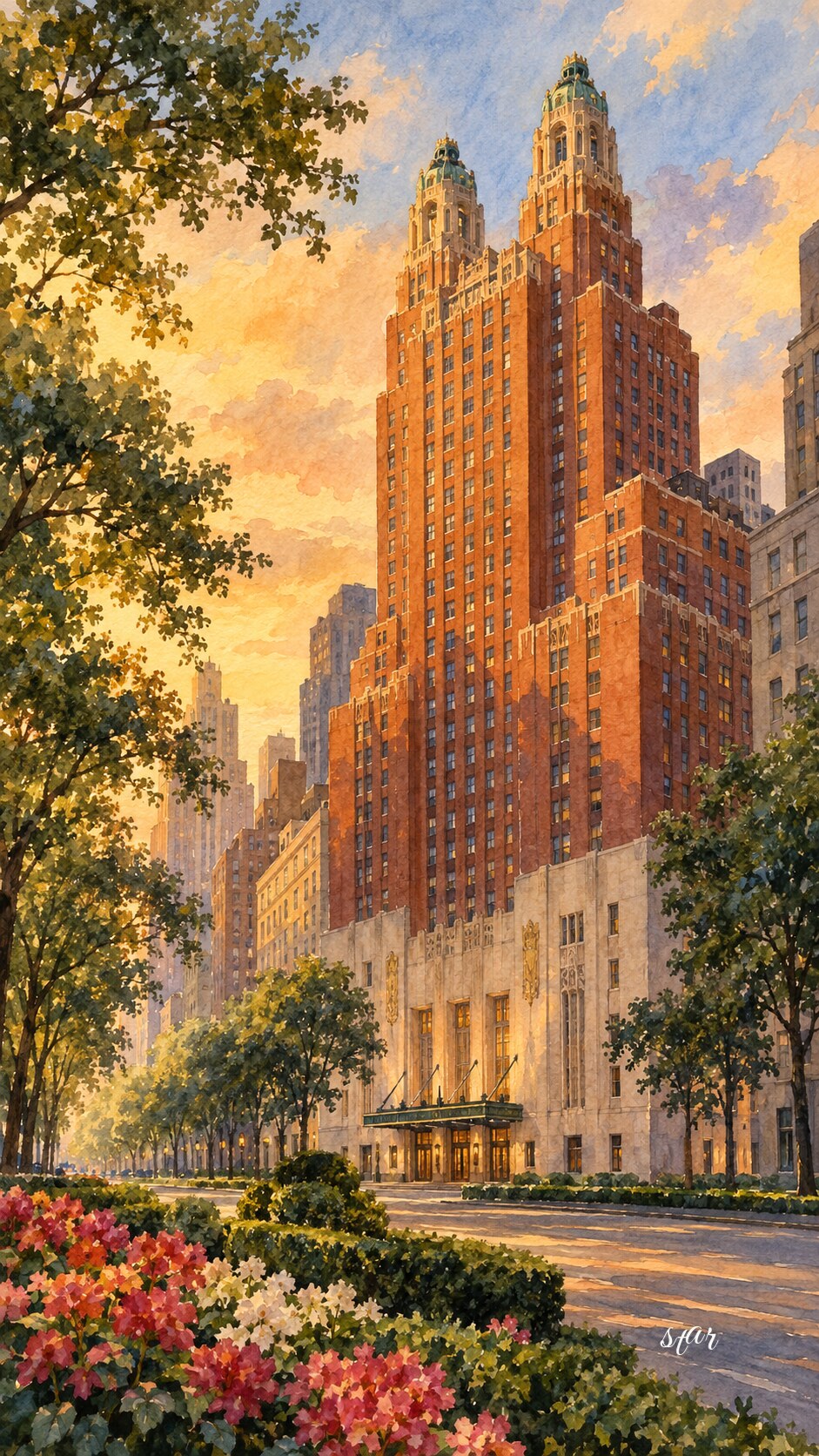
Original watercolor art illustration by Solomon Rokowsky.
The Waldorf Astoria on Park Avenue opened in 1931 as the largest and tallest hotel in the world, an Art Deco palace built in the depths of the Depression, and it has hosted more presidents, kings and celebrities than any hotel in America. After an eight-year, top-to-bottom restoration, it reopened in July 2025 with 375 hotel rooms below 372 private condominiums. The current building is actually the second Waldorf Astoria; the first stood where the Empire State Building stands today.
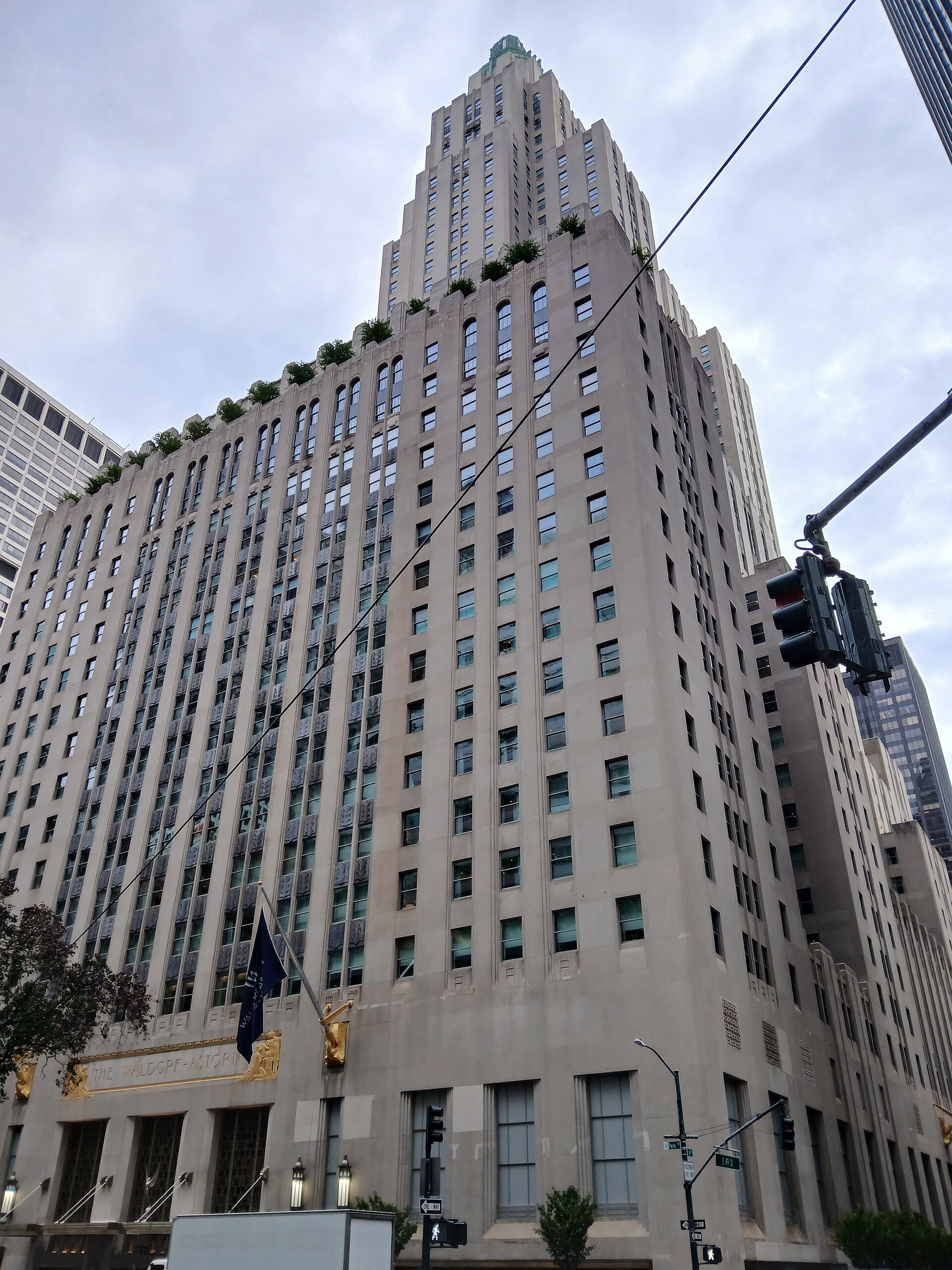
The Waldorf Astoria on Park Avenue, photographed in November 2025 after its restoration. Photo by Epicgenius, via Wikimedia Commons. Creative Commons Attribution-Share Alike 4.0.
What was the original Waldorf-Astoria?
The name began as a family feud on Fifth Avenue. William Waldorf Astor built the Waldorf Hotel at Fifth Avenue and 33rd Street in 1893, and his cousin John Jacob Astor IV answered with the taller Astoria next door in 1897. The two hotels were joined by a marble corridor known as Peacock Alley, and the hyphenated Waldorf-Astoria became the social center of Gilded Age New York. It was there that maître d'hôtel Oscar Tschirky, "Oscar of the Waldorf," presided over the inventions the hotel still claims: the Waldorf salad, eggs Benedict and Thousand Island dressing.
The combined hotel did not survive the northward march of commerce. It was demolished in 1929, and the Empire State Building rose on its site. The Waldorf's owners took the name, the banquet silver and Oscar himself uptown to a full-block site on Park Avenue between 49th and 50th Streets.
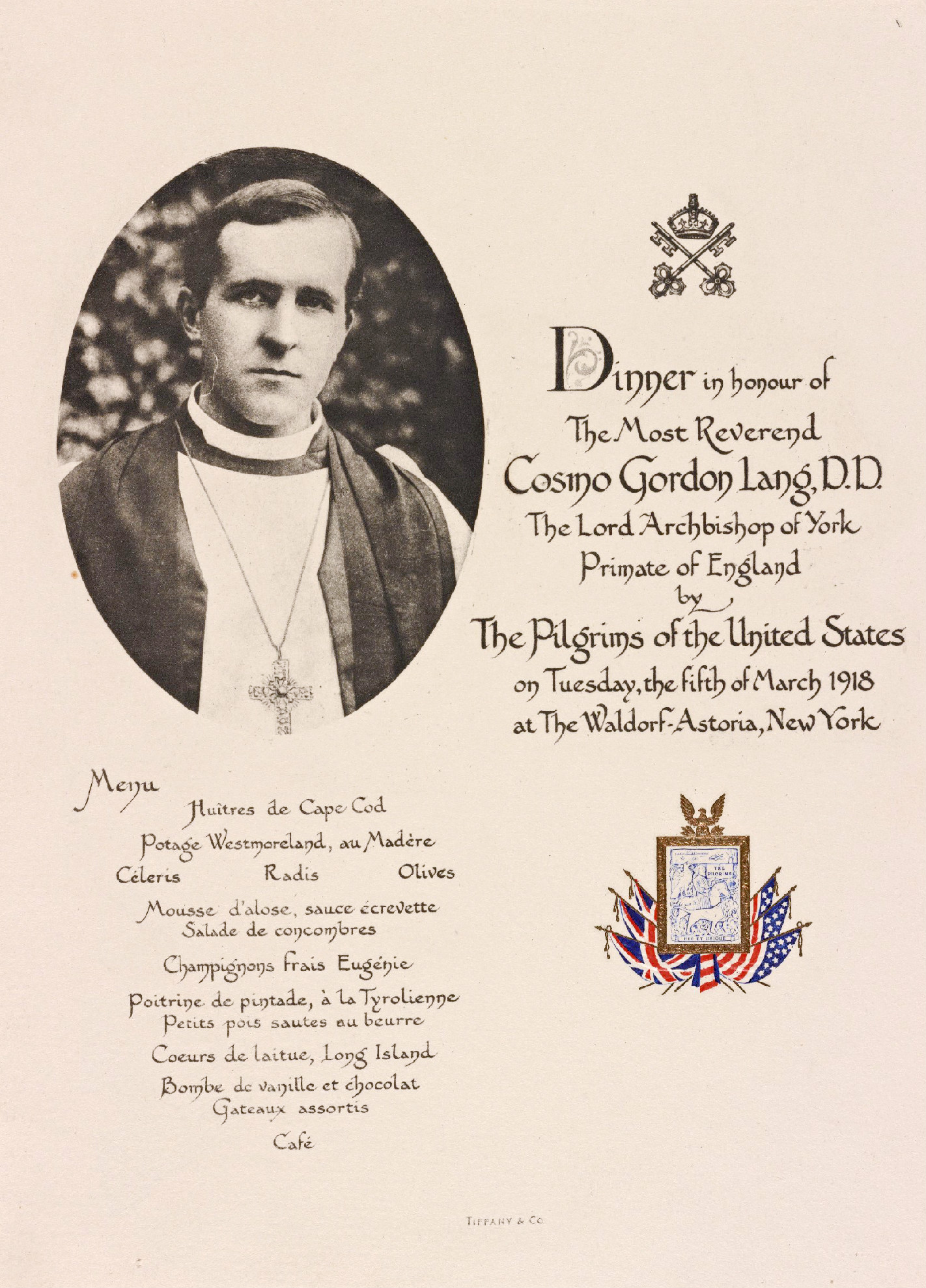
A dinner menu from the original Waldorf-Astoria on Fifth Avenue, printed by Tiffany and Company for the hotel. Via Wikimedia Commons. Public domain.
How did the new Waldorf open in the Depression?
The current building was designed by Schultze & Weaver and rises 625 feet and 47 stories over Park Avenue, a slab of gray brick and limestone with twin cupola-topped towers. On the exact opening date the sources differ: the hotel's own history dates the opening to October 1, 1931, while the Landmarks Preservation Commission's 2017 designation announcement says the hotel opened in September 1931. Either way, opening the world's grandest hotel in the worst year of the Depression, with banks failing across the country, looked mad, and President Herbert Hoover said so, kindly, in a radio address broadcast from the White House: "The opening of the new Waldorf Astoria is an event in the advancement of hotels, even in New York City." With 1,413 rooms, it was the largest and tallest hotel in the world.
The public rooms were the point. The Landmarks Preservation Commission, which made the exterior a New York City landmark in 1993, describes interconnected rooms and corridors on the ground, first, second and third floors, from the foyers and lobbies up to the Grand Ballroom, with lavish Art Deco detail throughout. Peacock Alley was recreated in the new building, running between the Park Avenue and Lexington Avenue lobbies.
The Waldorf Astoria tower on Park Avenue. Photo by Alan Light, via Wikimedia Commons. Creative Commons Attribution 2.0.
Who lived at the Waldorf?
Plenty of famous guests checked in and never really left. Its residents have included Cole Porter, the Duke and Duchess of Windsor, Douglas MacArthur and Winston Churchill. Herbert Hoover lived at the Waldorf Astoria for 20 years, from after his wife died in 1944 until his own death in 1964, and Frank Sinatra kept a suite there from 1979 until 1988. Cole Porter and his wife Linda Lee Thomas had an apartment in the Waldorf Towers, Suite 33A; the hotel once gave Porter a Steinway grand piano, which returned to display on the Cocktail Terrace after the restoration. The Royal Suite is named for the Windsors.
The hotel liked to say that every president from Hoover onward stayed or spoke there, and the presidential suite tradition became so established that the Waldorf functioned as New York's standing presidential address. That guest list, plus the Grand Ballroom's debutante cotillions, charity galas and press conferences, is what made "the Waldorf" a byword for Manhattan formality, and what made its 2017 closure feel like the end of an era rather than a routine renovation.
What survived from the first Waldorf, and what lies underneath?
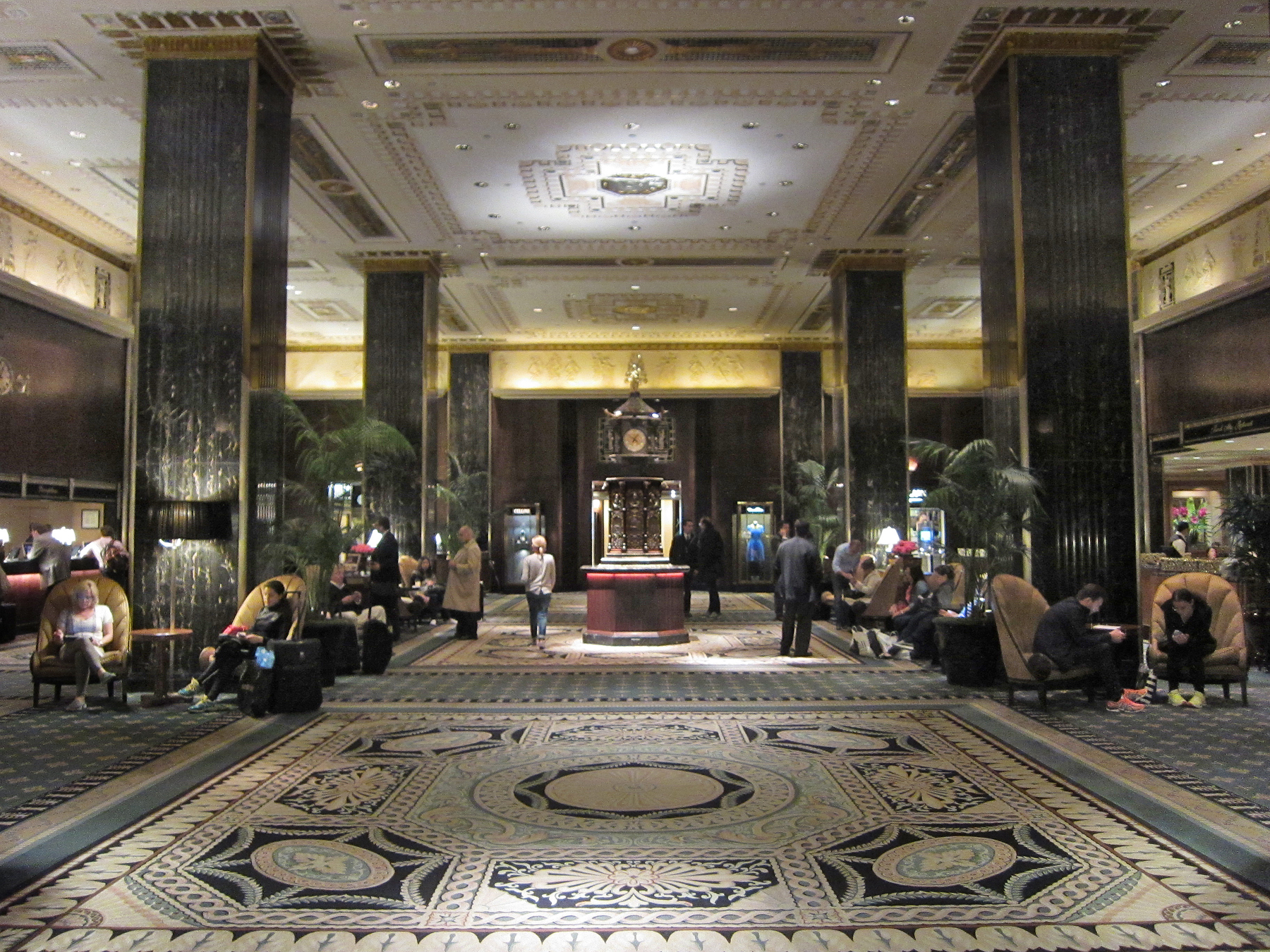
The most famous survivor stands in the main lobby: a 4,000-pound bronze clock, covered with relief figures, that was built by the Goldsmith's Company of London for the 1893 World's Columbian Exposition in Chicago and later acquired by the original hotel. It moved to Park Avenue with the name in 1931 and was restored during the recent renovation. Peacock Alley itself is a survivor in spirit, the corridor recreated from the 1890s original. And the opening year carried a warning the hotel likes to forget: On one early night, the 2,200-room hotel had only 500 occupants, a measure of how deep the Depression cut before the Waldorf grew into its reputation.
Beneath the ballroom floor runs one of the great New York legends. The hotel sits over Track 61, a rail siding that was part of the New York Central Railroad and connected to the Grand Central Terminal complex, long rumored to have served as a private arrival platform for presidents and dignitaries who could ride an elevator straight into the hotel. Whether or not a given presidential visit used it, the siding is real, and it explains why the site, above the rail yards, was available for a full-block hotel in the first place.
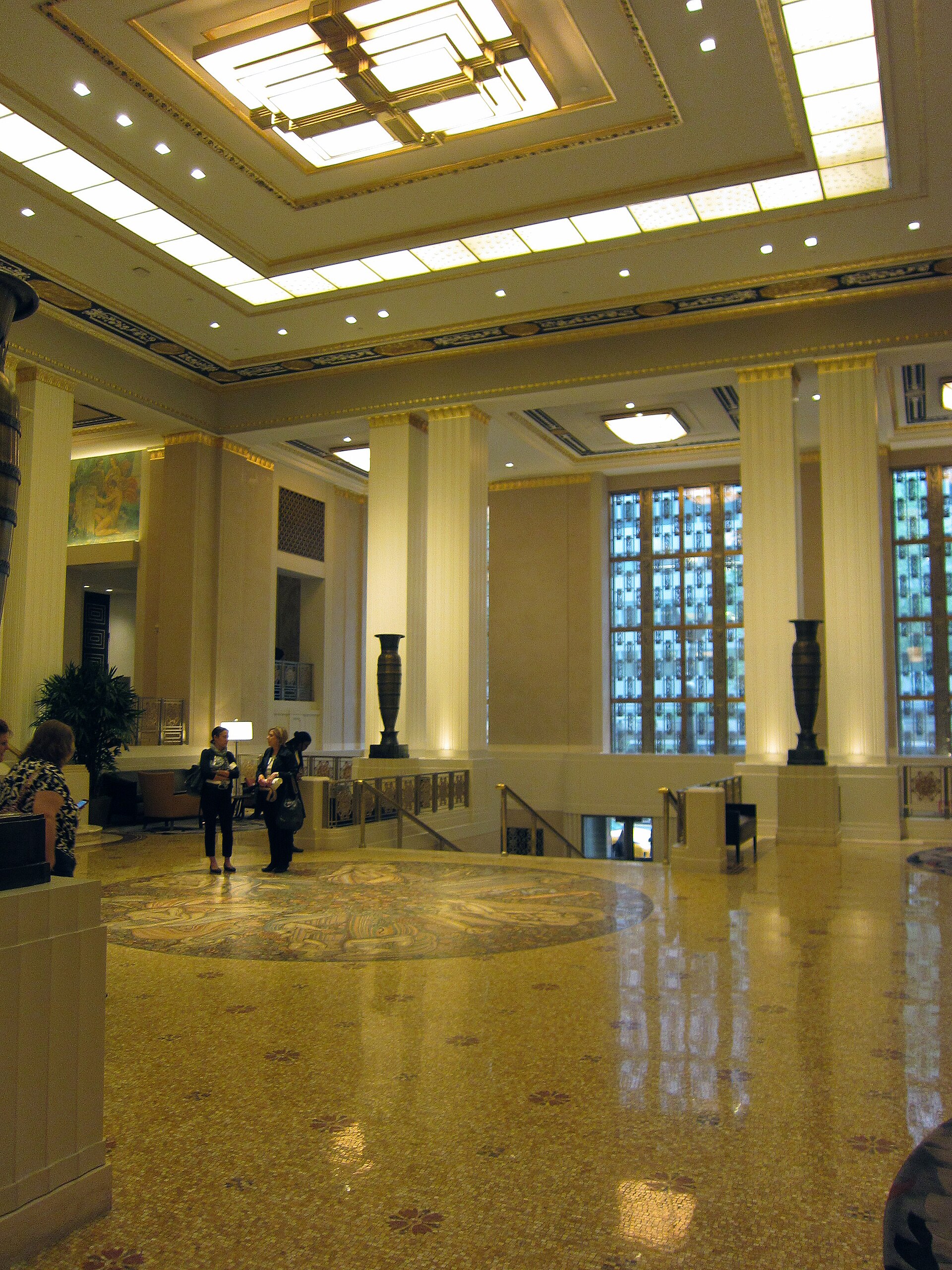
The Park Avenue lobby, one of the interior spaces landmarked in March 2017, with the bronze clock from the 1893 World's Columbian Exposition. Photo by Alan Light, via Wikimedia Commons. Creative Commons Attribution 2.0.
Why did the Waldorf close, and what reopened in 2025?
In 2014, the Chinese company Anbang Insurance Group bought the Waldorf Astoria New York from Hilton for $1.95 billion, at the time making it the most expensive hotel ever sold. Anbang announced plans to convert much of the building to condominiums, and the entire hotel closed in March 2017 for extensive renovations. One week before the closure, on March 7, 2017, the Landmarks Preservation Commission voted unanimously to protect the hotel's celebrated interior spaces, including the Park Avenue Lobby, the Grand Ballroom and the Silver Gallery, a designation the commission said brought the number of New York City interior landmarks to 119. Those rooms had to be preserved through everything that followed.
What followed was complicated. The plan converted the upper stories into 372 condominiums, The Towers of the Waldorf Astoria, and retained 375 hotel rooms on the lowest 18 floors. Anbang went bankrupt in 2020, its assets passed to Dajia Insurance Group, and after several delays the hotel reopened in July 2025. Hilton's official site now describes 375 redesigned guest rooms and suites, a 22,000-square-foot Guerlain Wellness Spa, and the restored Art Deco public floors, with check-in at 4 PM and check-out at noon at 301 Park Avenue, the address it has held since 1931.
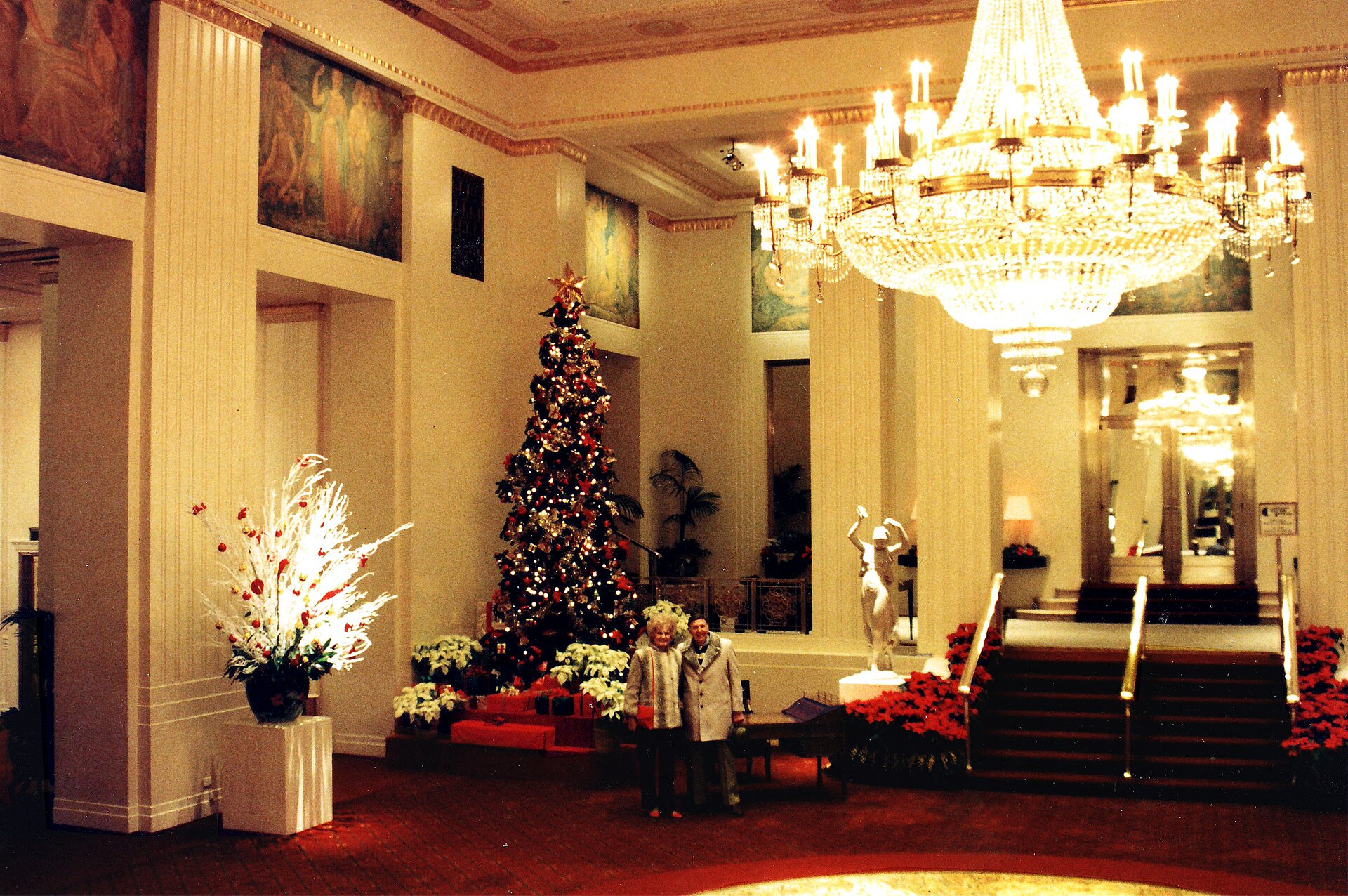
A restored foyer in the Waldorf Astoria. Photo by JGHowes, via Wikimedia Commons. Attribution license.
In the Movies
The Waldorf's best-known screen role is Scent of a Woman (1992), and that filming really happened here: the production shot at the hotel itself, where Chris O'Donnell's prep-school student Charlie and Al Pacino's blind, embittered Lieutenant Colonel Frank Slade stay for one last lavish New York weekend. Pacino won the Academy Award for Best Actor for the role. One detail the location record keeps straight: the famous tango from the same trip was filmed not at the Waldorf but in the ballroom of the Pierre Hotel on Fifth Avenue.
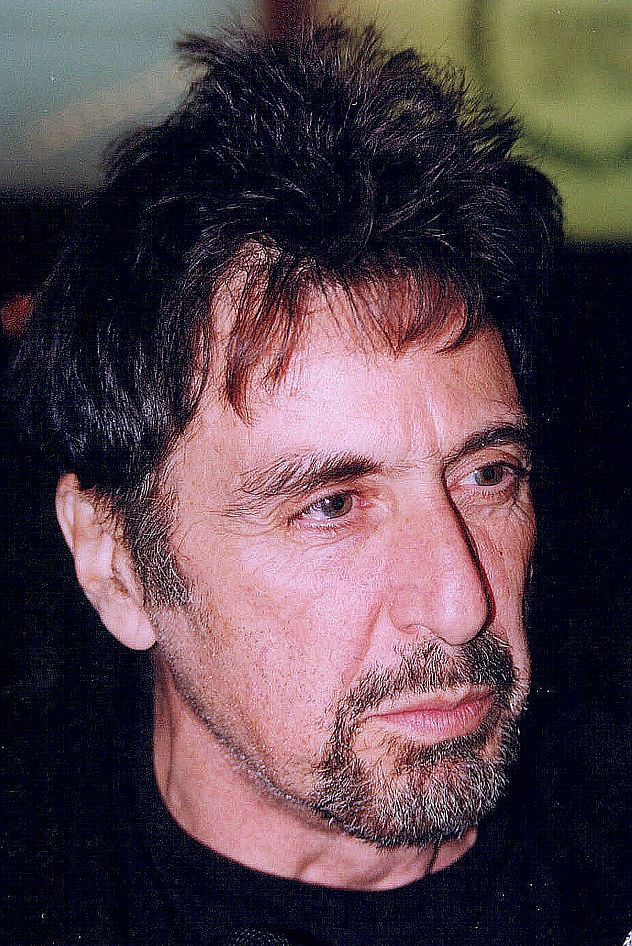
Al Pacino in 1999. He won the Academy Award for playing Lieutenant Colonel Frank Slade in Scent of a Woman, filmed at the Waldorf. Photo: Kingkongphoto & celebrity-photos.com, via Wikimedia Commons. Creative Commons Attribution-Share Alike 2.0.
Decades earlier, Week-End at the Waldorf (1945), with Ginger Rogers and Lana Turner, was set at the hotel but only partly filmed there: the American Film Institute's catalog records that some interiors and exteriors were shot on location at the Waldorf-Astoria, while most of the picture was filmed at the MGM studios on replicas of the lobby, the Starlight roof garden and some sixty other sets. Later films used the hotel as an on-screen presence rather than a documented filming location, among them Woody Allen's Hannah and Her Sisters, Wes Anderson's The Royal Tenenbaums, Analyze This and Coming to America.
Sources for this section: Movie-Locations.com, Scent of a Woman · AFI Catalog, Week-End at the Waldorf.
Gangsters and Organized Crime
Frank Costello, the Mafia boss the press called the Prime Minister of the Underworld, was part of the Waldorf's daily scenery at the height of his power. Time magazine described his almost unvarying morning routine in 1951, and crime historians fill in the stops: a daily trip to the Waldorf-Astoria barber shop for a shine, a shave and a manicure, after which he held court in the hotel's bar.
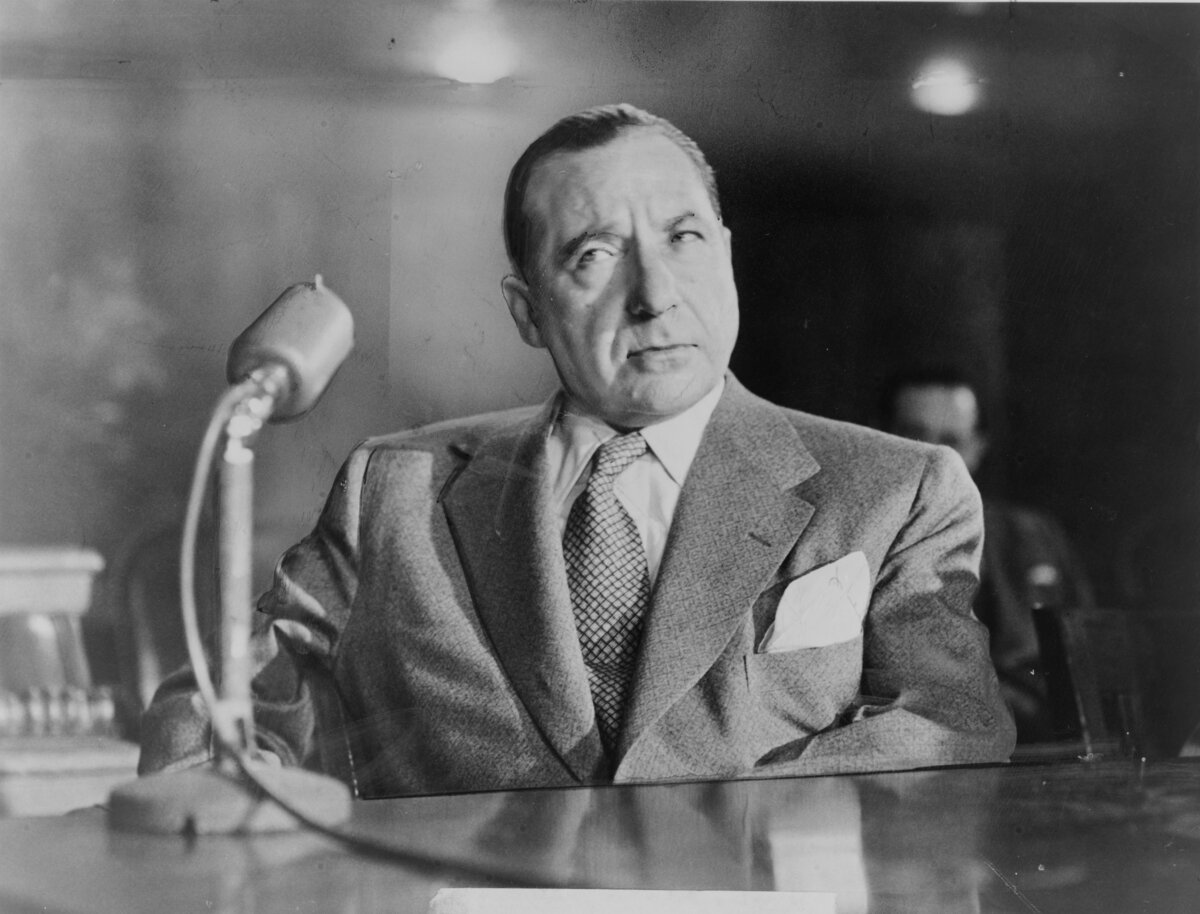
Frank Costello testifying before the Senate's Kefauver Committee in 1951, when his Waldorf barber-shop routine was part of his public image. Photo by Al Aumuller, New York World-Telegram & Sun, via the Library of Congress. Public domain.
One famous event is often misplaced onto the hotel, so it is worth getting right. The attempt on Costello's life did not happen at the Waldorf. Costello lived at the Majestic apartments at 115 Central Park West, and it was in that building's lobby, on the evening of May 2, 1957, that a gunman followed him in and fired a single shot at his head. The bullet only grazed him. Police charged Vincent "The Chin" Gigante with the shooting, Costello refused to identify anyone, and Gigante was acquitted. Costello announced his retirement soon after and died in 1973, still living at the Majestic.
Who owns the Waldorf Astoria today?
Dajia Insurance Group, a Chinese government-controlled insurer, owns the building, and Hilton operates the hotel. The split dates to October 2014, when Anbang Insurance Group agreed to pay Hilton $1.95 billion for the property - at the time the most expensive hotel sale ever - and granted Hilton a 100-year management agreement to keep running it. After Anbang's chairman was prosecuted on fraud charges, its assets, the Waldorf included, passed to Dajia in 2018. Hilton is explicit about the arrangement: it does not own the building, but its management agreement "will continue for decades to come," and a change of ownership would not affect hotel operations or the condominiums.
A change of ownership is exactly what may be coming. In February 2026 the Wall Street Journal reported, with Reuters and the Commercial Observer confirming, that Dajia plans to sell the Waldorf and could put it on the market through the investment bank Eastdil Secured within weeks. No buyer and no price have been announced, so the sale remains a report, not a done deal. Whatever happens to the hotel portion, the private condominiums in the Towers of the Waldorf Astoria are separately owned and would not be part of it.
Where can you eat or drink at the Waldorf Astoria?
According to the hotel's official dining pages, the reopened Waldorf has three chef-driven spots plus in-room dining. Lex Yard, a two-story restaurant helmed by Chef Michael Anthony, celebrates seasonal food and local ingredients, including a four-course Chef's Market Menu. Peacock Alley Bar, in the restored corridor between the lobbies, runs a cocktail program developed by Jeff Bell inspired by iconic former guests and classic techniques. Yoshoku offers a West-meets-East take on traditional Japanese dishes and hosts the hotel's afternoon tea. The Waldorf salad and eggs Benedict, invented at the original hotel, remain on the menus. Listings and hours here were read on the official pages on November 3, 2026.
Sources
- Hilton Worldwide, announcement of the Waldorf Astoria sale to Anbang (October 2014)
- Commercial Observer, "NYC's Waldorf Astoria Set to Hit the Market, Last Sold for Nearly $2B" (February 12, 2026)
- Reuters, "Waldorf Astoria's Chinese owners plan to sell iconic NYC hotel, WSJ reports" (February 12, 2026)
- The Mob Museum, "The hit that could have sunk Las Vegas" (2017)
- The New York Times, "Costello Is Shot Entering Home" (May 3, 1957)
- Time, "Manners & Morals: I Never Sold Any Bibles" (1951)
- Movie-Locations.com, Scent of a Woman filming locations
- AFI Catalog, Week-End at the Waldorf (1945)
- Waldorf Astoria New York, official hotel history (archived)
- Wikimedia Commons, Frank Costello before the Kefauver Committee, 1951 (public domain)

Visiting the Waldorf Astoria
The Waldorf Astoria New York stands at 301 Park Avenue, between East 49th and 50th Streets, near the 6 train at 51st Street. The hotel's landmarked public spaces, including the lobbies and Peacock Alley, can be seen by visitors coming to the restaurants and bars; the Grand Ballroom and other event spaces are accessible during events. Hotel check-in is at 4 PM and check-out at noon. These details were read on the official pages on November 3, 2026.