Sailors’ Snug Harbor: From Mariners’ Home to Staten Island Cultural Campus
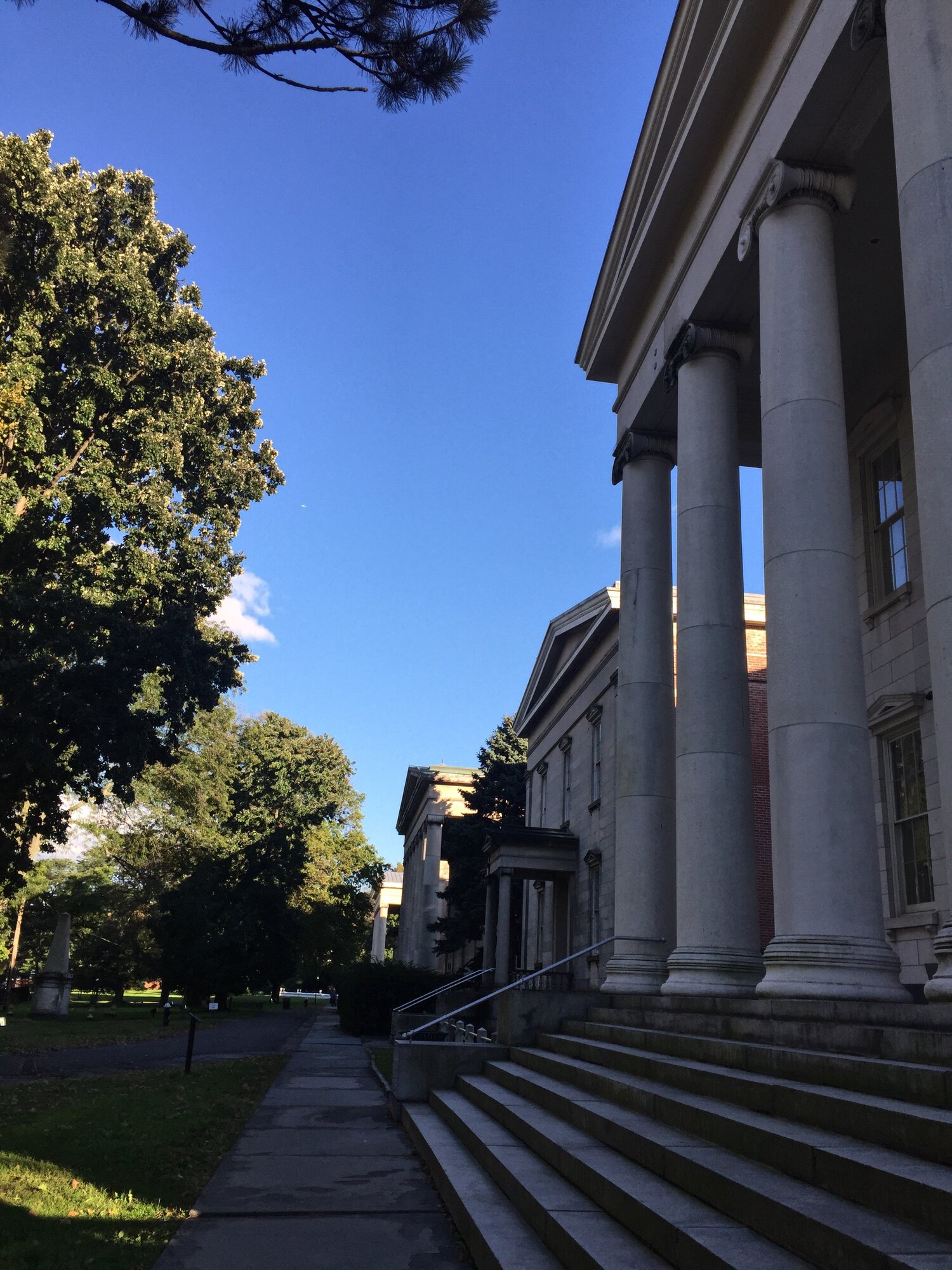
Staten Island Museum at Snug Harbor, 2018. Photograph by Ysmp bkln, via Wikimedia Commons. CC BY-SA 4.0.
The long row of temple-fronted buildings at Sailors’ Snug Harbor seems almost transported from another world. Facing Richmond Terrace on Staten Island’s north shore, the monumental Greek Revival complex began as a home for retired mariners. It later became one of New York’s major preservation victories and now anchors a cultural center, botanical garden, museums, performance spaces, and public landscape.
Its origin lies in the will of Captain Robert Richard Randall, an heir to a shipping fortune who died in 1801. Randall directed that income from his Manhattan farm support a haven for “aged, decrepit, and worn-out sailors.” The idea addressed a harsh reality of maritime life: after decades of dangerous physical work, many sailors reached old age without family support, pensions, or public benefits.
Randall’s property lay near what is now Washington Square. Legal challenges delayed the charity, while Manhattan development made the land increasingly valuable. Instead of building there, the trustees leased the city lots and used the income to purchase a 130-acre Staten Island farm overlooking the Kill Van Kull. Sailors’ Snug Harbor opened in 1833 with 37 retired seamen.
Building C, the original administration building, established the campus’s architectural identity. Its broad steps, giant columns, pediment, and carefully proportioned stone façade gave the institution the dignity of a civic temple. The design has been attributed at different times to Martin E. Thompson and Minard Lafever. Four neighboring buildings were added between 1839 and 1880, creating a remarkable line of five related Greek Revival structures. The National Park Service has described the group as unequaled in the scale, extent, and quality of its Greek Revival design.
The campus eventually grew far beyond that front row. Dormitories, a dining hall, hospital, chapel, music hall, residences, workshops, and service buildings formed a self-contained community. By the early twentieth century roughly 1,000 retired sailors lived there. Snug Harbor offered food, housing, medical care, worship, recreation, and companionship. Its 55 major buildings and extensive grounds reflected both the wealth of the Randall endowment and an institutional approach to elder care long before modern public programs.
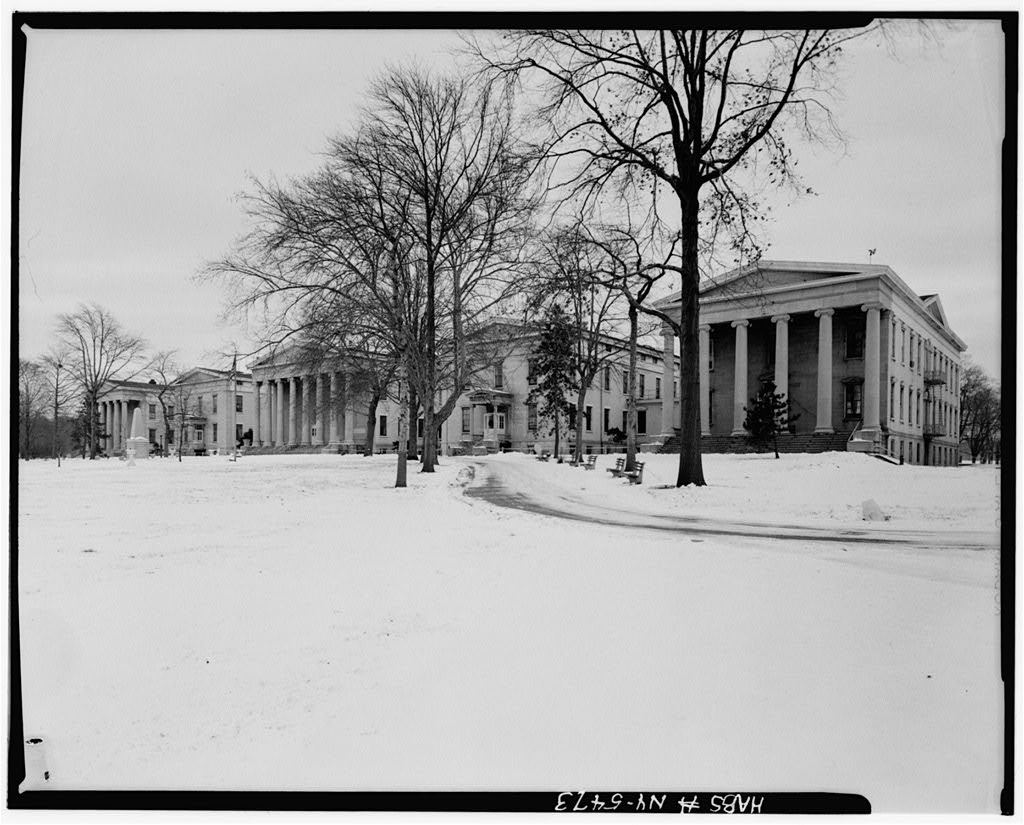
The Greek Revival front buildings at Sailors’ Snug Harbor. Historic American Buildings Survey, Library of Congress. Public domain.
Architectural variety grew with the institution. Later additions used Italianate, Second Empire, Renaissance Revival, Beaux-Arts, and High Victorian forms. The result was not a single frozen composition but a record of changing nineteenth- and early twentieth-century taste, organized around the commanding classical core.
By the mid-twentieth century, the system was under strain. Social Security, Medicare, and other programs changed how retired sailors obtained support, and fewer men chose institutional life at Snug Harbor. Maintenance costs rose as the endowment weakened. Buildings deteriorated, and several major structures, including the hospital and Randall Memorial Church, were demolished in the 1950s.
The trustees considered more demolition and modernization in the 1960s. Preservationists and the new Landmarks Preservation Commission intervened. In 1965, New York City designated six major buildings as landmarks, among its earliest protections. The Greek Revival core was later recognized as a National Historic Landmark.
Snug Harbor’s residential mission nevertheless left Staten Island. In the early 1970s, the trustees received court permission to move operations to North Carolina, and the city acquired the historic campus in stages. The final group of sailors departed in 1976. That same year, Snug Harbor Cultural Center began the long process of adapting the grounds for public use; its first art exhibition opened in 1977.
Today the city-owned campus combines the Snug Harbor Cultural Center and Botanical Garden with the Staten Island Museum, Noble Maritime Collection, New York Chinese Scholar’s Garden, performance venues, studios, schools, gardens, and community events. This mix is very different from Randall’s charitable home, but it preserves the underlying public purpose of the place.
Sailors’ Snug Harbor matters because reuse saved more than a row of façades. The surviving campus records the working lives of mariners, the history of philanthropy and elder care, and almost two centuries of architecture. Its grandest buildings were designed to honor sailors who had spent their lives at sea. Their second life as a public cultural landscape keeps that civic ambition visible.