The New York Stock Exchange: From a Buttonwood Tree to George B. Post's Marble Fortress
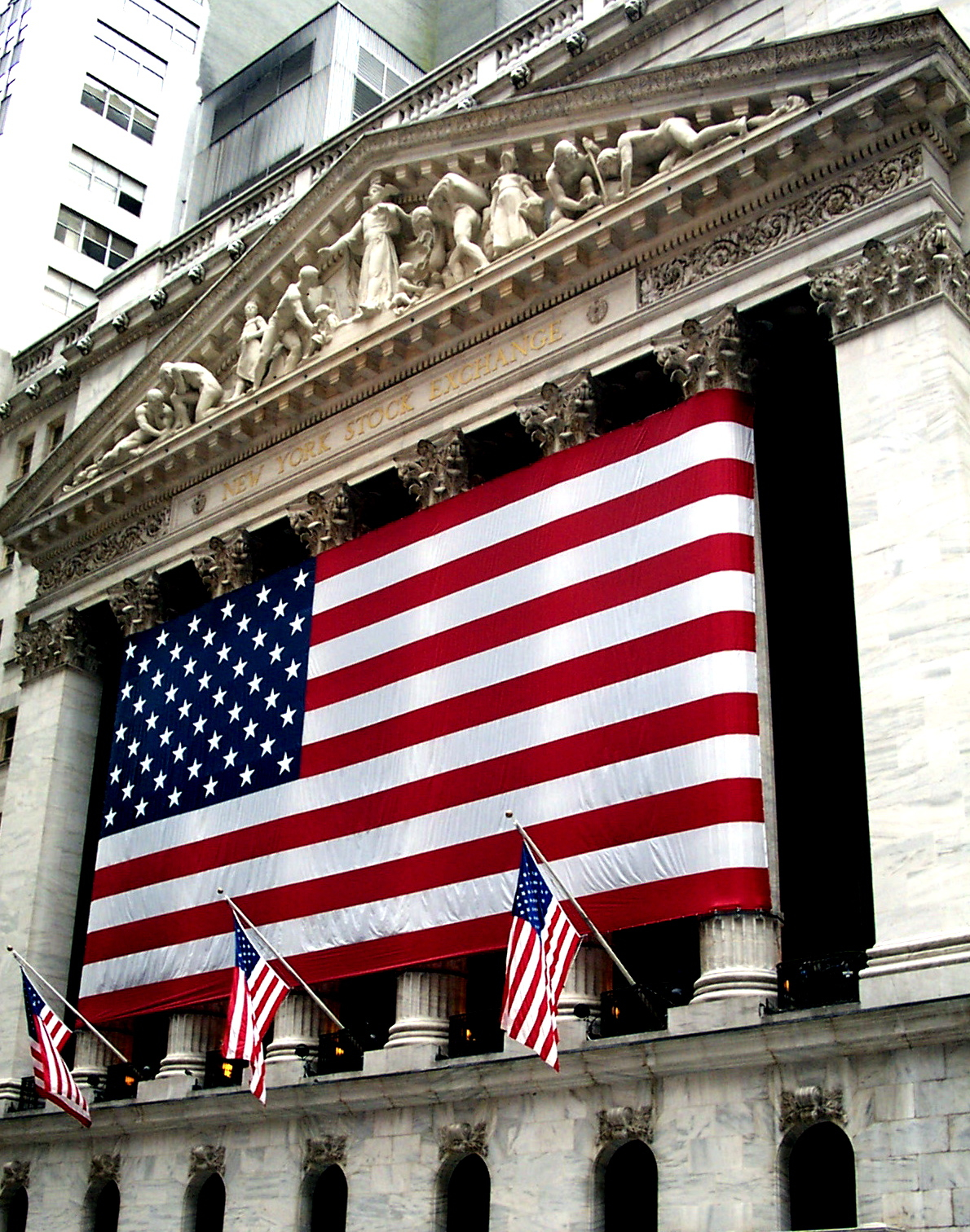
The New York Stock Exchange on Broad Street. Photograph by CGP Grey, via Wikimedia Commons. CC BY 2.0.
The New York Stock Exchange has traded on the same Broad Street block since 1865, and in its current building at 18 Broad Street, at the corner of Wall Street, since 1903. The Landmarks Preservation Commission calls the building the home of the nation's principal securities market and says its temple front was meant to project austerity, massiveness and security. This article covers the Exchange's path from a 1792 agreement under a tree to George B. Post's marble building, using the LPC's designation report, the NYSE's own history page and the National Park Service's landmark file.
Did the stock exchange really start under a tree?
By tradition, yes. The LPC report says that in 1792 stock dealers and auctioneers were meeting each weekday noon at 22 Wall Street, and that at about the same time brokers began meeting under an old buttonwood tree at 68 Wall Street. The NYSE's history page dates the Buttonwood Agreement to May 17, 1792: 24 stockbrokers set rules for how stocks could be traded and fixed commissions, in response to the young nation's first financial panic. The LPC says that by the end of 1792 the brokers had signed what became known as the Buttonwood Tree Agreement, and that they made their first indoor headquarters at the new Tontine Coffee House at Wall and Water Streets in 1793.
In 1817 the brokers adopted a constitution and the name New York Stock & Exchange Board. The NYSE says the constitution of March 8, 1817 set detailed trading rules, and that the brokers rented a room at 40 Wall Street where the president called out each security in turn from a podium while brokers shouted bids from assigned chairs: the origin of the membership term "seat." The LPC tracks the later moves: the Merchants' Exchange Building from 1827 until the fire of 1835 destroyed it, the Second Merchants' Exchange from 1842 to 1854, then two more stops before the present site.
How did the Exchange end up on Broad Street?
The LPC report says the Board adopted its present name, the New York Stock Exchange, in January 1863, bought land for a new building that October, and moved into the completed building on Broad Street in December 1865. The NYSE's history calls it the Exchange's first permanent home, on a portion of the present Broad Street site.
Technology reshaped trading in the decades after. The NYSE lists the electric stock ticker in 1867 and telephones in 1878, and says that on December 15, 1886, volume topped one million shares for the first time. The familiar bell began in the 1870s with the arrival of continuous trading, when brokers left their seats to roam the floor between trading posts; the original signal was a Chinese gong.
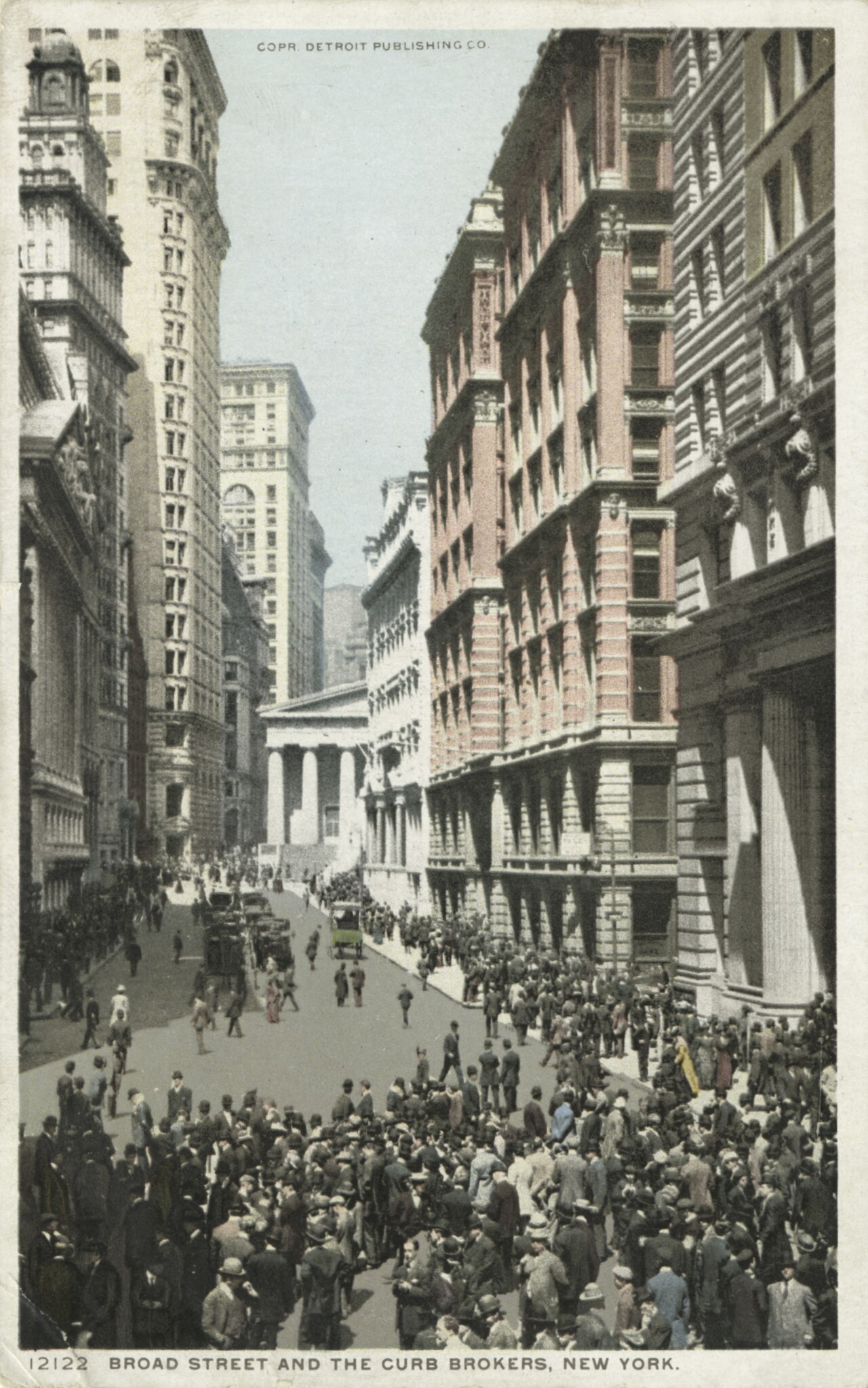
Broad Street and the curb brokers around 1900. Photograph by the Detroit Publishing Company, via Wikimedia Commons. Public domain.
Who designed the 1903 building?
By the turn of the century the 1865 building was inadequate. The LPC says several of the city's best-known architects were asked to join a competition whose program was prepared with Columbia professor William Ware and Charles W. Clinton, and George B. Post was selected. Post was one of the country's most prominent nineteenth-century architects, a veteran of the Equitable, Western Union and Produce Exchange buildings, and he had already designed the New York Cotton Exchange and the Montreal Stock Exchange.
Demolition of the old building began in May 1901, the cornerstone was laid on September 9, 1901, and the new building was occupied on April 22, 1903, according to the LPC. Post's design wraps the trading floor in a temple front: on Broad Street, six fluted Corinthian columns 52-and-a-half feet high stand before a glass curtain wall 96 feet wide and 50 feet tall, put there to light the floor inside. Critic Montgomery Schuyler, quoted in the LPC report, praised the boldness of using "colossal Corinthian columns as the mullions of an opening embracing the whole elevation."
The pediment holds the figural group "Integrity Protecting the Works of Man," designed by sculptor John Quincy Adams Ward and executed by Paul Wayland Bartlett. The LPC says Ward designed the composition in 1903 as the building neared completion, but the marble figures were carved only in 1908-09; weathering of that marble led to replacement by lead-coated copper sheet figures in 1936. The NYSE adds an engineering first: engineer Alfred Wolff's three ammonia-absorption machines, each equal to 150 tons of ice, made the Exchange the first air-conditioned building in North America. When the building opened in 1903, the gong was replaced by a brass bell, electrically operated; today each of the four trading areas has its own bell, rung in sync from one panel.
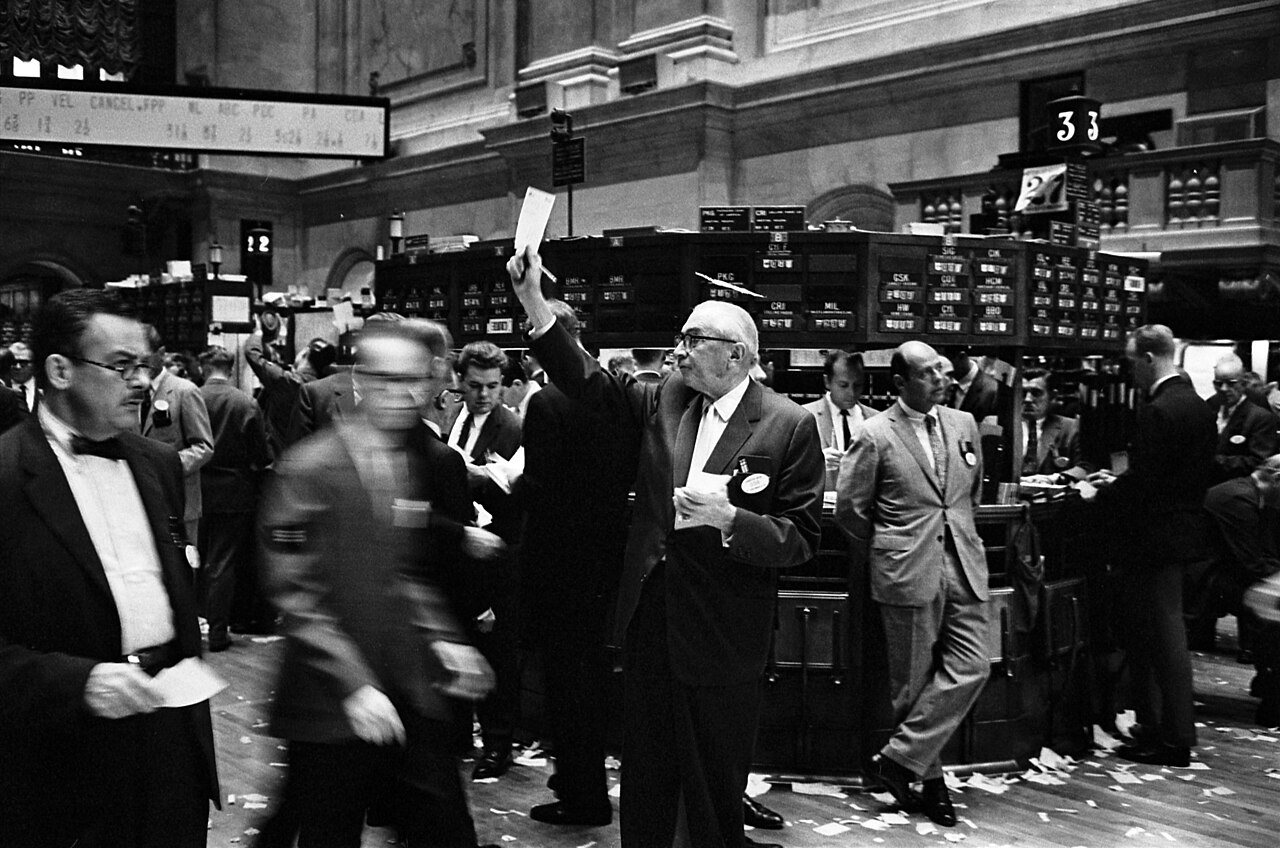
The trading floor in the early twentieth century. Photograph by the Bain News Service, via Wikimedia Commons. Public domain.
How did the building and the market grow?
The LPC notes that the Exchange kept expanding: the 23-story annex at 11 Wall Street, designed by Trowbridge & Livingston, went up in 1922, and the Exchange later moved into 20 Broad Street, built in 1954; neither is part of the LPC's 1985 designation. The NYSE's own timeline adds the first Wall Street Christmas tree lighting in 1923, the crash of October 29, 1929, when more than 16 million shares changed hands, and the creation of the Securities and Exchange Commission in 1934. It records the first permanent female member, Muriel Siebert, in 1967, and the first Black member, Joseph L. Searles III, in 1970; Black Monday, October 19, 1987, when the Dow fell 508 points, a record 22 percent; the 2006 merger that formed the publicly traded NYSE Group and ended membership ownership; and the 2008 acquisition of the American Stock Exchange. In 2018 Stacey Cunningham became the first woman to lead the NYSE as its 67th president. On March 23, 2020, the Exchange operated for the first time without its trading floor, shifting fully to electronic trading during the pandemic before a partial reopening on May 26, 2020.
Is the building a landmark?
Twice over. The National Park Service's file lists the New York Stock Exchange, including the 18 Broad Street and 11 Wall Street buildings, as a National Historic Landmark, nominated in 1977 and designated in 1978. New York City's Landmarks Preservation Commission designated the 1903 building's exterior a city landmark on July 9, 1985; the New York Times covered it as one of six buildings gaining landmark status that week. The LPC designation covers only Post's building at 8-18 Broad Street, not the annex.
Can you visit the NYSE?
Not the way tourists once did. CNBC reported in 2011 that the visitors' gallery, where tourists once watched the opening and closing bells, is closed to the general public, with only specially arranged guided tours getting inside; the Wall Street Journal reported in 2016 that the Exchange had no plan to reopen to the public. The gallery closure followed the September 11, 2001 attacks. The NYSE's timeline treats the markets' reopening on September 17, 2001, as a symbol of resilience, and CNBC describes firefighters and police officers ringing that day's opening bell before a floor crowded with officials. The NYSE calls its building one of the most exclusive and sought-after event spaces in New York City.
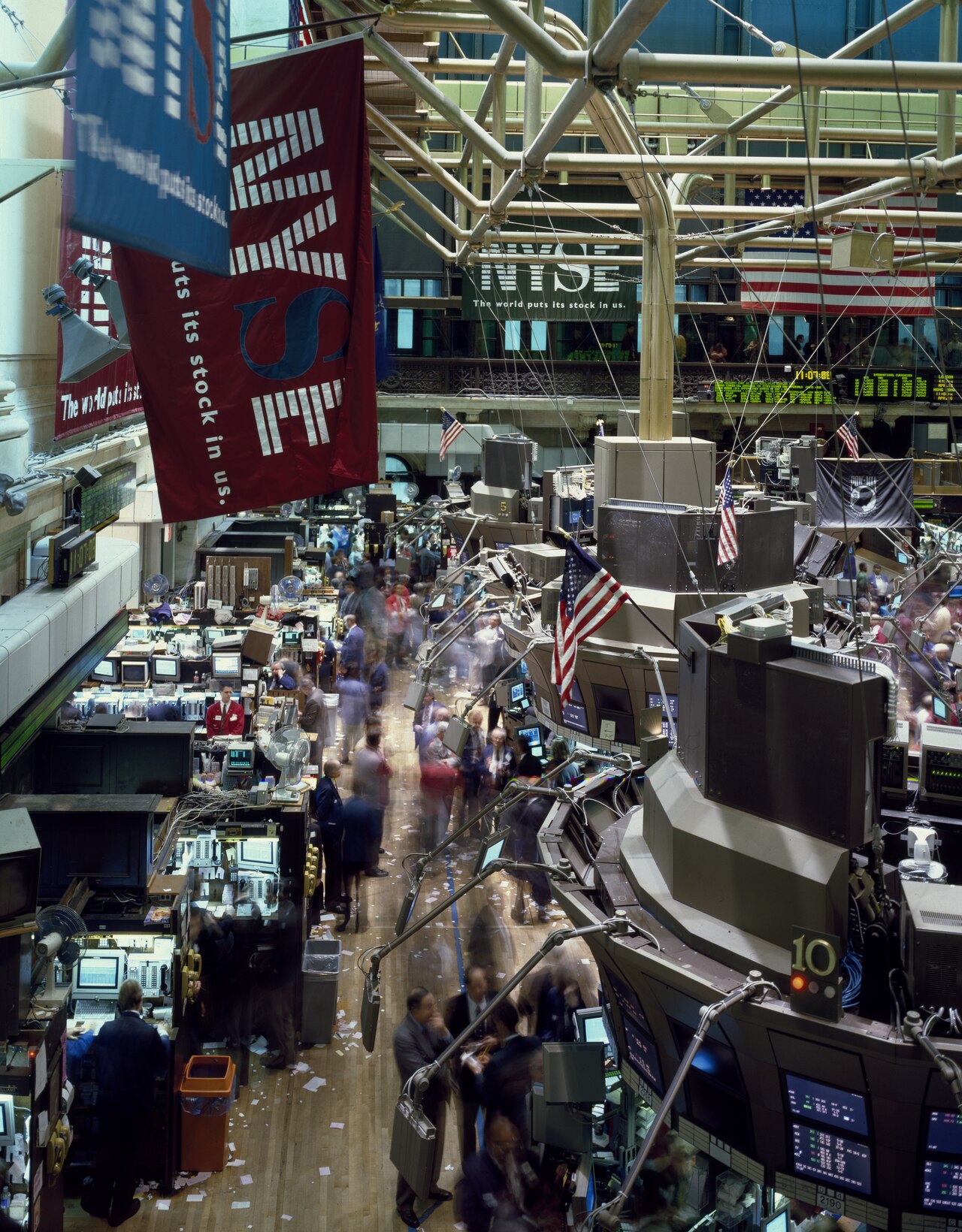
The modern trading floor. Photograph by Carol M. Highsmith, via Wikimedia Commons. Public domain.
Who owns the New York Stock Exchange?
The Exchange and its building are part of Intercontinental Exchange. The NYSE's history page says ICE listed on the NYSE on November 16, 2005, and that by 2013 ICE had acquired the NYSE; it remains the Exchange's parent organization today.
Where can you eat or drink at the New York Stock Exchange?
Nowhere, for the public: the building is not open for casual visits, so there is no public dining inside. CNBC's 2011 report does name the floor traders' own spot: on Thursday afternoons, it said, traders gather across the street at the bar inside Bobby Van's restaurant. The surrounding Financial District has plenty of ordinary restaurants, but the Exchange itself feeds only its own events.
Sources
- NYC Landmarks Preservation Commission, New York Stock Exchange Building designation report, July 9, 1985
- NYSE, The History of NYSE
- National Park Service, New York Stock Exchange National Historic Landmark nomination
- The New York Times, New York Stock Exchange among 6 buildings gaining landmark status, July 11, 1985
- CNBC, The Demise of the Trading Floor, September 2, 2011
- The Wall Street Journal, Once-Popular NYSE Has No Plan to Reopen to the Public, 2016
Visiting the New York Stock Exchange
- Address: 18 Broad Street, at Wall Street, New York, NY 10005.
- Public access: None for casual visitors. The visitors' gallery closed to the general public after September 11, 2001, and the Wall Street Journal reported in 2016 that the Exchange had no plan to reopen public tours. The facade and the Wall Street streetscape are viewable any time from the sidewalk.
- Landmark status: New York City landmark since July 9, 1985, and a National Historic Landmark since 1978.
Access details come from the sources above; the NYSE lists no public tour program on its site. The exterior is the attraction.