The New York Botanical Garden: A Kew-Inspired Dream Built on a Tobacco Mill's Land
The New York Botanical Garden began with a visit to London. In 1888 the Columbia botanist Nathaniel Lord Britton saw the Royal Botanic Gardens at Kew and came home determined that New York deserved the same thing: a great scientific garden with a great glasshouse. Three years later the state created the institution, and within a decade it had 250 acres of the Bronx, a master plan by the co-designer of Central Park, and a Victorian conservatory that rivaled Kew's own. The land remembers older uses, too, from an old-growth forest and the Bronx River's gorge to the stone snuff mill of a tobacco family that gave the Lorillard name to the neighborhood's history.
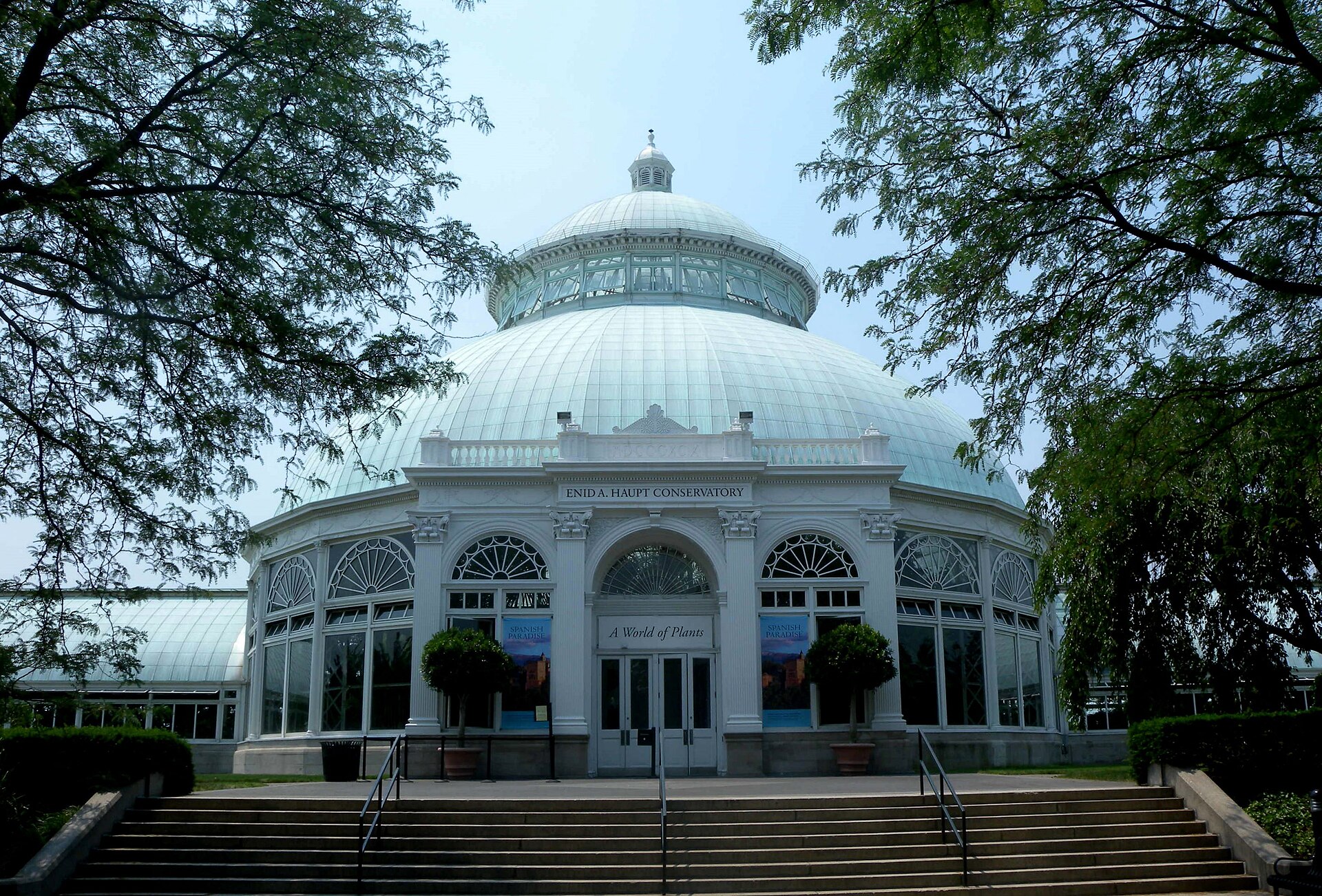
The Enid A. Haupt Conservatory, completed in 1902. Photograph by Jim Henderson, via Wikimedia Commons. CC0.
How did a visit to Kew start a garden in the Bronx?
The Landmarks Preservation Commission's conservatory report tells the founding story: after visiting the Royal Botanic Gardens at Kew in 1888, Dr. Nathaniel Lord Britton, one of the most eminent botanists of his day, was inspired to establish a similar institution in New York. Britton and his wife, the botanist Elizabeth Gertrude Britton, reported on the Kew trip to the Torrey Botanical Club that October, and the club's members became the campaign's core. On April 28, 1891, the governor approved the New York Botanical Garden's Act of Incorporation.
A site committee, led by members of the Torrey Botanical Club and Columbia University, settled in 1895 on 250 acres of undeveloped parkland in the northern section of Bronx Park. The choice rested on scenery that was already famous: an 1887 account, quoted in the Garden's own backgrounder, praised the tract's "gigantic trees, centuries old" and moss- and ivy-covered rocks, and the bedrock itself, dark gray Fordham gneiss, shapes outcrops and slopes ranging from 20 to 180 feet above sea level. Part of the acreage had been the Lorillard estate. In the late 1700s the brothers Pierre and George Lorillard had bought 50 acres along the Bronx River for manufacturing tobacco, erecting a dam, a grist mill and a 45-room mansion; the ground was too rocky and marshy to farm, which is exactly why the mature forest west of the river survived virtually intact. The Garden describes that surviving stand, now the Thain Family Forest, and the river gorge it wraps around as the heart of its National Historic Landmark site.
Who planned the grounds?
The Garden's first landscape architect was Calvert Vaux, best known as Frederick Law Olmsted's partner in Central Park. Between 1891 and 1895 Vaux positioned the Garden's roads and entrances and laid out the sites of its main buildings, a framework the Garden's backgrounder says still organizes the grounds; it was perhaps his final professional project. From 1896 the Garden followed a General Plan by the civil and landscape engineer John R. Brinley, under which its first living collection, the Pinetum, was planted and its two main buildings rose: the Conservatory and the Beaux-Arts Museum, now the Library building, completed in 1901 and approached through a double row of tulip trees planted that year. In 1923 the Olmsted Brothers firm, led by Frederick Law Olmsted Jr., was commissioned to consult on the landscape, adapting the Vaux plan for maintenance and automobile traffic.
The Museum building, today the LuEsther T. Mertz Library, anchored that early plan. When it was finished in 1901, the Garden dressed its classical facade with a formal approach of 26 tulip trees in two double rows. That Tulip Tree Allée, now more than a century old, is one of the Garden's signature plantings, framing the library and the Lillian Goldman Fountain of Life at its front entry. The combination of a research museum, a glass conservatory and a native forest on one 250-acre campus is what separated the Bronx institution from a pleasure garden: from the beginning it was chartered as an educational and scientific institution, not a park with flowerbeds.
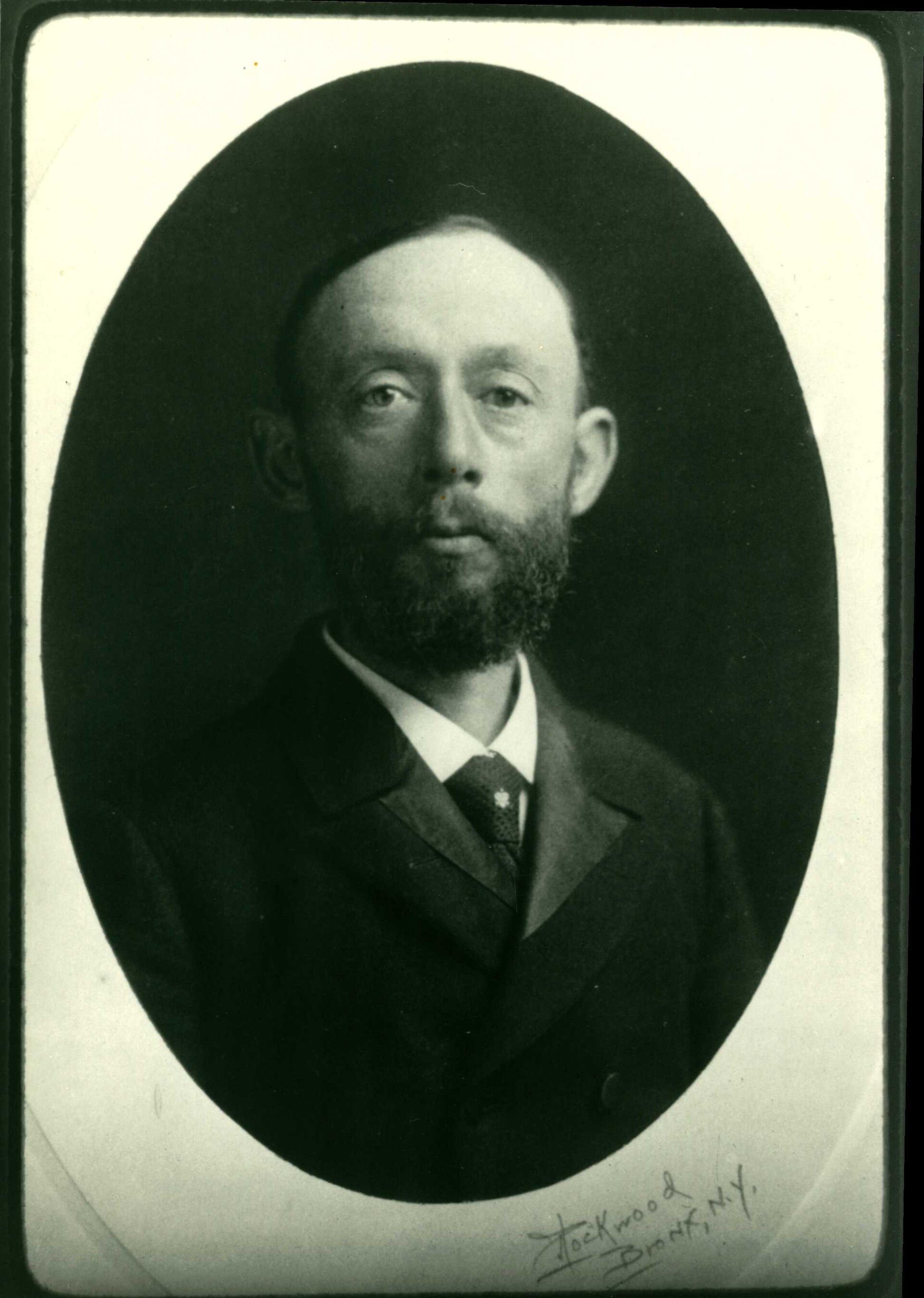
Nathaniel Lord Britton, the Garden's founding director. Photographer unknown, via Wikimedia Commons. CC BY-SA 4.0.
What makes the Conservatory special?
It was built to stand beside Kew's. Britton had been influenced not only by Kew's conception but by its famous horticultural house of 1845 to 1847, and the landmarks report quotes the New York Journal of June 16, 1901, boasting that New York would have "the largest [greenhouse] equipment of the kind in the world, with the exception of the famous Kew Gardens." The design is believed to be the work of William R. Cobb, designer and architect for Lord and Burnham, the era's most noted greenhouse firm, founded in 1856 by Frederick A. Lord and joined in 1872 by William Addison Burnham. Where British houses of the mid-nineteenth century were restricted to iron and wood, the New York house could use steel framing half a century later.
Construction began in 1899 and finished in 1902. The Conservatory is a C-shaped composition of a central rotunda, the Palm House, about 100 feet in diameter, with ten connecting greenhouses: two lateral wings about 116 feet long, cruciform corner houses, 75-foot side wings, square end pavilions and two more 103-foot wings. The Landmarks Preservation Commission designated it a New York City landmark on October 16, 1973. The Garden's library research guides document a 1978 renovation and a 1980 New York Landmarks Conservancy chairman's award under the name it carries today, the Enid A. Haupt Conservatory, honoring the philanthropist whose giving rescued the aging glasshouse.
What else grew on the site?
A century of gardens by marquee designers. In 1915 Beatrix Jones Farrand, the only woman among the founders of the American Society of Landscape Architects, designed a large triangular rose garden in a valley east of the Conservatory; work began in 1918, but her full design was realized only in 1988. In 1932 the horticulturist T. H. Everett, trained at Kew, spearheaded a new Rock Garden of waterfalls, pools, boulders and woodland glades that quickly became one of the Garden's most popular attractions. In the early 1930s Ellen Biddle Shipman designed the long perennial border along the Conservatory's southeast side, sponsored by the Women's Auxiliary and known as the Ladies' Border, refreshed in 2000 by Lynden B. Miller.
The backgrounder's list continues into the modern era. The Montgomery Conifer Collection, 200 specimens of rare ornamental conifers, was planted in 1946 and 1947 near the Rose Garden and later joined a planting by Marian Cruger Coffin that reopened in 2004 as the Benenson Ornamental Conifers. In 1974 the modernist Daniel Urban Kiley laid out a geometric perennial garden outside the Conservatory, refined by Lynden B. Miller in 2004; Miller had earlier redesigned what is now the Jane Watson Irwin Perennial Garden in 1987. The Everett Children's Adventure Garden, a 12-acre indoor-outdoor science-learning landscape, opened to the public on May 1, 1998.
The natural features outrank even these: the Bronx River enters a narrow gorge inside the Garden and pours over a waterfall beside the Lorillards' old mill works, on what the Garden calls New York City's only freshwater river.
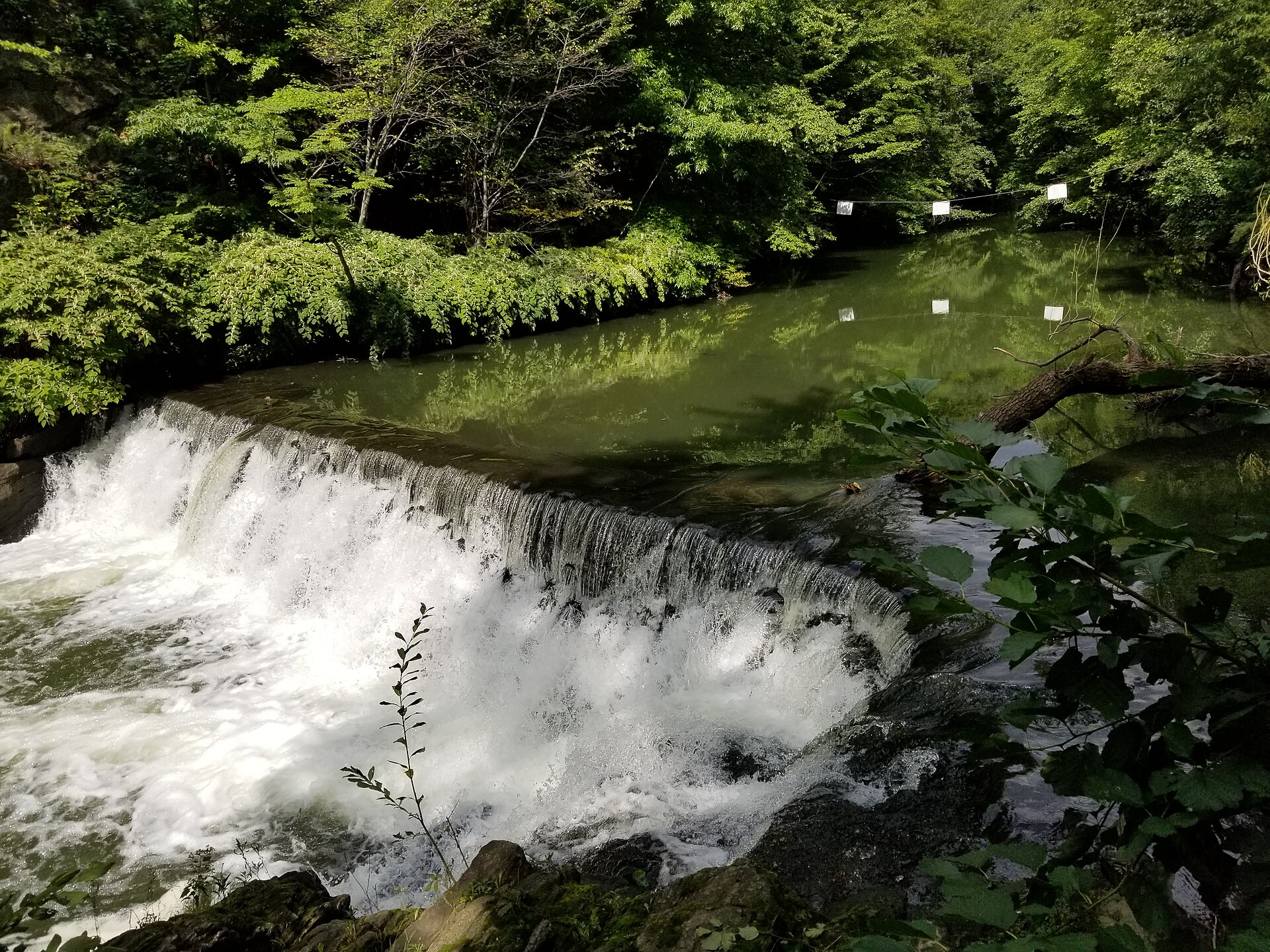
The Bronx River waterfall in the Garden's forest gorge. Photograph by Antigng, via Wikimedia Commons. CC BY-SA 4.0.
The surviving piece of the estate era is the Lorillard Snuff Mill, a fieldstone building by the river that is among the oldest industrial structures in the Bronx. The snuff mill, the stone lion of the old gatehouse and the gorge together explain why the whole 250-acre site, not just a building, carries the National Historic Landmark designation that the Garden cites in its own materials.
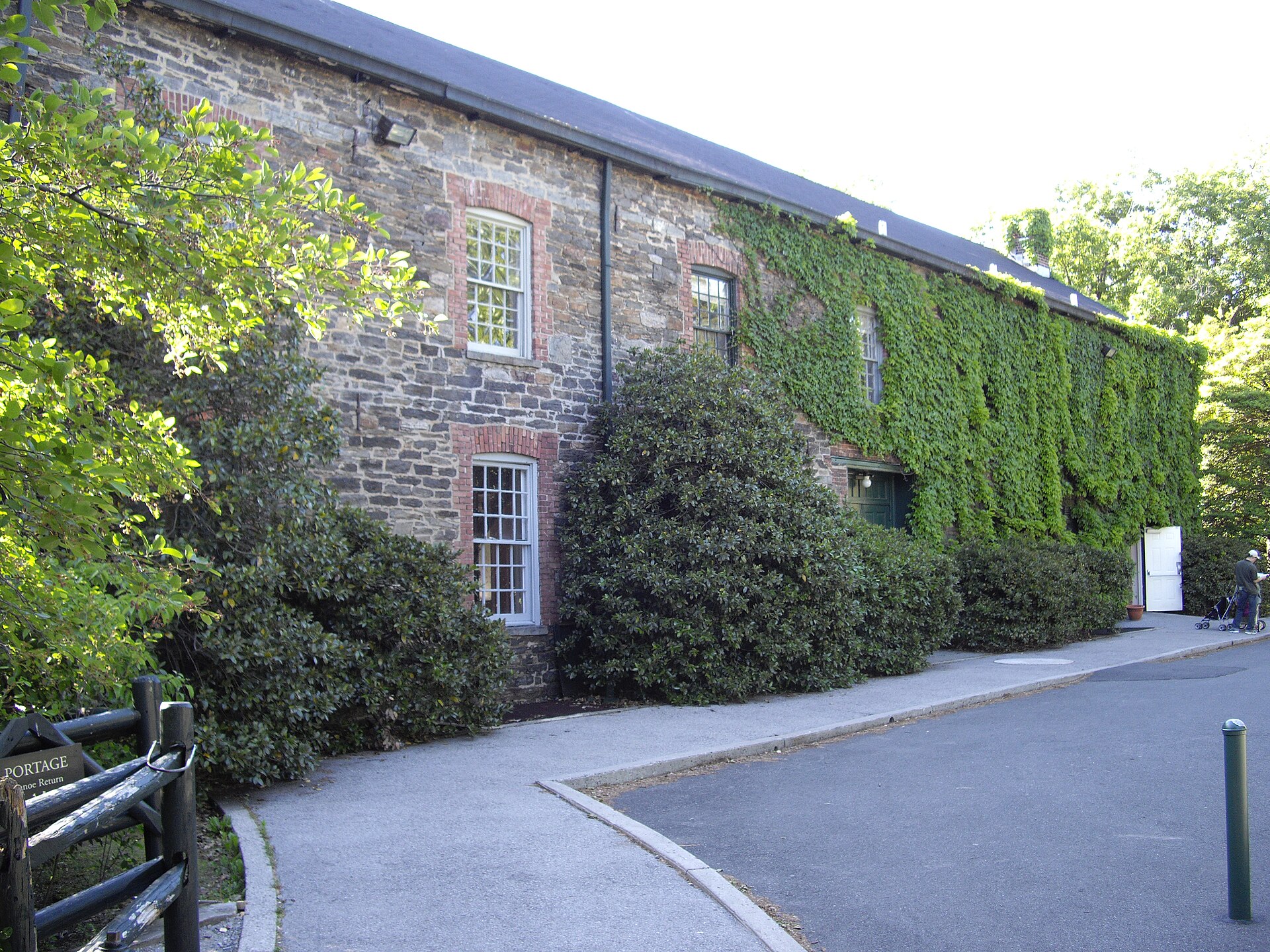
The Lorillard Snuff Mill, a remnant of the estate era. Photograph by Dmadeo, via Wikimedia Commons. CC BY-SA 3.0.
Who owns the New York Botanical Garden today?
The City of New York owns the ground outright. The Garden's own published backgrounder states that the institution "is located on property owned in full by the City of New York," with its operation made possible in part by public funds through the city's Department of Cultural Affairs. NYBG itself is a private nonprofit that runs the garden, its science programs and its collections under that public-private arrangement; the Cultural Affairs department describes its Cultural Institutions Group as 39 organizations on city-owned property that receive capital and operating support in return for operating as publicly accessible facilities, a group that includes the city's botanical gardens. So the flowers belong to a nonprofit's science, but the land belongs to the public.
Where can you eat or drink at the New York Botanical Garden?
The Garden's visit page names two options run with Levy Restaurants: the Pine Tree Café for grab-and-go meals, and the Hudson Garden Grill for a seated, full-service meal. Seasonal food and drink stalls appear around big exhibitions and events. Hours and menus change with the season and the exhibition calendar; the dining descriptions here were read on the Garden's official pages on October 27, 2026, so confirm before you plan a meal around a visit.
Sources
- NYC Landmarks Preservation Commission, The Conservatory, New York Botanical Garden designation report, LP-0481, October 16, 1973
- The New York Botanical Garden, Backgrounder: NYBG's Legacy of Natural and Designed Landscapes
- NYBG Mertz Library research guides, Conservatory vertical files
- NYBG Mertz Library, The New York Botanical Garden 1888-1982: A Chronology of Major Events
- NYC Department of Cultural Affairs, Cultural Institutions Group
- The New York Botanical Garden, Visit
Visiting the New York Botanical Garden
- Address: The Garden lists its main entrance at 2900 Southern Boulevard, Bronx, NY 10458, with the Mosholu Gate on Southern Boulevard and a Metro-North stop at its own station.
- Hours: The Garden lists opening hours of 10 a.m. to 6 p.m., Tuesday through Sunday, plus Monday federal holidays.
- Admission: Tickets are required and can be bought online or at ticketing windows; members reserve free entry.
- Size: 250 acres in Bronx Park, including the 50-acre Thain Family Forest and the Enid A. Haupt Conservatory.
Facts above come from the Garden's pages listed in Sources. Hours, ticketing and dining change with seasons and exhibitions, so confirm on nybg.org before you go.