Who Designed Central Park? How Olmsted and Vaux Won a Competition for 843 Acres
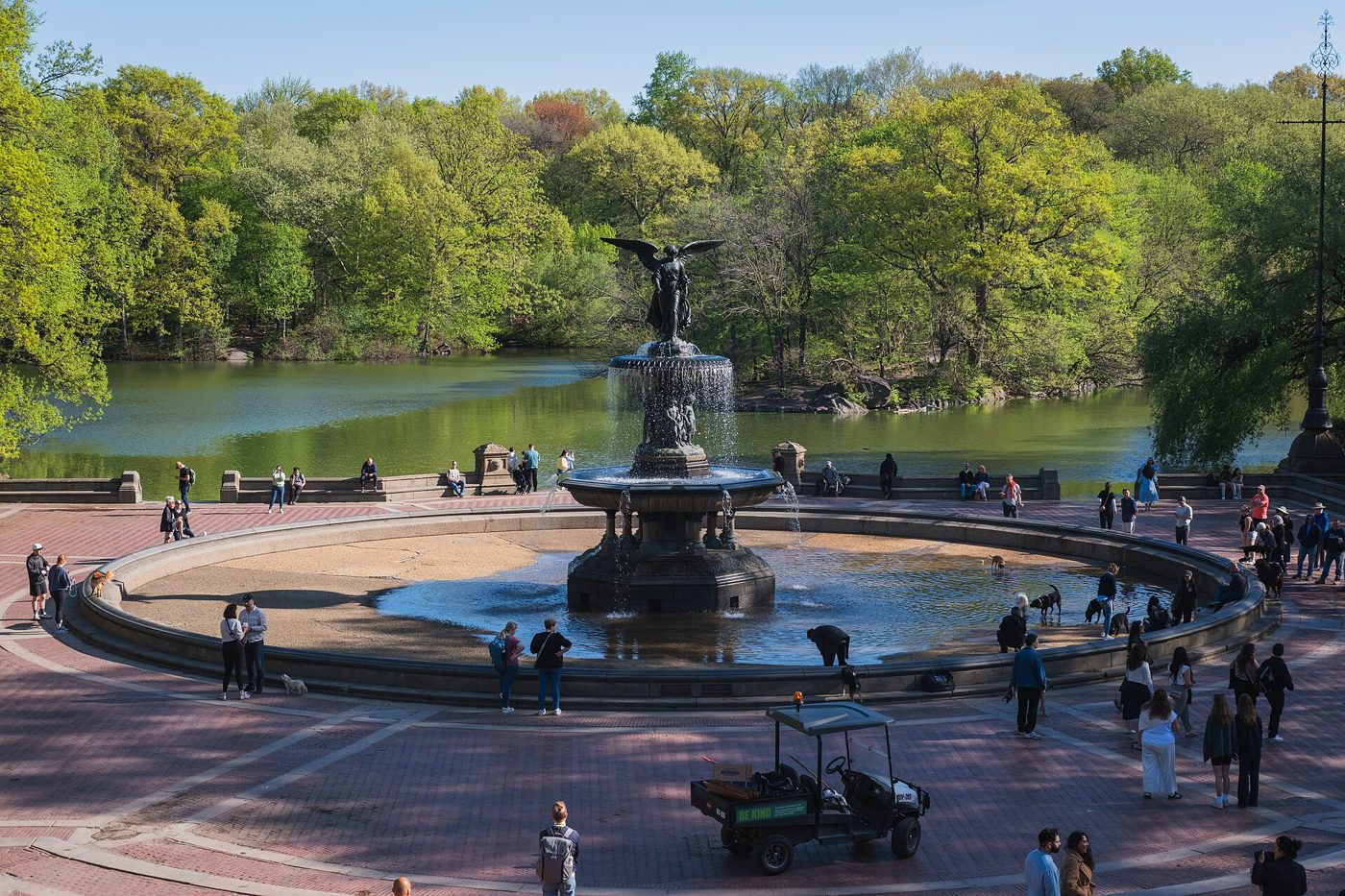
Bethesda Fountain and the Lake in Central Park. Photograph by Christian David, via Wikimedia Commons. CC BY-SA 4.0.
Central Park was designed on paper before it was built on the ground. The Landmarks Preservation Commission calls it the first large-scale public park in the nation that was designed and constructed according to a plan. The plan was called Greensward, and it came from two men who entered a design competition in 1858: Frederick Law Olmsted and Calvert Vaux. Today the Central Park Conservancy says it covers 843 acres, welcomes more than 42 million visits a year, and was designed so that people of every background could share it. This article follows the park from the street grid that left no room for it to the lawns, the Mall and the rowboats that visitors look for now.
Why did New York need a park?
The Commissioners' Plan of 1811 laid out Manhattan's street grid with little provision for squares, promenades or parks, according to the Landmarks Preservation Commission. The green spaces that did exist were either private, like Gramercy Park, or converted graveyards like Washington Square. The city was growing fast. The commission says the population rose by an average of 15,000 people a year between 1830 and 1850, and that in the summer of 1832 more than 100,000 New Yorkers fled a cholera epidemic. The Croton Water Works, built to bring fresh water into the city, had an uptown reservoir that influenced where the park would go.
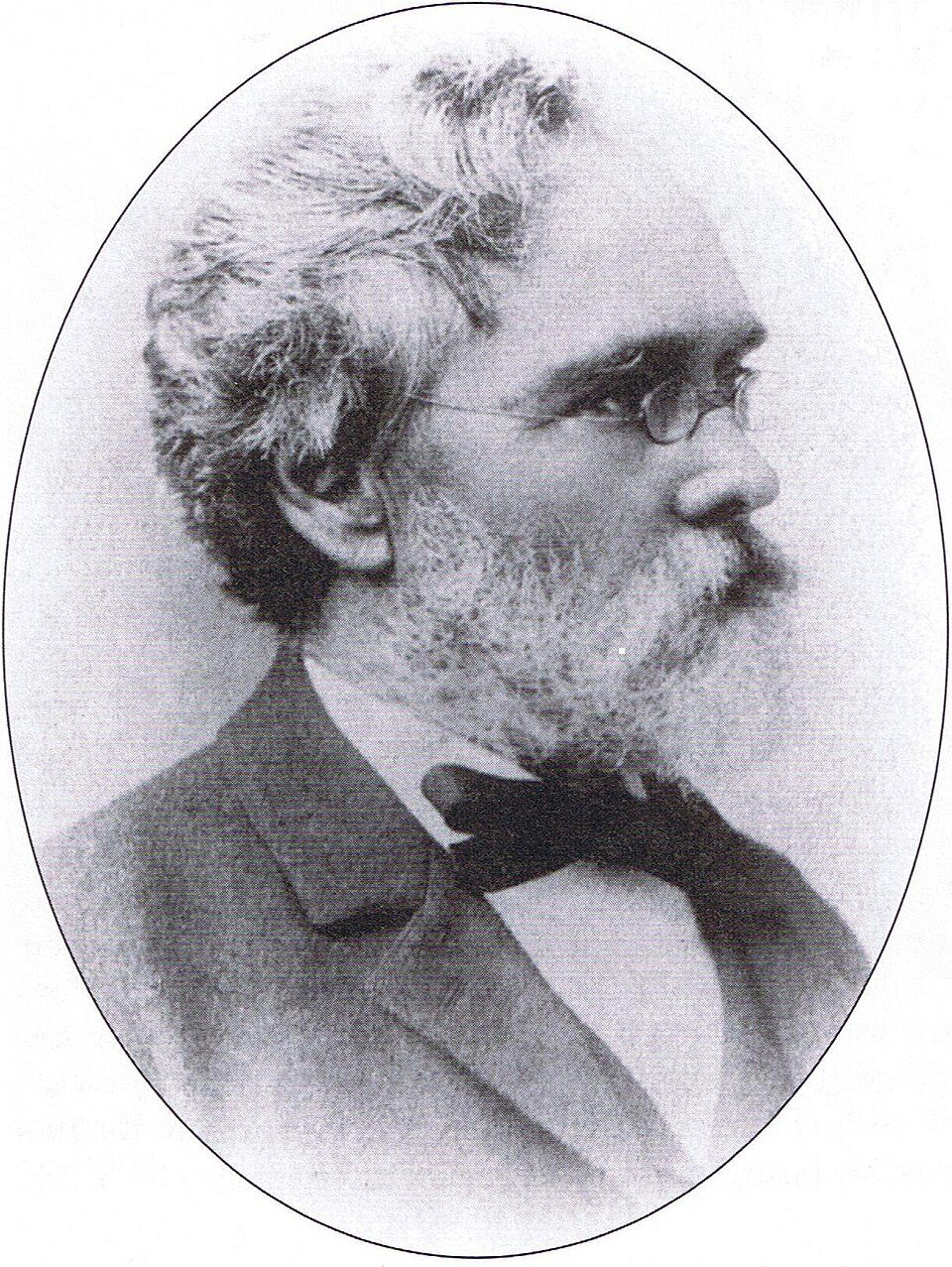
The campaign had two early voices. The journalist William Cullen Bryant began writing editorials for a park in the New York Evening Post on July 3, 1844, and he favored Jones' Wood on the East River. The landscape architect Andrew Jackson Downing called in 1851 for a "central" park of at least 500 acres around the receiving reservoir near 80th Street. State legislation named Jones' Wood as the site, but opposition rose and the Board of Aldermen chose a more central tract instead. The Conservancy says state officials approved funds in 1853 to buy the land from 59th to 106th Streets between Fifth and Eighth Avenues. The commission says the park was extended north to 110th Street in 1859, after the rocky ground proved too rough to develop profitably under the street grid.
Who designed Central Park?
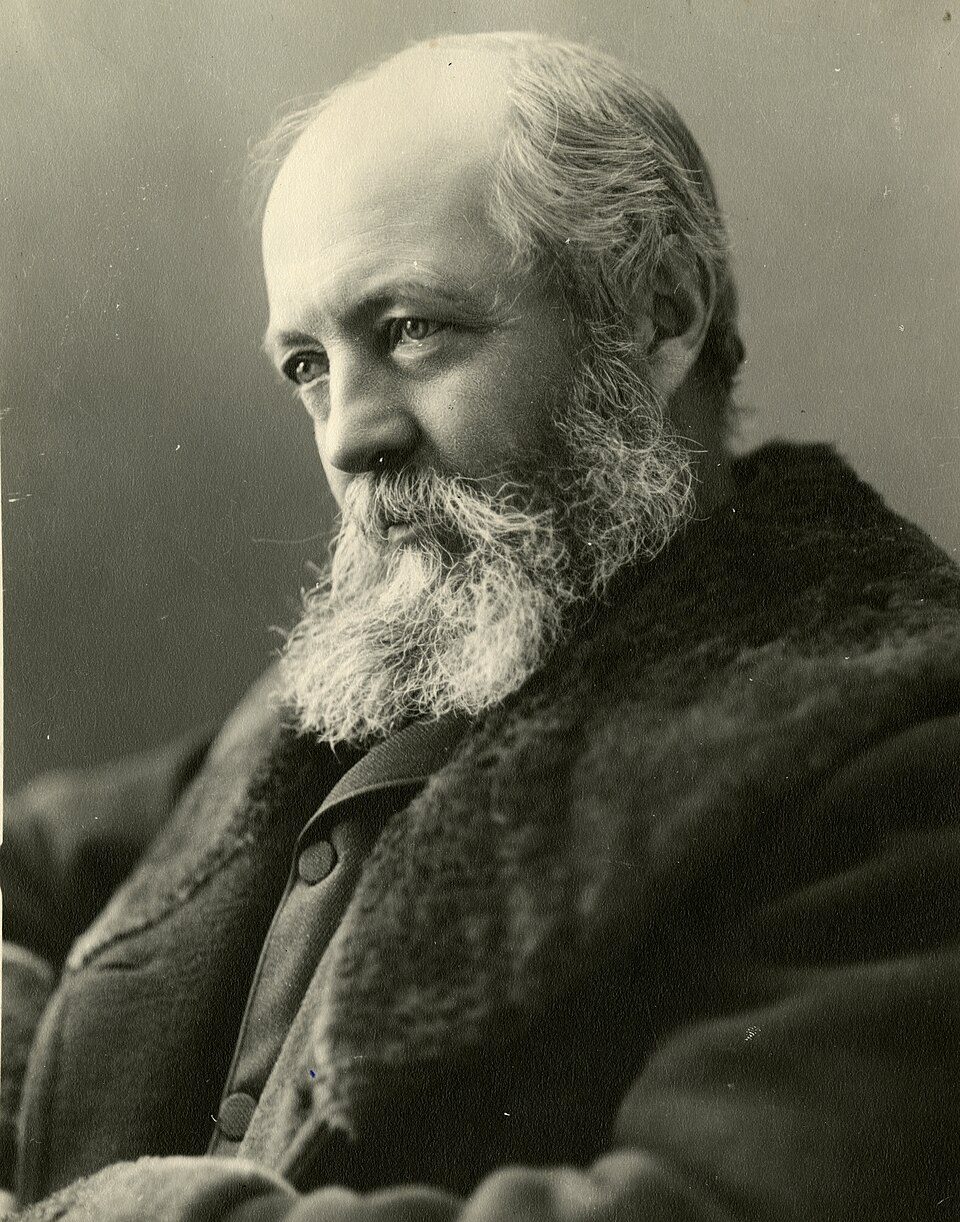
The answer is two people, and they met through a third. The commission says Egbert L. Viele was appointed chief engineer in 1857 and charged with laying out the park. Olmsted, a writer and farmer who had studied engineering, was elected superintendent of the park on September 11, 1857, and reported to Viele. When the Park Commission announced a public competition that October, the English-born architect Calvert Vaux, who had worked with Downing, approached Olmsted and suggested they enter together. The Conservancy says the commission chose their plan, Greensward, from 33 entries. The commission says they submitted it anonymously and won first prize in April 1858. Olmsted became Architect-in-Chief and Vaux his assistant.
The National Park Service says the most revolutionary part of the design was the sunken transverse roads. They let carriages and people cross the park without spoiling the experience of it. The Conservancy says Olmsted and Vaux hid the roads below the landscape, out of sight, and that the plan was naturalistic, with large pastoral landscapes and wooded areas meant to give New Yorkers a rural escape. The commission describes a deliberate contrast. The southern part of the park, with the Lake, the Pond, the Sheep Meadow and the Ramble, was meant to be varied and picturesque. The northern part was meant to feel like wilderness, with steep hills, rock outcroppings and thick woods.
How was it built?
Construction began in 1858. The Conservancy says workers moved nearly 5 million cubic yards of stone, earth and topsoil, built 36 bridges and arches and 11 overpasses over the transverse roads, and planted 500,000 trees, shrubs and vines. NYC Parks also counts 36 bridges and arches. The Conservancy's article on Vaux gives the number as 39, so the sources differ by a few. The Conservancy says the park took 15 years and cost $14 million against an original budget of $5 million. The commission gives a snapshot from earlier in the work: by January 1, 1866, the city had spent $9,750,000.
The commission also notes how closely the designers watched the work. During construction Olmsted and Vaux moved their families into a building at the northern end of the park, so they could change the design day by day as conditions on the site required. For the planting, Olmsted relied on the horticulturist Ignatz Pilat, who had settled in the United States in 1856.
The Park Service adds that the project was not smooth. It says Tammany Hall politicians wanted park jobs for their voters and friends, and that Olmsted clashed with the commission's leader, Andrew Green, over spending.
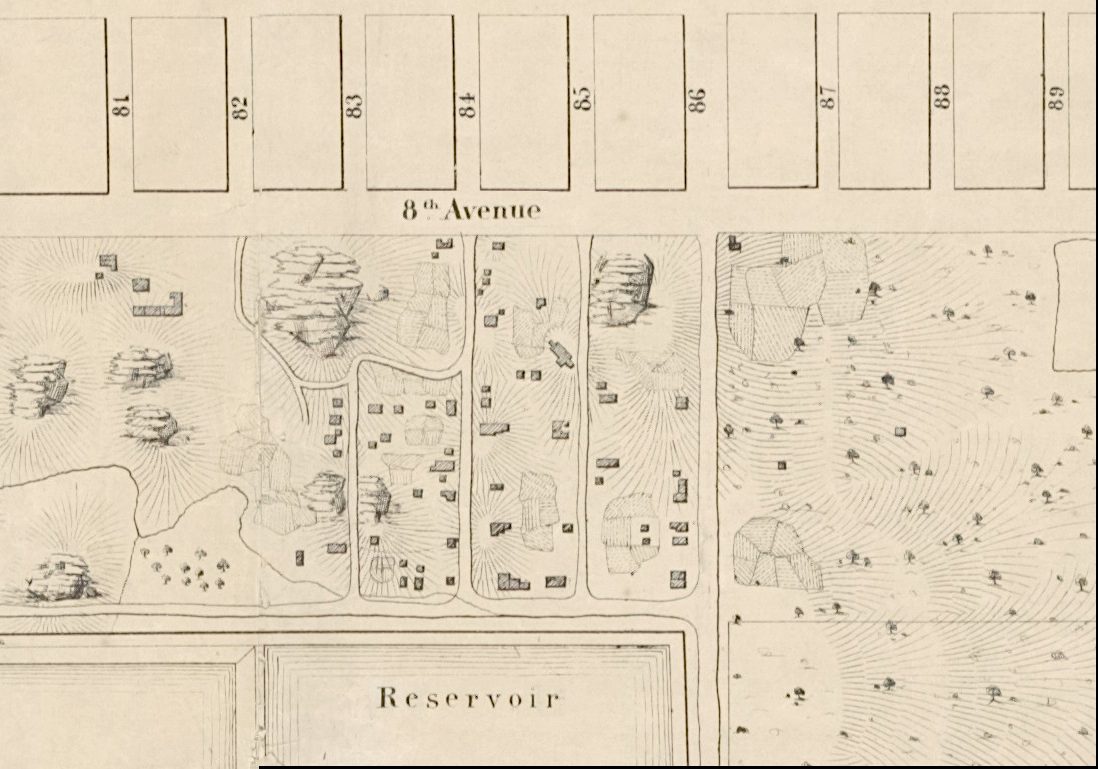
Seneca Village, from Egbert L. Viele's 1856 Map of the Lands Included in the Central Park. Via Wikimedia Commons. Public domain.
What was on the land before the park?
The site was not empty. The Conservancy says it held small farms, industrial uses and scattered dwellings between marshland and rocky hills, and Kingsbridge Road ran through it. NYC Parks and the Conservancy both describe a settlement called Seneca Village. The Conservancy says it began in 1825 when free Black residents from downtown started buying land between roughly 82nd and 89th Streets, and that by 1855 it had 225 residents, about two-thirds Black and one-third Irish, three churches, a school and high rates of property ownership. The City acquired the land for Central Park in 1857, and the residents were displaced. The Conservancy says historians rediscovered the village in the 1990s, and that it has installed signs in the park marking the sites of churches and homes.
NYC Parks says about 1,600 residents in all were displaced by eminent domain, with Seneca Village accounting for about 225 of them.
What is the Mall, and why is it formal?
Most of Central Park is curved and informal. The Mall is the exception. The Conservancy calls it the only straight line in the park's design. The commission says it was part of the original Greensward plan, stretches across the lower section of the park from 65th Street to 73rd Street, and was planted with four rows of elm trees. It was laid out so that a walker heading north would reach the Terrace and see the Belvedere beyond. Vaux wrote that nature should come first in the park: "Nature first, second, and third, architecture after a while," in the Conservancy's wording. The Mall prepared visitors for the one place where he made architecture the main event.
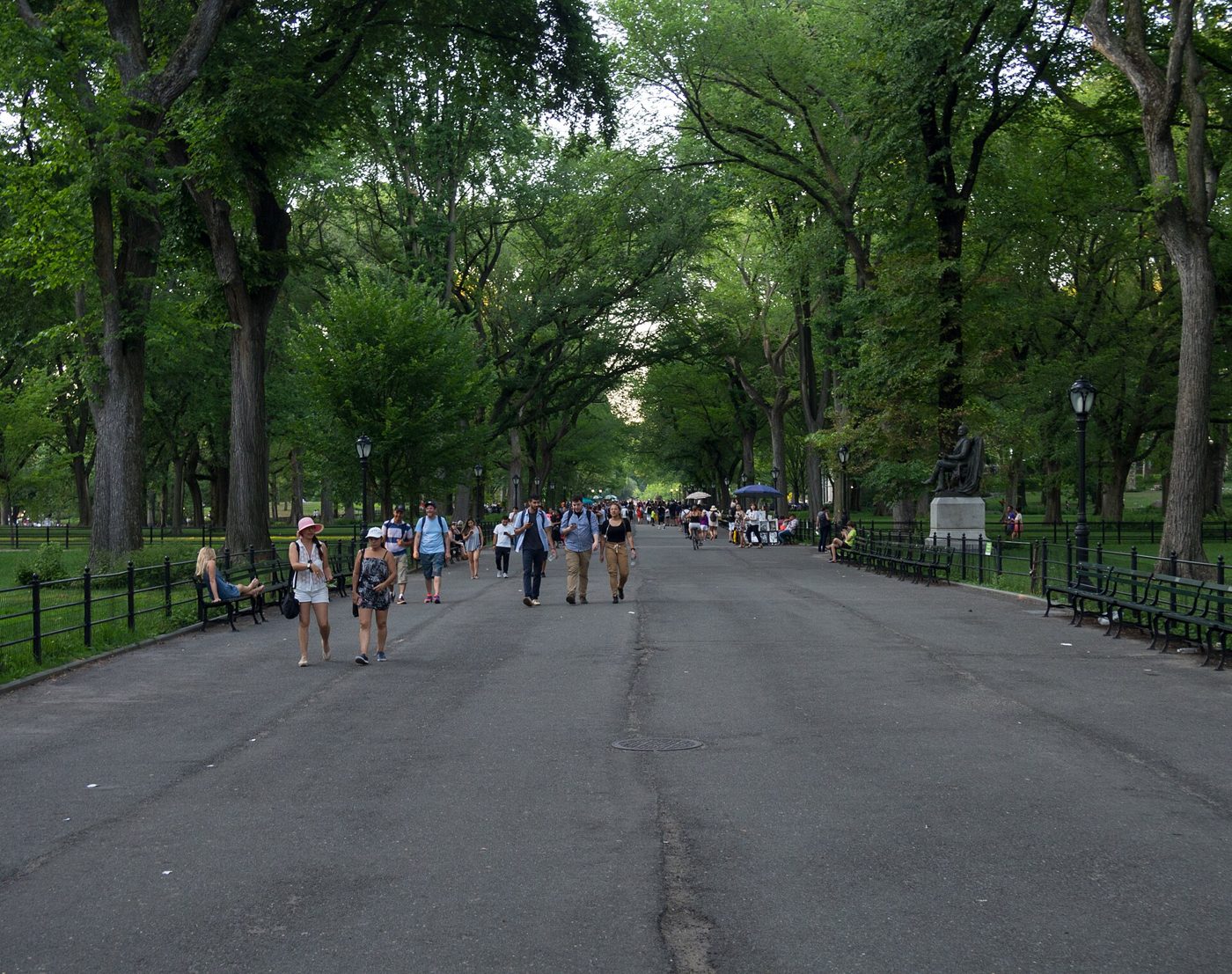
The Mall in Central Park. Photograph by Rhododendrites, via Wikimedia Commons. CC BY-SA 4.0.
What makes Bethesda Terrace special?
At the north end of the Mall is Bethesda Terrace. The Conservancy says Vaux considered it the most important architectural achievement of his career, and the commission says it has two levels, with a gallery and arcade under the roadway. The piers and balustrades are carved from Albert freestone, with stylized leaves and birds designed by Jacob Wrey Mould. The ceiling of the arcade is lined with colored Minton tiles. The Conservancy, which restored the ceiling in the 1980s, says that makes it the only Minton tile ceiling in the world, a claim this article credits to the Conservancy.
The centerpiece is the fountain. The commission says it was designed by Emma Stebbins: a bronze figure of the Angel of the Waters above a basin, on a pedestal carved with four figures that stand for Health, Purity, Temperance and Peace. The inspiration is the story in the fifth chapter of the Gospel of John. The Conservancy says the fountain also commemorates the project that brought clean water to New York City.
A note for visitors: the Conservancy's Bethesda Terrace page says the fountain was to be turned off in early August for roughly one year for a restoration, while the Terrace itself stays open to walk through. Check that page for the current status.
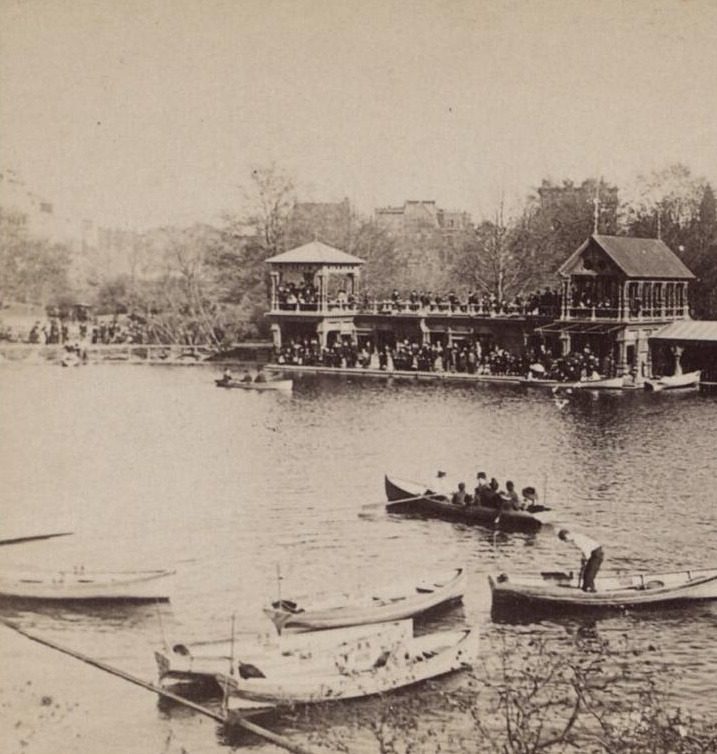
The boathouse on the Lake, Central Park. Stereoscopic view from the Robert N. Dennis collection, New York Public Library, via Wikimedia Commons. Public domain. Cropped to one half of the card.
When did rowboats arrive on the Lake?
Boating is one of the oldest things to do in the park. The Conservancy says that beginning in the 1860s visitors could ride a passage boat around the Lake, stopping at boat landings, or hire a gondola for a guided tour. The commission notes that the bridges over the Lake were built so a rowboat could pass under them. As boating grew, the park needed a place to keep the boats. The Conservancy says the first boathouse went up in the 1870s on the Lake's eastern shore, an ornate wooden building designed by Vaux. It had fallen into disrepair by the 1950s, and the current boathouse was designed as a more modern facility with restaurants and restrooms. The Conservancy says it is best known as the launch point for rowboats.
How did the park nearly fail?
Crowds came before the park was even finished. The commission quotes Harper's Magazine saying that by 1861 the most popular features were the Carriage Drive, the Bridle Road, the Ramble and the Lake, with hundreds of skaters on the Lake in winter, and that by 1866 an average of 20,000 people a day visited. The commission also reports that land values around the park rose by $34.6 million, to $61 million, by 1866.
The Conservancy tells the later story plainly. By the early 1900s, plantings were not replaced, soil eroded and paths and waterways clogged. Mayor Fiorello La Guardia appointed Robert Moses parks commissioner in 1934, and federal funding paid for citywide projects that included playgrounds. After Moses resigned in 1960 the park was left without a maintenance plan, and the meadows turned to dust and the infrastructure crumbled. In 1979 Elizabeth Barlow Rogers became the first Central Park Administrator, and in 1980 several advocacy groups joined with the City to form the Central Park Conservancy. The Conservancy says it has invested nearly $1 billion in restoring and maintaining the park.
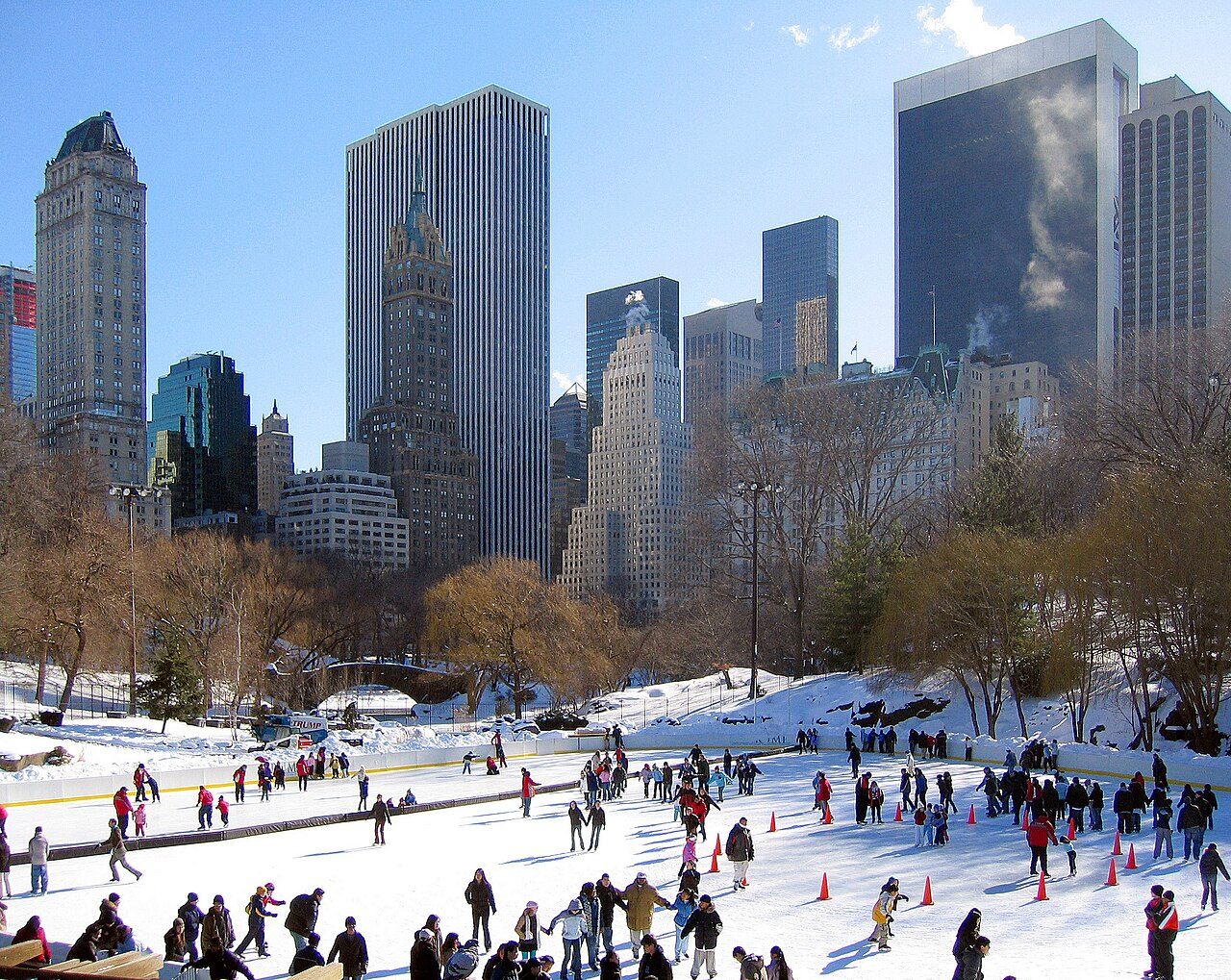
Skaters at Wollman Rink, Central Park, 2004. Photograph by Tomás Fano, via Wikimedia Commons. CC BY-SA 2.0.
What is Wollman Rink, and what did Donald Trump have to do with it?
Wollman Rink is the park's best-known ice rink. NYC Parks says philanthropist Kate Wollman gave $600,000 in 1949 toward an artificial rink as a memorial to her parents and four brothers. It opened in 1950, and NYC Parks says more than 300,000 skaters used it in its first year. The Conservancy says it was built over the northernmost section of the Pond. Skating itself is older. The Conservancy says the Lake welcomed skaters in the winter of 1858.
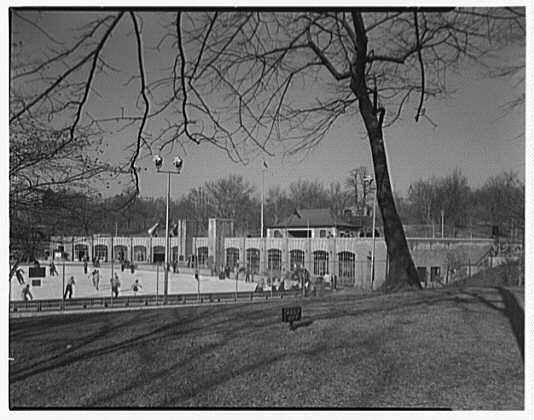
The Wollman Skating Rink, Central Park. Photograph from the Gottscho-Schleisner Collection, Library of Congress, via Wikimedia Commons. Public domain. The catalog record is undated.
The Trump link comes from the 1980s. The Washington Post says the city closed the rink in 1980 for what was to be a two-year, $4.9 million repair. It was still shut in 1986. On May 31, 1986, The New York Times reported that developer Donald J. Trump had offered to take over the reconstruction, finish it by that winter and run it at no profit to himself. On June 7, 1986, the Times reported an agreement announced by Mayor Edward Koch. Trump would rebuild the rink at the city's expense by December 15 and make no profit. The price was still being negotiated, and city officials estimated it at $2.5 million.
The rink reopened in November 1986. The sources give the finish differently. A Times column of November 15, 1986 said the job came in two and a half months ahead of Trump's own six-month schedule and $750,000 under his own projected $3 million budget, and said the city had spent six years and $12 million on earlier attempts. A Times editorial of November 13 said it opened three weeks ahead of schedule and $750,000 under projected cost. Both measure against Trump's own targets.
The Trump Organization later held the concession to run the rink. NBC New York reported in July 2021 that the city had ended its contracts with the company in January 2021, after the attack on the Capitol, and that a joint venture called Wollman Park Partners, including Harris Blitzer Sports and Entertainment, Related Companies, Equinox, Great Performances and Ice Hockey in Harlem, was expected to win a five-year contract. NYC Parks has since announced that it selected Wollman Park Partners II, a partnership of Related Companies and CityPickle, to operate and maintain the rink.
When is Wollman Rink open, and what does it cost to skate?
The operator, Wollman Rink NYC, says the 2026-27 season starts with an opening weekend on October 24 and 25 and ends with an end-of-season weekend on March 14 to 16, 2027. Its Plan Your Visit page lists these hours: Monday and Tuesday 10:00 am to 2:30 pm, Wednesday, Thursday and Sunday 10:00 am to 9:00 pm, Friday and Saturday 10:00 am to 10:00 pm. The Conservancy's page gives different hours: Monday and Tuesday 10:00 am to 2:30 pm, Wednesday and Thursday 10:00 am to 10:00 pm, Friday and Saturday 10:00 am to 11:00 pm and Sunday 10:00 am to 9:00 pm. The operator's page is the more specific one, and hours can change by date, so check its calendar before you go.
The operator lists skate rentals and season passes for 2026-27 and says the closest park entrance is at 59th Street and Sixth Avenue. The Conservancy lists the rink on the East Side at 63rd Street and says restrooms are inside the paid area. Ticket prices vary by day and time and were not on the pages checked, so they are not quoted here.
How big is Central Park, and how many people visit?
Sources give slightly different numbers. The Conservancy and the National Park Service both say 843 acres. The Landmarks Preservation Commission's 1974 report says about 840. On visitors, the Conservancy says more than 42 million visits a year, and NYC Parks' own page says over 25 million guests per year. We can't tell which count is current, so this article gives both. NYC Parks also counts about 50 fountains, monuments and sculptures, and 21 official playgrounds. The Conservancy says the park is a National Historic Landmark, designated in 1963, and a Scenic Landscape of the City of New York, designated in 1974.
Who owns Central Park today?
NYC Parks lists Central Park as one of its parks, and the Landmarks Preservation Commission's 1974 designation covers the site as a city scenic landmark. NYC Parks lists the Central Park Conservancy as its partner organization. The Conservancy describes itself as a private, not-for-profit organization that has cared for the park since 1980 in partnership with the City, and says nearly 80 percent of the park's budget comes from private donors. In short, the park is a public park under city jurisdiction, with a private nonprofit doing much of the care.
Where can you eat or drink at Central Park?
Two sit-down restaurants are inside the park.
- The Loeb Boathouse. Its site lists restaurant lunch Monday to Saturday 11 am to 4 pm, dinner Monday to Saturday 4 pm to 9 pm and Sunday 3 pm to 8 pm, and Sunday brunch 11 am to 3 pm. The cafe hours appear twice on the page with different closing times (5 pm and 7 pm).
- Tavern on the Green, 67th Street and Central Park West. Its site lists the main restaurant Monday to Thursday 11 am to 10 pm, Friday 11 am to 11 pm, Saturday 9 am to 11 pm and Sunday 9 am to 10 pm, with the bar room open all day, seven days a week.
Hours and status were read from the official pages listed below on October 13, 2026. They change, so confirm before visiting.
Sources
- NYC Parks, The History of Ice Skating in New York City Parks
- Central Park Conservancy, Wollman Rink
- Wollman Rink NYC, Plan Your Visit and 2026-27 calendar
- The New York Times, Trump Offers to Rebuild Skating Rink, May 31, 1986
- The New York Times, Trump to Rebuild Wollman Rink at the City's Expense by Dec. 15, June 7, 1986
- The New York Times, About New York: Pssst, Here's a Secret: Trump Rebuilds Ice Rink, Nov. 15, 1986
- The New York Times, Lessons of the Wollman Rink, Nov. 13, 1986
- The Washington Post, N.Y. Falls Down on Job, and Gets a Lesson in Rinkmanship, Nov. 14, 1986
- NBC New York, Group of Businesses, Nonprofits Will Run Central Park Ice Rink Formerly Run by Trump, July 2021
- NYC Parks, selection of Wollman Park Partners II to operate Wollman Rink
- NYC Landmarks Preservation Commission, Central Park scenic landmark designation report, 1974
- Central Park Conservancy, Park History
- Central Park Conservancy, 160 Years of Central Park: A Brief History
- Central Park Conservancy, Calvert Vaux and the Vision of Bethesda Terrace
- Central Park Conservancy, Bethesda Terrace
- Central Park Conservancy, Central Park Boathouse
- Central Park Conservancy, Seneca Village history
- National Park Service, Central Park
- NYC Parks, Central Park
- Loeb Boathouse dining (checked October 13, 2026)
- Tavern on the Green hours (checked October 13, 2026)
Visiting Central Park
- Location: NYC Parks lists Central Park as running from Fifth Avenue to Central Park West and from 59th Street to 110th Street, in Manhattan.
- Hours: The Conservancy's help center says Central Park opens at 6:00 am and closes at 1:00 am, 365 days a year.
- Cost: The Conservancy says most of Central Park is free to enjoy. Tours and some activities are ticketed.
- Bethesda Terrace: The Conservancy places it mid-park at 72nd Street. Its page says the fountain was to be turned off for about a year for restoration, and that the Terrace stays open.
- Ice skating: Wollman Rink NYC lists the 2026-27 season as October 24, 2026 to March 16, 2027, with hours of 10:00 am to between 2:30 pm and 10:00 pm depending on the day. The Conservancy lists slightly different evening hours. Check wollmanrinknyc.com/plan for the current calendar and tickets.
- Rowboats: The Conservancy's boathouse page lists boating on the Lake as an activity and describes the Boathouse as the launch point for rowboats. Rental details are not on that page, so check with the Boathouse.
Checked against Central Park Conservancy plan-a-visit page. Confirm hours and ticket rules there.