The Museum of Modern Art: From Rented Rooms on Fifth Avenue to the 2019 Expansion
The Museum of Modern Art did not start in the building most visitors enter today. It opened in the fall of 1929 in rented rooms in an office building on Fifth Avenue, moved twice more, and only in 1939 got a purpose-built home on West 53rd Street. Every decade since has added to that home, and the most recent expansion opened in October 2019. This is the story of the buildings, drawn mostly from the museum's own histories and press materials.
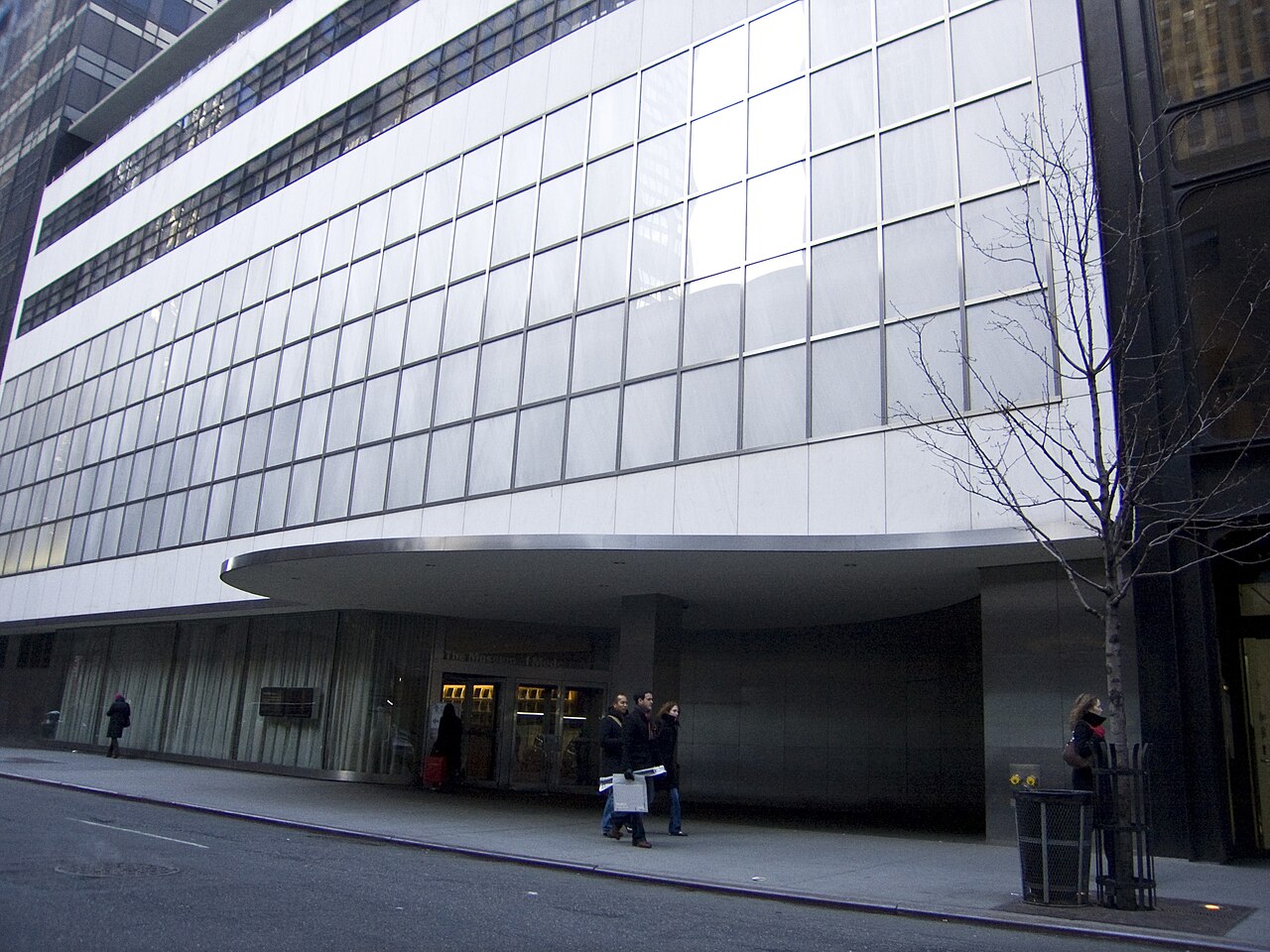
The facade of the Museum of Modern Art on West 53rd Street. Photograph by Wikipedia Loves Art participant "The_Grotto", via Wikimedia Commons. CC BY-SA 2.5.
Who founded the Museum of Modern Art?
MoMA's own history page says that in the late 1920s three patrons of the arts, Lillie P. Bliss, Mary Quinn Sullivan and Abby Aldrich Rockefeller, saw a need to challenge the conservative policies of traditional museums and to create an institution devoted only to modern art. With additional original trustees A. Conger Goodyear, Paul Sachs, Frank Crowninshield and Josephine Boardman Crane, they created the museum in 1929. Its founding director, Alfred H. Barr Jr., wanted it to help people understand and enjoy the visual arts of their own time and to give New York what he called "the greatest museum of modern art in the world."
The museum's chronology says it opened in rented quarters in an office building at 730 Fifth Avenue, less than a year after the three women first began exploring the idea. Its first exhibition showed Cezanne, Gauguin, Seurat and van Gogh. The collection began, according to MoMA, with a gift of eight prints and one drawing. The response was strong enough that over the next ten years the museum moved three times into larger temporary quarters. In 1932 it took a five-story townhouse at 11 West 53rd Street, owned by John D. Rockefeller Jr. and Abby Aldrich Rockefeller. That is the street, and nearly the address, where the museum still stands.
Who designed the 1939 building?
In May 1939, MoMA's through-time history says, the museum moved into a new custom-built home on West 53rd Street. Philip L. Goodwin, a museum trustee, and Edward Durell Stone designed it together. Barr had pushed to add an architect with a modern approach, using new materials and minimal ornament, to balance Goodwin's taste for a traditional Beaux-Arts style. He had originally hoped to bring in a prominent European modernist and settled on Ludwig Mies van der Rohe, and the museum says he resigned from the building committee after Stone was chosen without his final approval.
The building rose over four years. It had six stories of white marble and used a new insulated glass called Thermolux to soften the light in the galleries. It more than tripled the exhibition space and added an auditorium for the film program, a library and two floors of offices. A sculpture garden, designed by the architecture curator John McAndrew, opened with it. The museum's account says the new building stood in stark contrast to the brownstones and Beaux-Arts townhouses beside it.
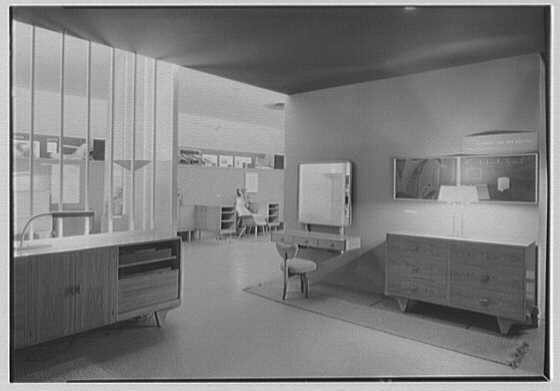
An interior photographed at the museum at 11 West 53rd Street in 1941. Photograph by Gottscho-Schleisner, Library of Congress, via Wikimedia Commons. Public domain.
How did the museum keep growing?
The museum's chronology lists the later changes in order. In 1953 the garden was redesigned by Philip Johnson and named the Abby Aldrich Rockefeller Sculpture Garden, and in 1954 a full-scale Japanese house shipped from Japan was reassembled in it. A fire on the second floor of the Goodwin-Stone building in 1958 caused one death and damaged several artworks. In 1964 Johnson's East Wing, a Garden Wing on West 54th Street and a renovated lobby opened. A major expansion by Cesar Pelli in 1984 added a West Wing and the 56-story residential Museum Tower, which the museum says was built to take advantage of its valuable air rights. MoMA says the Pelli renovation doubled the gallery space.
One long loan also ended in this period. Picasso's Guernica had been on extended loan to MoMA since 1939, and the chronology says it was returned to Spain in 1981. Barr himself left the director's chair earlier. In 1943 the board, citing concerns that too much of his time went to administrative routine, forced him to resign as director and become advisory director.
What did Yoshio Taniguchi change?
To make room for a new building by Yoshio Taniguchi, MoMA closed its 53rd Street galleries on May 21, 2002 and opened MoMA QNS in Long Island City, Queens, on June 29, 2002. MoMA QNS was the base for exhibitions through September 27, 2004, and the building is now used for storage. The museum's history page says the new Manhattan building opened to the public on November 20, 2004, and that it brought 630,000 square feet of new and redesigned space. The Peggy and David Rockefeller Building on the western part of the site houses the main galleries, and the Lewis B. and Dorothy Cullman Education and Research Building on the east side holds classrooms, auditoriums, the library and archives. The two buildings frame the enlarged sculpture garden.
The sources disagree slightly on dates here. MoMA's history page says the Taniguchi project was completed in 2006, while the same page says the main building opened in November 2004 and the Cullman Building in November 2006. The museum's building chronology lists the Taniguchi extension under 2004. The clearest reading is that the main building opened in 2004 and the education building followed in 2006.
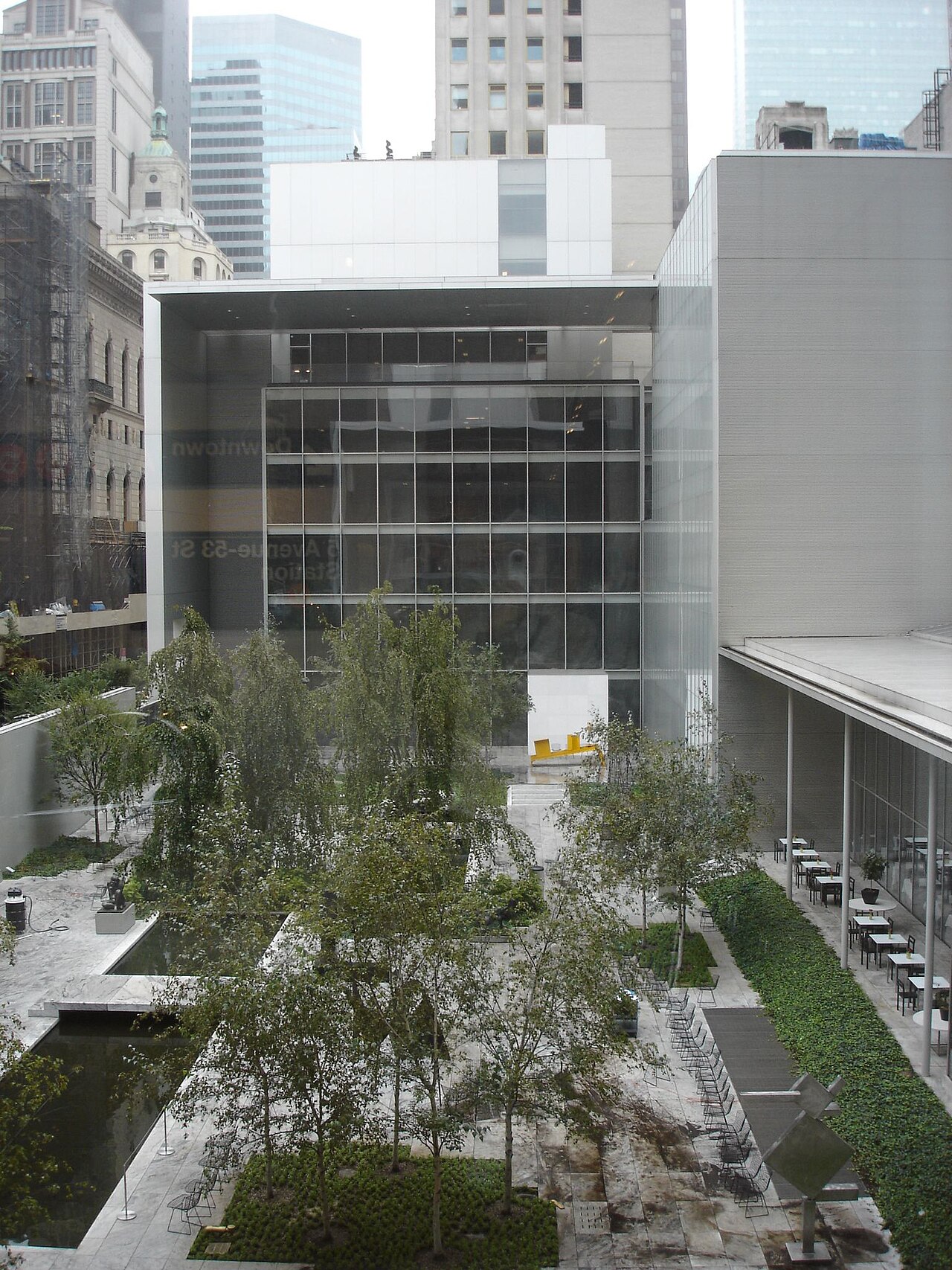
The sculpture garden at MoMA. Photograph by hibino, via Wikimedia Commons. CC BY 2.0.
What did the 2019 expansion add?
MoMA's press materials say the expansion, designed by Diller Scofidio + Renfro in collaboration with Gensler, opened on October 21, 2019. The design was commissioned in 2014, groundbreaking was in 2016 and a first phase of renovations on the east end was completed in 2017. The press page says the work added more than 40,000 square feet of gallery space. It also added a performance and programming space called the Studio, a second-floor Creativity Lab for education, and free street-level galleries on an expanded ground floor.
The museum's building fact sheet gives these figures: total gallery space grew from about 128,000 to about 166,000 square feet, with about 47,000 square feet of galleries new or renovated, and public space grew from 83,000 to 104,000 square feet. The same document calls the gain 30 percent in one place and one third in another, and gives the gallery total as both about 165,000 and 166,000 square feet, so treat those as approximate. It lists a construction cost of $50 million for renovation and $400 million for new construction. The main lobby became a double-height space that runs between West 53rd and West 54th Streets.
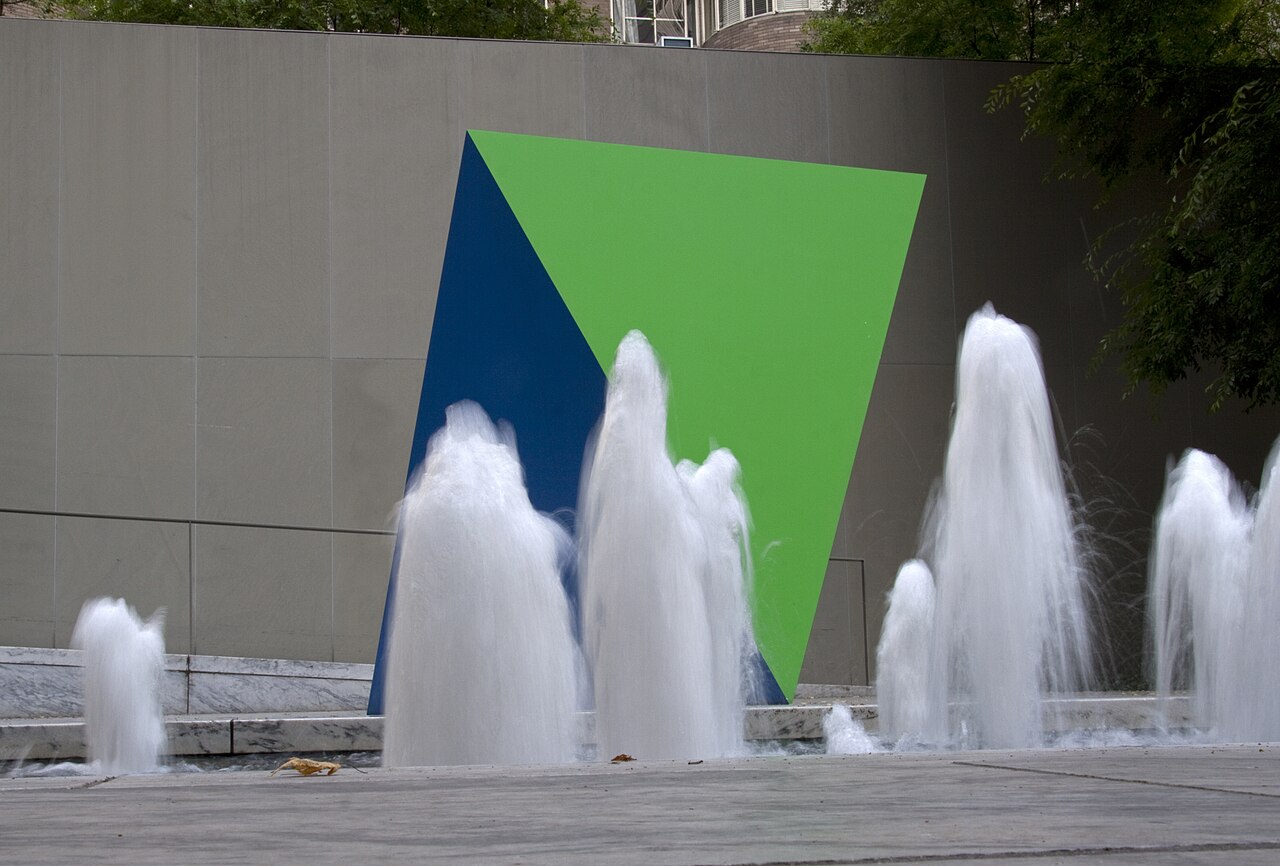
A fountain in the courtyard at MoMA. Photograph by Tony Hisgett, via Wikimedia Commons. CC BY 2.0.
What is in the collection and who runs it?
MoMA's history page says the collection has grown from that first gift of prints and a drawing to roughly 200,000 paintings, sculptures, drawings, prints, photographs, media and performance works, architectural models and drawings, design objects and films. That count comes from the museum's page, which may not have been updated recently. The museum's departments today include architecture and design, drawings and prints, film, media and performance, painting and sculpture, and photography.
MoMA is an independent museum run by its own trustees. In January 2000 it became the sole corporate member of MoMA PS1 in Queens, which keeps its own artistic and corporate independence, according to the museum. I did not find an official page that spells out the museum's legal ownership of the buildings, so this article does not.
Where can you eat or drink at the Museum of Modern Art?
MoMA's dining page lists several options. The Modern is a two-Michelin-starred restaurant next door with a view of the sculpture garden. It serves lunch daily from 12:00 to 2:30 p.m. and dinner from 5:00 to 9:00 p.m. Sunday to Thursday and until 9:30 p.m. on Friday and Saturday. The Bar Room at The Modern offers an a la carte menu, with lunch daily from 11:30 a.m. to 3:00 p.m. and dinner from 5:00 to 9:30 p.m.
Inside the museum, the Terrace Cafe on the sixth floor offers shared plates, salads, sandwiches and desserts with outdoor seating and views of Midtown. It takes walk-ins and is open daily from 11 a.m. to 4:45 p.m. Cafe 2 on the second floor serves rustic Italian dishes and has wine and beer as well as espresso, open daily from 11:00 a.m. to 5:00 p.m. with walk-ins welcome. The Espresso Bar on the second floor serves coffee and pastries, open 10:30 a.m. to 5:00 p.m. Sunday to Thursday and until 7:45 p.m. on Fridays. The Garden Bar is a seasonal pop-up in the sculpture garden with beer, wine, cocktails, light snacks and soft-serve ice cream. Hours and menus change, so check MoMA's dining page. Listings and hours here were read on the official pages on October 19, 2026.
Sources
- MoMA, The Museum of Modern Art history
- MoMA through Time, A Modern Building for a Modern Museum
- MoMA, Chronology (press materials, October 2019)
- MoMA press, The Expanded and Reimagined Museum of Modern Art Opened on October 21, 2019
- MoMA press, Building Information (October 2019)
- MoMA, Locations and hours
- MoMA, Restaurants and dining
Visiting the Museum of Modern Art
- Address: 11 West 53rd Street, New York, NY 10019. The main entrance is on 53rd Street, close to Sixth Avenue and just east of the flagship Museum Store, per MoMA.
- Admission: MoMA lists adults at $30, seniors 65 and over with ID at $22, students with ID at $17, and visitors 16 and under and members free. Prices change, so check MoMA before you go.
- Hours: MoMA lists 10:30 a.m. to 5:30 p.m. daily, except Fridays, when it stays open until 8:30 p.m. It is open every day except Thanksgiving and Christmas, and galleries close about 15 minutes before the museum does.
- Bags: All bags are inspected on arrival, and large umbrellas are not allowed in the galleries.
Everything above comes from the MoMA visit page. Stores and restaurants keep different hours from the galleries.