Why Is the Guggenheim Museum a Spiral? Wright, Rebay and a Sixteen-Year Wait
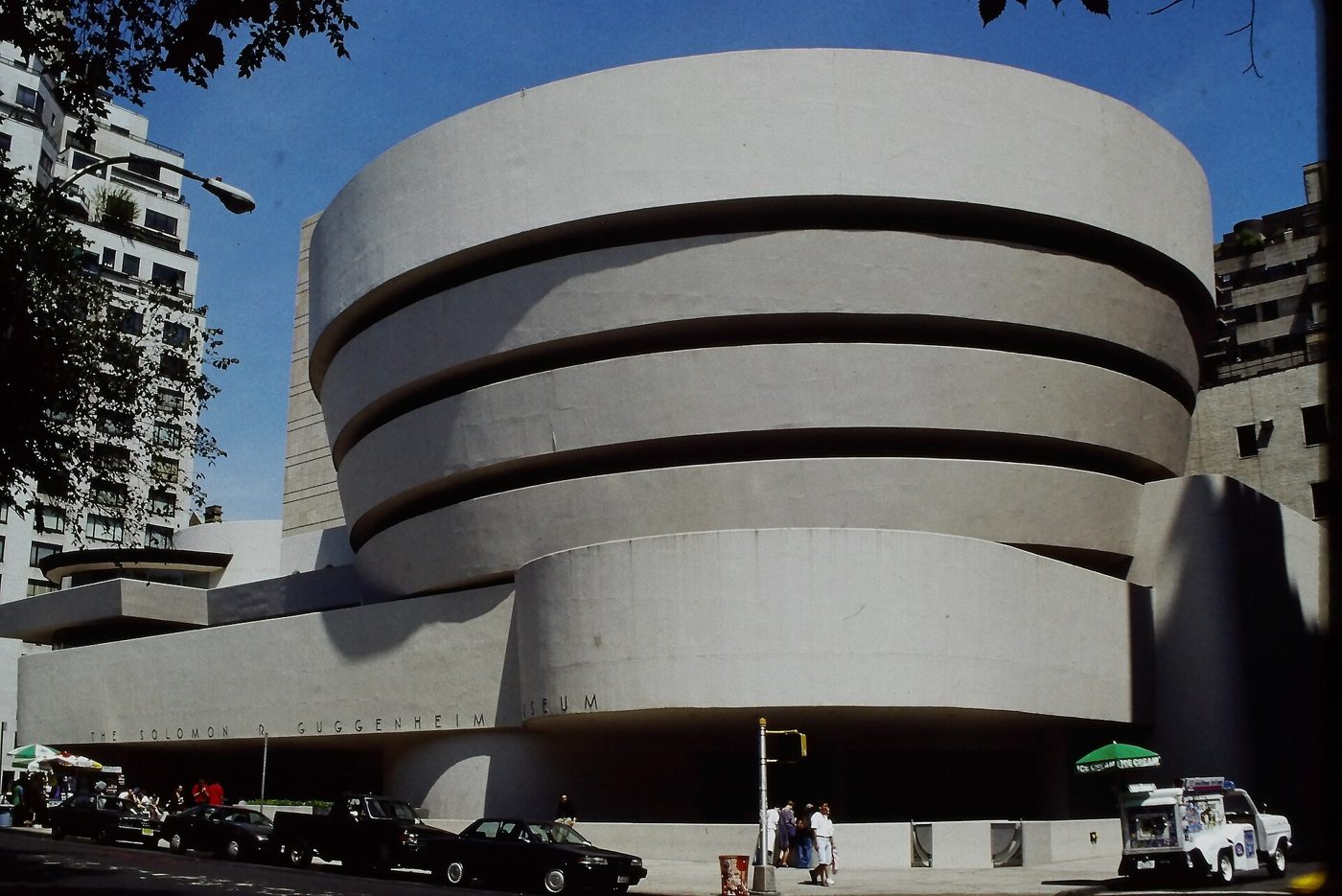
The Solomon R. Guggenheim Museum on Fifth Avenue. Photograph by Bmzuckerman, via Wikimedia Commons. CC BY 4.0.
The Guggenheim is a spiral because that was the shape Frank Lloyd Wright kept returning to for this museum. The Landmarks Preservation Commission says his earliest designs showed the rotunda as a ziggurat-like spiral, an inverted ziggurat-like spiral, or a stack of hexagonal rings, with bands of skylights. The commission also notes Wright had used circles and spiral ramps before, in unbuilt non-museum projects such as the 1925 Automobile Objective for Gordon Strong at Sugarloaf Mountain, Maryland. The Guggenheim's own visitor guide describes a ramp a quarter mile long on a 3-degree incline. The museum opened in October 1959. Wright died earlier that year.
Who commissioned the Guggenheim Museum?
The commission came through the artist Hilla Rebay, the Landmarks Preservation Commission says. Rebay convinced Solomon R. Guggenheim to hire Wright in 1943. The collection had been shown since May 31, 1939 in the Museum of Non-objective Painting at 24 East 54th Street, and Rebay wanted a permanent building for it. The commission says Wright proposed a ziggurat-like building that thrilled Rebay, that he built a mutual respect with Guggenheim, and that he was given $21,000 to begin designing before a site had even been acquired. Wright called the project "My Pantheon."
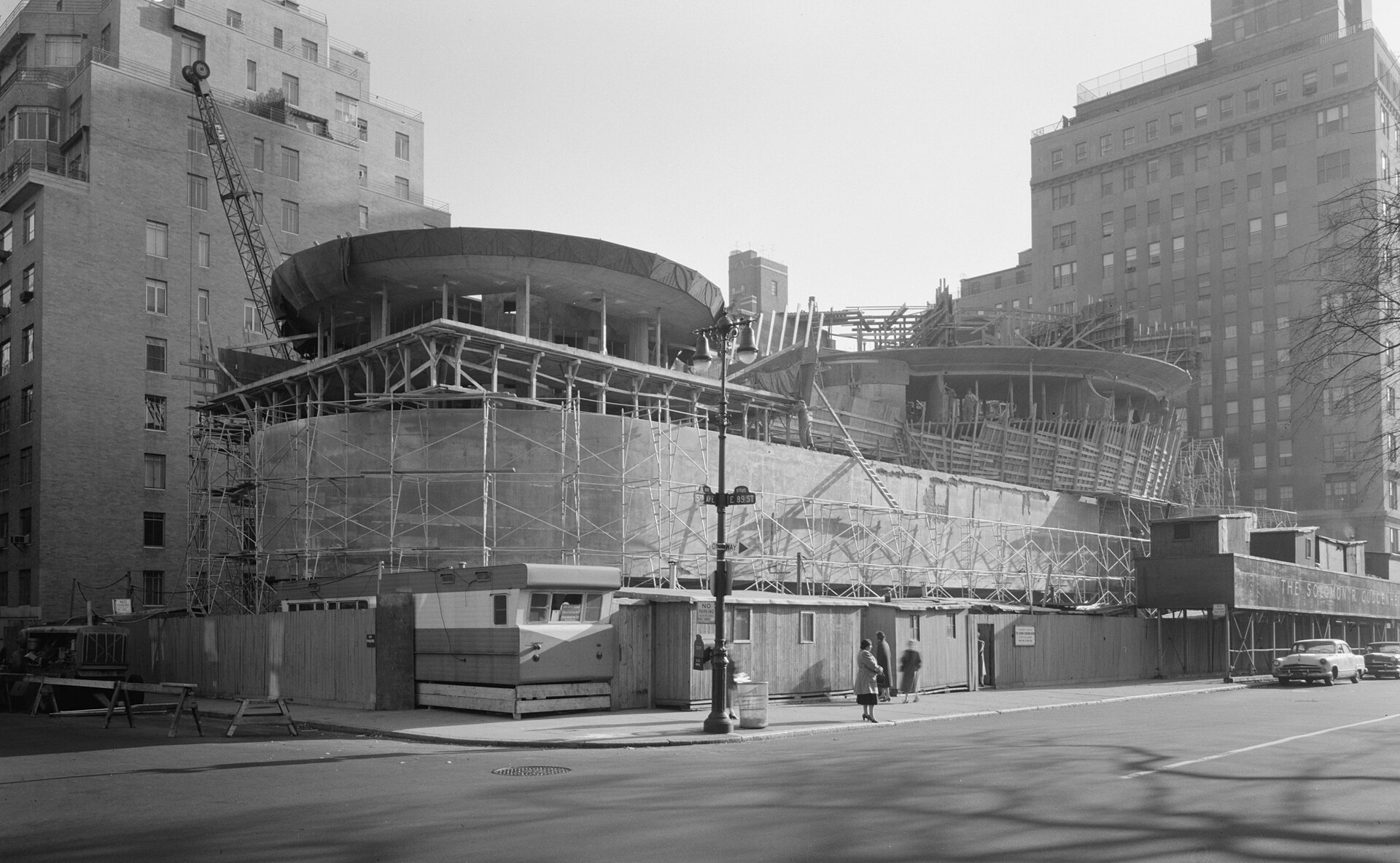
The Guggenheim Museum under construction at 88th Street and Fifth Avenue. Photograph by Gottscho-Schleisner, Inc., Library of Congress, via Wikimedia Commons. Public domain.
Why did it take sixteen years to build?
The commission says Wright's first idea was a trigonometric spiral that raised structural and cost problems nobody could solve. In 1946 the Czech-born engineer Jaroslav J. Polivka offered a solution, and the commission records shell tests he carried out that year. Edgar Tafel introduced Wright to the builder George N. Cohen of Euclid Contracting in August 1954. Demolition on the site began in May 1956 and construction started in October of that year.
The ramp floor is poured concrete. The outer wall is sprayed Gunite, which was later painted with an ivory vinyl coating known as "Cocoon," according to the commission. The official visitor guide says the walls are only five inches thick.
How did New York react?
Not everyone liked it. The commission records that 21 artists signed an open letter in 1956 objecting to the design, and that Lewis Mumford judged it unfavorably. The public came anyway. The report counts 16,039 visitors on the first Sunday and 750,000 in the first nine months.
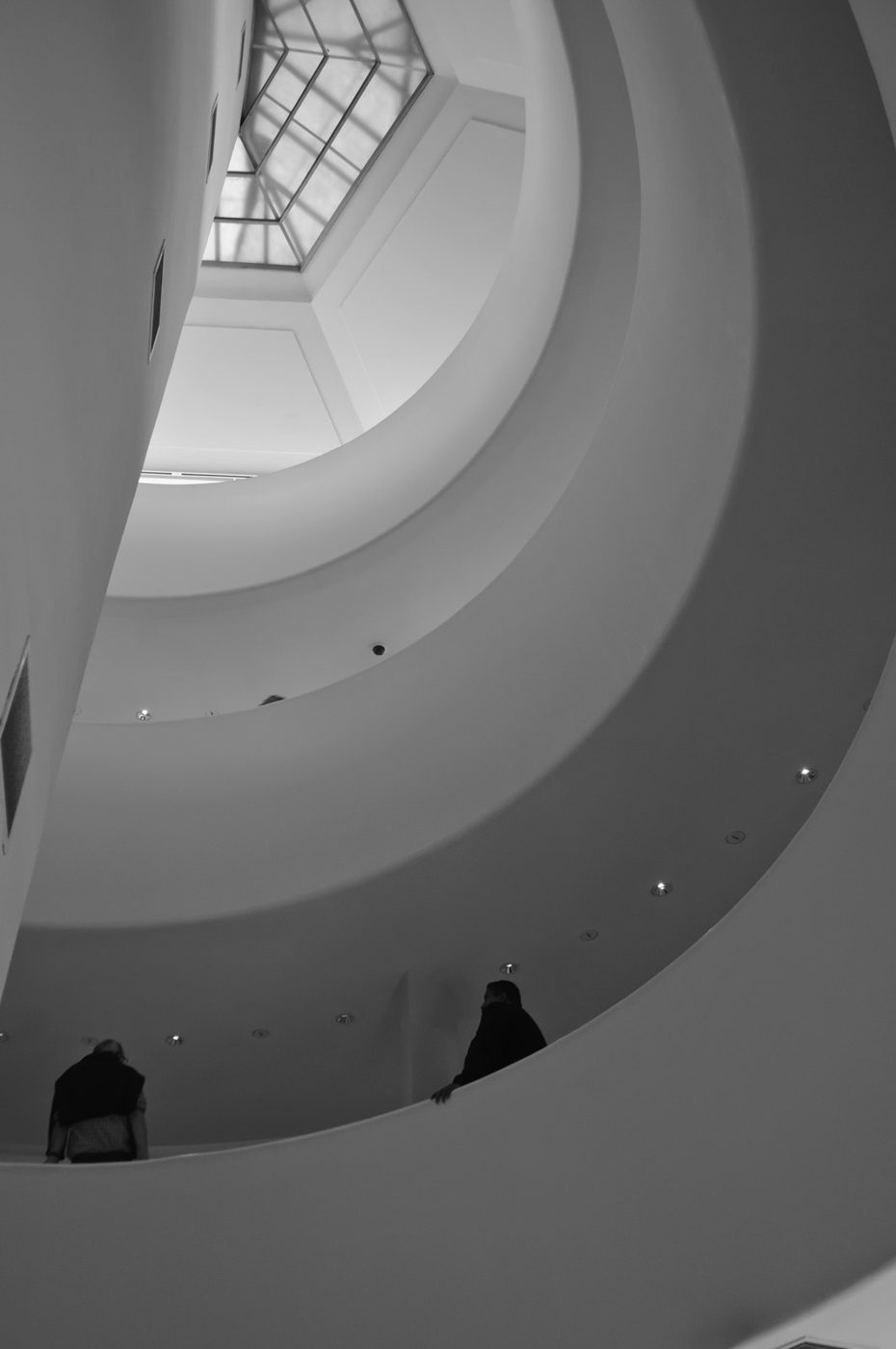
Looking up the rotunda toward the skylight. Photograph by InSapphoWeTrust, via Wikimedia Commons. CC BY-SA 2.0.
How has the building changed?
The Thannhauser Wing opened in 1965, and an annex called the Taliesin addition was completed in 1968. The Peggy Guggenheim collection was willed to the Foundation in the early 1970s. The commission records proposals by Gwathmey Siegel for an annex in 1985 to 1987. It designated the museum a landmark on August 14, 1990. The building also won the American Institute of Architects Twenty-Five Year Award, which the report mentions.
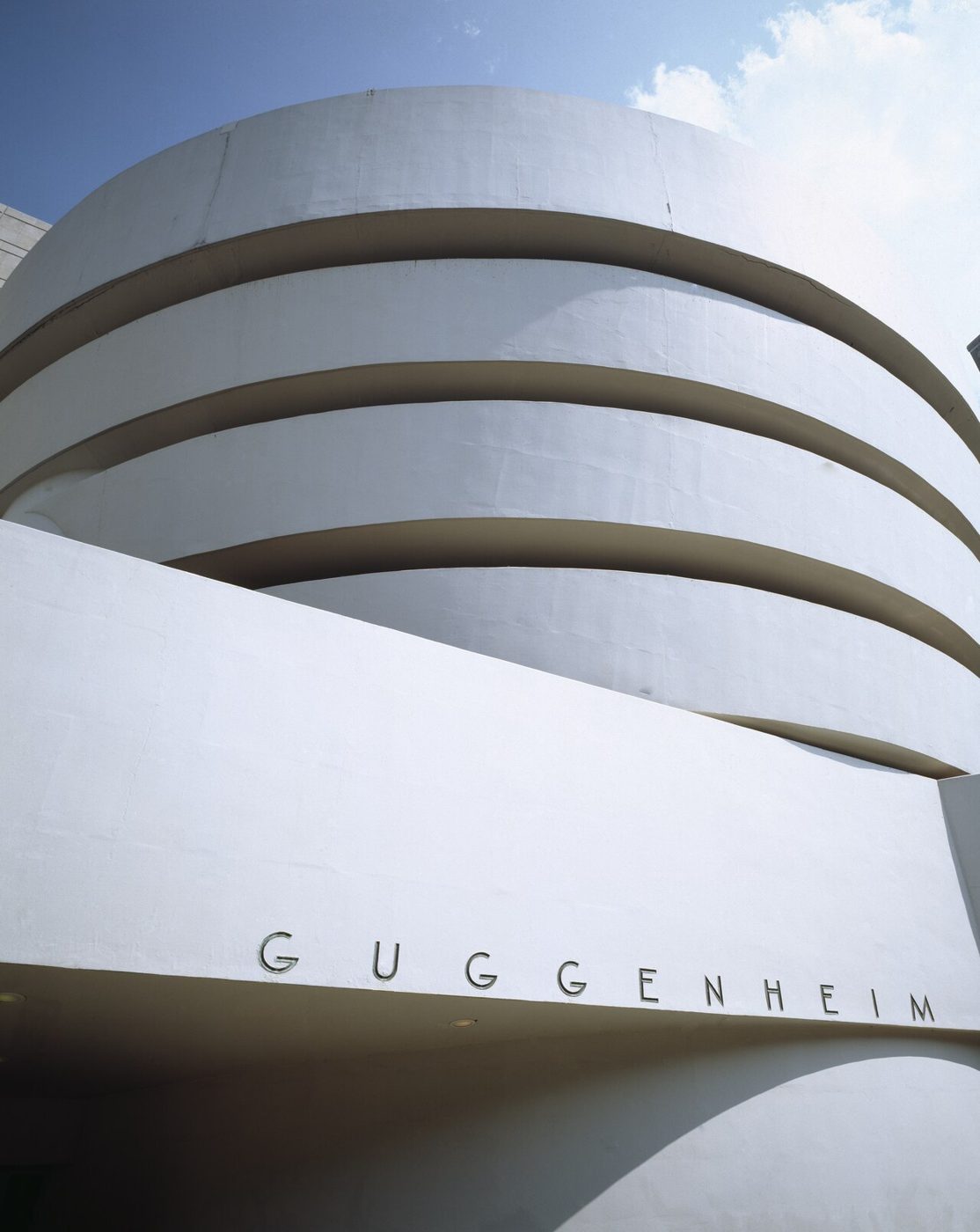
The museum's curved concrete walls and name. Photograph by Carol M. Highsmith, Library of Congress, via Wikimedia Commons. Public domain.
Who owns the Guggenheim Museum today?
The Solomon R. Guggenheim Foundation, founded in 1937, owns and operates the museum directly, according to the Foundation's audited financial statements. The same statements call the Fifth Avenue museum the centerpiece of the Foundation and say the building is on the UNESCO World Heritage List as part of The 20th-Century Architecture of Frank Lloyd Wright.
Sources
- NYC Landmarks Preservation Commission, Solomon R. Guggenheim Museum designation report, 1990
- Solomon R. Guggenheim Museum, Visitor Guide
- Solomon R. Guggenheim Foundation, audited financial statements 2021
- Guggenheim, The Solomon R. Guggenheim Foundation
Visiting the Guggenheim Museum
- Address: 1071 Fifth Avenue at 88th Street.
- Hours: The museum's hours page lists daily hours of 10:30 am to 5:30 pm.
- Accessibility: The official brochure says wheelchairs are available from a guard.
- Galleries: The Guggenheim does not allow food and beverages in the galleries.
Checked against the Guggenheim visit pages, its hours page and its visitor brochure. Confirm hours and ticket rules there.