The High Line: How an Abandoned Freight Railway Became a Park in the Sky
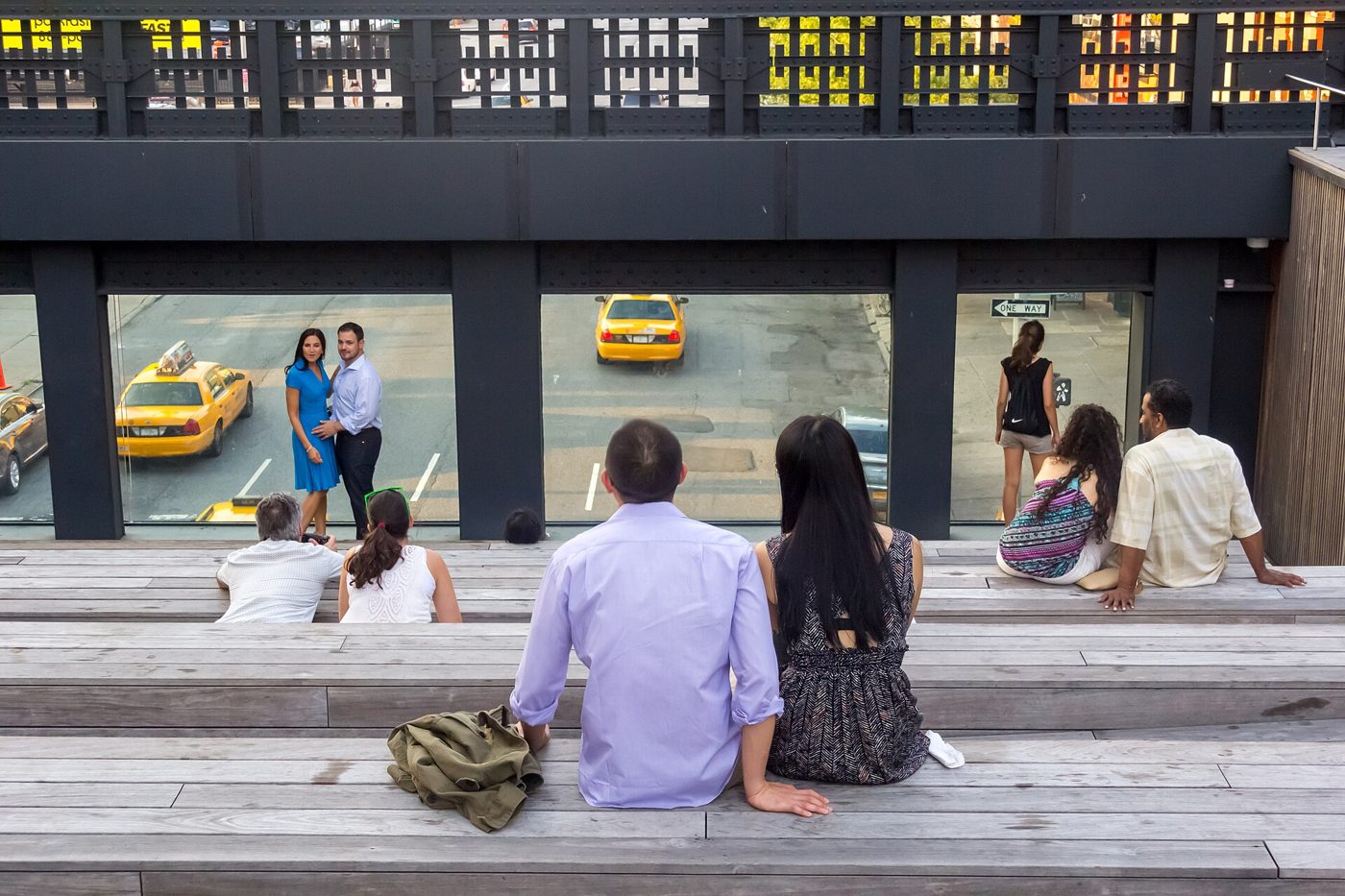
Visitors on the High Line. Photograph by Mike Peel (mikepeel.net), via Wikimedia Commons. CC BY-SA 4.0.
The High Line is a park built on a freight railway that once ran through the upper floors of Manhattan's West Side factories. It is 1.45 miles long, runs from Gansevoort Street in the Meatpacking District to West 34th Street, and is open to everyone for free. Friends of the High Line, the nonprofit that runs it, says the structure was once headed for demolition. How it was saved is a short history of unusual civic persistence: two neighbors, a rezoning, and a wild garden that grew where the trains used to run.
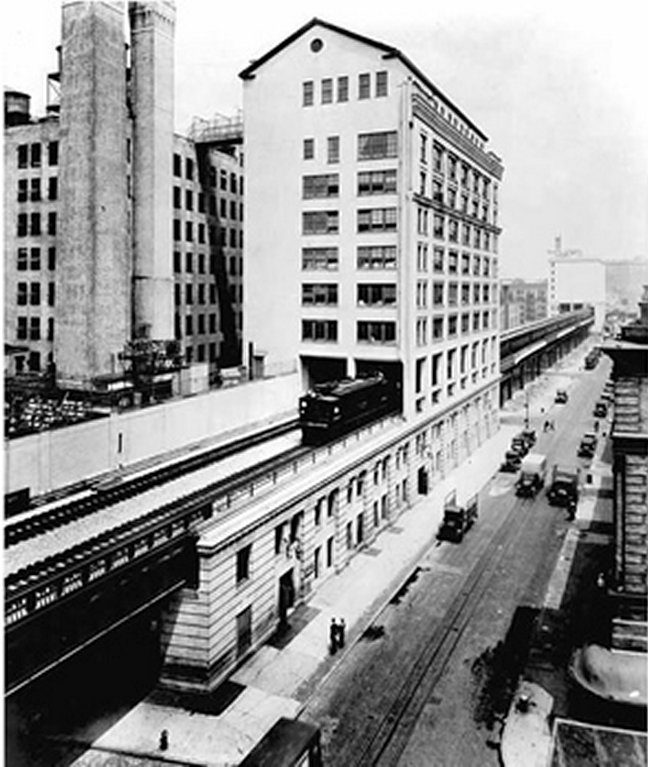
The Western Electric complex, now Westbeth, seen from Washington Street with a train on the High Line in 1936. Via Wikimedia Commons. Public domain.
Why was the High Line built?
The reason was safety. Freight trains of the New York Central Railroad ran at street level on Manhattan's West Side, delivering food to lower Manhattan, and Tenth Avenue became known as "Death Avenue." Friends of the High Line says more than 540 people had been killed by trains by 1910. NYC Parks' historic sign text says more than 500. To protect pedestrians the railroad hired men on horses, known as the West Side Cowboys, who rode ahead of trains waving red flags until their final ride in 1941, according to Friends of the High Line.
The fix was the West Side Improvement. NYC Parks says a transit commission directive called for removing street-level crossings, which led to an elevated line from West 34th Street to a terminal at Spring Street. Friends of the High Line's fact sheet says it lifted train traffic 30 feet into the air, and that the line was fully operational by 1934. Both organizations say it was then called the West Side Elevated Line. NYC Parks adds that many industrial and residential buildings were leveled to clear the right of way.
Why did trains go through buildings?
The line was designed to deliver goods straight to the factories. NYC Parks says it passed through commercial buildings, including the National Biscuit Company factory, now Chelsea Market, and Bell Laboratories, now West Beth Artists Housing, and included cargo off-loading docks. Friends of the High Line says the cut through Nabisco gave the factory easy access to freight, and that the line carried millions of tons of meat, dairy and produce.
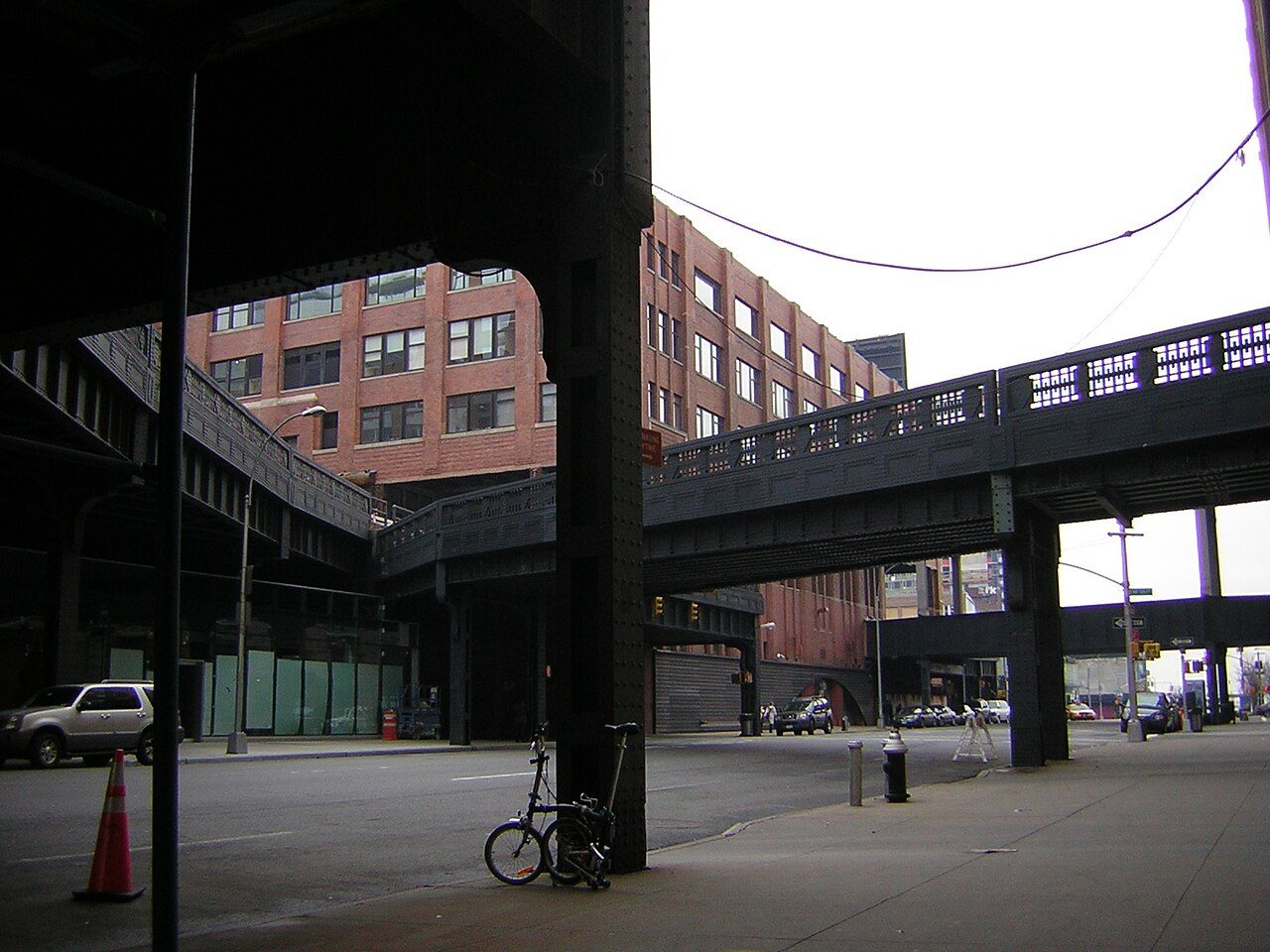
Looking south along Tenth Avenue from under the High Line at 16th Street, with sidings entering the buildings. Photograph by Jim Henderson, via Wikimedia Commons. Public domain.
How did it end up abandoned?
Trucking took the freight. NYC Parks says a rise in commercial trucking and the decline of the West Side waterfront industry led to the rail line's decline. The southern end, from Spring to Bank Streets, was removed in the 1960s, and the line stopped operating in 1980, according to NYC Parks. Friends of the High Line's fact sheet says the last train carried three carloads of frozen turkeys.
The empty structure had defenders and enemies. NYC Parks says that in the early 1980s a Chelsea resident, Peter Obletz, temporarily brokered rights to the abandoned easement and formed the West Side Rail Line Foundation to preserve it. The stretch from Bethune to Gansevoort Street came down in 1990 and 1991. Friends of the High Line says that when CSX Transportation, the owner, opened the structure to reuse proposals in 1999, many people called it an eyesore, and that Mayor Giuliani signed a demolition order as one of his last acts in office.
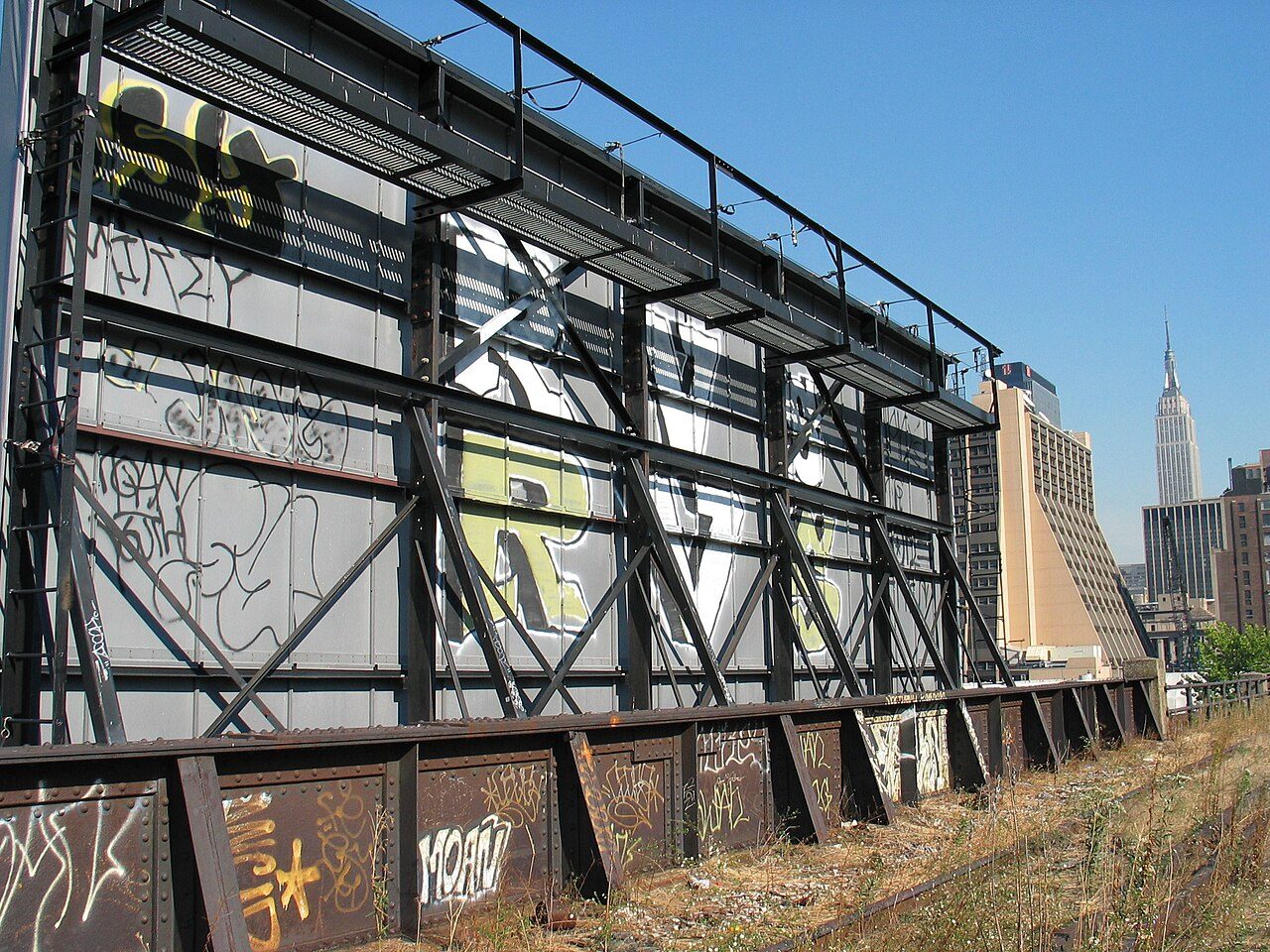
A billboard frame beside the High Line rail bed before the park was built. Photograph by Geoff Stearns, via Wikimedia Commons. CC BY 2.0.
Who saved the High Line?
Two citizens did, with help from the city. In 1999, when CSX asked for proposals, Joshua David and Robert Hammond formed Friends of the High Line to turn the structure into a public park. Both Friends of the High Line and NYC Parks say that over the years the abandoned tracks became a wild meadow of plants seeded by birds and wind. Friends of the High Line says its members were inspired by that hidden garden.
The group held an ideas competition to raise awareness. Friends of the High Line says it drew 720 ideas from more than 36 countries, and NYC Parks counts 726 proposals. Friends also says the entries included a roller coaster and a mile-long lap pool. NYC Parks says that after four years of advocacy the City approved the conversion, winning over West Chelsea property owners by up-zoning their development rights next to the structure. Friends says the West Chelsea Special District made the park possible, and that Mayor Bloomberg and the City Council backed it. It quotes the headline in The New York Times when the City Council passed the rezoning: "Frog of a Railroad to Become Prince of a Park."
Who designed the park?
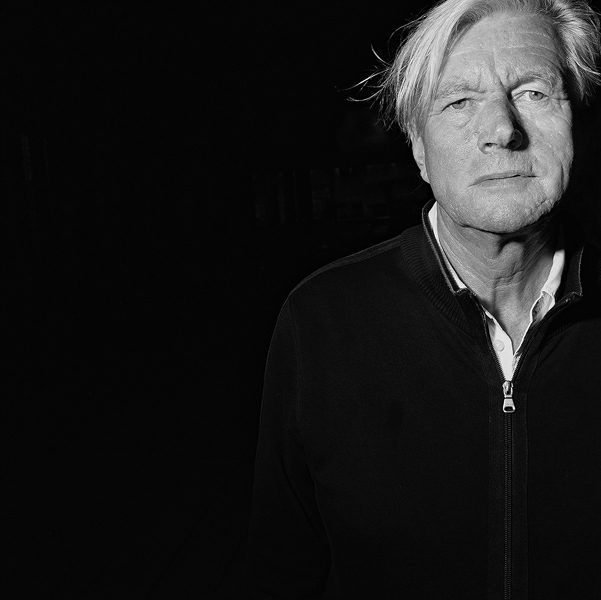
Friends of the High Line says the team was the landscape architecture firm James Corner Field Operations, the design studio Diller Scofidio + Renfro and the planting designer Piet Oudolf. NYC Parks says the design acknowledges the line's history and its period of nature taking over. Original train tracks were set back into the walkway, and the distinctive cast-stone floor planks suggest the rails. Hardy native plants were chosen to give a wild feel. NYC Parks calls out a special feature, an amphitheater hovering over Tenth Avenue at West 17th Street. On plants, the sources differ. NYC Parks' history sign speaks of more than 200 plant species, while Friends of the High Line's history now says the park has more than 500 species of plants and trees.
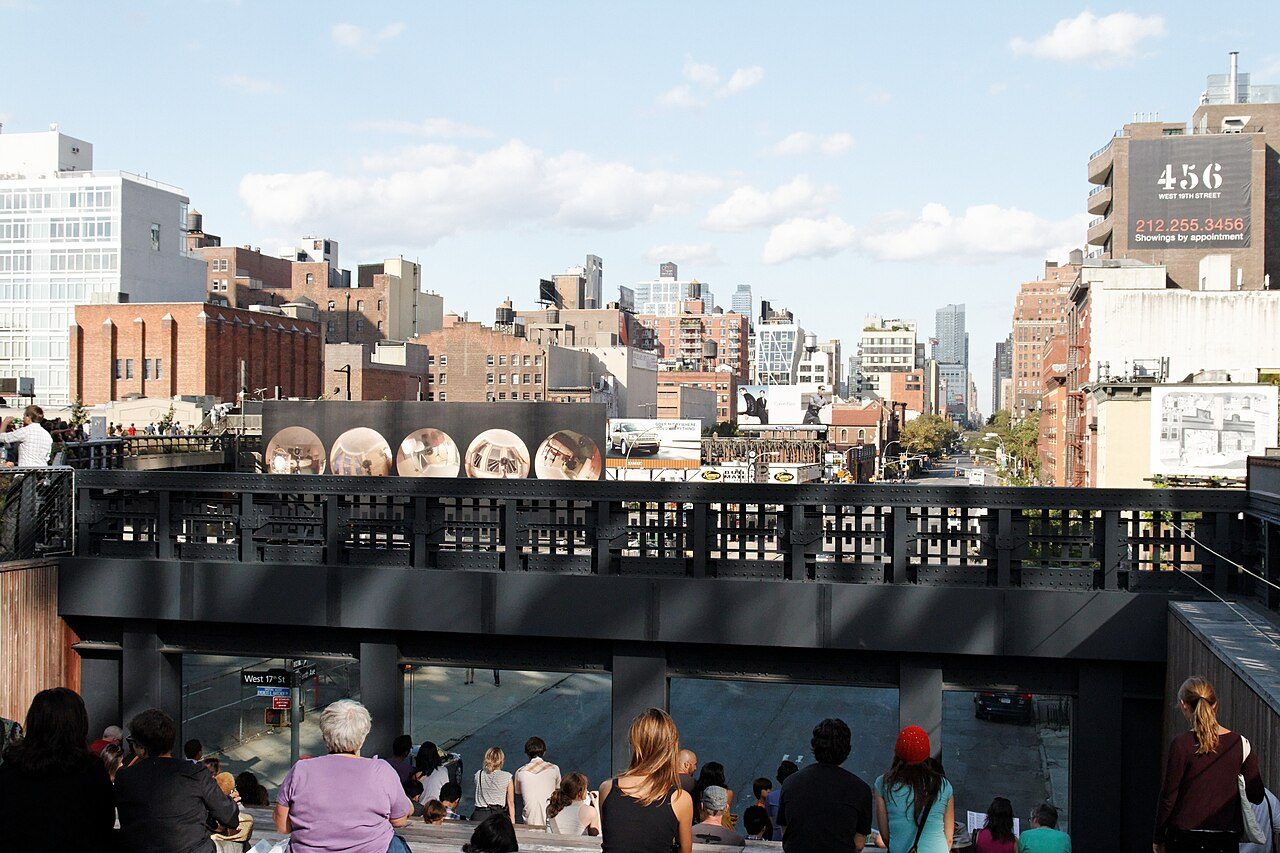
Crowds on the High Line. Photograph by KimonBerlin, via Wikimedia Commons (title on Commons: 10th Ave Square). CC BY-SA 2.0.
When did each section open?
Friends of the High Line gives the sequence. Construction broke ground in April 2006. The first section, from Gansevoort to 20th Street, opened in June 2009, and High Line Art was founded that year to commission artworks on and around the park. The second section, 20th to 30th Streets, was followed by the High Line at the Rail Yards, between 30th and 34th Streets, which opened in 2014. The Spur at 30th Street and 10th Avenue opened on June 5, 2019, after a campaign to save that last remaining piece of the original structure. The High Line Moynihan Connector opened on June 22, 2023, linking the Spur through Manhattan West to Moynihan Train Hall. NYC Parks says the connector is a pair of 600-foot bridges, the Woodlands Bridge and the Timber Bridge, built by the Empire State Development Corporation, Brookfield Properties and the High Line.
NYC Parks says the first section instantly became a premier tourist attraction and spurred high-end development in West Chelsea.
What is the High Line like today?
Friends of the High Line describes it as one continuous 1.45-mile greenway with more than 500 species of plants and trees. Beyond the gardens, it says the park hosts free public programs, community and teen engagement, and artwork and performances. High Line Art has commissioned works on and around the park every year since 2009, and the park's visitor page offers a free pocket guide with a map and a list of artworks on view. Friends of the High Line says the park has become a global inspiration for cities that want to turn unused industrial zones into public space. That claim is its own, and the planting and design credits above come from the same organization.
Who owns the High Line today?
Friends of the High Line says CSX Transportation donated ownership of the structure to the City of New York, four years before the first section opened. The park is under the jurisdiction of the New York City Department of Parks & Recreation, which lists it as a community park of 6.73 acres. The park is managed, operated and funded by Friends of the High Line, a nonprofit conservancy. Friends of the High Line says it is the sole group responsible for the park's maintenance and operation.
Where can you eat or drink at High Line?
The park's Eat & Drink page lists vendors.
- Vendors operate from May to October; Shake Shack is open year-round, January to March 10:30 am to 10 pm and April to December 10:30 am to 11 pm. Al Volo, CoolBean, Crispy Chick and Strawberro Cafe are listed as new for 2026.
The vendor list changes each season. Hours and status were read from the official pages listed below on October 13, 2026. They change, so confirm before visiting.
Sources
- Friends of the High Line, History
- Friends of the High Line, High Line fact sheet
- NYC Parks, The High Line Highlights
- NYC Parks, The High Line
- Friends of the High Line, Visitor Info
- Friends of the High Line, FAQ
- The High Line: Eat & Drink (checked October 13, 2026)
Visiting the High Line
- Location: Friends of the High Line says the park runs from Gansevoort Street in the Meatpacking District to West 34th Street, between 10th and 11th Avenues.
- Hours: April 1 to November 30, 7am to 10pm. December 1 to March 31, 7am to 8pm.
- Cost: The High Line's FAQ says it is free.
- Access: The FAQ lists elevators at Gansevoort and Washington Streets, 14th Street and 10th Avenue, 23rd Street and 10th Avenue, 30th Street and 10th Avenue, and 31st Street and Dyer Avenue, with park-level access at 30th Street at Hudson Yards. It says the entire High Line is wheelchair accessible, and asks visitors to check the elevator status page before they go.
- Rules: The High Line's rules do not allow bicycles, dogs other than service dogs, skateboards, skates or recreational scooters, smoking, or walking in the planting beds.
- Food and tours: The FAQ says food and beverage vendors are open from May to October and Shake Shack is open year-round. Free docent-led tours run on select days, and the schedule is on the High Line's site.
Checked against High Line visitor info page. Confirm hours and ticket rules there.