The Frick Collection: A Steel Baron's Mansion Built to Become a Museum
Most house museums were homes first and museums by accident. The Frick Collection is the reverse. Henry Clay Frick planned his Fifth Avenue mansion from the beginning to be opened as a public museum after his family was done with it, and the house at 1 East 70th Street has now served that purpose for ninety years. In April 2025 the museum reopened after a five-year, $330 million renovation, the first comprehensive upgrade since 1935, with rooms on the family's former second floor open to the public for the first time.
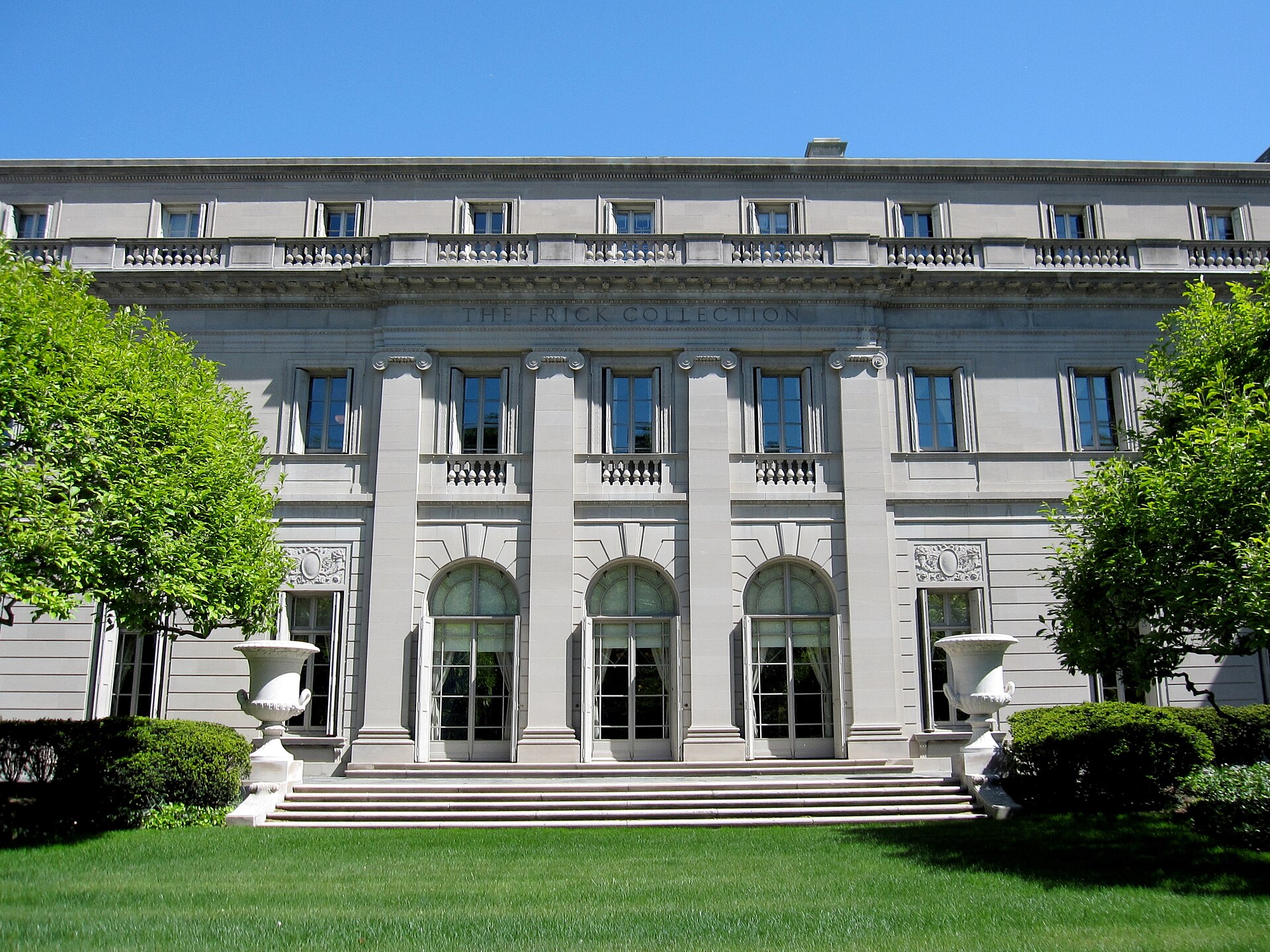
The Frick Collection at 1 East 70th Street, seen from Fifth Avenue. Photograph by Gryffindor, via Wikimedia Commons. CC BY-SA 3.0.
Who was Henry Clay Frick?
The Landmarks Preservation Commission's designation report calls Frick a coke and steel magnate who gradually built up an outstanding art collection. The building story starts in 1911, when Frick bought the Fifth Avenue blockfront between East 70th and 71st Streets. The site was then occupied by the Lenox Library, one of the private libraries that was about to unite its holdings with the Astor and Tilden libraries in the new New York Public Library at 42nd Street. Frick chose Carrère & Hastings, the architects of that public library, to design his mansion, and the LPC report notes that his residence was planned from the beginning to serve as a future museum. The house was built in 1913 and 1914 in the French Louis XVI style, set back from the avenue behind a raised lawn.
The LPC report describes the result in detail. A wide lawn and garden, held above Fifth Avenue by retaining walls, give the mansion unusual breathing room for its block. A raised terrace leads up to the most prominent feature of the Fifth Avenue facade, a shallow projecting bay marked by four Ionic pilasters that frame the three arched windows of the first story. The main body of the house is three stories high, including a classical attic story set back behind a balustraded parapet, and a deep bandcourse above the rusticated first floor ties the north and south wings to the main block. At the north end of the lawn, a one-story gallery wing with a loggia runs 275 feet east from Fifth Avenue and ends in a corner pavilion. The report calls the complex truly monumental, enhanced by its spacious grounds.
How did the house become a museum?
The Frick's own history says it was Henry Clay Frick's intention that his art collection and home be opened as a museum following his wife's death. Frick died in 1919, and his collection was incorporated in 1920. In 1924 he had already opened a two-story art reference library on the property to the art world; his daughter Helen C. Frick later founded a new library building in his memory next door at 10 East 71st Street, designed by John Russell Pope and built from 1931 to 1935.
Adelaide Howard Childs Frick died in October 1931, and the transformation began. The trustees commissioned Pope to enlarge the mansion for public use. The Frick lists his additions: two galleries called the Oval Room and the East Gallery, a combination lecture hall and music room, and the enclosed Garden Court. The LPC report describes how Pope turned the open courtyard, through which the family carriage driveway had passed, into an enclosed entrance atrium with an arched glass skylight on coupled columns, keeping Carrère & Hastings's Louis XVI character. The entire complex opened to the public on December 16, 1935.

Plants in the garden at the Frick Collection. Photography inside the museum is permitted only in the Garden Court. Photograph by Tomwsulcer, via Wikimedia Commons. CC0.
How did the museum grow?
The Landmarks Preservation Commission designated the Frick Collection, including the Frick Art Reference Library, an individual New York City landmark on March 20, 1973, after a public hearing in 1970, calling it one of the finest examples of French Louis XVI architecture in the city. The landmark site was enlarged in 1974 to take in the 70th Street lots where the Frick planned a garden. In 1977 the museum added a new Reception Hall designed by Harry van Dyke, John Barrington Bayley and G. Frederick Poehler, opened two lower-level galleries for temporary exhibitions, and got its best-known outdoor space: the 70th Street Garden, designed by landscape architect Russell Page. In December 2011 the portico was enclosed to form the Portico Gallery for sculpture and decorative arts.
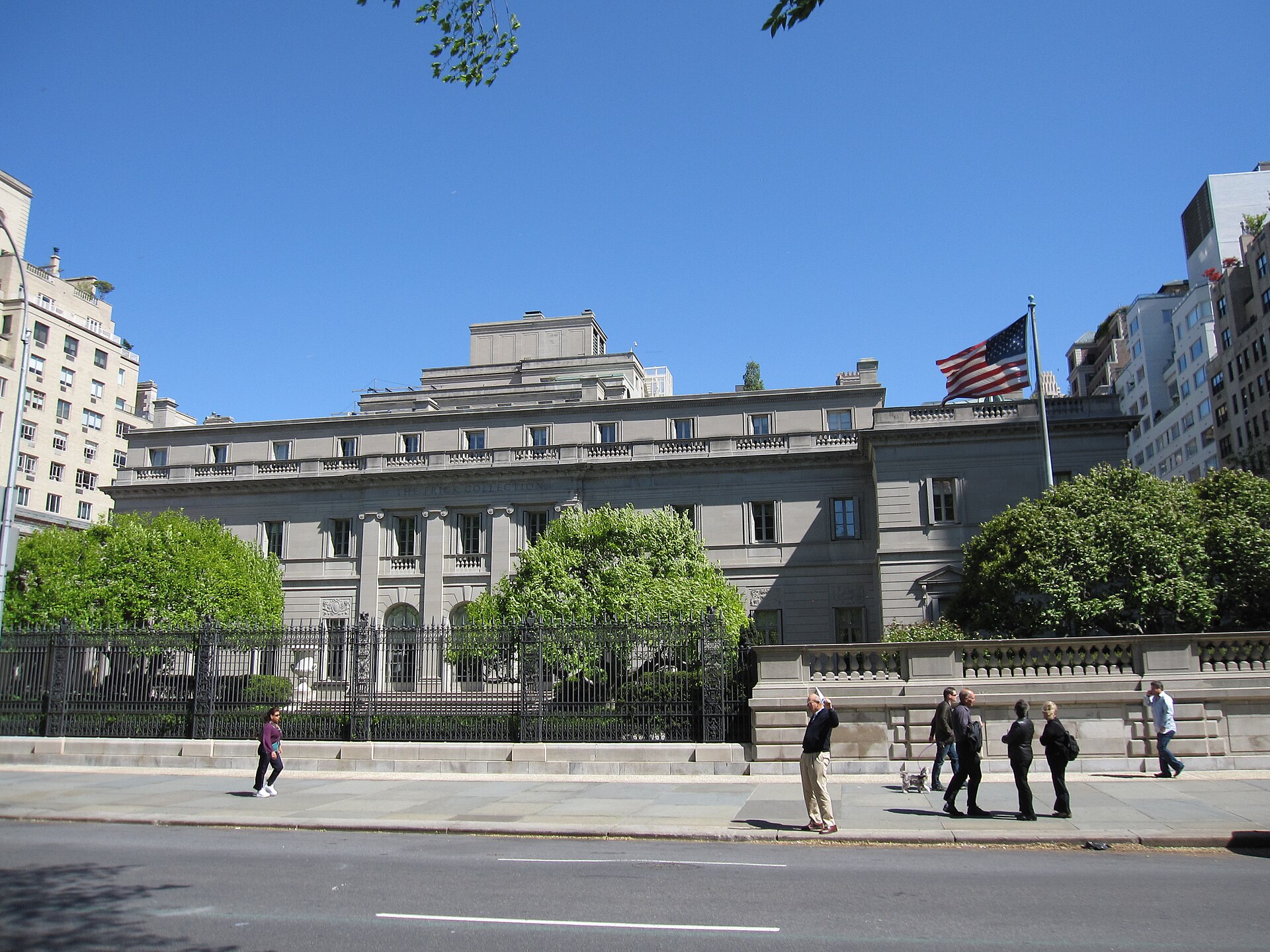
The mansion from East 70th Street. Photograph by Gryffindor, via Wikimedia Commons. CC BY-SA 3.0.
Why did the Frick close for five years?
By the late 2010s the museum needed its first comprehensive upgrade in nearly ninety years. The Frick closed its historic buildings in 2020 and moved its collection highlights to Frick Madison, the former Whitney Museum building designed by Marcel Breuer at 945 Madison Avenue, which the Frick says was open from March 18, 2021 through March 3, 2024. It was the first time a substantial gathering of the collection had been shown outside the Gilded Age mansion. The Frick says the installation at Frick Madison respected the forms and materials of Breuer's stone and concrete building, juxtaposing its masterpieces with signature features such as the trapezoid windows, and allowed direct access to objects without vitrines or stanchions.
The renovation, designed by Selldorf Architects with Beyer Blinder Belle as executive architect, repurposed 60,000 square feet of existing space and added 27,000 square feet of new construction. The museum reopened on April 17, 2025. The press release describes restored first-floor galleries, a new suite of galleries on the second floor of the original family home, open to the public for the first time, new special exhibition galleries on the first floor, the Frick's first dedicated education rooms, and a new 218-seat auditorium named for Stephen A. Schwarzman. The 70th Street Garden was restored to follow Russell Page's original 1977 design as faithfully as possible, and textiles and wall hangings were recreated by the same firms the Frick family had commissioned more than a century earlier. The total project cost was $330 million, which the museum says includes $220 million in hard costs for construction, restoration and infrastructure.
The reopening came with an inaugural season of programs. The press release describes a special commission of porcelain plants and flowers by sculptor Vladimir Kanevsky, a homage to the floral arrangements made for the original 1935 opening, a music festival in the new auditorium in late April 2025, and a first special exhibition in the new galleries, Vermeer's Love Letters, opening in June 2025. The Frick Art Research Library reopened at the same time with refurbished reading rooms. Inside the museum, the visit page notes, the Frick still hangs art without conventional wall labels to preserve the atmosphere of a Gilded Age home; it offers a free mobile guide through Bloomberg Connects and an introductory video narrated by Steve Martin that plays in the auditorium.
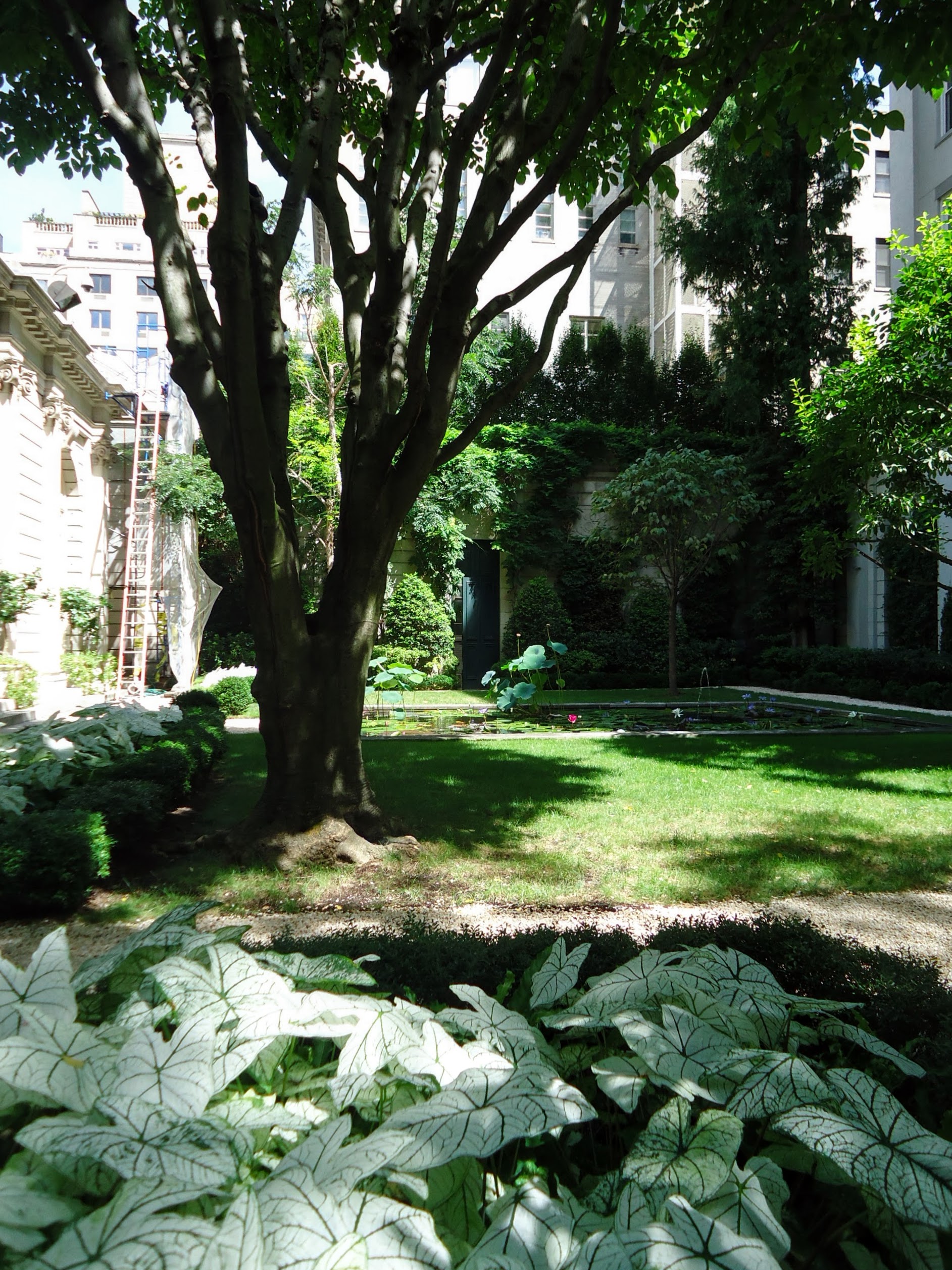
The Fifth Avenue garden, seen through the museum's fence. Photograph by Tomwsulcer, via Wikimedia Commons. CC0.
Who runs the Frick?
The Frick Collection is a private museum governed by a board of trustees. The museum announced in September 2024 that Axel Rüger, previously director of the Royal Academy of Arts in London and the Van Gogh Museum in Amsterdam, would become its next Anna-Maria and Stephen Kellen Director, starting in the spring of 2025. He succeeded Ian Wardropper, who led the museum and library for fourteen years, through the renovation and the Frick Madison period. The board chair named in the announcement is Elizabeth M. Eveillard.
Where can you eat or drink at the Frick?
The renovated museum has its first-ever cafe. The Frick announced that Westmoreland opened on June 6, 2025, on the second floor of the Selldorf-designed addition, with about fifty seats, interior design by Bryan O'Sullivan Studio and a mural by artist Darren Waterston. The name comes from the Frick family's private Pullman train car, which they used from 1911 to travel between their homes. The all-day, table-service menu is by Union Square Events, and the cafe is an amenity for museum ticket holders and members, open during regular museum hours, with same-day reservations made onsite. Details change, so confirm with the museum. Listings and hours here were read on the official pages on October 21, 2026.
Sources
- New York City Landmarks Preservation Commission, The Frick Collection (including the Frick Art Reference Library) designation report (LP-0667)
- The Frick Collection, Buildings
- The Frick Collection, The Frick Collection Reopens, April 2025
- The Frick Collection, About Frick Madison
- The Frick Collection, Axel Rüger Appointed as Next Frick Director, September 19, 2024
- The Frick Collection, Frick's New Café Opens, June 4, 2025
- The Frick Collection, Visit
Visiting the Frick Collection
- Address: The museum's visit page lists 1 East 70th Street at Fifth Avenue, New York, NY 10021; the Frick Art Research Library entrance is at 10 East 71st Street.
- Hours: The visit page lists museum hours as 10:30 a.m. to 5:30 p.m. on Mondays and Wednesdays through Sundays, closed Tuesdays, with pay-what-you-wish admission on Wednesdays from 1:30 to 5:30 p.m. and Louis Vuitton First Fridays evenings from 5:30 to 9:00 p.m.
- Tickets: The visit page lists admission at $30 for adults, $22 for seniors 65 and over and visitors with disabilities, $17 for students with ID, free for youth ages 10 to 18 and members, and notes that only children ages 10 and older are admitted. Timed tickets are recommended.
- Photography: The museum says photography is permitted only in the Garden Court.
Facts above come from the Frick's official visit page. Hours and prices change, so confirm on the museum's site before going.