The Empire State Building: A Depression-Era Gamble That Became a Symbol
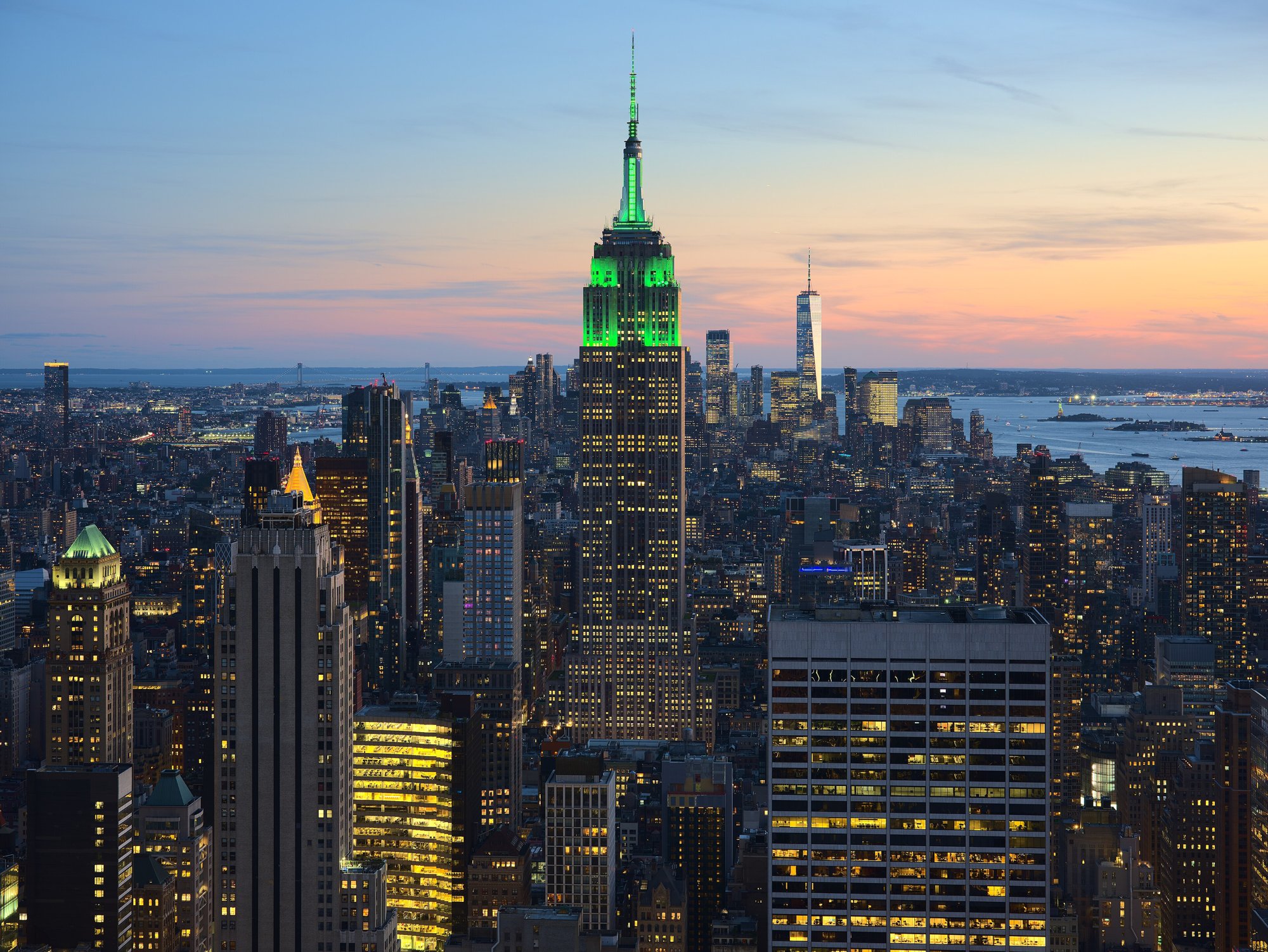
The Empire State Building at dusk in 2021, seen from Rockefeller Center. Photograph by Dllu, via Wikimedia Commons. CC BY-SA 4.0.
For more than a century the block at Fifth Avenue and 34th Street belonged to the Astors. William B. Astor acquired the farmland there in 1827, and the family later built two hotels on it that were joined as the Waldorf-Astoria. By the late 1920s, business was pushing north into what had been Manhattan's most fashionable residential district. In 1929 the site was sold, and in 1930 the Waldorf-Astoria was torn down to make room for the tallest building in the world.
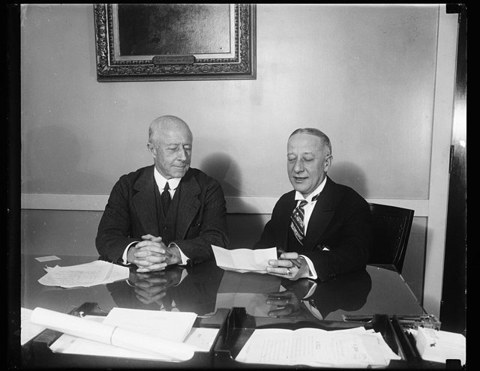
The man behind the project was John J. Raskob, a General Motors executive who had become one of the richest men in the country. Raskob had managed former New York Governor Alfred E. Smith's unsuccessful 1928 campaign for president. When he decided to build a skyscraper, he made Smith president of the company. The Landmarks Preservation Commission notes that Smith's name gave the venture public trust and publicity. It was not named for a car company or for Raskob, and the public came to see it as Al Smith's venture.
The architects were Shreve, Lamb & Harmon, with William Lamb as chief designer. The firm described the program as short: a fixed budget, no office space deeper than 28 feet from window to corridor, as many floors of that space as possible, a limestone exterior, and completion by May 1, 1931. That date mattered because May 1 was the traditional day for signing commercial leases in New York. The design was shaped for speed. Metal spandrels and simple, repeated stone pieces let different trades work without waiting on each other. A lobby medallion records the construction dates as March 17, 1930, and March 1, 1931.
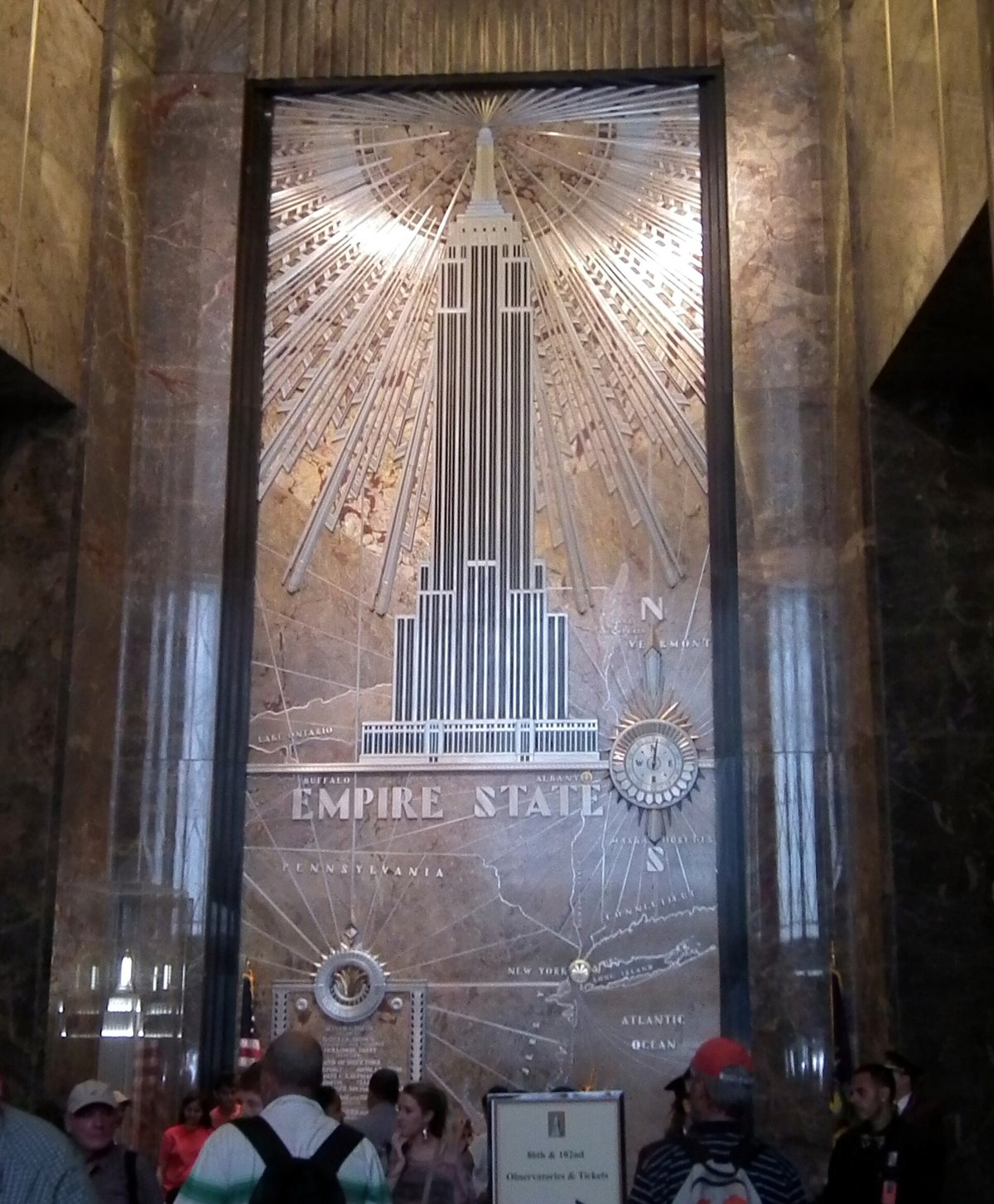
The lobby's aluminum relief of the building, 2011. Photograph by Erik Drost, via Wikimedia Commons. CC BY 2.0.
The owners also sold height as a spectacle. They hired photographer Lewis Hine to document the steelworkers, swinging him out over the street in a special cage for the most daring shots. They promoted a mooring mast at the top for transatlantic dirigibles. The building opened on May 1, 1931, at 1,250 feet. With the mast counted as fourteen floors, it is usually described as 102 stories. The 86th-floor observatory became a standard stop for visitors to New York. A television antenna was added to the mast in 1953, bringing the total height to 1,472 feet.
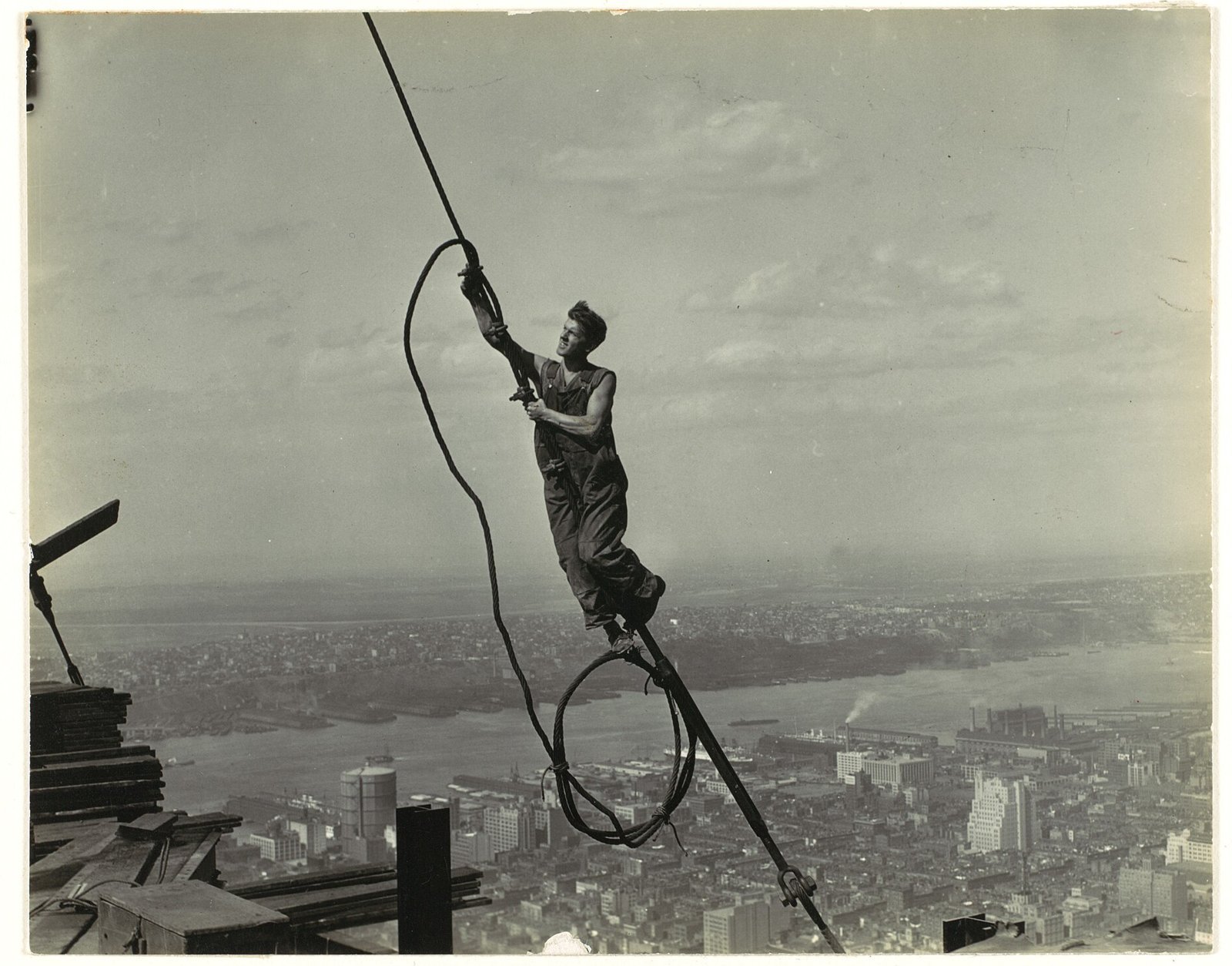
"Icarus, Empire State Building," 1930. Photograph by Lewis Hine. The Metropolitan Museum of Art, via Wikimedia Commons. Public domain (CC0).
Timing nearly ruined the project. The stock market crashed about two weeks after the building was announced, and through the early Depression years much of it sat empty. New Yorkers called it the "Empty State Building." The Landmarks Preservation Commission credits the observatory, with about a million visitors a year paying a dollar each, with helping save it from bankruptcy. Over time the building filled, largely with tenants from the nearby garment district.
Its strength was tested on July 28, 1945, when an Army bomber flying in fog struck the 79th floor. The crash tore a hole about 18 by 20 feet in the facade and started fires on the upper floors. The National Park Service notes that the building shook twice and settled, and its structure held.
Who owns the Empire State Building today?
The building is owned by Empire State Realty Trust, a publicly traded real estate investment trust listed on the New York Stock Exchange. The company calls the Empire State Building its flagship property.
The Empire State Building held the title of world's tallest until the 1970s. New York City designated it a landmark on May 19, 1981, and it is also a National Historic Landmark. It lost the height record long ago, but it never lost its place as the building most people picture when they think of New York.
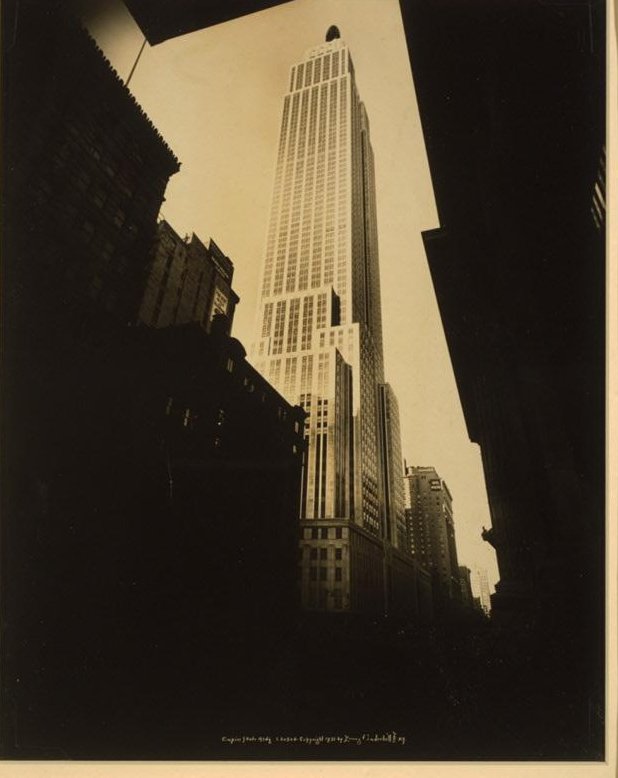
The Empire State Building, 1931. Photograph by Irving Underhill. Library of Congress, Prints & Photographs Division. No known restrictions on publication.
Sources
- NYC Landmarks Preservation Commission, Empire State Building designation report (1981)
- National Park Service, National Historic Landmark documentation
- Empire State Realty Trust, About Us
- Library of Congress, Irving Underhill photograph (1931)
- Wikimedia Commons, Lewis Hine, "Icarus, Empire State Building" (Metropolitan Museum of Art, CC0)
- Wikimedia Commons, Empire State Building lobby by Erik Drost (CC BY 2.0)
- Library of Congress, Harris & Ewing photograph of Alfred E. Smith (1929)
- Wikimedia Commons, Empire State Building from Rockefeller Center (CC BY-SA 4.0)

.jpg)
