The Dakota: The Upper West Side Apartment House That Came First
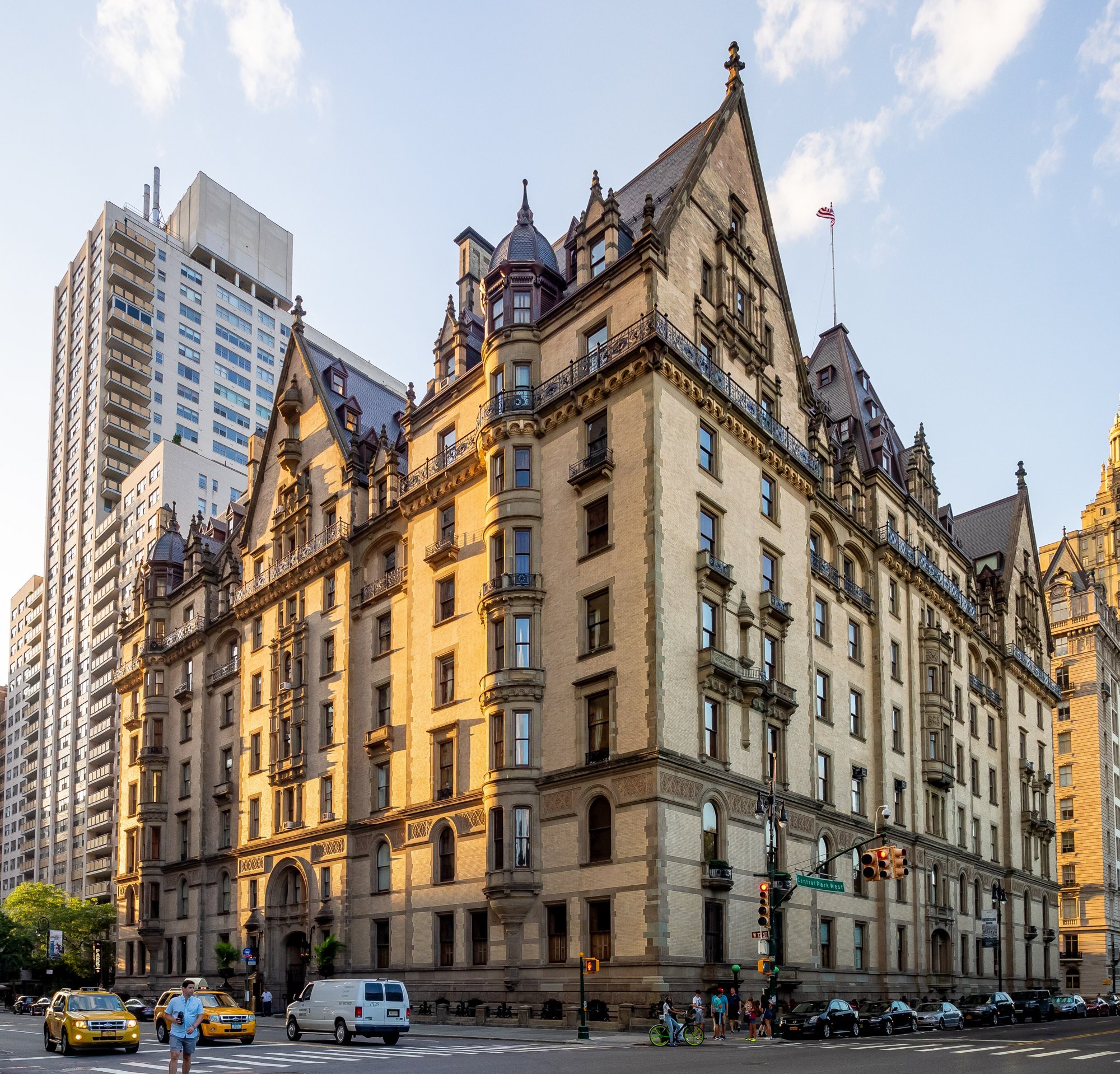
The Dakota in 2019. Photograph by Ajay Suresh, via Wikimedia Commons. CC BY 2.0.
When construction began in 1880, the corner of Central Park West and 72nd Street was far from the center of New York life. The man who chose it was Edward S. Clark, heir to the Singer Sewing Machine fortune and a leading figure in the development of Cooperstown, New York. Plans were filed on September 29, 1880, and approved three weeks later. Because of the building's size and remote location, it was once called "Clark's Folly."
The name has its own story. According to the explanation repeated by the Landmarks Preservation Commission and the National Park Service, Clark's colleagues teased him that the site was so far north he might as well build in Dakota Territory. Whatever its exact origin, the name stuck.
Clark hired Henry Janeway Hardenbergh, who would later design the Plaza Hotel. Hardenbergh gave the building the look of a German Renaissance chateau: yellow brick with stone trim and terra-cotta ornament, crowned by a roofline of gables, dormers and peaks. The facades are organized as a base of two stories, a shaft of four floors, and a crown. Each side is treated differently, without strict symmetry. The Landmarks Preservation Commission praised the result as monumental in scale yet dignified and serene.
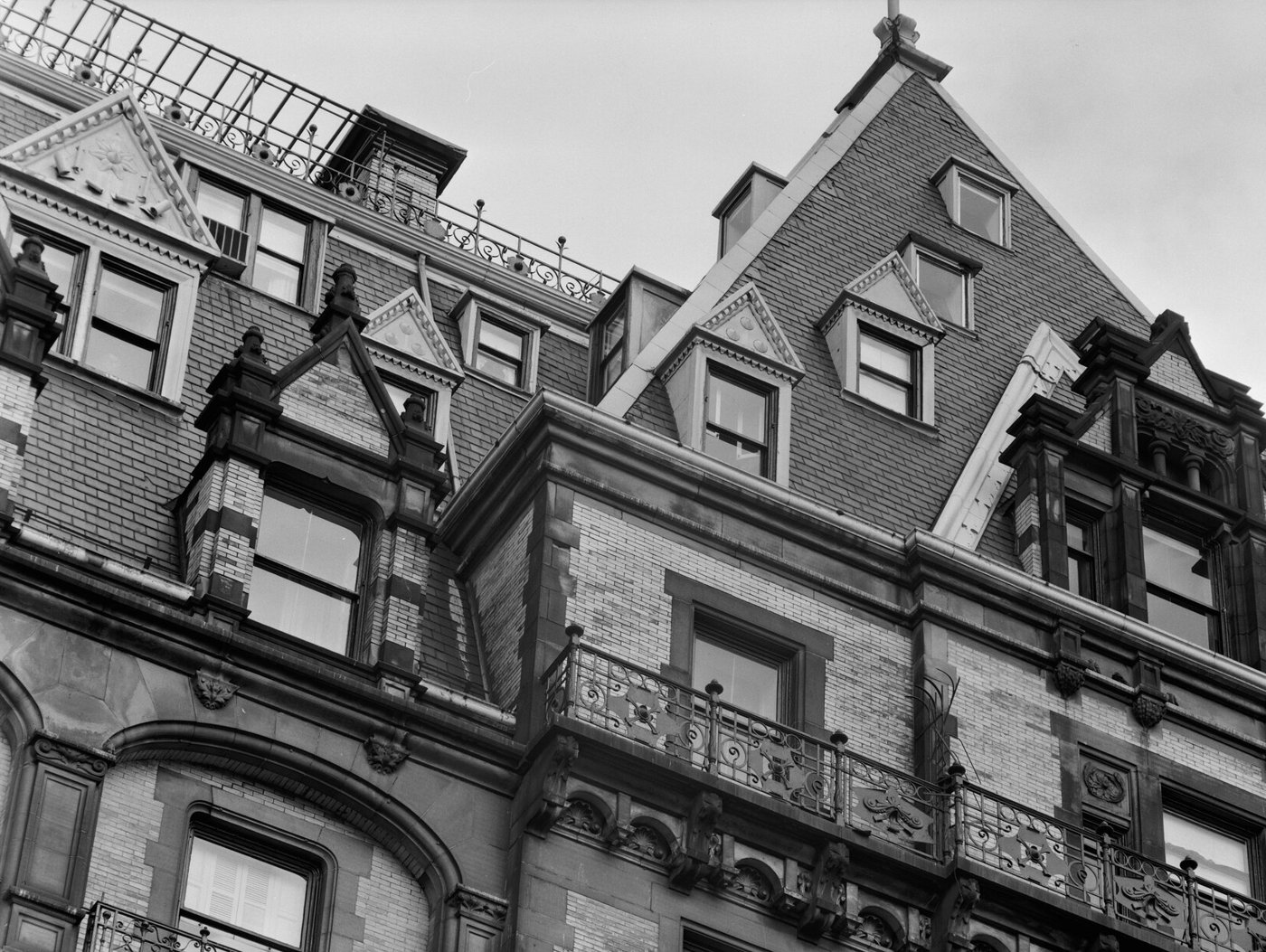
The Dakota's roofline, 1965. Photograph by Jack Boucher, Historic American Buildings Survey. Library of Congress. No known restrictions on images made by the U.S. Government.
The plan was as new as the style. The building is nearly square and wraps around an inner courtyard, first designed as a carriage turnaround. Residents enter through a two-story arched passage past a sentry box into the courtyard, with four corner entrances leading to the floors above. Service elevators, among the first in New York, sat behind the kitchens. Heavy load-bearing walls and double-thick concrete floors made it one of the quietest buildings in the city.
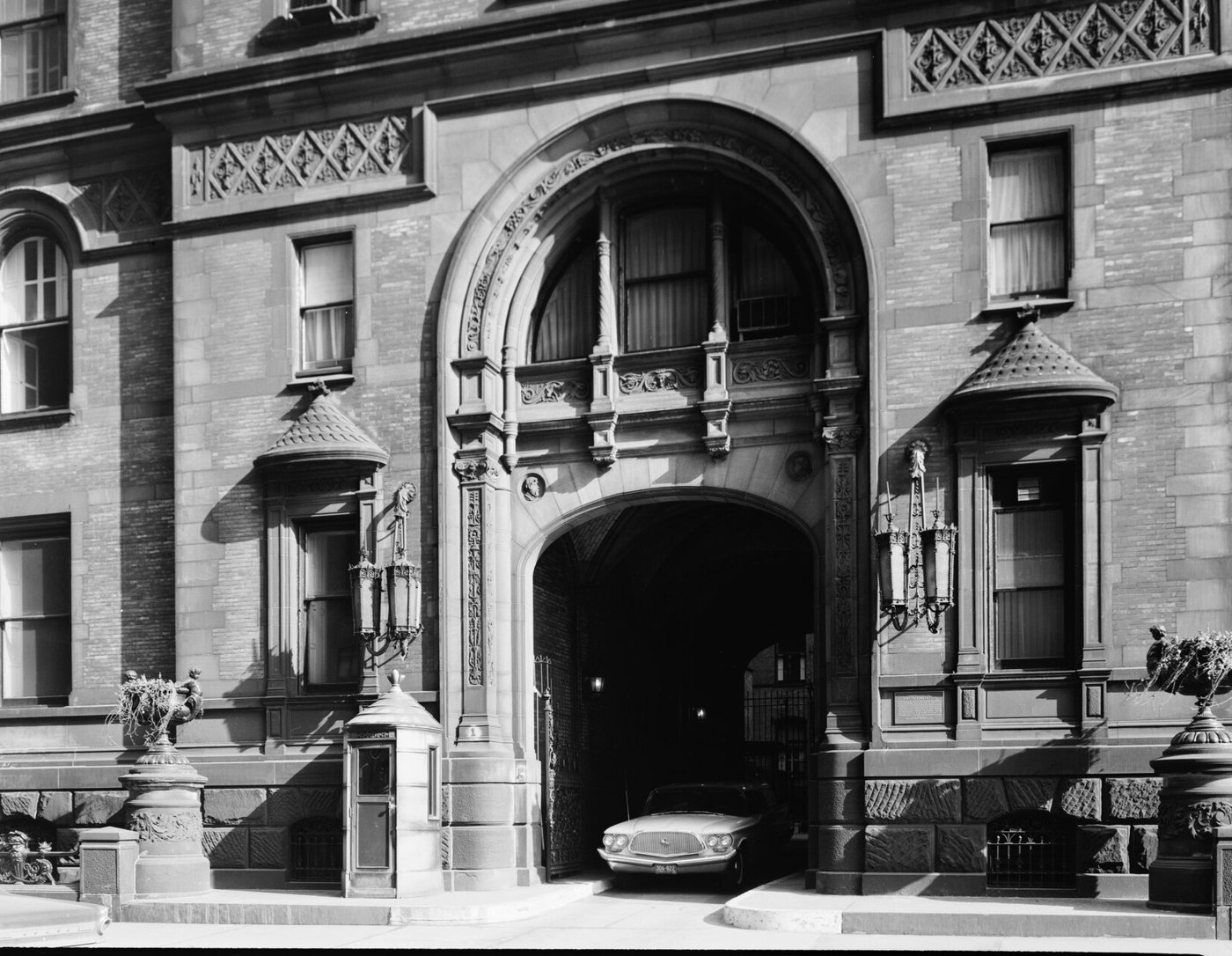
The arched entrance on 72nd Street, with its sentry box, 1965. Photograph by Jack Boucher, Historic American Buildings Survey. Library of Congress. No known restrictions on images made by the U.S. Government.
The Dakota opened in 1884 as a rental building offering the services of a luxury hotel. A description from the time called for about 65 suites. The New York Daily Graphic of September 10, 1884, called it "the largest, most substantial, and most conveniently arranged apartment house of the sort in this country." The Landmarks Preservation Commission later described it as the city's first luxury apartment house. At a time when many wealthy New Yorkers still preferred private houses, the Dakota helped make apartment living respectable at the top of the market.
Who owns the Dakota today?
The Dakota is owned by its residents as a cooperative. That arrangement came out of a close call. In January 1961, The New York Times reported that the building was being sold and that the buyer might tear it down. That April, the Times reported that the tenants would buy the building themselves for $4.8 million. By the time the city considered it for landmark status later in the decade, the Commission was dealing with the secretary of the cooperative.
New York City designated the Dakota a landmark on February 11, 1969, citing its grandeur and its site overlooking Central Park. It is also a National Historic Landmark. Its most painful chapter came on December 8, 1980, when John Lennon was shot and killed outside the building. More than 140 years after Clark's "folly" opened, the Dakota remains one of the most recognized addresses in New York - and the Upper West Side long ago grew up around it.
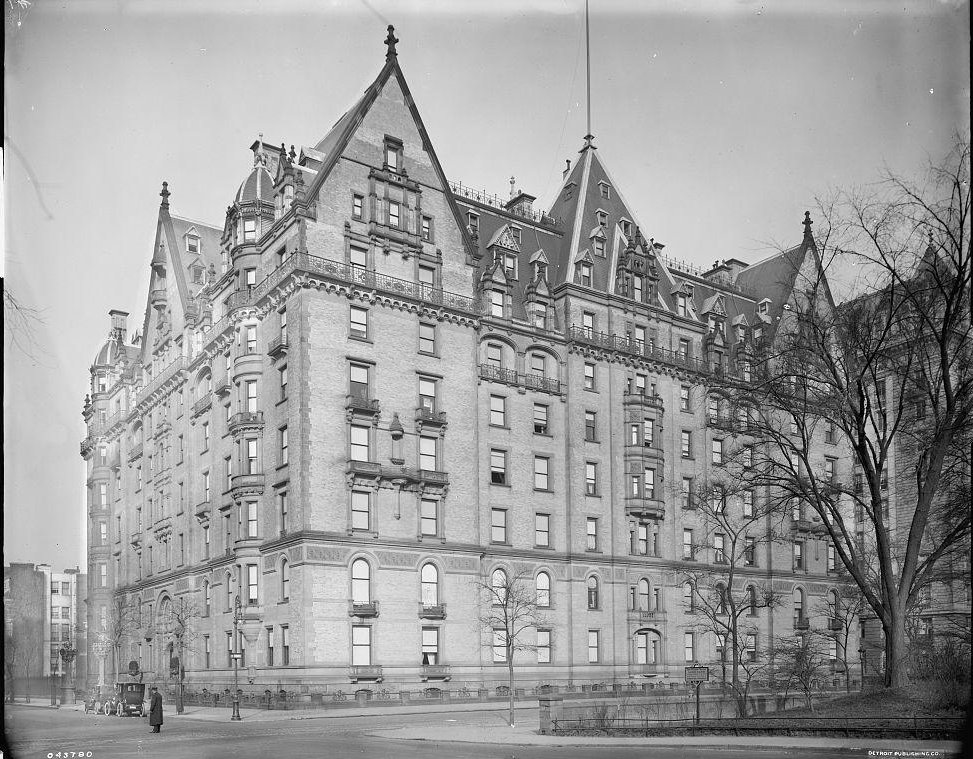
The Dakota Apartment House, ca. 1905. Detroit Publishing Co. Library of Congress, Prints & Photographs Division. No known restrictions on publication.
Sources
- NYC Landmarks Preservation Commission, Dakota Apartments designation report (1969)
- National Park Service, National Register documentation
- The New York Times, "Dakota Apartments to Be Sold; Buyer May Raze 1881 Building" (1961)
- The New York Times, "Dakota Tenants to Buy Building" (1961)
- The New York Times, "John Lennon of Beatles Is Killed" (1980)
- Library of Congress, Detroit Publishing Co. photograph
- Library of Congress, Historic American Buildings Survey photographs of the Dakota (1965)
- Wikimedia Commons, The Dakota by Ajay Suresh (CC BY 2.0)
.jpg)