Who Built Castle Clinton? A Harbor Fort That Became an Opera House, an Immigrant Depot and an Aquarium
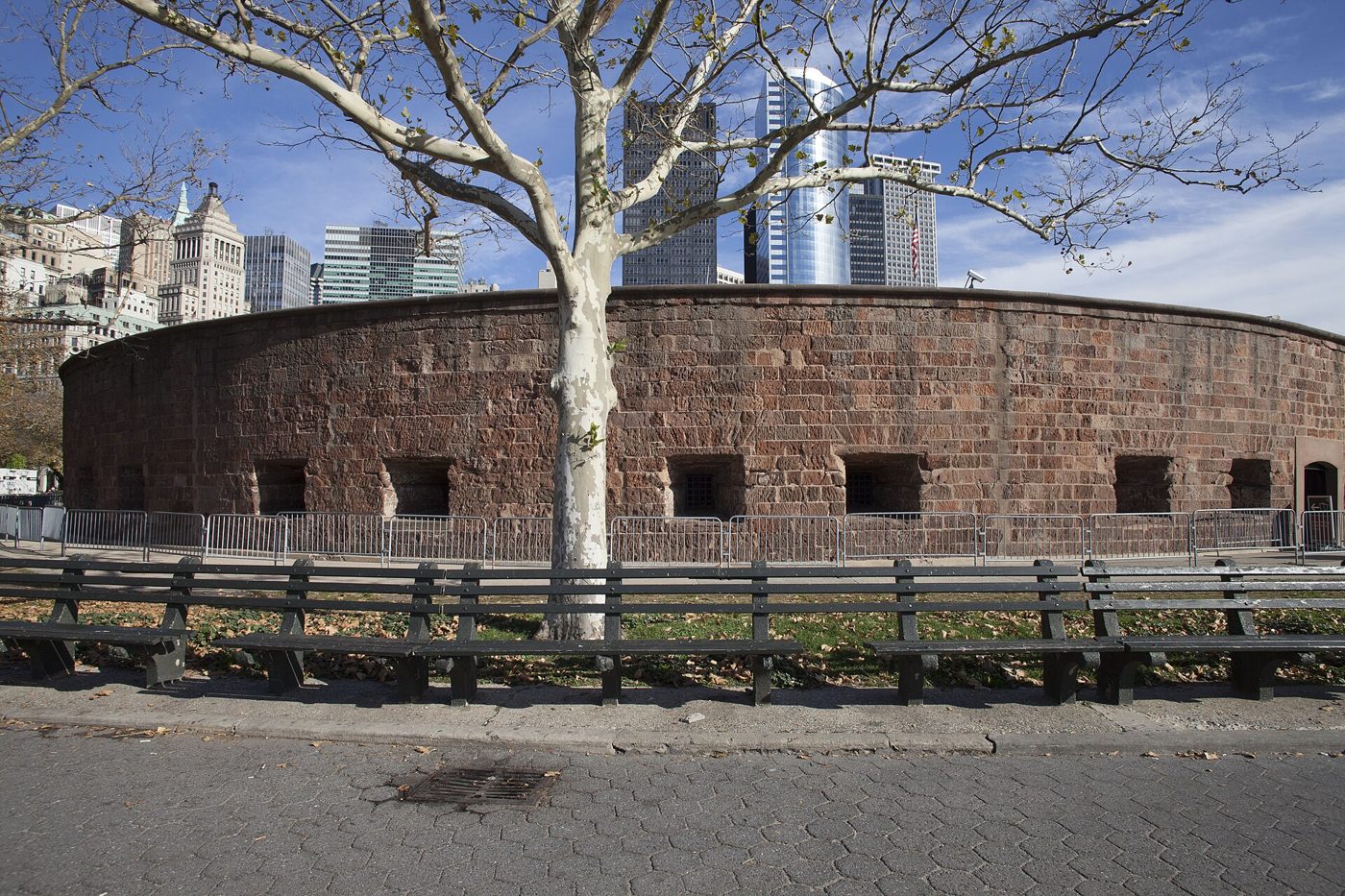
Castle Clinton National Monument in Battery Park. National Park Service, via Wikimedia Commons. Public domain.
Castle Clinton was built as a harbor fort, and it never fired at an enemy. The Landmarks Preservation Commission says none of its 28 guns ever fired a shot in a military engagement, though the fort mattered to the protection of New York during the War of 1812. After the army left, the same round walls held a garden and opera house, then an immigration depot, then the city's aquarium. The National Park Service now runs it as a national monument, and it is where visitors line up for the Statue of Liberty and Ellis Island ferries.
Who built Castle Clinton?
The sources name two designers. The National Park Service says Lt. Col. Jonathan Williams, chief engineer of the U.S. Army Corps of Engineers and first commandant of the U.S. Military Academy at West Point, designed it and led construction, working with the architect John McComb Jr. The Landmarks Preservation Commission lists McComb as the architect and dates the building to 1807. The Park Service says it was built between 1807 and 1811.
It was first called the Southwest Battery. It stood on a rocky outcrop offshore from the tip of Manhattan, connected by a 200 foot wooden causeway and drawbridge. The walls are brownstone, eight feet thick, and the Park Service says the plan was almost completely circular with one flat edge facing Manhattan. Twenty-eight gun ports held cannon that could fire 32-pound balls up to 1.5 miles. Williams had planned a multi-tiered fort like Castle Williams on Governors Island, but the Park Service says it was built single-tiered.
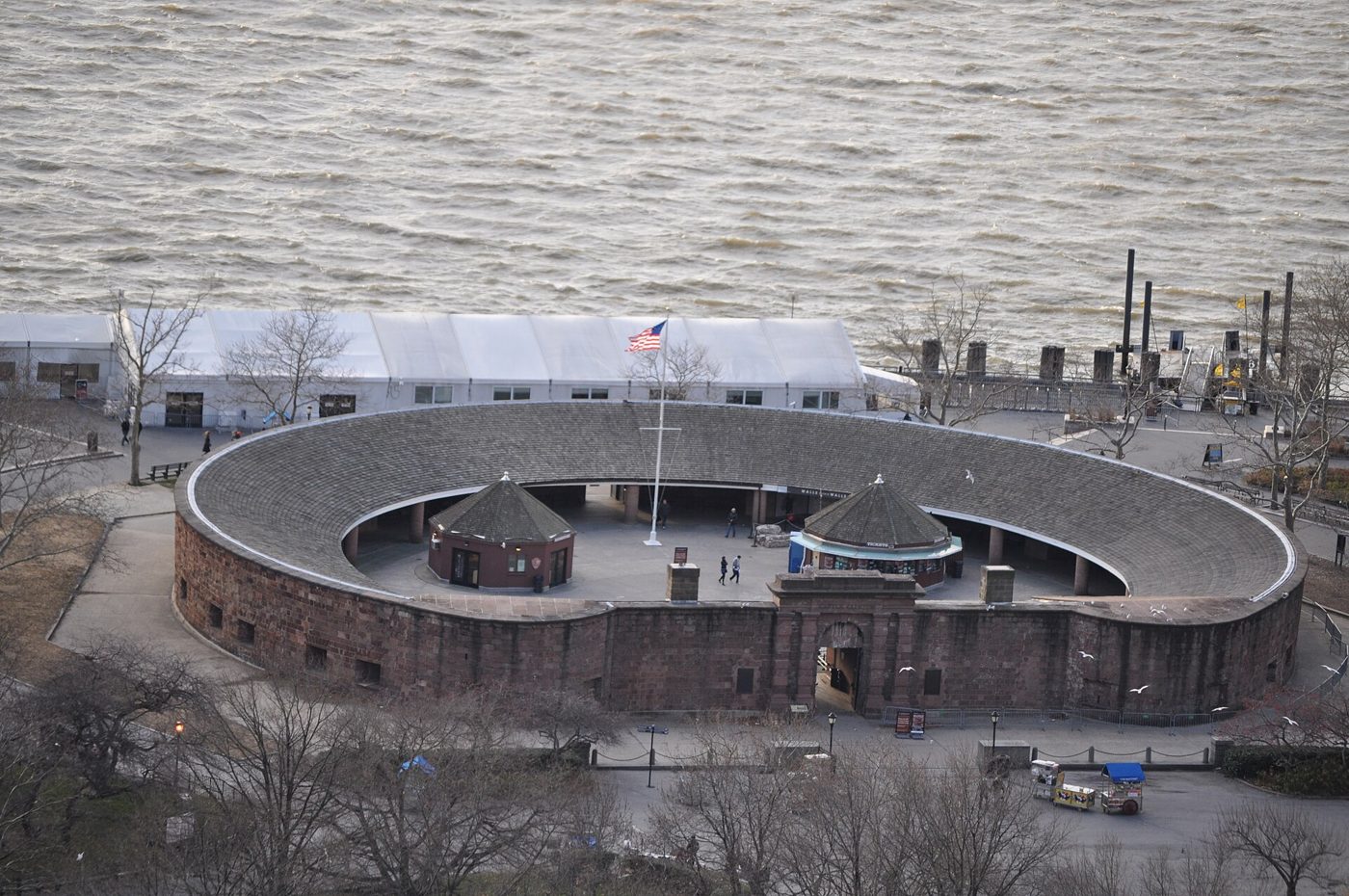
Castle Clinton seen from above. Photograph by Afshin Darian, via Wikimedia Commons. CC BY 2.0.
Why was a fort built at the Battery?
The Park Service says it was the last in a series of forts built to protect New York Harbor and Lower Manhattan. The Dutch had built Fort Amsterdam on the spot in 1626, and the British-held Fort George was demolished between 1788 and 1790. By 1807, Britain was interfering with American trade and seizing sailors, and President Jefferson renewed the coastal fortification program. The Southwest Battery was one of four forts built in the Upper Bay between 1807 and 1811, with Fort Gibson on Ellis Island, Fort Wood on Liberty Island and Castle Williams on Governors Island.
The garrison arrived on June 2, 1812, ten days before the United States declared war. The Park Service says the battery never saw action and fired only to celebrate anniversaries and for target practice. Britain blockaded New York Harbor from May 26, 1813 to March 6, 1815.
Who was Castle Clinton named for?
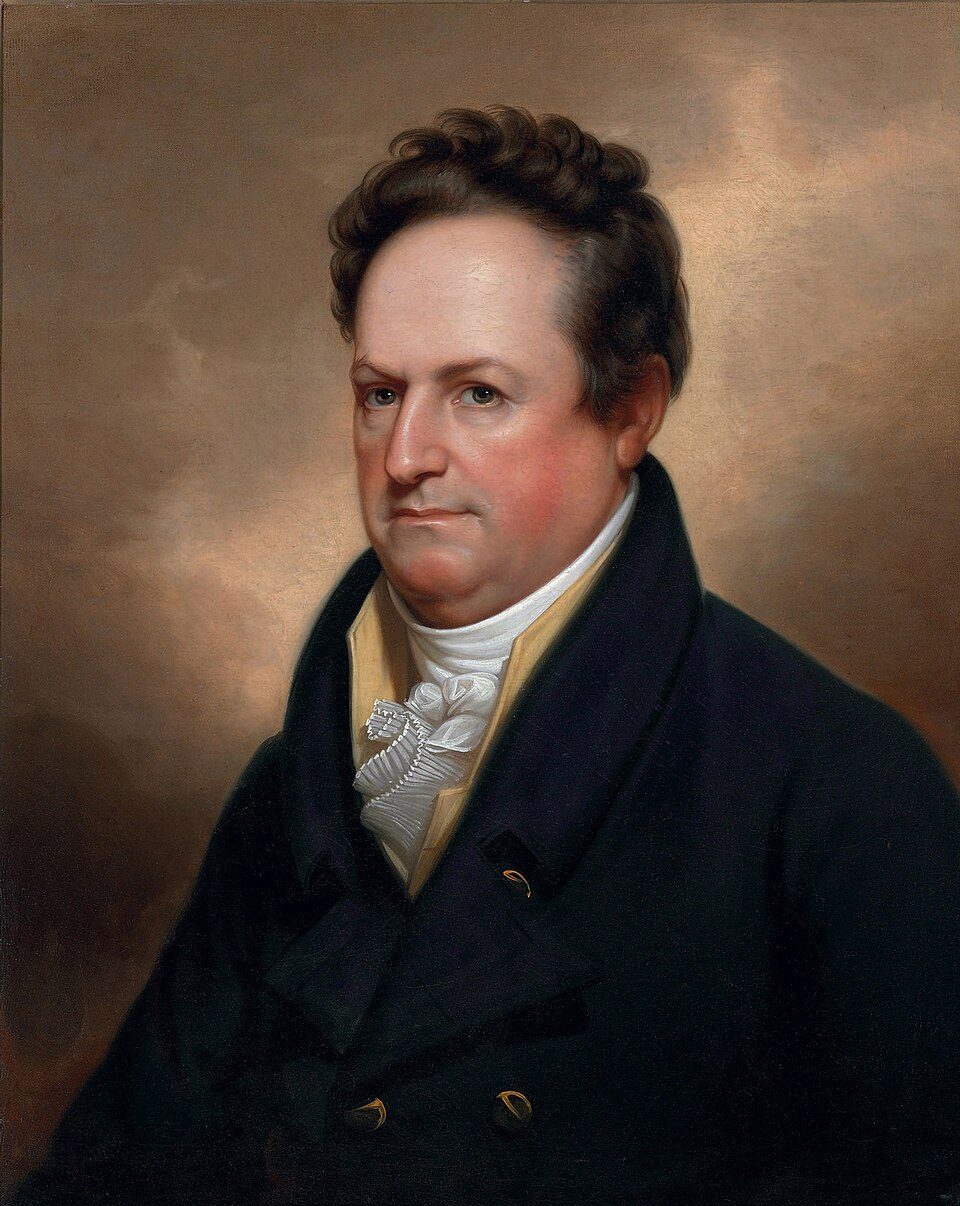
General Alexander McComb made the fort his headquarters in 1815 and renamed it Castle Clinton for DeWitt Clinton, a popular mayor of New York who later became governor. The Park Service says Winfield Scott moved the military headquarters to Governors Island by 1821, and the army left. The fort was deeded to New York City in 1823.
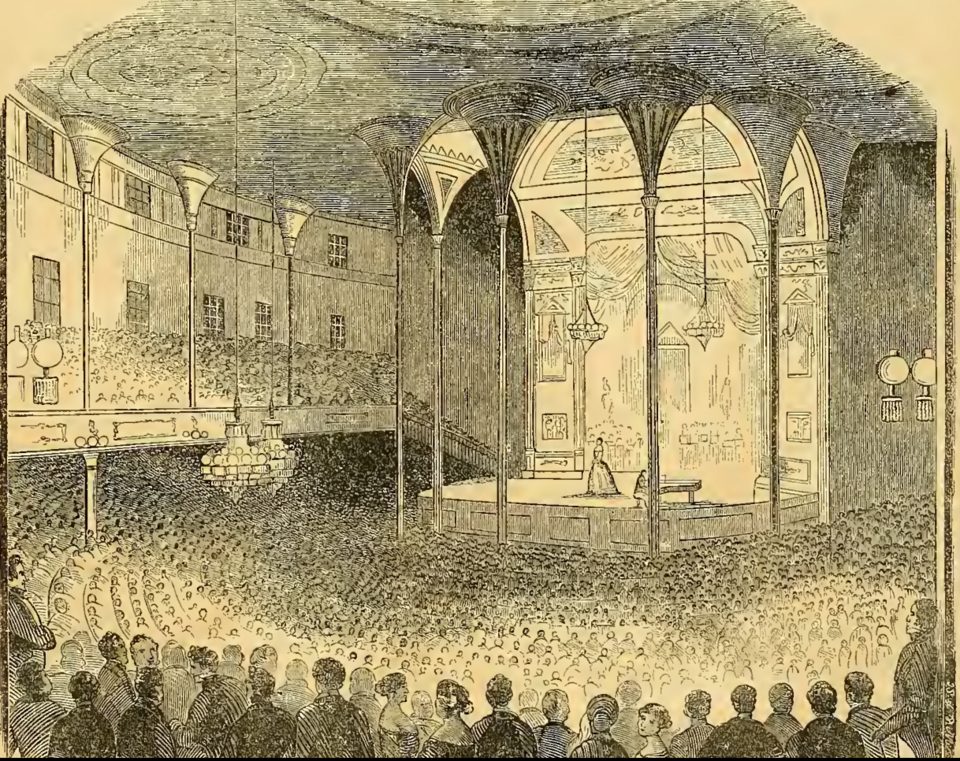
Castle Garden during one of Jenny Lind's concerts. Gleason's Pictorial Drawing-Room Companion, via Wikimedia Commons. Public domain.
How did the fort become Castle Garden?
The city leased the structure to businessmen, and the Park Service says it opened as Castle Garden in the summer of 1824, one of four popular amphitheaters in the city, with refreshments, live music, exhibitions and fireworks. Lafayette was greeted there in August 1824, and the Park Service says a grand reception followed on September 14. In 1833, according to the Park Service, President Andrew Jackson led a procession on horseback across the footbridge, and the bridge collapsed behind him.
In 1841 the lease went to Philip French and Christopher Heiser, who added an ornate domed roof, a central fountain and seating for 6,000, the Park Service says. The reopening in 1845 featured Italian opera, with Rossini's Semiramide before an audience of three to four thousand. The Landmarks Preservation Commission also says the dome was added in 1845, and the Park Service fact sheet says the redesign came in 1844. On September 11, 1850, the singer Jenny Lind made her American debut there, and the Park Service says more than 5,000 people attended her first concert. P. T. Barnum held a sublease and promoted it. Samuel Morse's telegraph and Samuel Colt's revolving rifles were also shown there, the Park Service says.
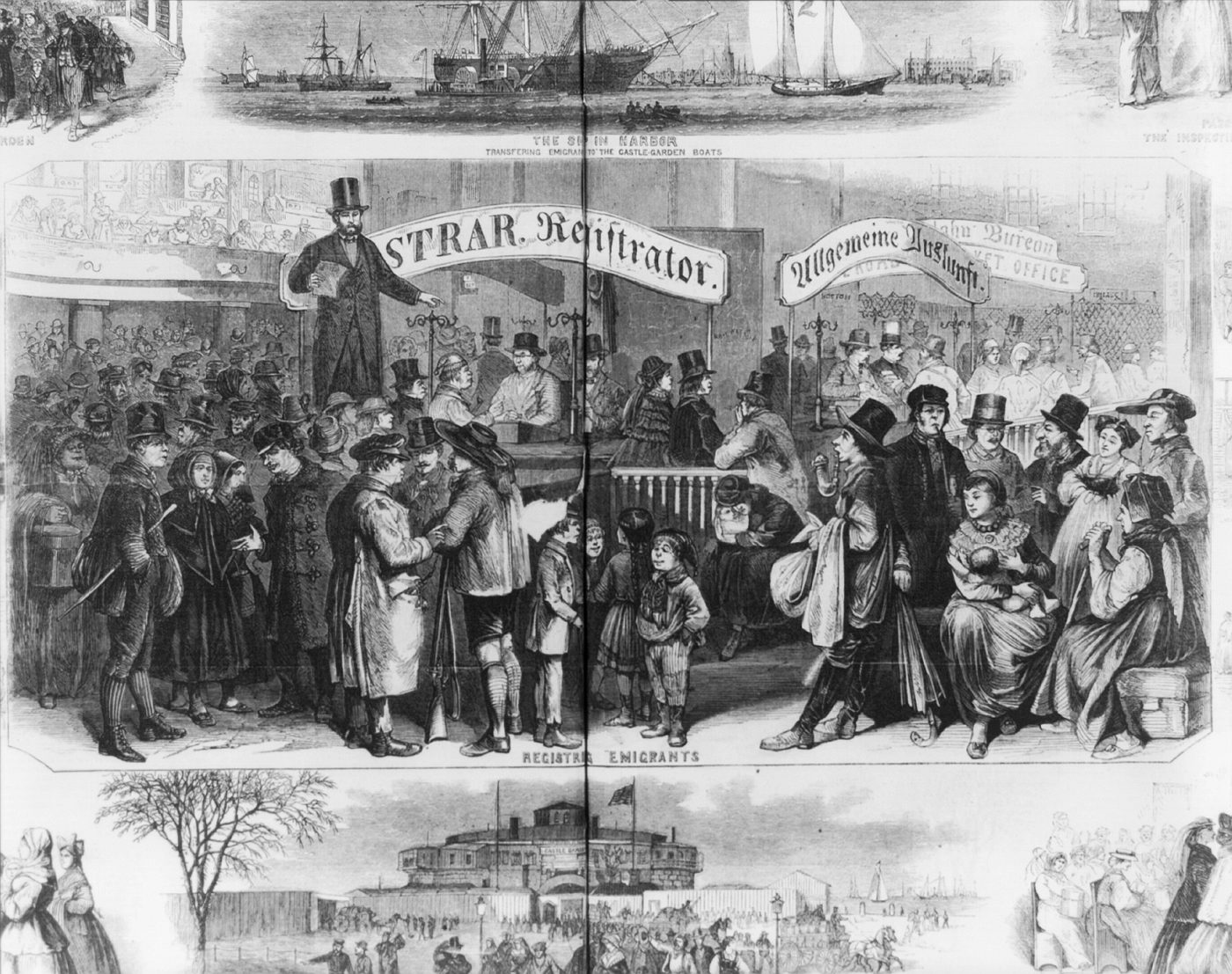
Immigrants at Castle Garden, New York City, 1866. Wood engraving, Library of Congress, via Wikimedia Commons. Public domain.
What was Castle Garden as an immigration depot?
The Park Service calls Castle Garden Emigrant Depot America's first facility dedicated entirely to the welfare of immigrants. It opened on August 3, 1855 and closed on April 30, 1890. Between August 3, 1855 and December 31, 1889, the Park Service says 8,280,917 of the 10,956,910 immigrants who entered the United States, about 75 percent, passed through it. The Landmarks Preservation Commission gives a rounder figure of approximately 7,500,000. The Park Service says the largest groups were Germans, then Irish, English, Swedish and Italians, and that about 20 percent of Americans can trace their ancestry to someone who came through Castle Garden.
Officials recorded each person's name, ship, destination and the money they carried. Immigrants could exchange money, buy railroad tickets and store baggage. Yiddish-speaking immigrants called the noisy rotunda "Kesselgarden," the Park Service says. The depot kept the opera house's columns and second-floor balcony. The Park Service says that most of its original records were destroyed.
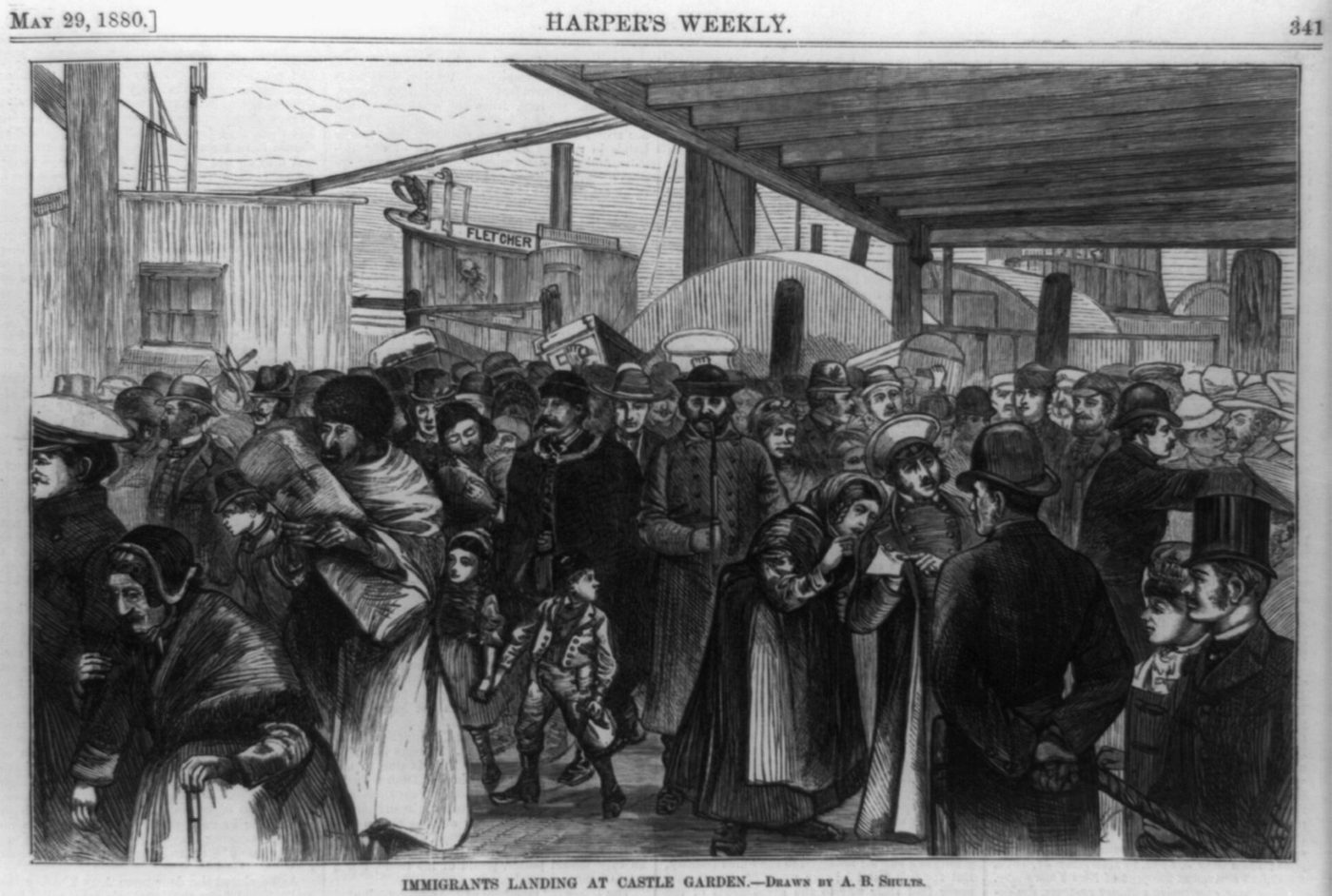
Immigrants landing at Castle Garden. Drawing by A. B. Shults, Harper's Weekly, Library of Congress, via Wikimedia Commons. Public domain.
How did it become an aquarium and a national monument?
When immigration processing moved to Ellis Island between 1890 and 1892, the Park Service says the space was converted into New York City's first aquarium, which opened in 1896. The Landmarks Preservation Commission says McKim, Mead & White remodeled the building in 1896 for that purpose, and it was an aquarium until 1941. In 1941 it was to have been demolished to make way for approaches to the Brooklyn-Battery Tunnel. The commission says the fort was saved in 1946, when it was renamed Castle Clinton and became a national monument. The Park Service fact sheet gives the date of establishment as August 12, 1946. The commission designated it a landmark on November 23, 1965 and says it was restored to its original appearance.
Who owns Castle Clinton today?
The federal government does. The Landmarks Preservation Commission says it became a national monument under the jurisdiction of the National Park Service of the U.S. Department of the Interior, and the Park Service says it has operated the site ever since.
Sources
- NYC Landmarks Preservation Commission, Castle Clinton designation report, 1965
- National Park Service, Southwest Battery/Castle Clinton 1807-1823
- National Park Service, Castle Garden Entertainment Center 1823-1854
- National Park Service, Castle Garden Emigrant Depot
- National Park Service, Fact Sheet: Castle Clinton National Monument
- National Park Service, Castle Clinton Operating Hours and Seasons
- National Park Service, Castle Clinton Plan Your Visit
Visiting Castle Clinton
- Location: The southern end of Battery Park, along the water's edge.
- Hours: The Park Service lists 7:45 am to 5 pm every day. It is closed Thanksgiving and December 25, and may close in bad weather. The Park Service gives a number to call to confirm: (212) 344-7220.
- Tours: The Park Service says ranger-guided tours run every day, with the schedule posted on the door of the Castle Clinton Exhibit. Its fact sheet describes a free 20-minute "History of the Castle" tour.
- Ferries: The Park Service says Castle Clinton is the starting point for the Statue of Liberty and Ellis Island ferries, which require airport-style security. Tickets are sold on site or at statuecruises.com.
Checked against the Park Service hours page and its Plan Your Visit page. Confirm hours and ticket rules there.