Who Built the Brooklyn Bridge? How Three Roeblings Finished It
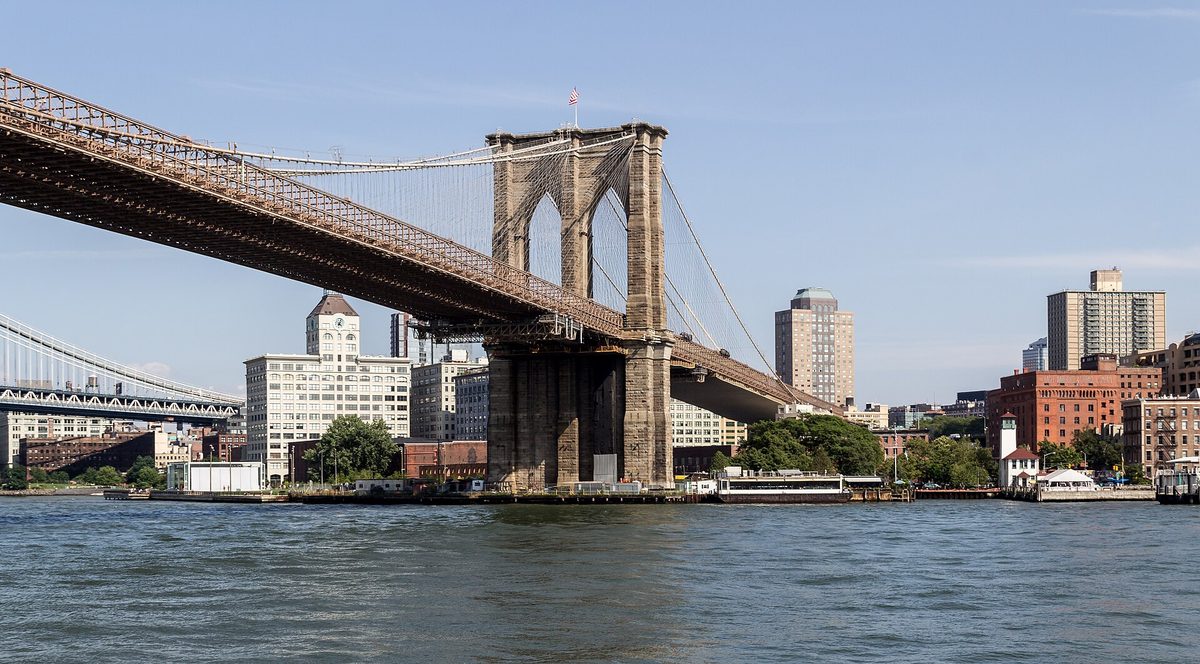
The Brooklyn Bridge over the East River, July 2012. Photograph by Dietmar Rabich, via Wikimedia Commons. CC BY-SA 4.0.
The short answer to who built the Brooklyn Bridge is the Roebling family. John A. Roebling designed it and died in 1869, before construction was well underway. His son, Washington A. Roebling, took over as chief engineer. When Washington was left an invalid by the bends, his wife, Emily Warren Roebling, carried the work between his sickroom and the construction site. The bridge opened on May 24, 1883.
Who designed the Brooklyn Bridge?
The National Park Service's landmark nomination says John A. Roebling came to America from Prussia in 1831 and had already built suspension bridges at Pittsburgh, near Port Jervis, at Niagara, and over the Ohio River at Cincinnati. In 1867 he wrote that the Brooklyn work would be "the greatest engineering work of the continent, and of the age." He did not see it built. The American Society of Civil Engineers says that while he was surveying for the Brooklyn tower, a ferry pinned his foot against a dock, and he died of tetanus a few weeks later. The nomination dates his death to July 1869.
The sources differ on the start date. The city's Department of Transportation says construction began in 1869, and the engineers' society gives January 3, 1870. Both agree it finished in 1883.
How did Washington Roebling build the towers?
The foundations were built in pneumatic caissons, bottomless timber boxes sunk into the riverbed with compressed air inside to keep water out. The nomination says the New York caisson was launched on May 8, 1871, and towed into position on September 11. Because the New York side was deeper, the workers there got caisson disease, the bends. Between January 25 and May 31, 1872, the official physician, Dr. Andrew H. Smith, reported 110 cases. On May 18, after a third worker died, Roebling stopped the digging at 78 feet 6 inches below high water and had the caisson filled with stone, sand and concrete. The work was done by July 12.
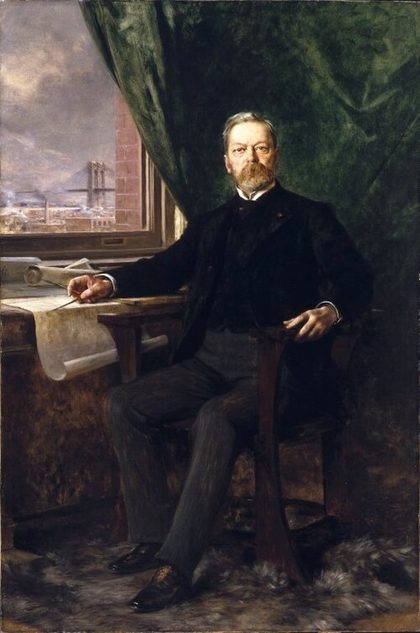
The National Trust for Historic Preservation says Washington Roebling himself was stricken during the caisson work and was left weak and reclusive, but stayed chief engineer through to the opening, watching the construction from a window of the couple's Brooklyn Heights home.
The towers are limestone and granite. The nomination says the Brooklyn tower was finished in June 1875 and the New York tower 13 months later, and that the keystones of the Brooklyn tower's arches weigh 11 tons each. Its gothic arches rise 117 feet above the roadway. The cables were spun from the Brooklyn side: the nomination counts 5,434 individual steel wires in all, 152 more than John Roebling had planned, added because about 221 tons of wire proved deficient once laid. The bridge was the first to use galvanized steel wire for its cables, according to the engineers' society.
What did Emily Roebling do?
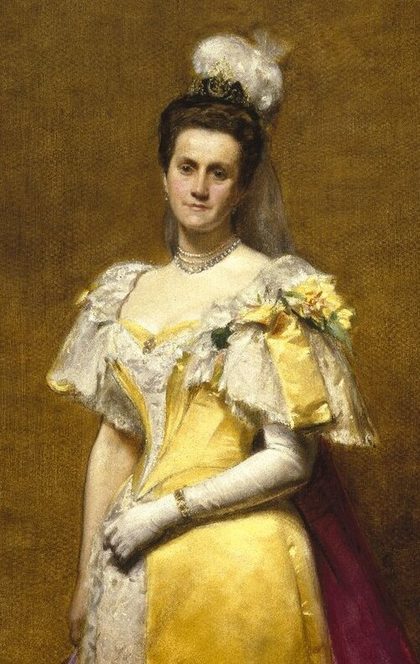
The National Trust says Emily visited the site daily, sometimes several times a day, carrying information between Washington and the assistant engineers and contractors, and wrote every piece of correspondence that left the Roebling house for the bridge office. It adds that rumors she was acting as chief engineer were not true: Washington kept the post. She was, in Washington's words, "a woman of infinite tact and wisest counsel." The Trust and the engineers' society both say she was the first person to ride across the finished bridge, in an open carriage with a rooster as a symbol of victory. Plaques honoring her are on each tower.
When did the Brooklyn Bridge open?
The official opening was May 24, 1883. The National Trust says Emily Roebling, Brooklyn's mayor Seth Low and marching bands crossed from the Brooklyn side, and President Chester A. Arthur and Governor Grover Cleveland crossed from Manhattan. The engineers' society says more than 150,000 people crossed on opening day, schools and businesses in both cities closed, and the day ended with an hour-long fireworks display.
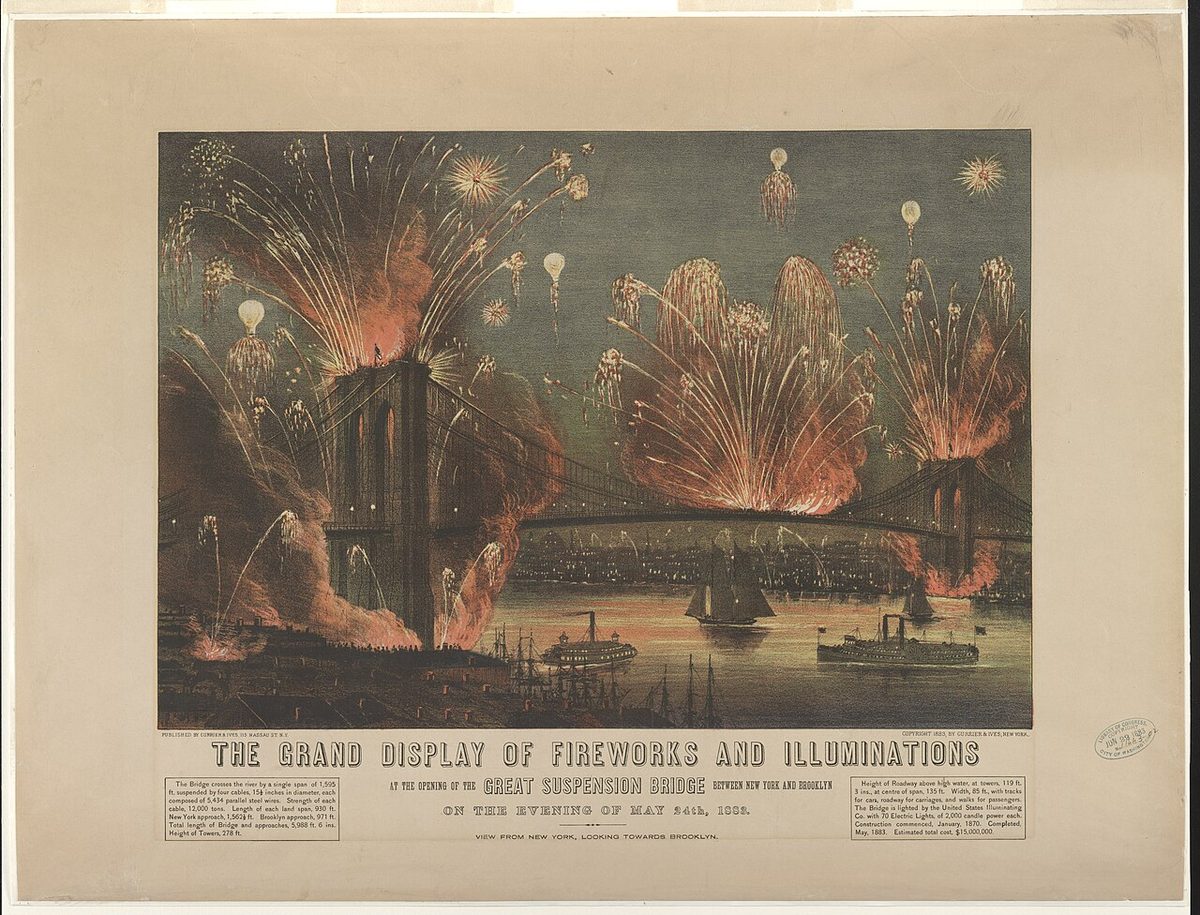
The grand display of fireworks at the opening of the bridge between New York and Brooklyn, May 24, 1883. Print, Library of Congress, via Wikimedia Commons. Public domain.
The city's Department of Transportation puts the bridge's main span at 1,595.5 feet and its total length with approaches at 6,016 feet, with 135 feet of clearance at the center. It was the longest suspension bridge in the world when it opened. The nomination says it stayed the largest for twenty years.
The bridge was built for pedestrians, vehicles and cable cars, with an elevated promenade down the center of the roadway. The nomination says the cable cars were carrying more than 30,000,000 passengers a year by 1888, and that trolleys and elevated trains followed. The department says the railroad and trolley tracks came out in a reconstruction between 1944 and 1954, which also widened the roadway from two lanes to three.
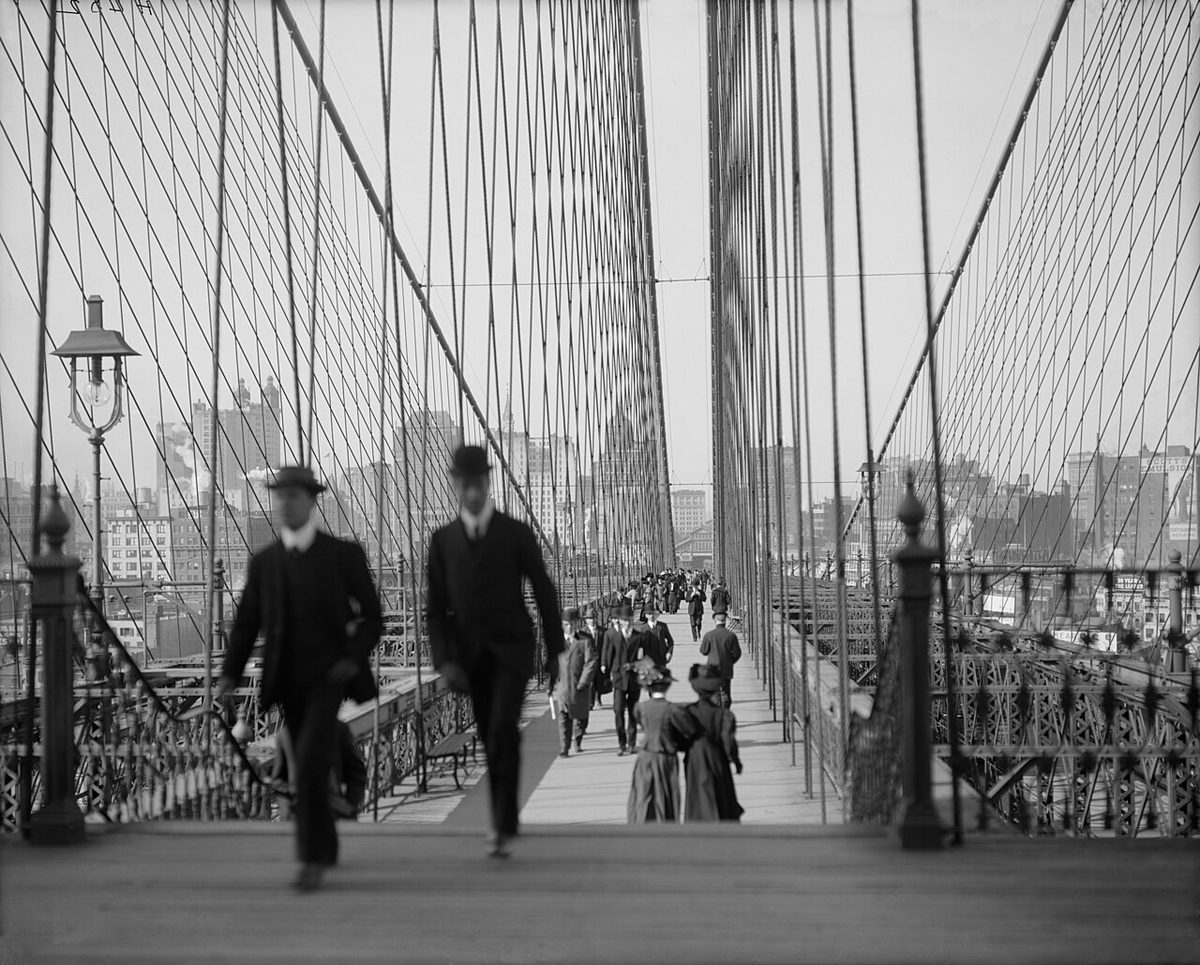
Pedestrians on the Brooklyn Bridge, between 1905 and 1920. Detroit Publishing Company, Library of Congress, via Wikimedia Commons. Public domain.
The department says the bridge was designated a National Historic Landmark in 1964 and a National Historic Civil Engineering Landmark in 1972, and that the bridge and the lots forming its approaches became New York City landmarks in 1967.
Who owns the Brooklyn Bridge today?
The city's Department of Transportation operates it and runs its repair contracts. Its page lists work on the towers and approach arches, including strengthening the masonry towers and repointing the granite. The sources used here do not include a deed, so this article reports who runs the bridge, not the form of title.
Sources
- NYC Department of Transportation, Brooklyn Bridge
- National Park Service, National Historic Landmark nomination, Brooklyn Bridge
- National Trust for Historic Preservation, Emily Warren Roebling: A Cornerstone in the Construction of the Brooklyn Bridge
- ASCE Metropolitan Section, Brooklyn Bridge
Visiting the Brooklyn Bridge
- Walking it: The bridge carries a pedestrian promenade and a protected bicycle path alongside five lanes of vehicle traffic, with no trucks. The Department of Transportation reports that in 2024 an average of 28,845 pedestrians and 5,504 cyclists crossed each day.
- Bike path: The promenade is shared with the bike path, which opened in September 2021 in place of a vehicle lane.
Checked against the NYC Department of Transportation bridge page in October 2026. Repair work can narrow the walkway at times, so confirm before you go.