The Winter Garden Theatre: A Horse Market Turned Cats, Mamma Mia! and Beetlejuice Theater
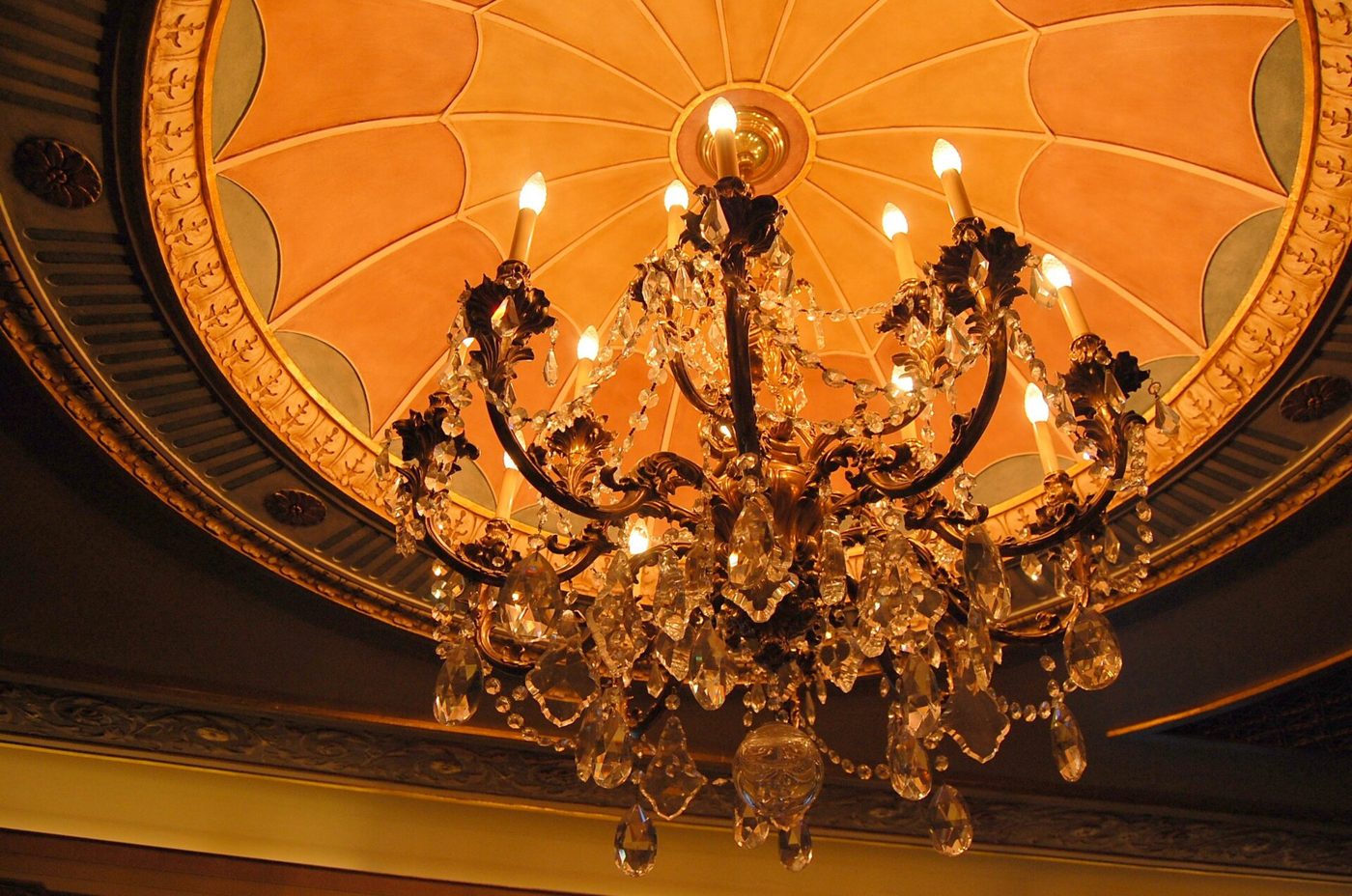
The ceiling dome and chandelier inside the Winter Garden Theatre, June 2010. Photograph by Yusuke Kawasaki, via Wikimedia Commons. CC BY 2.0. No open-license photo of the exterior turned up, so the photos here show the interior.
What is the Winter Garden Theatre?
The Winter Garden Theatre at 1634 Broadway, at West 50th Street, opened in 1911 in a building that began as a horse market. The Shubert Organization says it has owned the Winter Garden "longer than any of its other venues." The Landmarks Preservation Commission (LPC) designated its interior, though not its exterior, on January 5, 1988 (LP-1387). It is where Cats ran for almost 18 years, from October 7, 1982 to September 10, 2000, according to the Internet Broadway Database (IBDB), where Mamma Mia! opened in 2001 and where Beetlejuice played in 2019 and 2020.
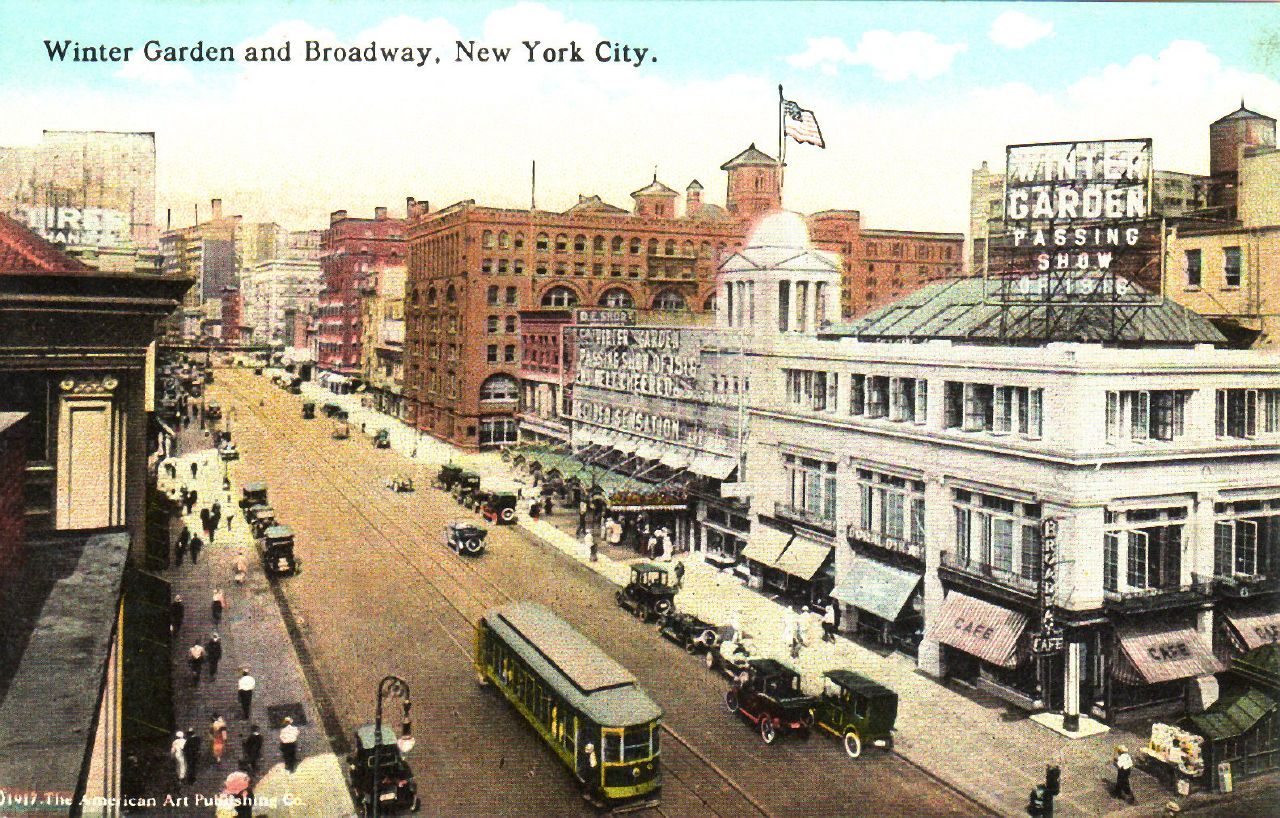
A 1917 postcard of the Winter Garden Theatre showing The Passing Show of 1916. The American Art Publishing Co., via Wikimedia Commons. Public domain.
Was the Winter Garden really a horse market?
Yes. The Shubert Organization says the playhouse occupies the second American Horse Exchange, built by William K. Vanderbilt in 1896, when Longacre (now Times Square) was the center of the horse and carriage trade. By 1911, when the Shuberts leased the Exchange, horses had given way to the automobile. IBDB gives the terms: in 1910 the Shuberts leased the American Horse Exchange from William K. Vanderbilt for $40,000 for 40 years and turned it into a theater. The LPC's designation report names a different Vanderbilt. It says Lee Shubert met Alfred Gwynne Vanderbilt, who owned the American Horse Exchange on Broadway at West 50th Street, and that the Shuberts acquired the Exchange from him and hired W. Albert Swasey to remodel it. Sources differ on which Vanderbilt it was, and this article does not choose. The LPC header describes the structure as built about 1885, rebuilt in 1896, and remodeled and partially rebuilt for theater use in 1910-11.
How did Swasey turn a showring into a theater?
The Shubert page says the architect William Albert Swasey converted the existing building by turning the showring into an auditorium with only one balcony and decorating it with a garden motif. Because of the existing space, the playhouse came out unusually wide. The Shubert Organization says the proscenium opening is still the widest of all Shubert theaters, which brought the audience closer to the stage. Swasey left the Horse Exchange's trusses exposed, covered the ceiling in sky-blue canvas and trimmed it and the walls with latticework. Garlands and leaves entwined the box fronts and proscenium arch. The page says the stage at one point included a water tank, and that in its first decade a runway extended out into the audience, which audiences dubbed "The Bridge of Thighs."
The LPC's report fills in the architect. It says Swasey, who was born in Melbourne, Australia to American parents and graduated from MIT in 1882, first made his reputation as a residential architect in St. Louis and moved to New York in 1905. Of the four theaters he designed there for the Shuberts, the report says only the Winter Garden survives. It quotes a 1911 journal description of the new theater as "absolutely fireproof" with "more exits than any other auditorium in the United States," and says Swasey built in large stairwells, ample corridors, metal fixtures and brick and metal dividers between rooms and floors. It describes a 1920 fire in the building between the Winter Garden and the Capitol Theater that caused one million dollars in damage. The Winter Garden suffered little, but J. J. Shubert was injured by falling glass while pacing the theater's runway.
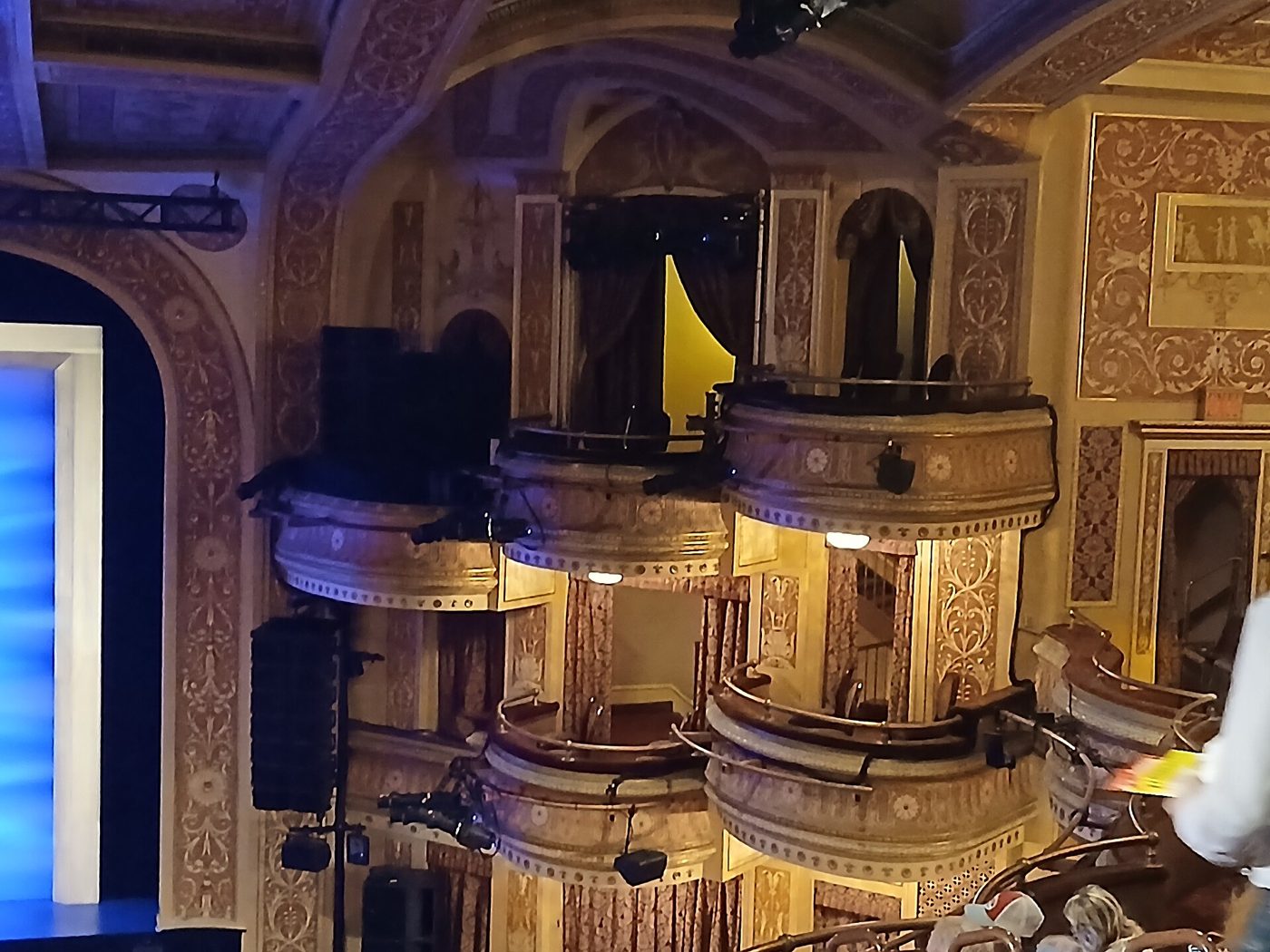
Box seats and proscenium at the Winter Garden Theatre, August 2025. Photograph by Epicgenius, via Wikimedia Commons. CC BY-SA 4.0. Mamma Mia! was playing.
What did Herbert Krapp change in 1922?
IBDB says the Shuberts hired Herbert J. Krapp in 1922 to design an extensive renovation and modernization of the auditorium. The LPC dates the remodeling 1922-23. The Shubert page says it came twelve years after the theater opened. It eliminated the runway, lowered the ceiling and proscenium arch and covered the trusses, adding elegant ornament that brought the theater in line with the traditional Adamesque style used in other Shubert venues. The LPC says the theater's handsome ornament is a product of Krapp's 1923 remodeling and "an excellent example of the elegant Adamesque style in which he worked," and that its interior has an unusual configuration reflecting its history, particularly Swasey's remodel for a large theater designed to house lush musical revues. The report credits Krapp with designing sixteen of the extant Broadway theaters, nearly half the total.
The Shubert page says a multimillion-dollar restoration followed in 2001, after Cats closed, overseen by the architect Francesca Russo, to bring the theater back to its "Twenties' glory."
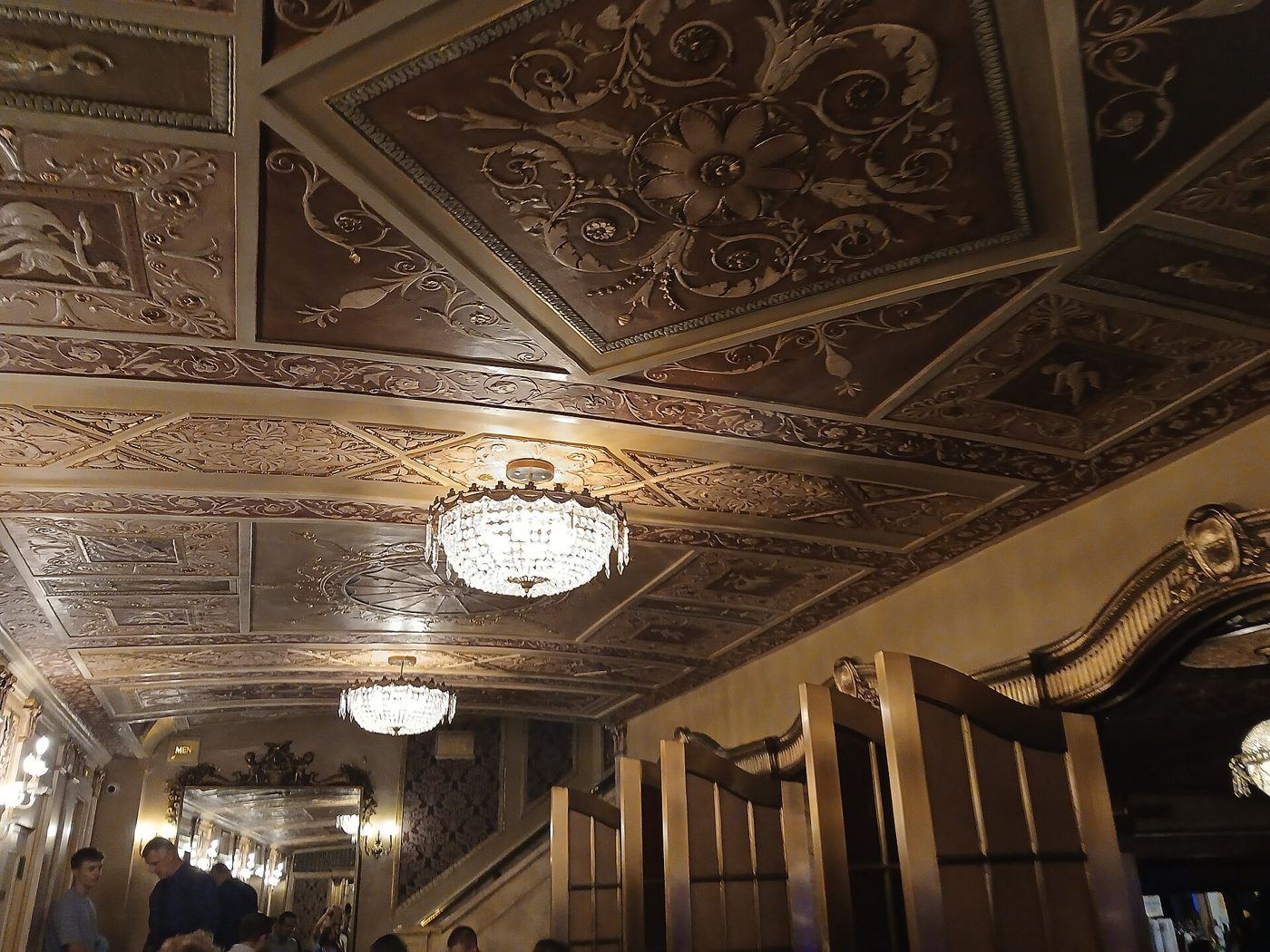
The ornamental ceiling inside the Winter Garden Theatre, August 2025. Photograph by Epicgenius, via Wikimedia Commons. CC BY-SA 4.0.
What has played at the Winter Garden?
The Shubert page says the theater has traditionally been home to revues and musicals. The Passing Show, the Shuberts' answer to Ziegfeld's Follies, and almost every Al Jolson musical played here. IBDB says that in 1932 the Shuberts negotiated with Ziegfeld's widow, Billie Burke, to take over the name and format of his Follies. The Shubert page lists editions of the Ziegfeld Follies in 1934, 1936, 1943 and 1947 with performers including Fanny Brice, Bob Hope, Gypsy Rose Lee and Josephine Baker. It names Mary Martin in Peter Pan (1954), the premiere of West Side Story (1957), Funny Girl (1964), which it says made Barbra Streisand a major star, and Mame (1966). In the 1970s it lists Follies (1971), Gypsy (1974) with Angela Lansbury and Pacific Overtures (1976). It says 42nd Street opened here in 1980 before moving to the Majestic.
IBDB dates Cats from October 7, 1982 to September 10, 2000, and the Shubert page calls it the second longest-running show in Broadway history. IBDB shows Mamma Mia! opening October 18, 2001, and its list for the theater runs to October 19, 2013, which matches the Shubert page's statement that it stayed until 2013 and then moved to the Broadhurst. IBDB dates Beetlejuice here from April 25, 2019 to March 10, 2020. The Shubert page also names Rocky the Musical (2014), Wolf Hall (2015) and Andrew Lloyd Webber's School of Rock (2015). IBDB also lists a return of Mamma Mia! from August 14, 2025 to February 1, 2026.
How many seats does the Winter Garden have?
The two main sources use different bases. IBDB lists approximately 1,526 seats. The Shubert Organization's specifications table lists a total of 1,600, which is a count that includes 33 standing places. Its seated rows are 1,045 in the orchestra, 486 in the mezzanine and 36 in boxes, which add up to 1,567. The 1,600 figure that is sometimes quoted therefore includes standing room. The two seated counts, 1,526 and 1,567, differ by 41, and this article does not say which is more current.
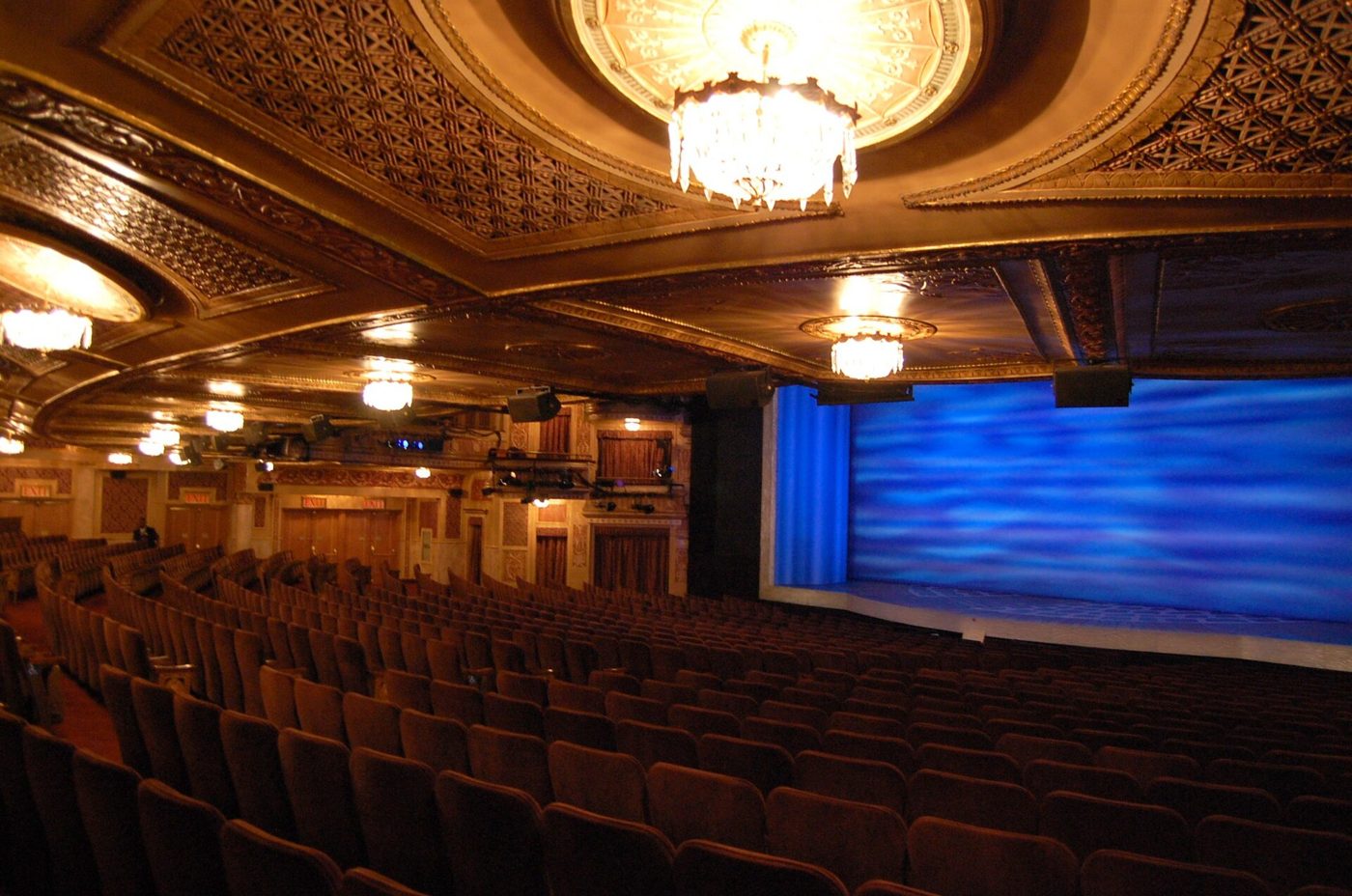
The auditorium and stage of the Winter Garden Theatre, June 2010, during Mamma Mia! Photograph by Yusuke Kawasaki, via Wikimedia Commons. CC BY 2.0.
Is the Winter Garden a New York City landmark?
Its interior is. The LPC's report designates the first-floor interior, meaning the inner lobby, the auditorium and the stage, together with the balcony floor interior and ceiling and the fixtures of these spaces. It does not designate the facade. The hearing was held on June 14 and 15, 1982, and the report says two witnesses spoke in opposition and the owner said it had not formulated an opinion. The commission called the interior one of the historic theater interiors that "symbolize American theater for both New York and the nation." This article did not find an exterior designation.
What is playing now?
The Shubert Organization's page features Much Ado About Nothing, with Tom Hiddleston and Hayley Atwell, for "10 weeks only," and also carries a description of Evita. The two items sit side by side, so this article does not state which is currently on stage. Check the Shubert page before you plan a visit.
Where can you eat or drink at the Winter Garden Theatre?
The Shubert Organization's page says no outside food or beverage is permitted unless medically necessary, and it lists a water fountain in the lobby. Theatre Refreshment Company describes itself as the exclusive concessionaire for the Shubert Organization's Broadway theatres in New York City. This article did not find an official list of what is sold at the Winter Garden, and it found no restaurant inside the theater. Hours and offerings can change with each production.
Who owns the Winter Garden Theatre today?
The Shubert Organization says it owns the Winter Garden, and IBDB's history describes the Shuberts leasing the site in 1910. The sources this article read do not say when the Shuberts bought the land, and no deed or other public record was checked. The interior is a landmark, so changes to the designated spaces need LPC approval.
Sources
- The Shubert Organization, Winter Garden Theatre
- Internet Broadway Database, Winter Garden Theatre
- NYC Landmarks Preservation Commission, Winter Garden Theater first-floor interior designation report, LP-1387 (January 5, 1988)
- Theatre Refreshment Company, concessionaire for the Shubert Organization
Visiting the Winter Garden Theatre
- Address: 1634 Broadway, New York, NY 10019, between West 50th and 51st Streets (Shubert Organization).
- Policies: everyone attending needs a ticket, latecomers are seated at management's discretion, children under four are not admitted, and no outside food or beverage is allowed unless medically necessary.
- Accessibility: the Shubert page says the theater is not completely wheelchair accessible. There are no steps into the theater from the sidewalk, the orchestra is accessible without steps, and the mezzanine is up 2 flights (34 steps) with no elevator or escalator.
Checked against Shubert Organization Winter Garden Theatre page. Confirm hours and ticket rules there.