Was the MetLife Clocktower Once the World's Tallest Building?
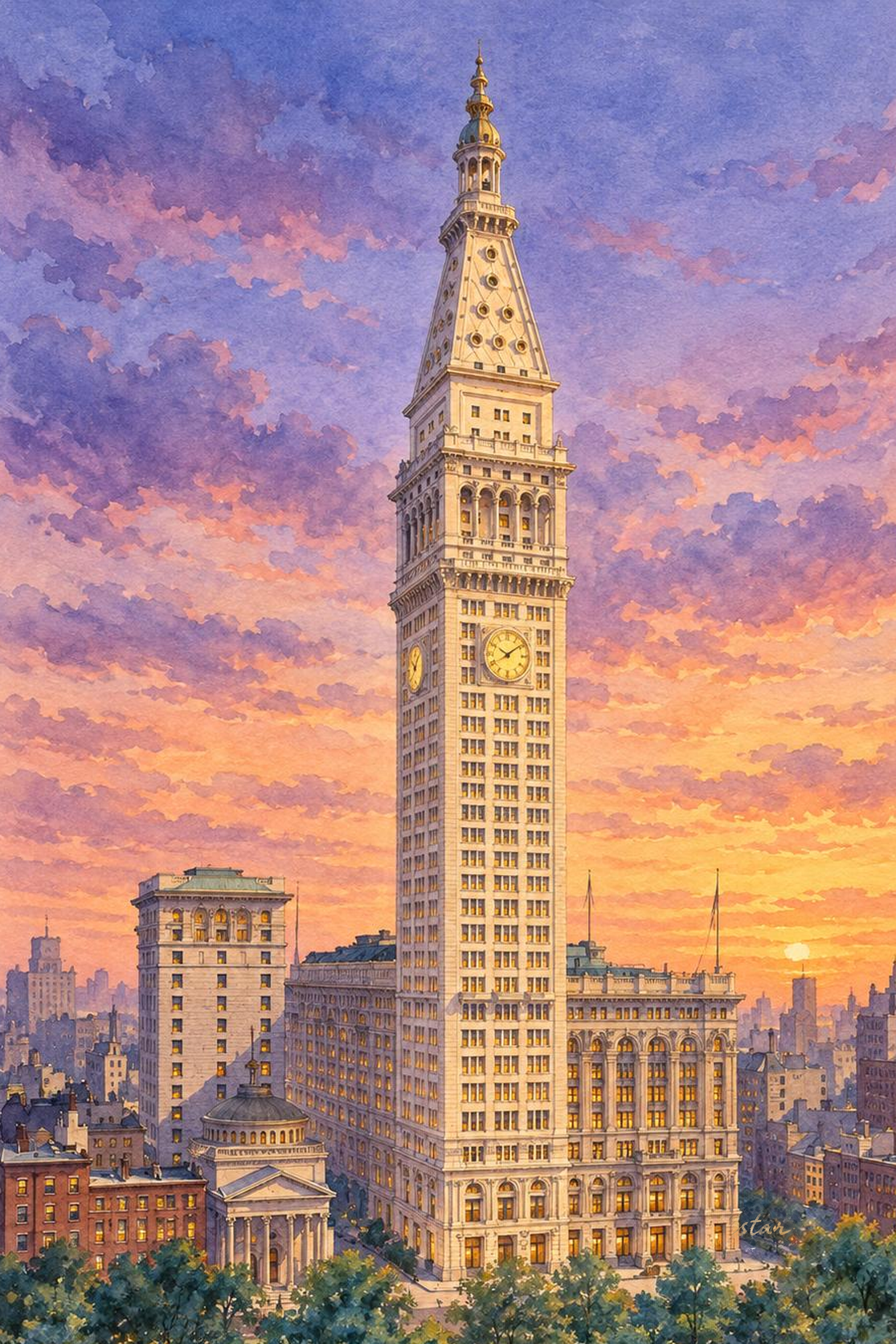
Original watercolour art illustration by Solomon Rokowsky. Based on a 1909 historical photograph by the Detroit Publishing Company, Library of Congress. Rights advisory: No known restrictions on publication.
Yes. The Metropolitan Life Insurance Company tower rose above Madison Square in 1909 and held the world's height record until the Woolworth Building overtook it in 1913. Its 700-foot silhouette gave an insurance company a landmark that New Yorkers could recognize from far beyond its offices.
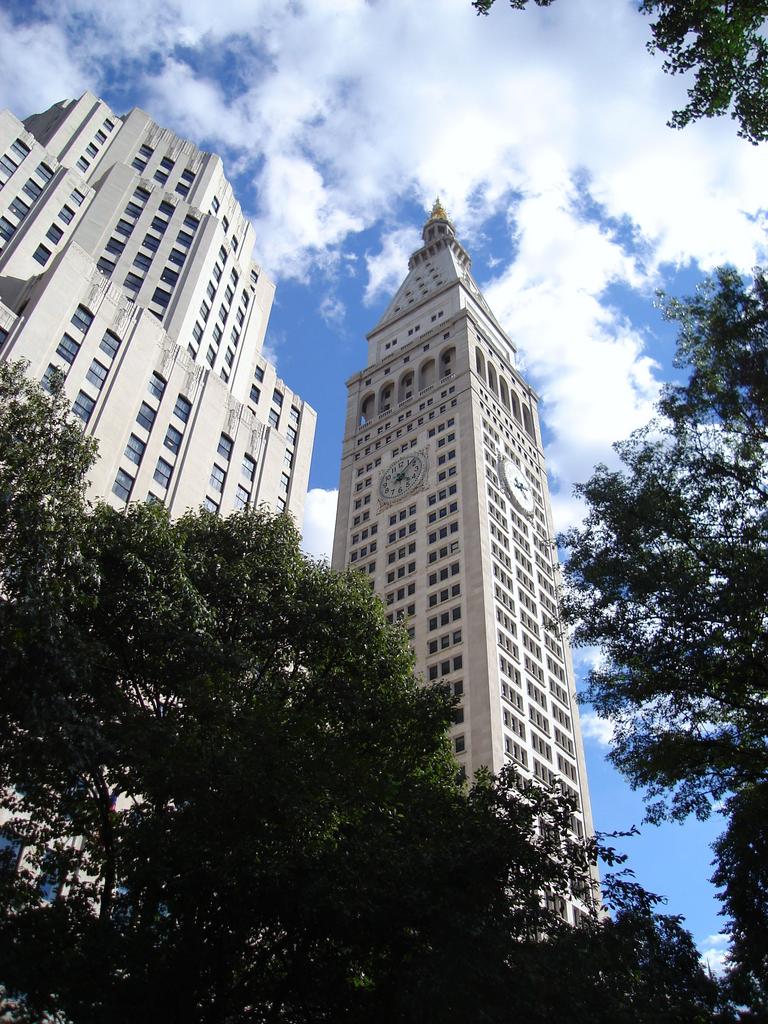
Today the clocktower contains the New York EDITION hotel. The change of use is substantial, but its place in the city remains familiar: a slender tower facing a public park, with huge clockfaces, an arcaded upper stage and a tapering crown. It is one of the clearest examples of a New York skyscraper borrowing an old architectural idea and stretching it to a new scale.
A Venetian idea on Madison Square
The tower was built in 1907-09 to the design of Pierre L. LeBrun of Napoleon LeBrun & Sons. Its model was the campanile in Venice's Saint Mark's Square. The relationship is visible in the sequence of a long shaft, an open-looking belfry and a pyramidal top, but the New York building was an office tower rather than a freestanding bell tower.
The analogy gave a modern commercial building a recognizable historical shape. Instead of making a broad pile of offices ever taller, the architects set a narrow tower at the northwest corner of the company's headquarters block, facing Madison Avenue and 24th Street. Madison Square Park supplied a foreground in which the tower could be seen as a complete object.
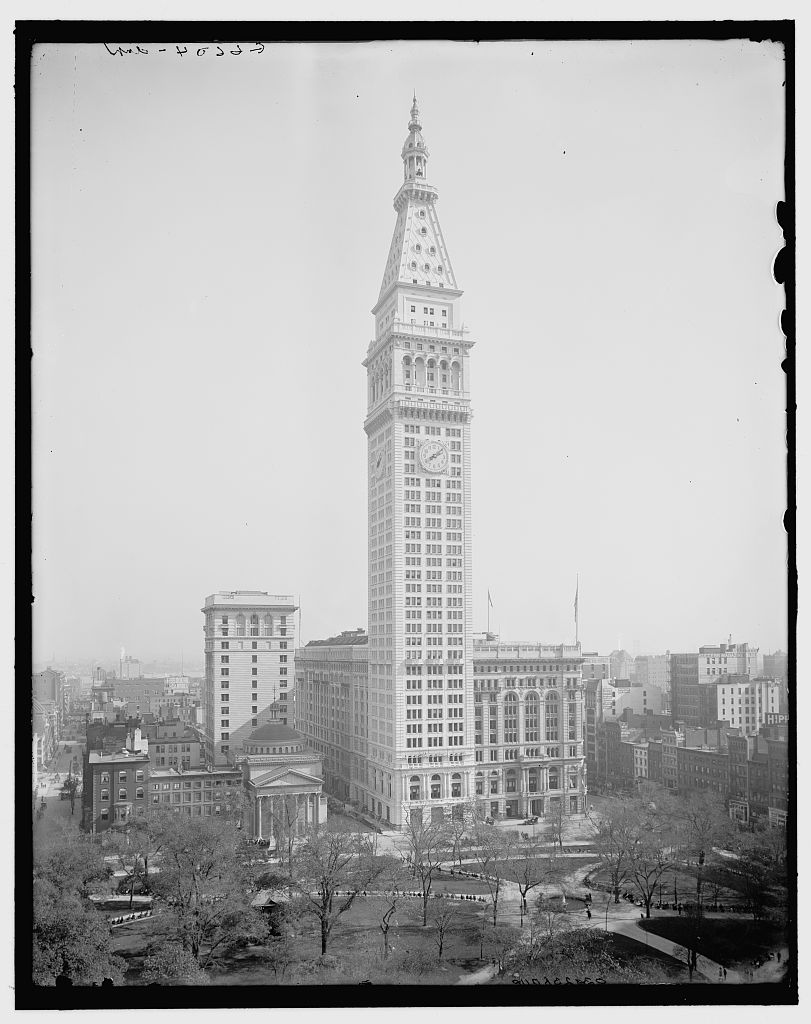
Its setting remains one of its great advantages. Many Manhattan skyscrapers are best understood by looking almost straight up from the sidewalk. Here the park gives the eye room to travel from the base to the lantern. The design was meant to work at the scale of the skyline as well as the street.
What the height record meant
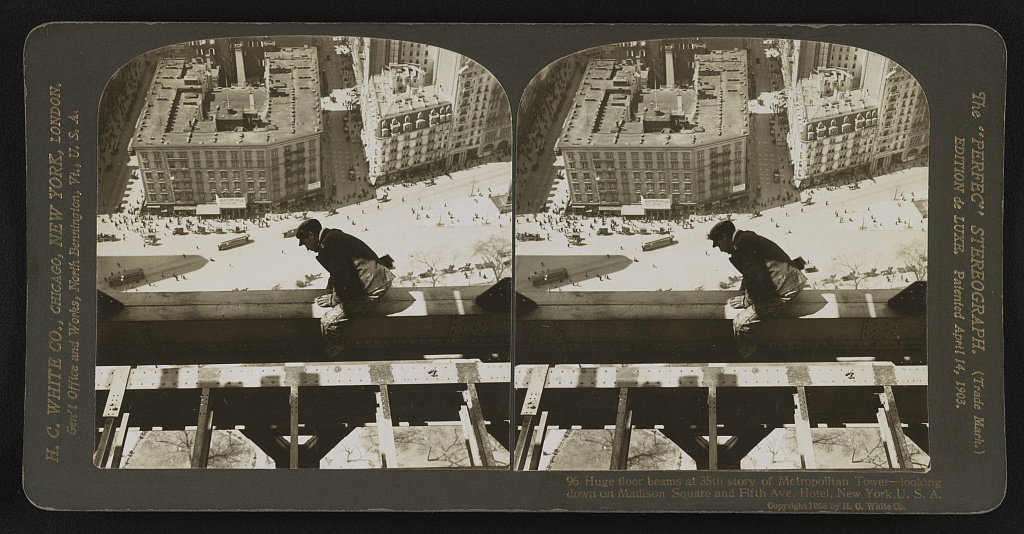
The world-height record lasted only four years, but it belonged to an important moment in the development of the skyscraper. Taller steel-framed buildings were changing the commercial city, and height itself had become a form of advertising. A headquarters could communicate stability and ambition before anyone read its name.
Metropolitan Life made the tower part of its corporate identity. The Landmarks Preservation Commission describes its lantern as the light that never fails, a phrase associated with the company's public image. The enormous clocks made the building useful to people who had no business with the insurer at all.
The tower's height should not be confused with the size of the entire headquarters complex. Its 700-foot vertical accent stood beside much lower office wings. Later buildings on the neighboring block, including the Metropolitan Life North Building, belonged to the larger corporate campus but were not the 1909 record-breaking tower.
A clocktower built to be read at a distance
The clocks divide the shaft from the more elaborate upper stages. Above them, an arcade, pyramid, cupola and lantern turn the simple vertical form into a distinctive crown. The design is memorable because these parts can still be understood from a distance, even when individual windows disappear.
A clocktower also gives a skyscraper a different relationship with the street. It is a landmark people can consult, meet near or use to orient themselves. In Madison Square, that civic role sits beside the building's original commercial purpose. The insurer paid for it, but the city adopted its silhouette.
Historical photographs show the tower surrounded by a lower and more open skyline. That context helps explain the impact it had in 1909. Modern towers have changed the background, but the older clocktower retains a clear profile because its crown and proportions are so unlike a glass office slab.
The 1960s renovation changed the details
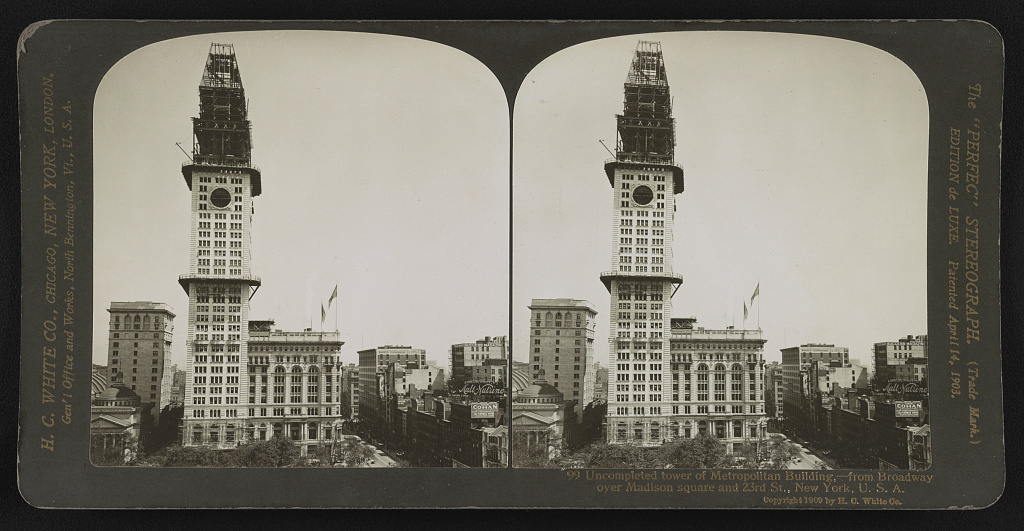
The tower was extensively renovated from 1960 to 1964 by Lloyd Morgan and Eugene V. Meroni. The city's landmark report is explicit that the major features survived: the clockfaces, setback arcade, pyramidal spire, cupola, chime and lantern, as well as the slight shaping of the shaft known as entasis.
That does not mean the exterior is an untouched 1909 artifact. Comparing early photographs with modern views is part of understanding the building. The historical design and the renovated exterior belong to the same story, but they should not be presented as visually identical.
The Landmarks Preservation Commission designated the tower a city landmark on June 13, 1989. Its report recognized both the building's architectural ancestry and its long service as a corporate symbol on the Manhattan skyline.
From insurance offices to hotel rooms
The clocktower's next major chapter came with its conversion into the New York EDITION. Marriott announced the sale of the hotel in April 2015 while retaining a long-term management agreement. The hotel opened that year, bringing guest rooms, a restaurant, bars and event space into a building created for an insurance company.
The hotel's interiors were shaped through the EDITION partnership associated with Ian Schrager and Marriott, with design work by David Rockwell. The result was not an attempt to turn every room into a replica of an old insurance office. Instead, the conversion used the landmark's location, windows and proportions to support a different kind of daily life.
The current hotel describes 271 guest rooms and suites. Earlier opening publicity used a different room count, so a contemporary visitor should follow the operating hotel's current information rather than an old press release. The larger point is the building's adaptability: the same tower that once advertised insurance now sells a stay overlooking Madison Square.
Visiting the clocktower
The New York EDITION uses the address 5 Madison Avenue, beside Madison Square Park. The city's landmark designation uses 1 Madison Avenue. These addresses refer to the tower and its historic headquarters setting; they are not evidence of two separate clocktowers.
The exterior is best appreciated from the park and the Madison Avenue sidewalk. This is an operating hotel, not a public observation tower. Do not assume that the clock, belfry or lantern can be visited simply because the lower floors welcome hotel and restaurant guests. Check the hotel's current access and dining information before planning an interior visit. Official hotel pages were read November 4, 2026.
Who owns the MetLife Clocktower today?
The most recent sale reporting located for this article identifies Kam Sang Company as the buyer of the New York EDITION in 2025 from the Abu Dhabi Investment Authority. The Real Deal reported that transaction in October 2025, while the hotel continues to operate under the EDITION brand. Ownership and hotel management are different roles.
Published accounts give different sale prices: The Real Deal reported about $250 million, while later Bisnow reporting gave $235 million. Rather than present one disputed figure as settled, the useful conclusion here is the change of owner. A 2015 report naming the earlier owner is no longer enough to answer who owns the hotel today.
Where can you eat or drink in the clocktower?
The Clocktower restaurant serves contemporary British food in three dining rooms overlooking Madison Square Park. Its official page lists daily breakfast from 7 to 10:30 a.m., weekend brunch from 11:30 a.m. to 2:30 p.m., and dinner from 5 to 10 p.m. The Lobby Bar serves cocktails and light food and explicitly welcomes locals as well as hotel guests.
The Lobby Bar's listed hours run from 9 a.m. to midnight Sunday through Thursday and until 1 a.m. Friday and Saturday. These schedules were read November 4, 2026. Confirm current hours, menus and reservations before visiting. A meal in the hotel is a way to experience the adapted building, not access to the clock mechanism or tower summit.
Sources
- Landmark designation report, 1989
- Historic Districts Council building entry
- The New York EDITION
- Marriott sale announcement, 2015
- The Real Deal, October 2025 sale report
- Bisnow, November 2025 sale report
- The Clocktower restaurant
- Lobby Bar