The Tweed Courthouse: How a Palace of Graft Became a Civic Treasure
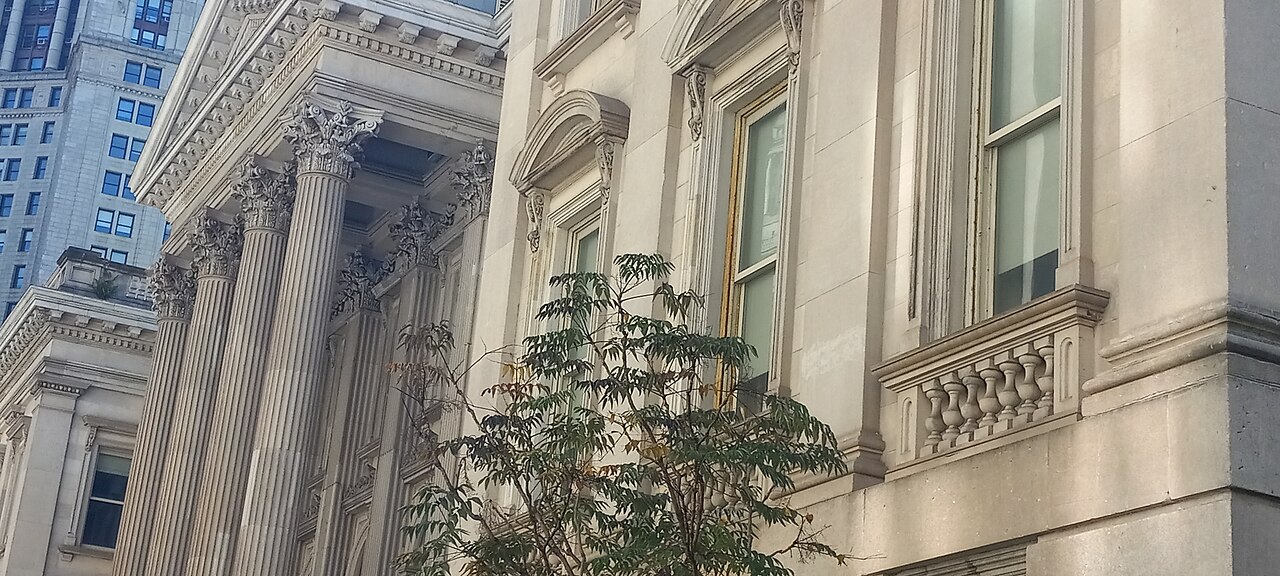
The Tweed Courthouse on Chambers Street, October 2024. Photograph by Kidfly182, via Wikimedia Commons. CC BY 4.0.
The marble courthouse behind City Hall took twenty years to build, and New Yorkers spent most of those years learning what it was really for. The Tweed Courthouse, as everyone came to call it, was the single greatest swindle of the Tweed Ring, the Tammany Hall machine run by William M. "Boss" Tweed. The New York City Landmarks Preservation Commission estimates that more than nine million dollars in graft flowed through its construction, at a time when that sum was nearly a fifth of the city's debt.
The project began honestly enough. After years of debate, the state legislature authorized a new county courthouse in 1861, and ground was broken on September 16 of that year; the cornerstone followed on December 26. The architect was John Kellum, working from earlier plans associated with Thomas Little, and he conceived a grand Italianate civic monument in white marble. But Tweed had just consolidated his grip on Tammany, and days after construction began he bought a marble quarry in Sheffield, Massachusetts, that would supply the building. Contractors connected to the Ring padded their bills, and the city's commissioners divided the take among themselves.
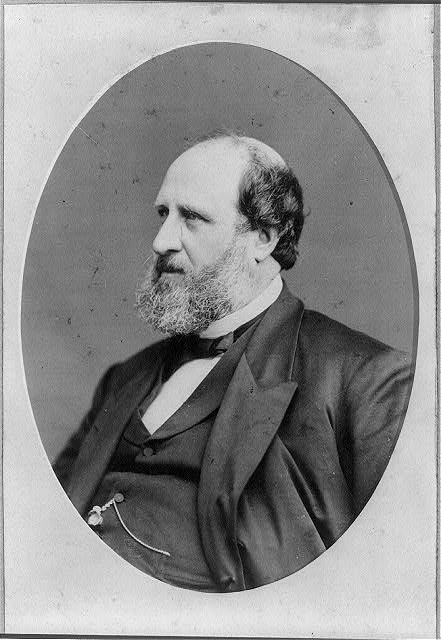
The graft peaked after 1870, when the Ring's new city charter replaced the supervisors with a Board of Special Audit that existed mainly to approve fraudulent bills. Progress on the building crawled while the costs soared. The press was mostly bought off or silent; the exceptions, The New York Times and Harper's Weekly, where Thomas Nast drew his famous cartoons of the Ring, finally brought the machine down in 1871. The courthouse, by then a standing symbol of corruption, was still unfinished.
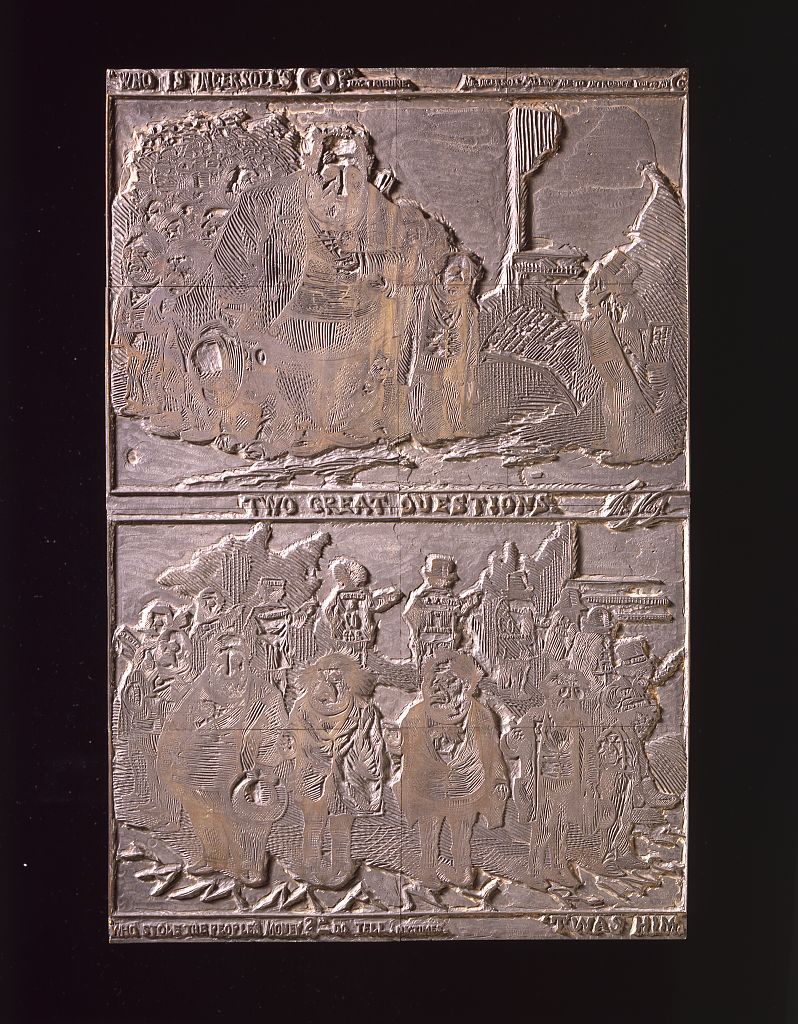
Thomas Nast's 1871 cartoon of the Tammany Ring: asked "Who stole the people's money?", each man points to the next. Library of Congress. Public domain.
Kellum had died in 1871, and the city turned to Leopold Eidlitz to finish the work. Eidlitz was a very different architect, and the Landmarks Preservation Commission describes the result as a building of two philosophies: Kellum's Italianate palace grafted to Eidlitz's medieval-inspired south wing, rotunda and interiors, an early American essay in organic design. Construction dragged on until about 1881, two decades after it began.
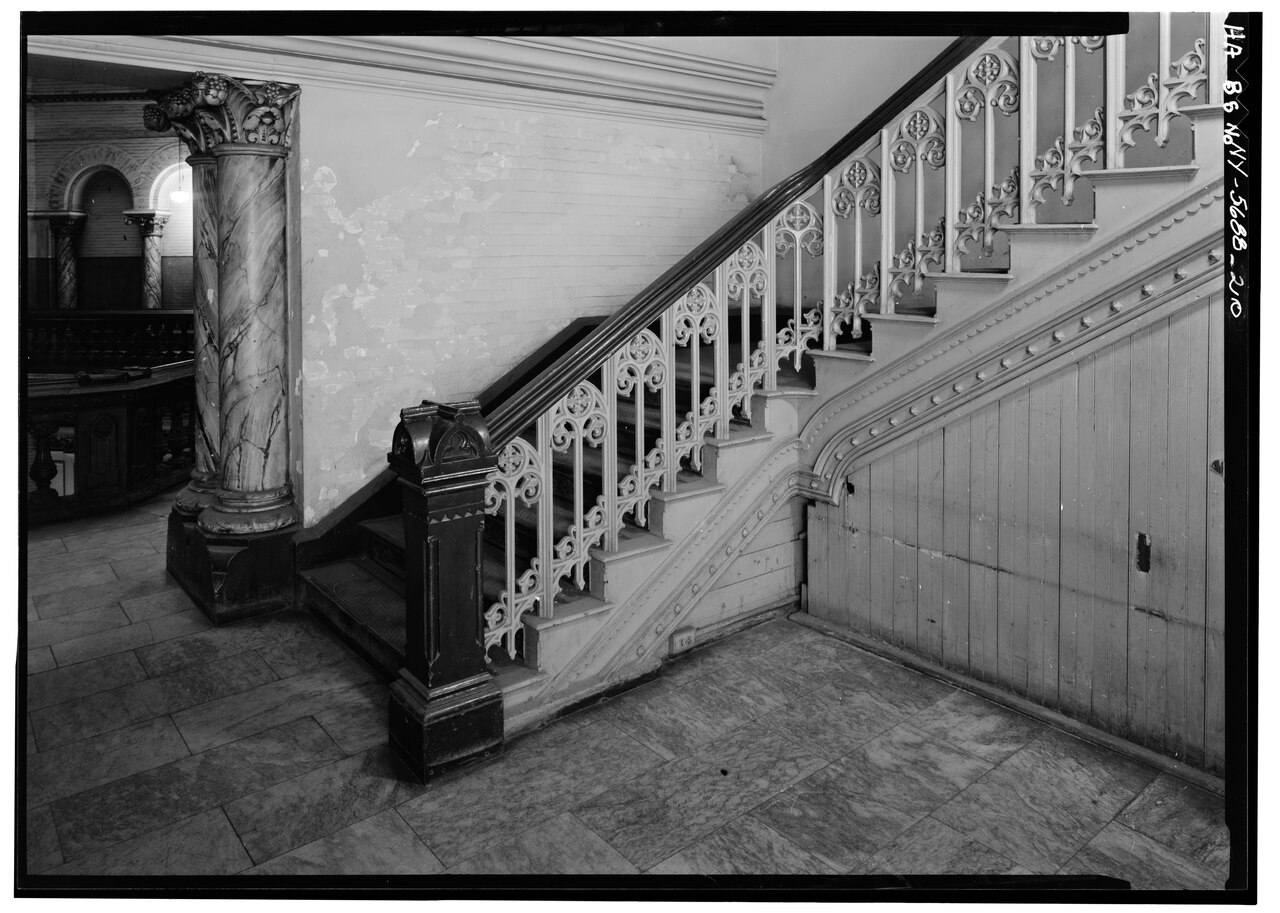
A stairway inside the courthouse. Historic American Buildings Survey, Library of Congress. Public domain.
Once finished, the building settled into ordinary work. It housed the New York Court of Appeals for a time and later served as the City Court, which stayed until 1961, when the court moved to 111 Centre Street. Municipal offices filled it afterward, and the marble slowly darkened under grime and deferred maintenance. The Landmarks Preservation Commission designated both the exterior and the rotunda interior as landmarks on October 16, 1984.
The rescue came at the end of the century. In 1999 the city began a comprehensive restoration of the 172,000-square-foot building, an $85 million project completed in December 2001 under the Economic Development Corporation with the architectural firm John G. Waite Associates. The facade was returned to its original gleaming white, the Chambers Street stairs and the rotunda were rebuilt, and courtrooms were restored to their historic configurations. Mayor Giuliani announced the restored building would become the new home of the Museum of the City of New York.
Who owns the Tweed Courthouse today?
The City of New York does, and the museum plan did not last. When Michael Bloomberg became mayor in 2002 and won control of the school system, he reversed the museum arrangement and moved the Department of Education's headquarters from 110 Livingston Street in Brooklyn into the courthouse. Schools Chancellor Joel Klein and his administrators took up their desks there that fall, and the Department of Education has been headquartered at 52 Chambers Street ever since.
It is a fittingly strange afterlife for the building: the monument to the city's most infamous machine now houses the bureaucracy of its public schools, scrubbed white and open to the park that surrounds it.
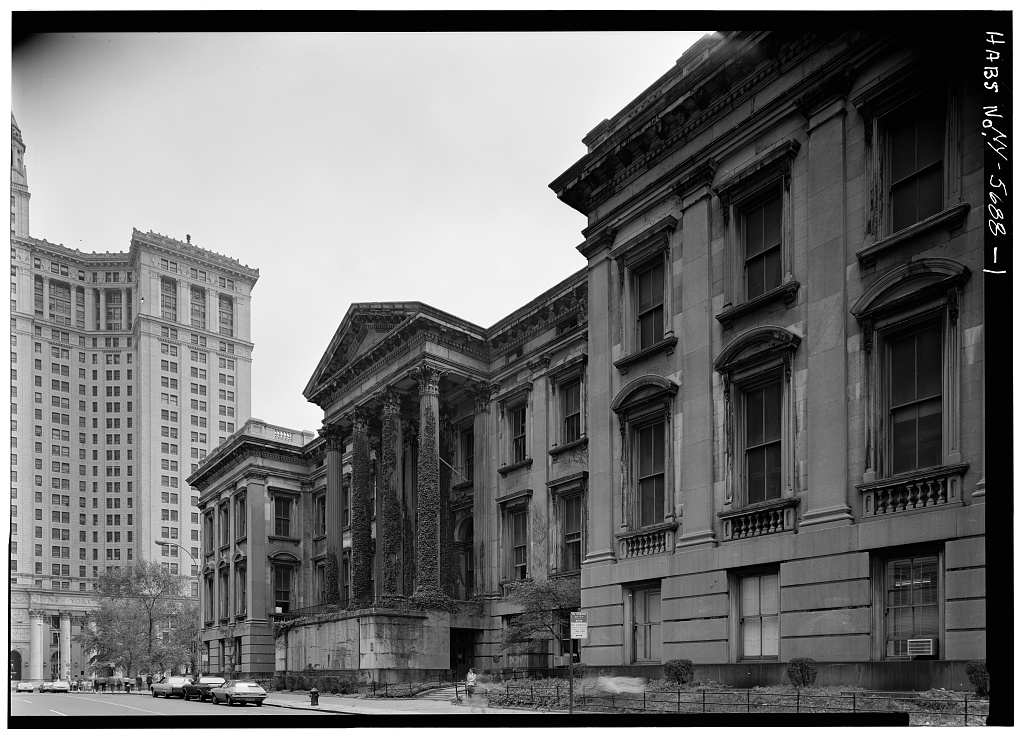
The courthouse before restoration, its portico covered in ivy. Historic American Buildings Survey, Library of Congress. Public domain.
Sources
- NYC Landmarks Preservation Commission, Tweed Courthouse designation report (1984)
- NYC Mayor's Office, press release on the completed $85 million restoration (2001)
- The New York Times, "Mayor Wants School Officials In Tweed Courthouse by the Fall" (2002)
- New York Post, "Tweed Suits Klein to a Tee" (2002)
- Wikimedia Commons, Tweed Courthouse by Kidfly182 (CC BY 4.0)
- Library of Congress, portrait of William M. Tweed (public domain)
- Library of Congress, Thomas Nast cartoon of the Tammany Ring (1871, public domain)
- Library of Congress, Historic American Buildings Survey photographs (public domain)
