The Tenement Museum: A New York Home Worth Saving
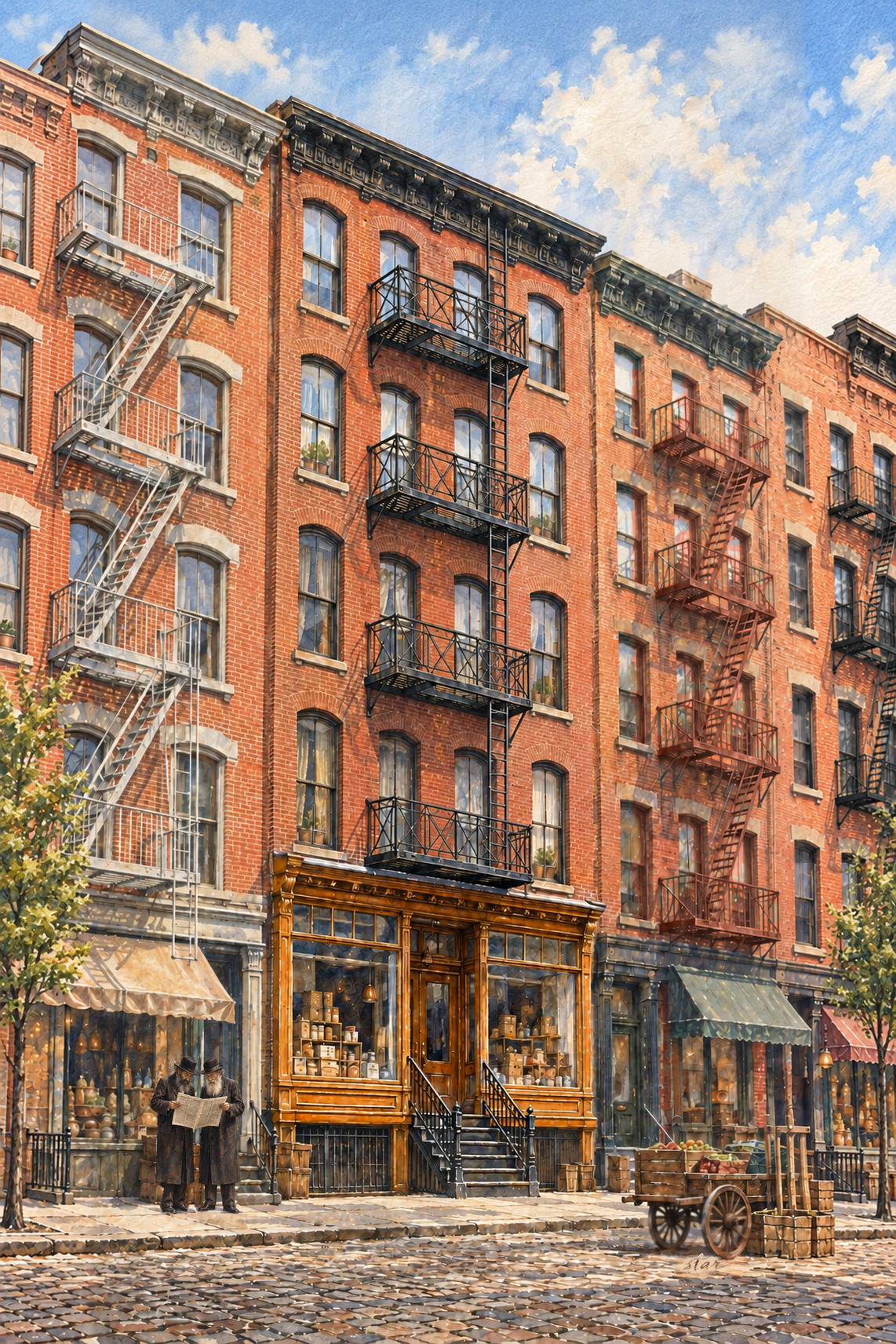
Original watercolour art illustration by Solomon Rokowsky. Imagined exterior of 97 Orchard Street circa 1910, based on a 2005 public-domain photograph by Fbv65edel and the National Register description. Period street details are reconstructed, not a documented scene.
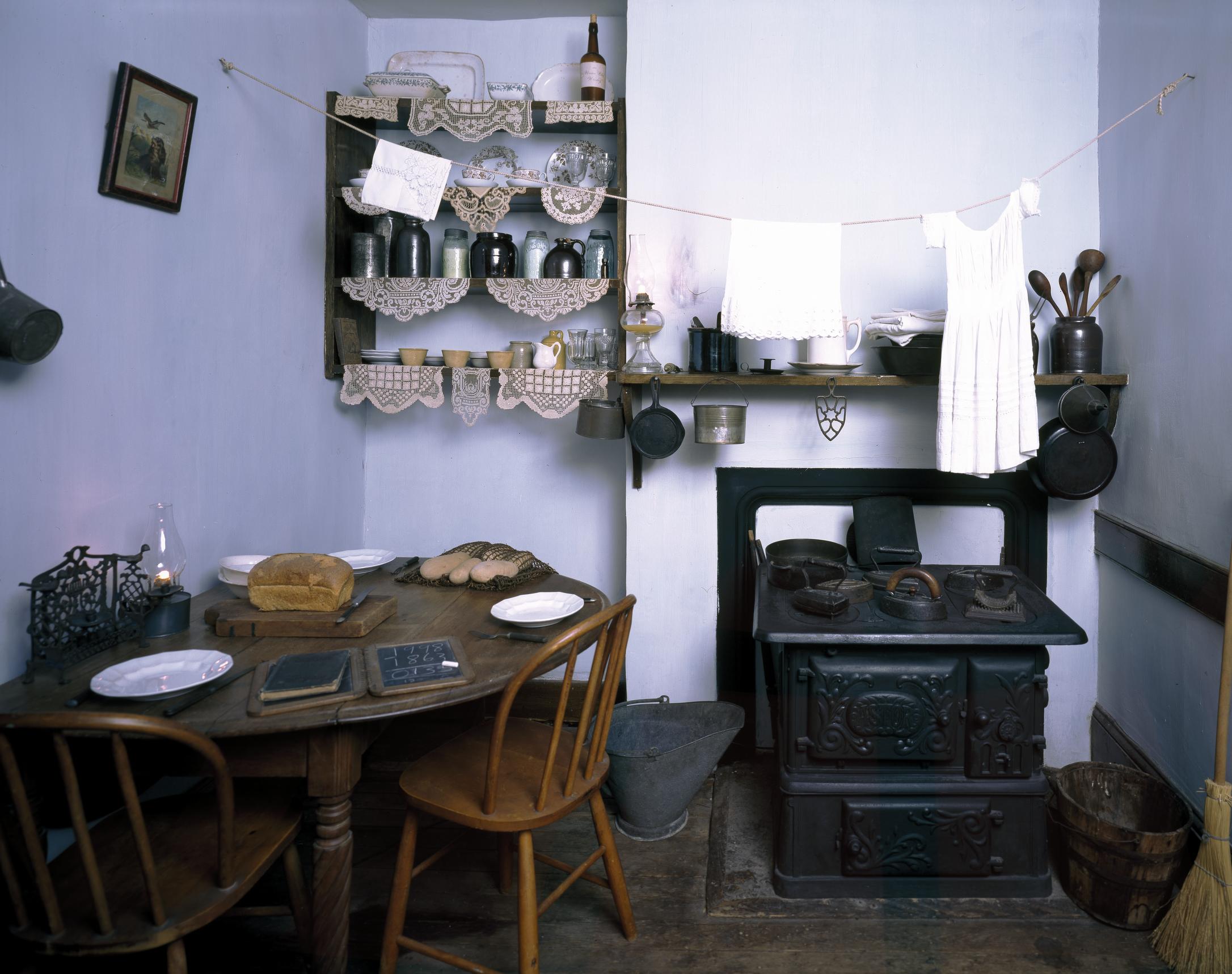
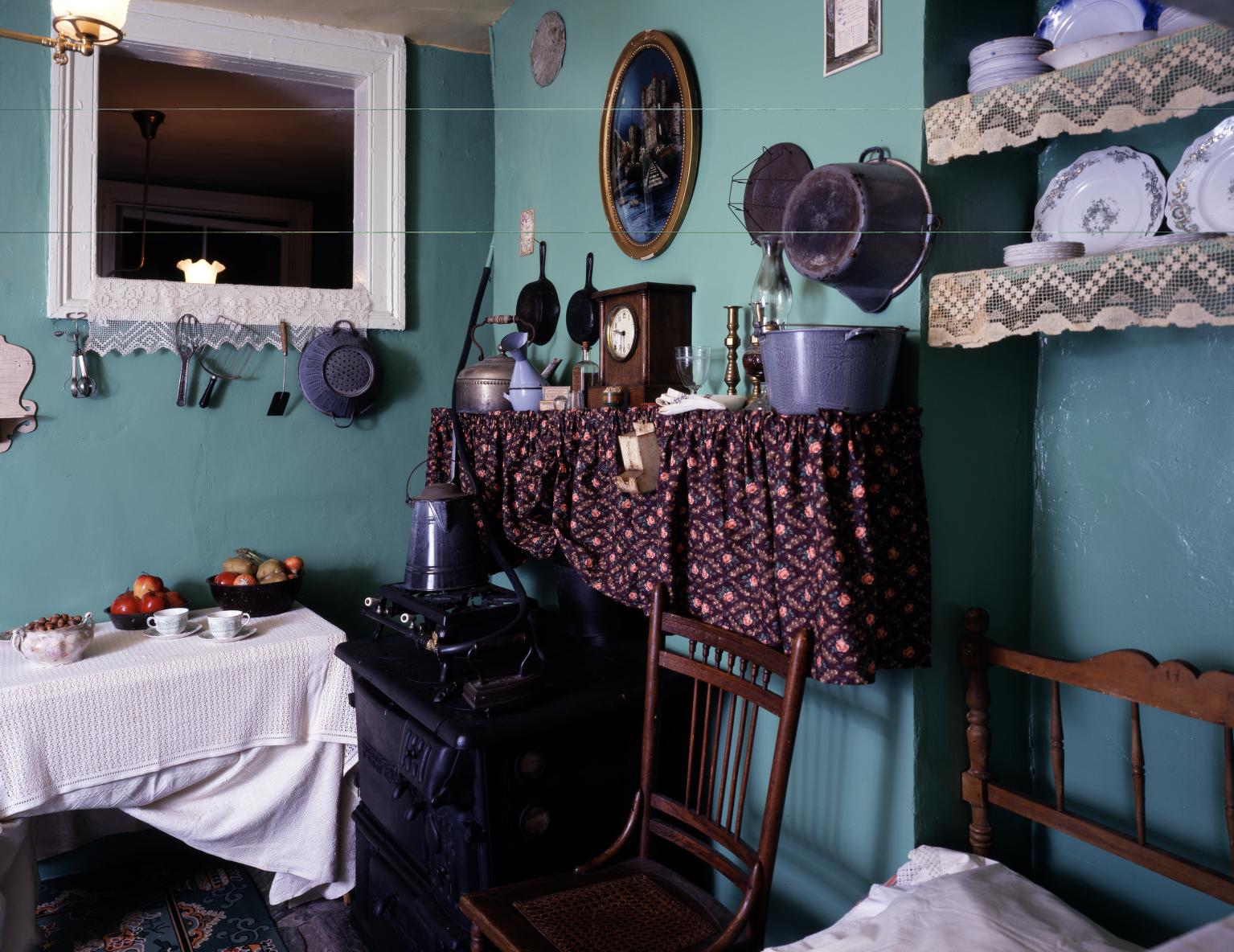
New York's grand houses tell us what money could buy. At 97 Orchard Street, the rooms tell us what families managed to do without it. A stove, a sewing machine, a narrow passage and a small kitchen become evidence of work, worry and the effort of making a home. The Tenement Museum preserves a kind of building that once filled the Lower East Side, but that rarely received the attention given to mansions or skyscrapers.
Its two historic tenements, at 97 and 103 Orchard Street, follow different generations of newcomers. One reaches back to the Civil War era; the other brings the story into the later twentieth century. Together, they make an unusually direct connection between New York's architecture and the people who paid rent, raised children and earned a living inside it.
A landlord builds his own investment
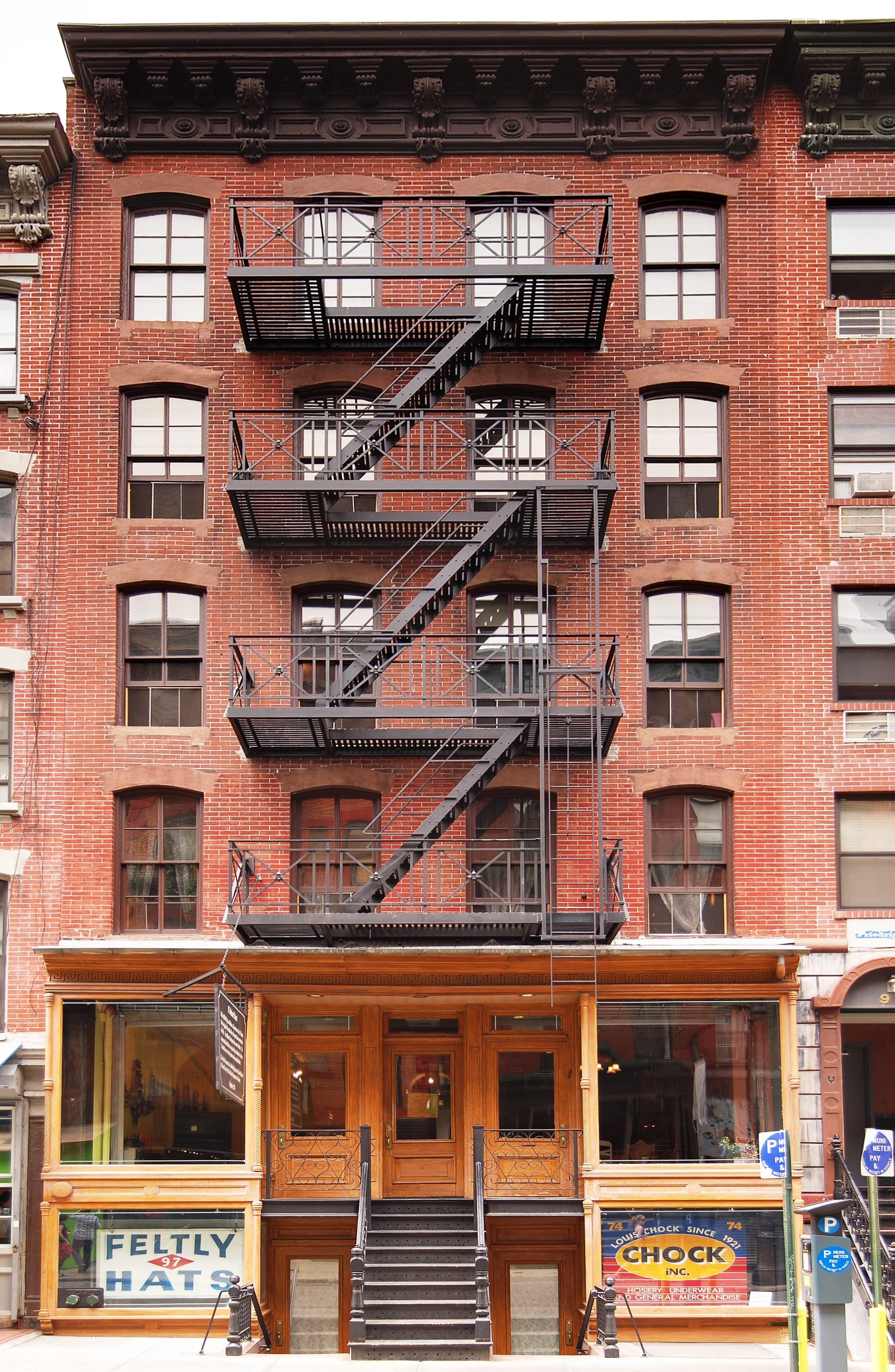
Lucas Glockner, a German immigrant who worked as a tailor, bought property on Orchard Street in 1863 and paid for the construction of 97 Orchard. He was not a distant landlord. By 1864, he was living in the building himself. The museum's researchers have found no record identifying the workers who built it, and they caution against treating Glockner as though he personally laid its bricks.
The five-story tenement contained 22 apartments, typically three rooms totaling about 325 square feet. It was built before New York's first Tenement House Act of 1867, making it an example of what preservationists call a pre-law tenement. The familiar brick front and metal cornice were the public face of an investment whose success depended on fitting many households onto a narrow city lot.
That does not make its history a simple tale of an evil landlord and helpless tenants. The museum describes Glockner helping resident Nathalie Gumpertz during hardship. Its research also shows why a new tenement could initially seem an improvement over a subdivided older house: a family could have a separate apartment and its own kitchen, even if the space was cramped.
The apartment was also a workplace
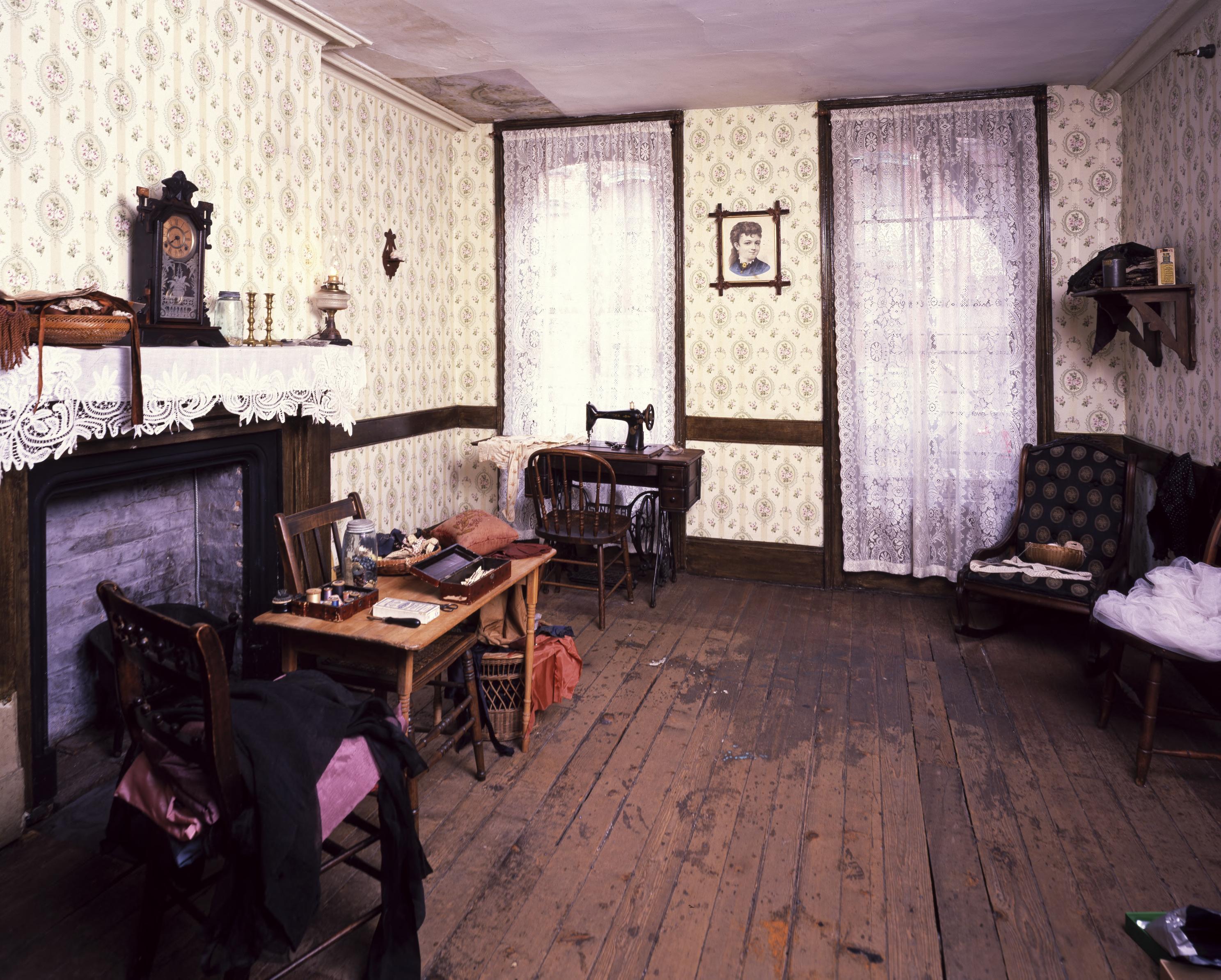
An estimated 7,000 people from more than 20 nations lived at 97 Orchard between 1863 and 1935. Those numbers are easiest to understand through the museum's individual households. Harris and Jennie Levine, immigrants from the Russian Empire, lived with their children in an apartment that also served as a garment shop. The boundary between earning wages and caring for a family ran through the same small rooms.
Other residents met different challenges. German-Jewish immigrant Nathalie Gumpertz supported her daughters after her husband disappeared during the economic crisis of the 1870s. Abraham and Fannie Rogarshevsky balanced work, family and Jewish religious life. The Baldizzi family lived here during the Great Depression. These are separate histories, not interchangeable examples of one immigrant experience.
The building also had a public life at street level. John and Caroline Schneider operated a lager beer saloon from 1864 to 1886 while living in an adjoining apartment. In the neighborhood then known as Little Germany, such businesses were places for food, conversation, family gatherings and political debate, as well as drinks.
A closed building becomes an archive
The upper floors stopped housing residents in 1935, although shops remained active long afterward. That division matters. It was the apartments, rather than the entire building, that effectively dropped out of everyday residential use. Their long closure helped preserve layers of wallpaper, paint, flooring and household traces that ordinary renovation would have swept away.
Historian Ruth Abram and social activist Anita Jacobson founded the museum in 1988. They had been searching for an unrestored early tenement when Jacobson entered a vacant storefront at 97 Orchard and discovered the old rooms upstairs. The museum's own account treats that encounter as the turning point: here was the physical setting in which the story could be told.
The resulting museum is not simply a collection of furnished rooms. Its educators use census records, oral histories and surviving objects to explain particular households. Restored apartments and preserved, unrestored areas serve different purposes. One helps visitors imagine daily life; the other shows the material evidence from which the restoration was built.
Why 103 Orchard Street matters
The museum purchased 103 Orchard Street in 2007. Its visitor center and shop occupy the street level, while exhibitions upstairs extend the story beyond the period preserved at 97. The museum's Under One Roof exhibition, opened in 2017, explored later immigration and migration, including Jewish refugees, Puerto Rican New Yorkers and Chinese garment workers.
The two buildings should not be confused with a generic recreation of an old neighborhood. Their importance comes from their actual rooms and documented residents. New York's tenements were places of deprivation and opportunity at the same time, and the museum is strongest when it keeps both realities in view.
Gangsters and organized crime
The museum's curatorial staff has documented an 1894 report of gambling at 97 Orchard Street, but says the surviving record does not identify the people involved. That is not evidence that the building was a mob headquarters. A separate 1897 extortion story involved tailors at 104 Orchard Street, across the street, and should not be moved into 97's history.
The distinction is useful in a neighborhood so often reduced to gangster stories. Crime formed part of Lower East Side life, but it does not explain the whole neighborhood, and it should not crowd out the documented lives of this building's residents.
Visiting the Tenement Museum
Begin at the visitor center at 103 Orchard Street, at Delancey Street, rather than entering 97 Orchard independently. The museum says its historic interiors are accessible through guided tours, not general self-guided admission. Choose the household or apartment tour that interests you and check its accessibility details before booking; different spaces have different physical limitations.
The official visitor page lists the visitor center and shop as open daily from 10 a.m. to 6 p.m. and asks tour guests to check in at least ten minutes early. Nearby subway options include Delancey Street/Essex Street and Grand Street. These details were read on November 4, 2026; confirm the tour schedule, transit service and access arrangements before visiting.
Who owns the Tenement Museum buildings today?
The Lower East Side Tenement Museum owns and preserves its historic properties. Its federal grant narrative describes 97 and 103 Orchard Street as the museum's two historic tenements and says it also owns 91 Orchard Street for offices and collection storage. This is a nonprofit museum property, not an apartment building still operating under its nineteenth-century landlord.
National Park Service affiliation should not be mistaken for federal ownership or day-to-day operation. The museum tells the stories, maintains the buildings and organizes the tours. Its purchase of 103 Orchard Street is documented in its own institutional fact sheet.
Where can you eat or drink at the Tenement Museum?
Schneider's recreated saloon is a historic exhibition, not an ordinary walk-in bar. The museum offers separately booked food experiences and points visitors to a neighborhood guide for nearby restaurants and cafes. Check the current tour listing for what a particular food experience includes rather than assuming food is part of every apartment tour.
For a meal before or after a visit, the Lower East Side is part of the experience. Keep the distinction clear: a neighborhood restaurant is not a restaurant inside the historic tenement. The museum's official visitor information was checked on November 4, 2026.
Sources
- The stories of 97 Orchard Street, Tenement Museum
- Lucas Glockner: Health and Construction
- Five Stories and Counting
- Why 97 Orchard Street?
- About the museum
- Institutional fact sheet
- Museum grant narrative, National Endowment for the Humanities
- Plan a visit
- Crime on the Lower East Side, museum curator David Favaloro
- The workers behind 97 Orchard Street