The St. James Theatre: Erlanger's Last Broadway House, Home of The King and I and Hello, Dolly!
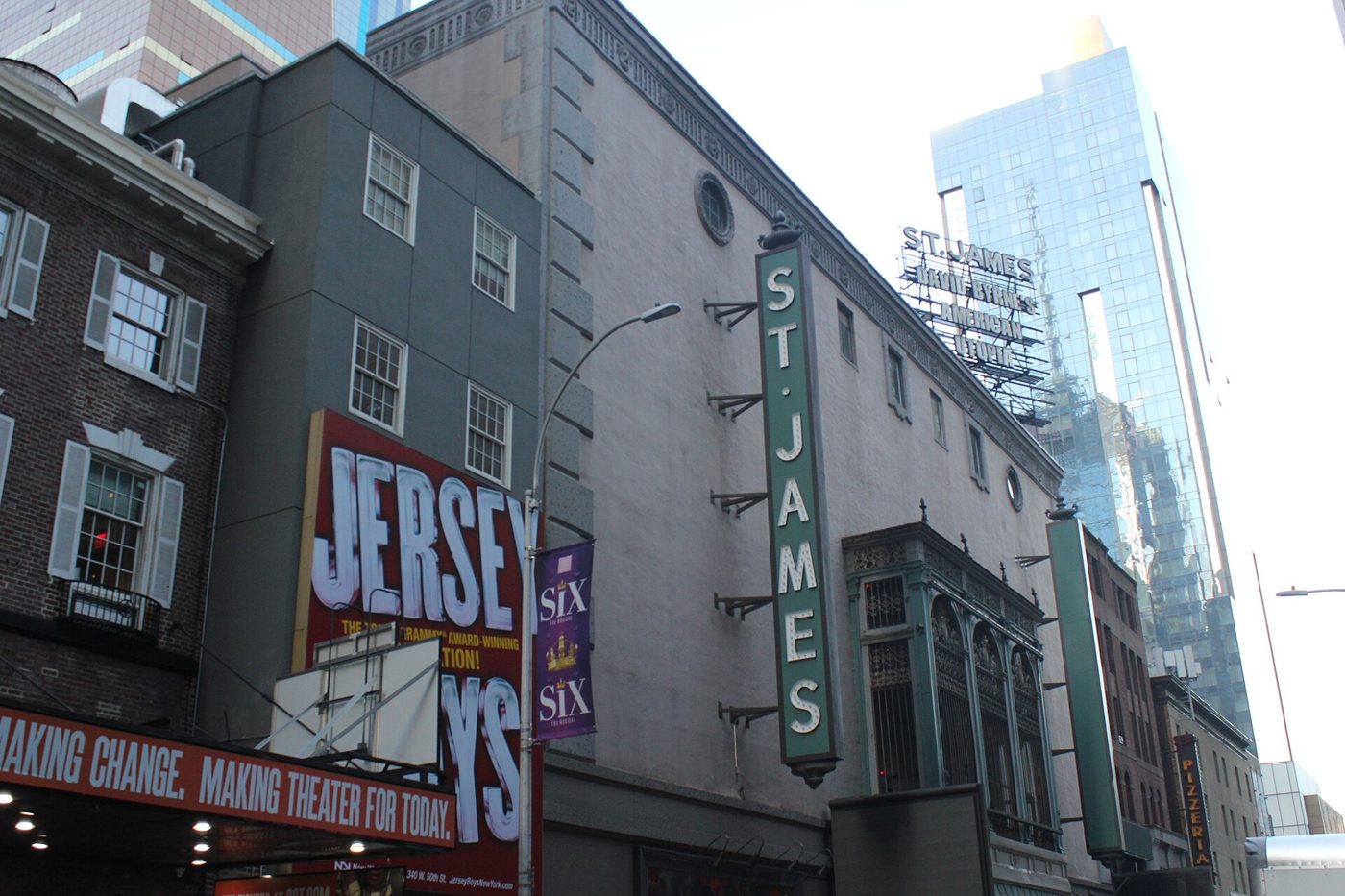
The St. James Theatre at 246 West 44th Street, October 2021. Photograph by Epicgenius, via Wikimedia Commons. CC BY-SA 4.0.
What is the St. James Theatre?
The St. James Theatre, at 246 West 44th Street, opened on September 26, 1927 as Erlanger's Theater. According to the New York City Landmarks Preservation Commission (LPC), it was built for Abraham Erlanger and designed by Warren & Wetmore, the architects of Grand Central Terminal. The LPC designated the exterior (LP-1374) and the first-floor interior (LP-1375) on December 15, 1987, after a public hearing on June 14 and 15, 1982. The commission called it one of the historic playhouses that "symbolize American theater for both New York and the nation." It is also where the original productions of The King and I and Hello, Dolly! opened, according to the Internet Broadway Database (IBDB).
Who was Abraham Erlanger, and why did it take so long to build?
The LPC says Erlanger had been a principal in the Klaw & Erlanger Theatrical Syndicate, which dominated the American theater industry for decades around the turn of the century. After the Syndicate broke up, Klaw and Erlanger went separate ways and each built theaters named for themselves. Klaw built the Klaw Theater (later the Avon, now demolished) at 251 West 45th Street in 1921. Erlanger began planning his theater that year, when the cluster of theaters on 44th and 45th Streets now called Shubert Alley was already largely in place. Preliminary drawings were completed in 1922, and the report says "more than six years of planning, delays and changes" passed before the theater opened in 1927, $500,000 over the estimated cost. It was Warren & Wetmore's first theatrical commission, and the LPC calls it the last Broadway theater erected for Erlanger.
The theater replaced a row of three-story brownstones on a site 125 by 100 feet. The LPC says that when completed it rose 98 feet, or eight stories, above West 44th Street, which made it one of the taller Broadway theaters. The opening production was a George M. Cohan show, per the LPC, and the report notes that Governor Al Smith and his family sat in one of the side boxes on opening night.
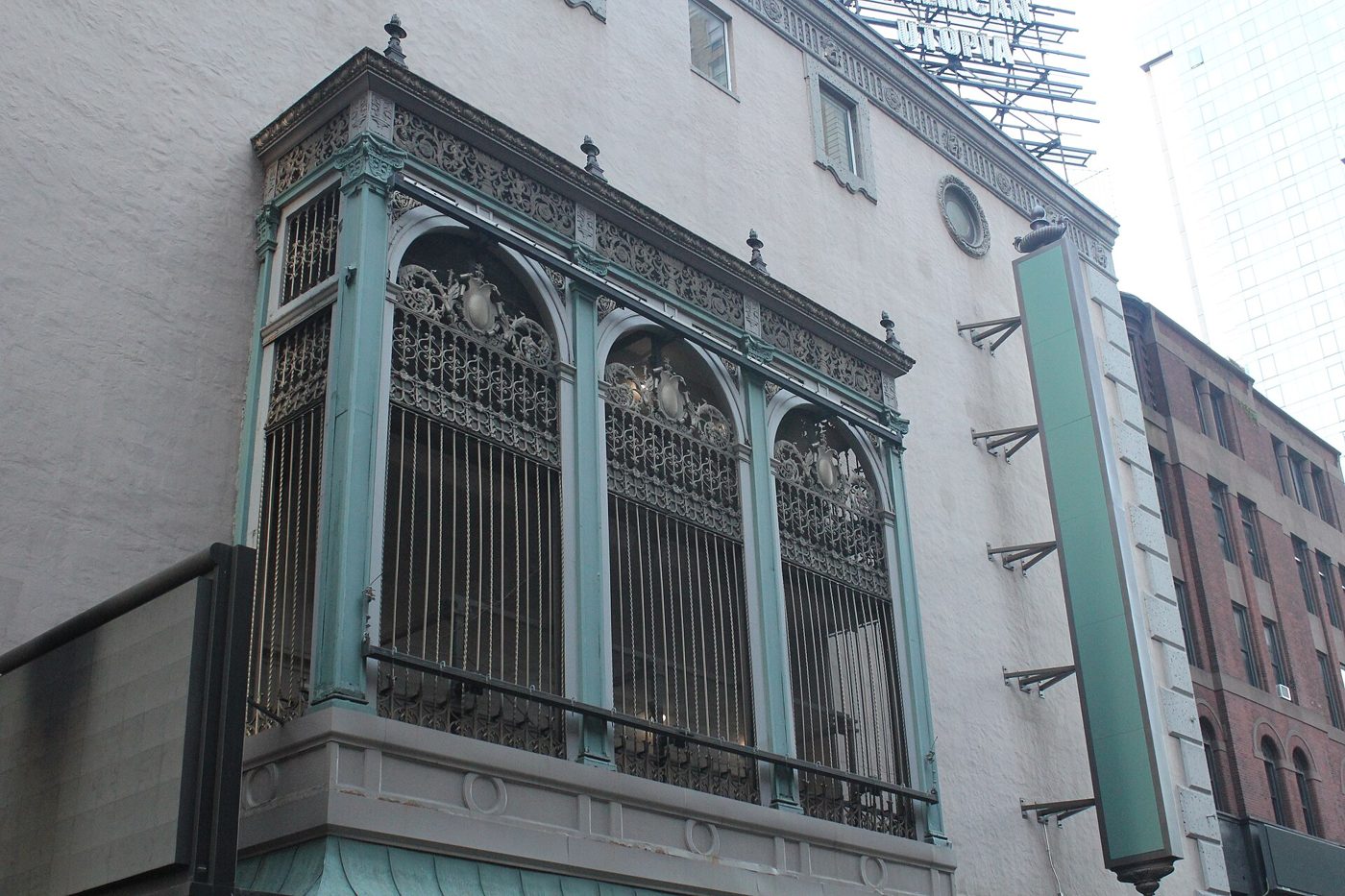
The wrought-iron loggia above the St. James Theatre entrance. Photograph by Epicgenius, via Wikimedia Commons. CC BY-SA 4.0.
What does the building look like?
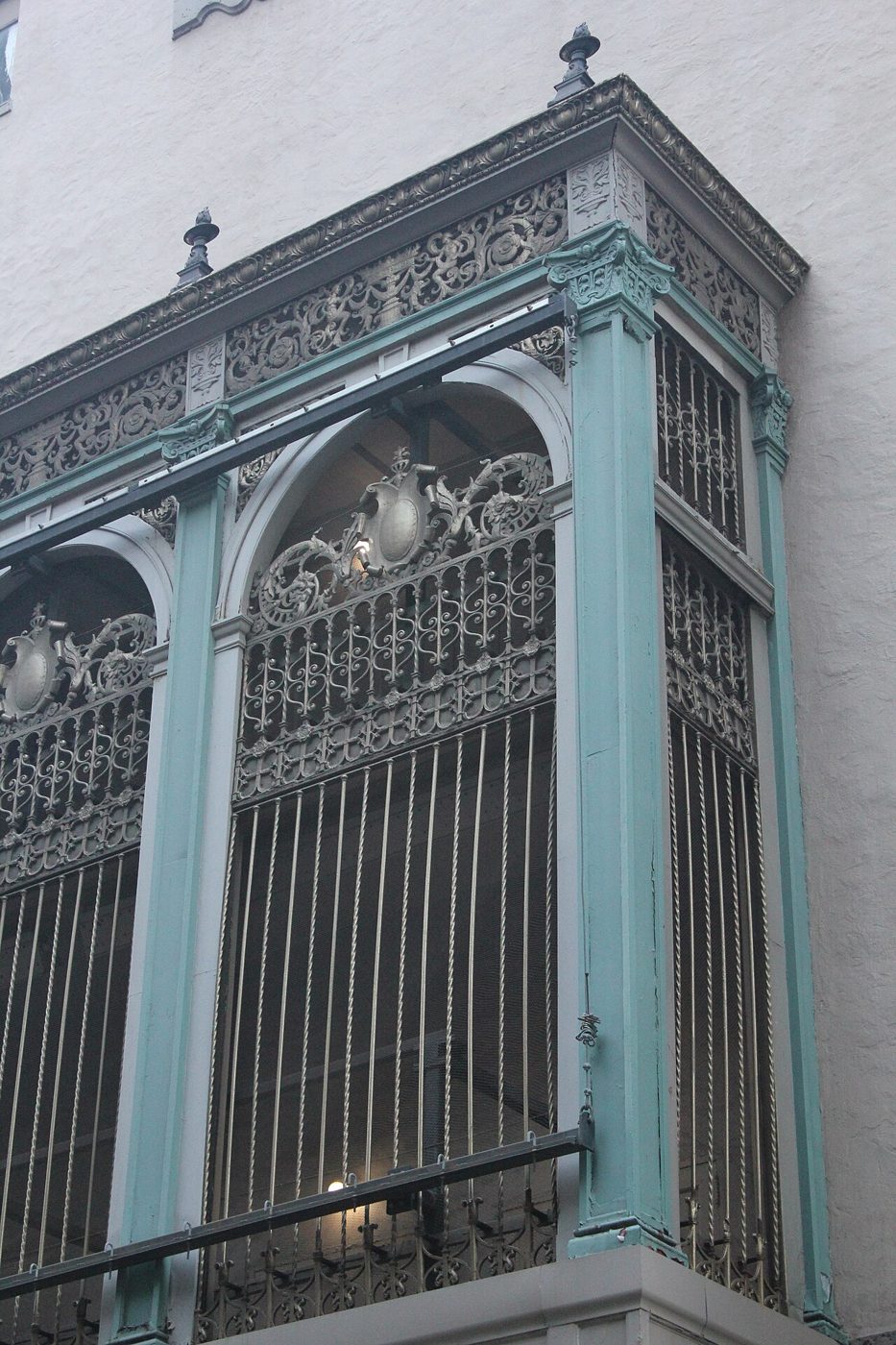
The LPC describes the facade as architecturally conservative compared with the pre-war theaters, "handsome, if restrained," in a Beaux-Arts style that fits the Shubert Alley cluster on West 44th and West 45th Streets. The surface is plain stucco above a cast stone and granite base, flanked by rusticated cast stone quoins. Seven windows run across the top, five rectangular and two bullseyes, under a cornice decorated with theatrical masks. The feature the report calls most distinctive is the elaborate wrought-iron loggia directly above the entrance canopy, which contrasts with the plain wall behind. One trade-press review quoted in the report said the new Erlanger's was probably the least ornate of the theaters recently added to the Times Square district.
What is inside?
The LPC's interior report says the auditorium was among the largest built on Broadway, a two-balcony house comparable in seating capacity to Klaw & Erlanger's New Amsterdam of twenty years earlier. The architects aimed for an intimate rather than theatrical atmosphere. Ornament other than the proscenium boxes is painted rather than plaster. Murals decorate the side walls and the proscenium arch. The side boxes, called the "President's" and "Governor's" boxes, project out and slightly below the balcony, each framed by slender fluted Corinthian columns with a lunette above. The ceiling has trompe-l'oeil swags and musical instruments around a large circular medallion with acanthus leaves, and a modern chandelier hangs from it. The report quotes an architectural journal calling the house "broad and shallow," with the balcony edge over the tenth row of the orchestra. The main entrance leads through wide doors into a spacious marble lobby that extends across the building. The 1958 renovation by Frederick Fox altered the lobby and lounge areas considerably, according to the report.
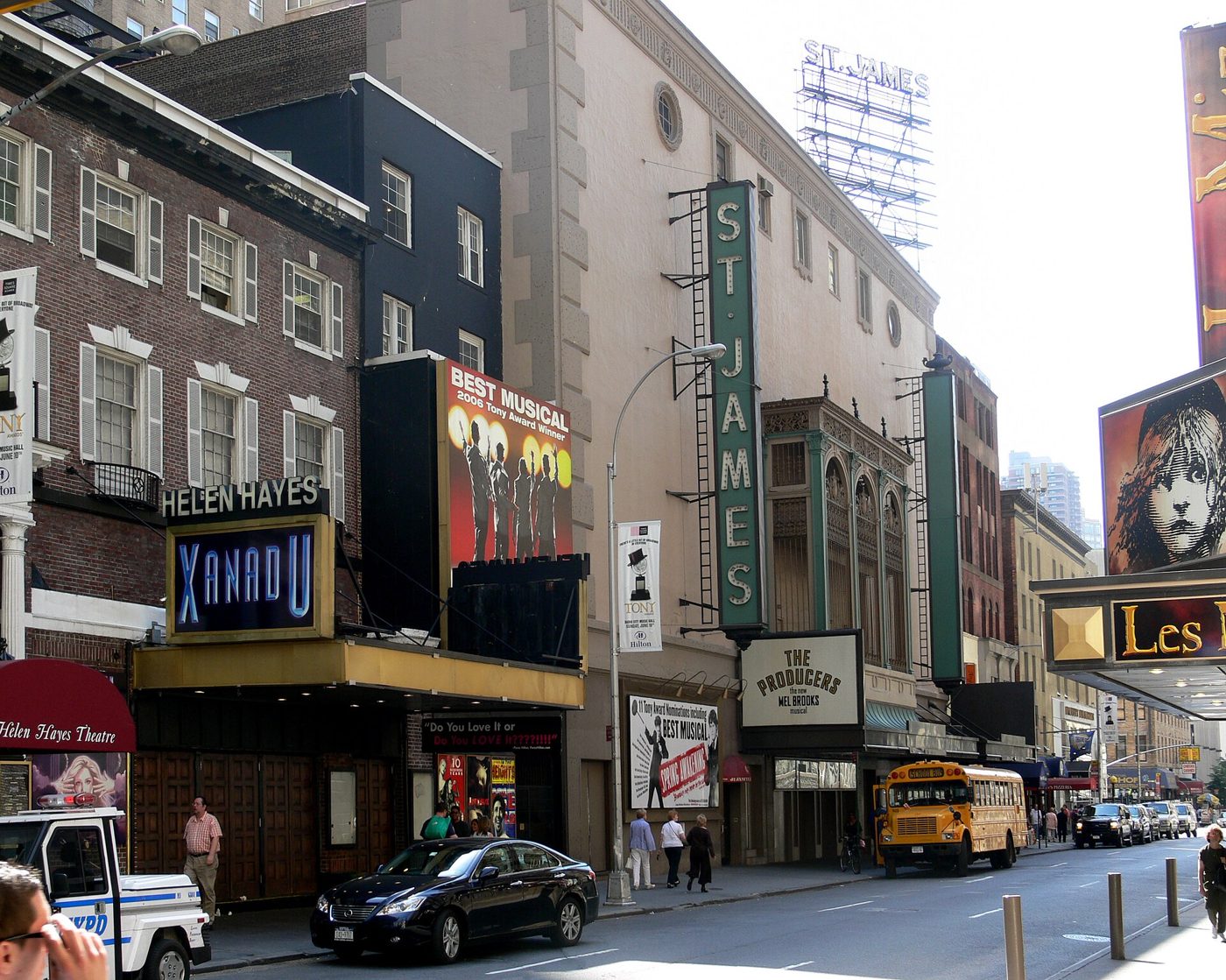
The St. James Theatre on West 44th Street, 2007, with the Helen Hayes Theatre at left. Photograph by Andreas Praefcke, via Wikimedia Commons. CC BY 3.0.
What has played at the St. James?
IBDB's production list includes Oklahoma! (March 31, 1943 to May 29, 1948), The King and I (March 29, 1951 to March 20, 1954), Hello, Dolly! (January 16, 1964 to December 27, 1970), Gypsy (November 16, 1989 to January 6, 1991 and again from March 27, 2008 to January 11, 2009), The Producers (April 19, 2001 to April 22, 2007), Hair (July 13 to September 10, 2011), Into the Woods (August 6, 2022 to January 8, 2023) and Sunset Boulevard (October 20, 2024 to July 20, 2025). It lists Titaníque from April 12, 2026 to September 20, 2026. ATG's venue page also describes a run of Titaníque this season. This article did not confirm what is playing there now.
Who owned and ran it over the years?
IBDB says Erlanger lost the theater in the Depression and the Shuberts bought it in 1941. Fearing monopoly accusations, the Shuberts turned over its management to the Jujamcyn Amusement Corporation, which renovated and reopened it in December 1958. The LPC says the St. James reopened in December 1958 after renovations by Frederick Fox. IBDB adds that in 2023 Jujamcyn merged with the Ambassador Theatre Group to become ATG Entertainment, which now owns and operates the theater.
How does it fit the history of Broadway theater design?
The LPC's report places the theater in a longer story. It says that at the close of the 19th century American theaters were still built like European opera houses, with high proscenium arches, narrow auditoriums, two or three horseshoe balconies and dozens of boxes. It points to the Art Nouveau New Amsterdam Theater, which opened in 1903, as a sign of a new seriousness in theater design. Over the following years, the report says, proscenium openings were made lower and wider, auditoriums became shallower, seating was planned in a fan shape and the number of balconies was usually cut to one. The St. James kept two balconies and a large house.
The report also explains the neighborhood. Much of the theater building around Times Square, it says, was driven by competition between the Theatrical Syndicate and the Shubert brothers for control of the touring business. It notes that from the Depression until the 1960s no new Broadway playhouses were built, since the 1929 stock market crash shrank theater activity and, after World War II, the cost of land and construction was prohibitive. The commission describes the St. James as an unusual design by the architects of Grand Central Terminal and as the last Broadway venture of Abraham Erlanger.
How many seats does the St. James have?
IBDB lists approximately 1,709 seats, which is one fewer than the 1,710 sometimes quoted. This article did not find a seat count on ATG's own venue page, so it uses IBDB's approximate figure and notes the one-seat difference.
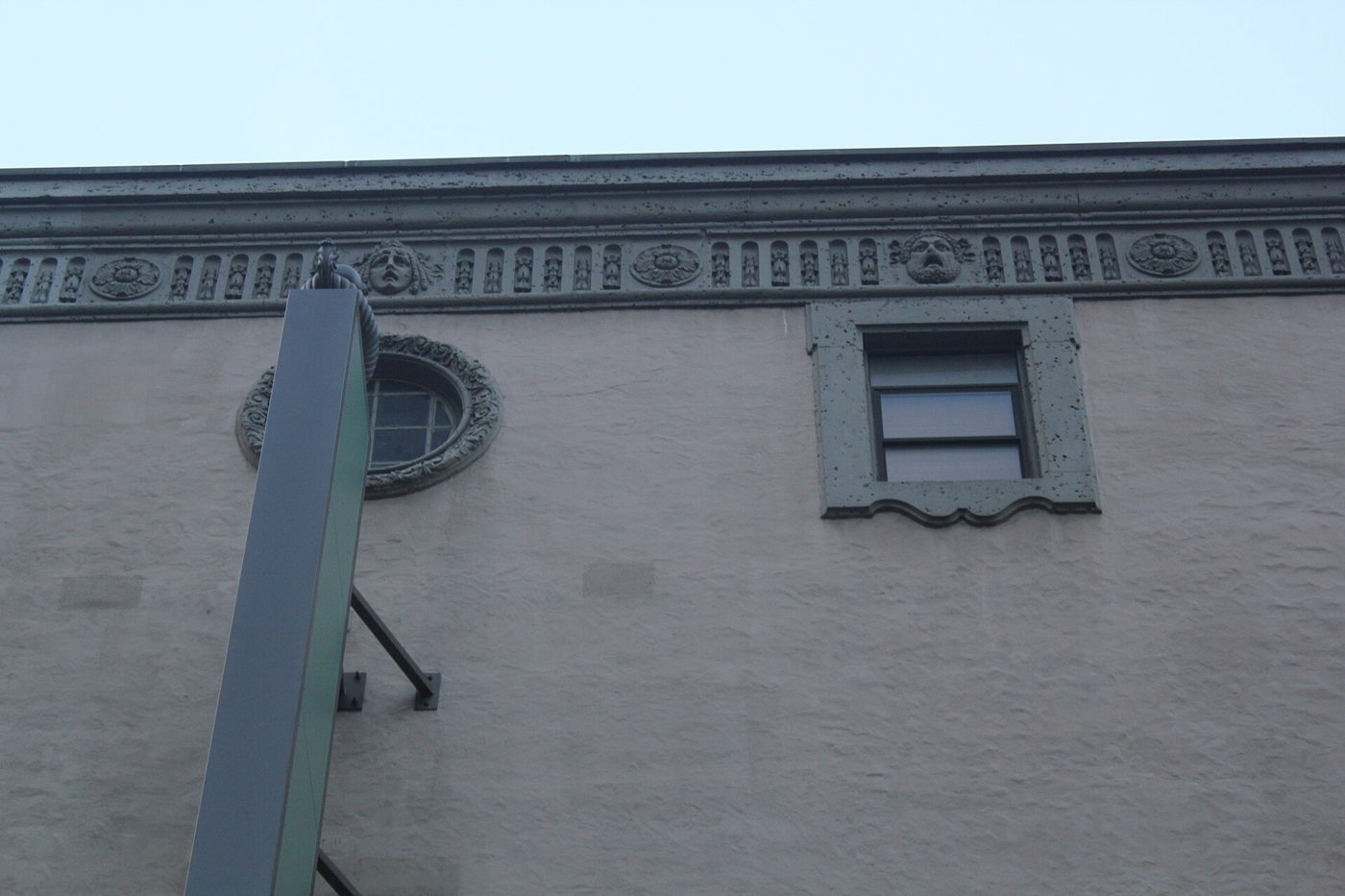
The cornice and a bullseye window on the St. James Theatre facade. Photograph by Epicgenius, via Wikimedia Commons. CC BY-SA 4.0.
Where can you eat or drink at the St. James Theatre?
ATG's venue page says merchandise is sold on the orchestra level before curtain, during intermission and after the show, and its code of conduct says alcohol must be consumed responsibly within the theater. It prohibits outside alcohol, glass bottles and weapons. This article read no official statement of which bars or snacks are available, and no restaurant inside the theater. Check ATG's venue information page before you go.
Who owns the St. James Theatre today?
IBDB says ATG Entertainment owns and operates the theater, following the 2023 merger of Jujamcyn and the Ambassador Theatre Group. ATG's venue page lists the theater under its own brand. Both the exterior and the interior are New York City landmarks, so exterior changes and changes to the designated interior spaces need LPC approval.
Sources
- Internet Broadway Database, St. James Theatre
- NYC Landmarks Preservation Commission, St. James Theater exterior designation report, LP-1374 (December 15, 1987)
- NYC Landmarks Preservation Commission, St. James Theater interior designation report, LP-1375 (December 15, 1987)
- ATG Tickets, St. James Theatre venue information
Visiting the St. James Theatre
- Address: 246 West 44th Street, New York, NY 10036 (ATG).
- Tickets: ATG says every person who enters needs a purchased ticket, lap seats are not available, and children under 5 are not admitted.
- Bags and items: large bags must go to coat check, and outside alcohol, glass bottles, lighters, bicycles, e-bikes and e-scooters are prohibited.
- Merchandise: sold on the orchestra level before curtain, at intermission and after the show.
Checked against ATG venue information page. Confirm hours and ticket rules there.