Radio City Music Hall: How a Failed Opera House Became the Showplace of the Nation
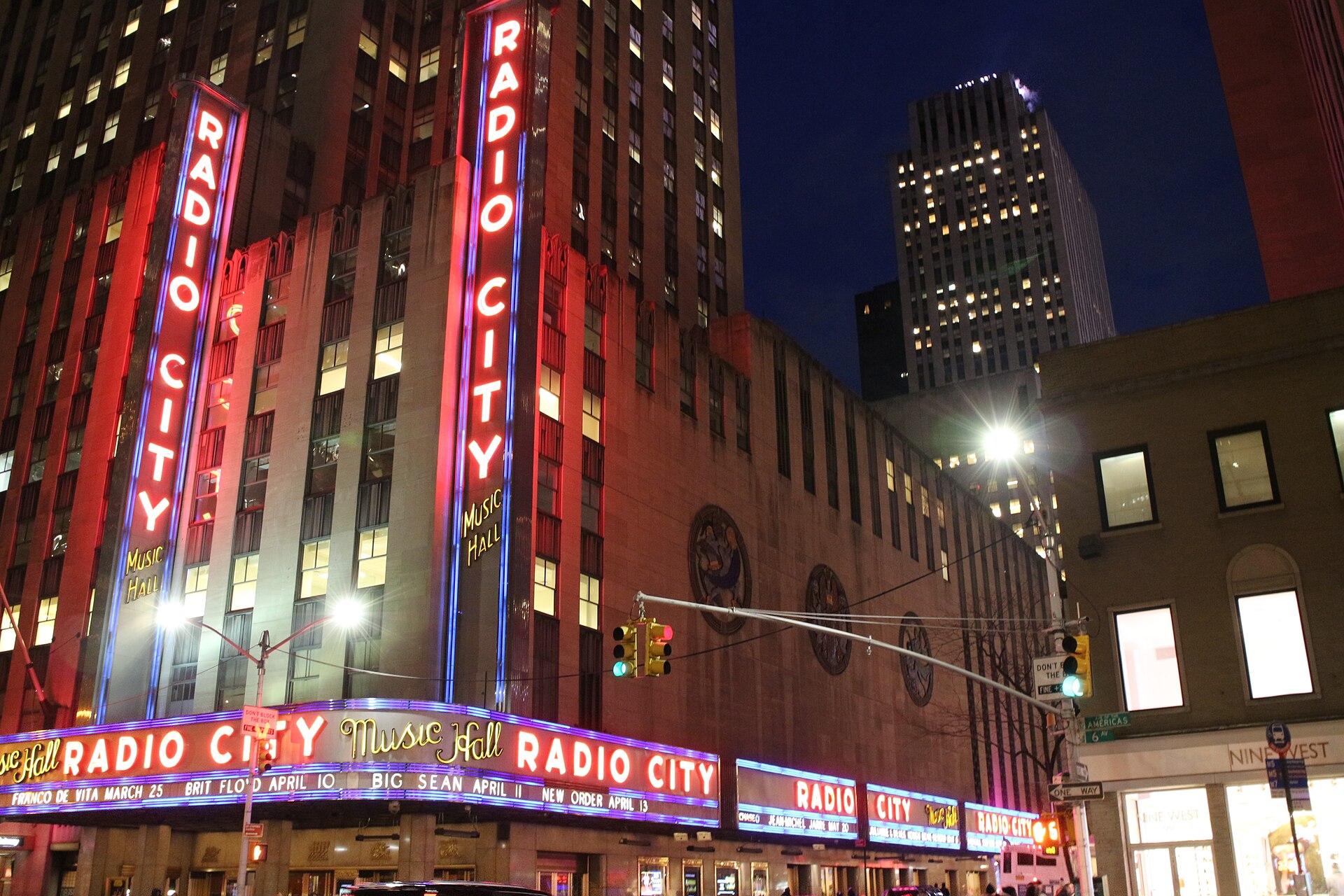
Photograph by Suicasmo, via Wikimedia Commons. CC BY-SA 4.0.
Radio City Music Hall exists because a plan for an opera house collapsed. It then opened in the middle of the Depression with a show that ran until 2:30 in the morning and lost money, and it nearly came down in the 1970s.
The Landmarks Preservation Commission's 1978 report traces it to Rockefeller Center. The Metropolitan Opera had been looking for a new home, and in 1928 John D. Rockefeller, Jr. agreed to lease three blocks from Columbia University for the project. After the 1929 stock market crash the Opera withdrew, and the plan became a commercial center. The architect Raymond Hood suggested that RCA, NBC and the film company RKO become major tenants, and RCA signed for space, including two theaters, in June 1930. The commission says construction began in September 1931 and that the hall, first called the International Music Hall, was the first Rockefeller Center building to be officially completed.
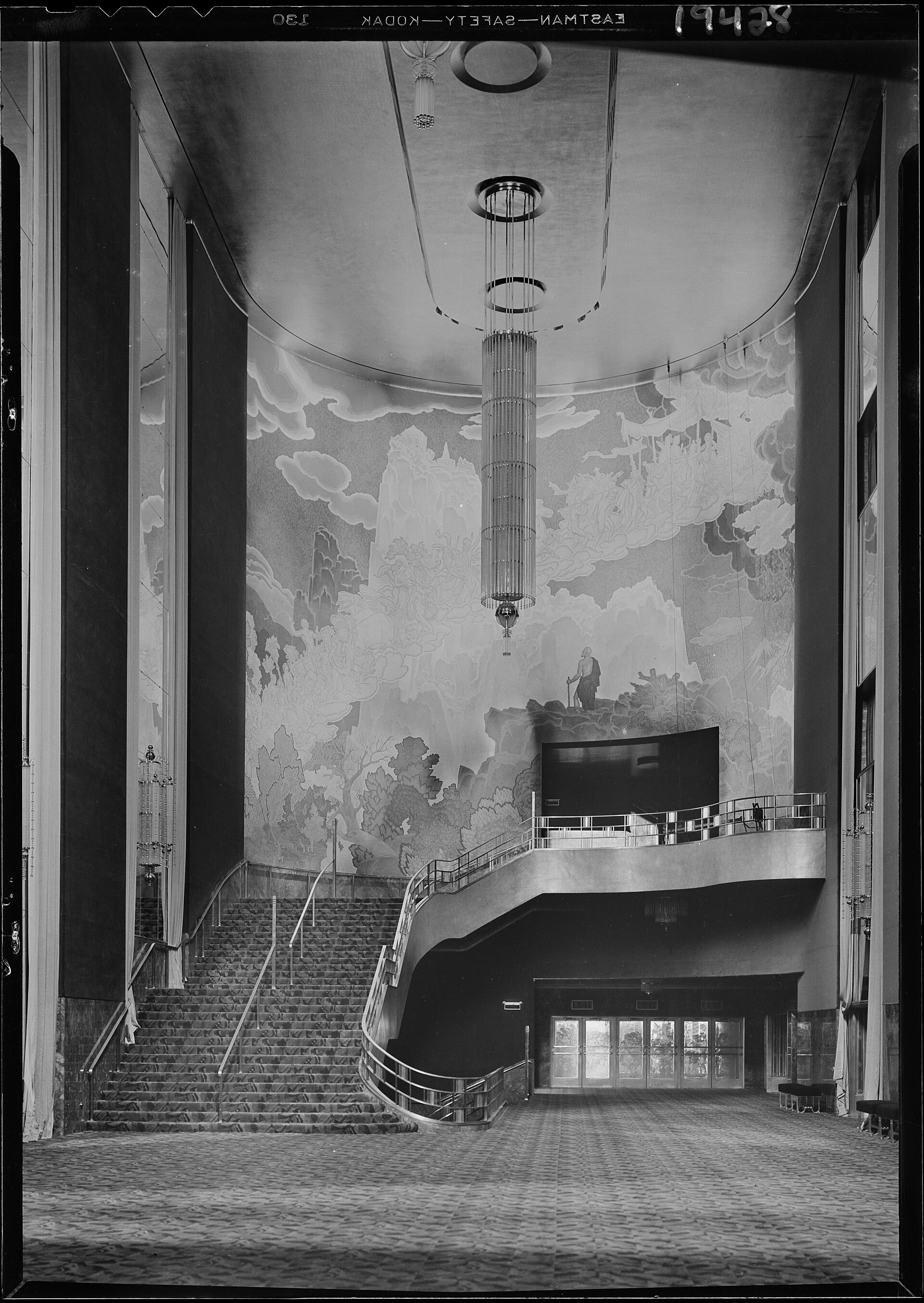
Interior of the International Music Hall, Radio City, 1932. Photograph by Samuel H. Gottscho, Library of Congress, via Wikimedia Commons. Public domain.
The commission credits no single firm with the design. Three firms worked together as "The Associated Architects": Reinhard & Hofmeister, Corbett, Harrison & MacMurray, and Hood, Godley & Fouilhoux. Its report names Edward Durell Stone as design supervisor of the auditorium and says Hood proposed the final form of the ceiling. Some popular summaries credit Stone alone, but the commission's account is the collaborative one. The report also notes that because no structure could be built above a theater under the codes then in effect, the Music Hall is low and flanked by two taller buildings.
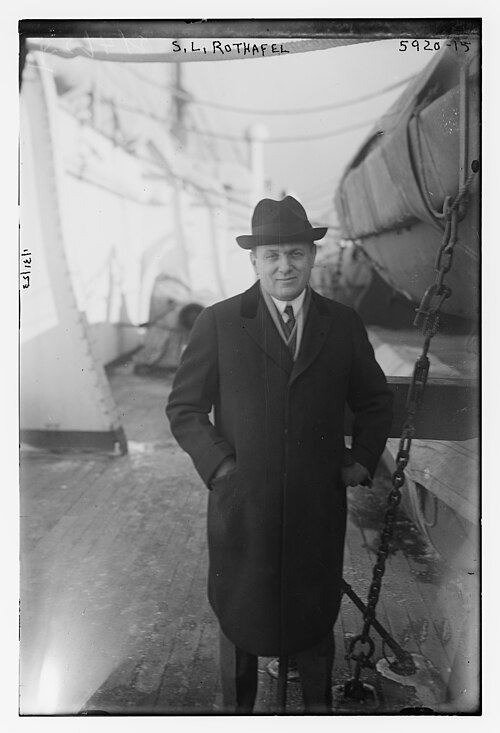
The man behind the concept was Samuel Lionel Rothafel, known as Roxy, whom RKO hired to run both Rockefeller Center theaters. He had already run the Capitol and Roxy theaters. The report says he wanted the largest theater in the world, with seating planned for 6,200, and shaped the plan. He chose three shallow mezzanines instead of one deep balcony to keep the audience close to the stage, The report also describes side ramps from the stage to the first mezzanine, which let performers make the stage appear to wrap around the audience.
The report describes the proscenium as a huge semicircular arch more than 60 feet high and 100 feet wide, with a ceiling of overlapping bands lit by a cove lighting system that could turn the walls and ceiling blue, red, green or amber.
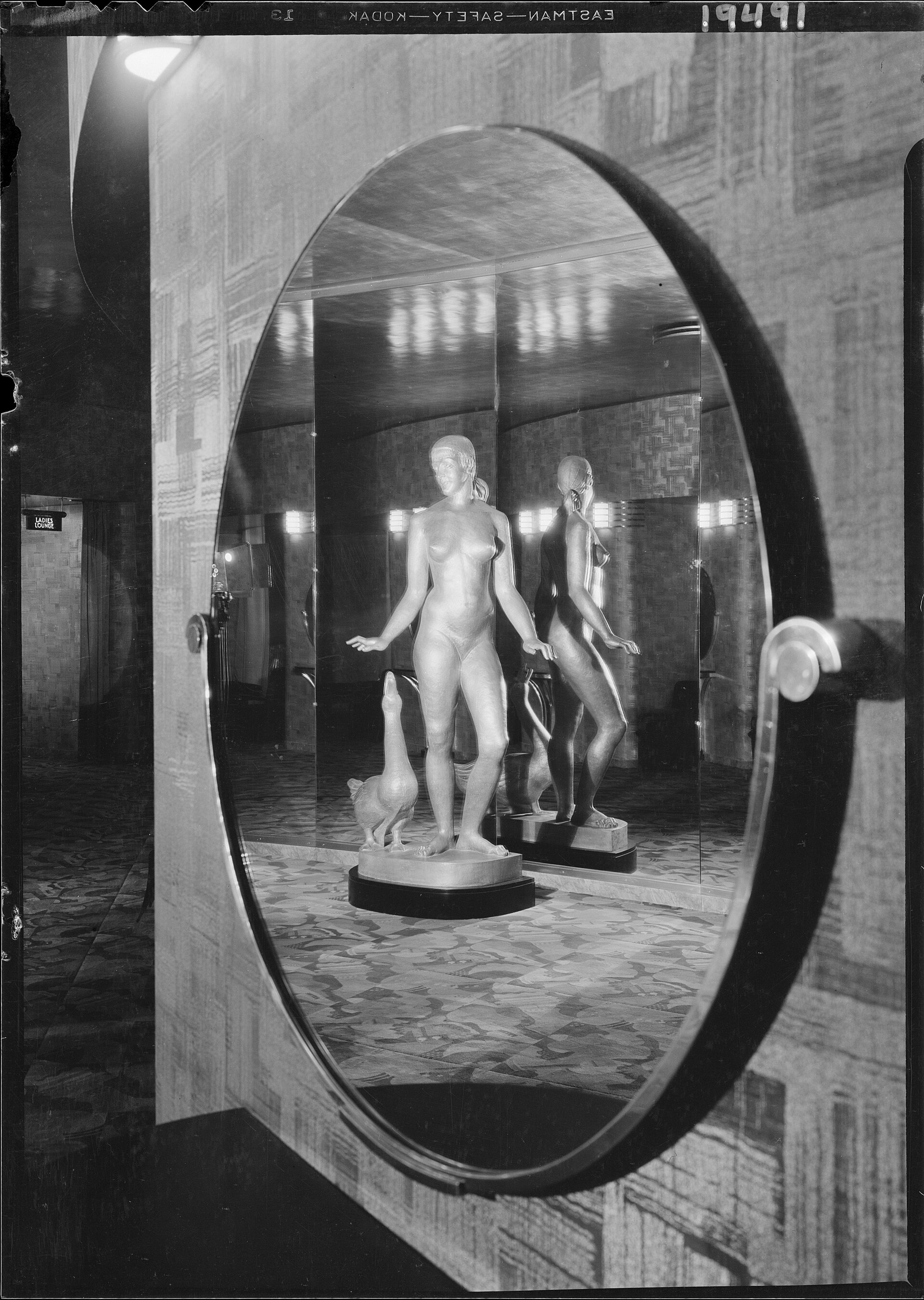
The interior came from Donald Deskey. In spring 1932 a competition was held to choose the decorators of the two Rockefeller Center theaters, and the report says Deskey won both and took only the Music Hall. He designed furniture, carpets and many light fixtures, and hired artists for murals, wall coverings and sculpture. The commission says that kind of unified design was exceptional.
Radio City Music Hall opened on December 27, 1932. The report says guests included John D. Rockefeller, Jr., Amelia Earhart, Walter Chrysler, Noel Coward and Irving Berlin. Roxy's bill had twenty numbers, including the dancer Martha Graham, the Tuskegee choir, the comedy team Weber and Fields, a resident ballet company and 48 "Roxyette" precision dancers, who later became the Rockettes. The show ended at 2:30 a.m. Critics were cool toward it and warm toward the building. Percy Hammond of the Herald Tribune wrote that the least important item of the evening was the show.
The show lost money. Two weeks after the opening the Music Hall had a $200,000 operating deficit, the report says, and on January 11, 1933 it switched to movies with some live acts, beginning with Frank Capra's The Bitter Tea of General Yen. Roxy resigned in January 1934 and died two years later at 53.
The hall faced its next crisis in the late 1970s. The New York Preservation Archive Project says Rockefeller Center's president announced in 1977 that the hall would close after a $2.3 million deficit, and that office conversion was reportedly planned. A rescue committee formed in January 1978. The commission held a hearing on March 14, 1978. Seventy witnesses spoke for designation and five against, including Rockefeller Center's president. The commission designated the interior on March 28, 1978. The archive project says the exterior was designated on April 23, 1985, as part of Rockefeller Center, and that the hall reopened in 1980.
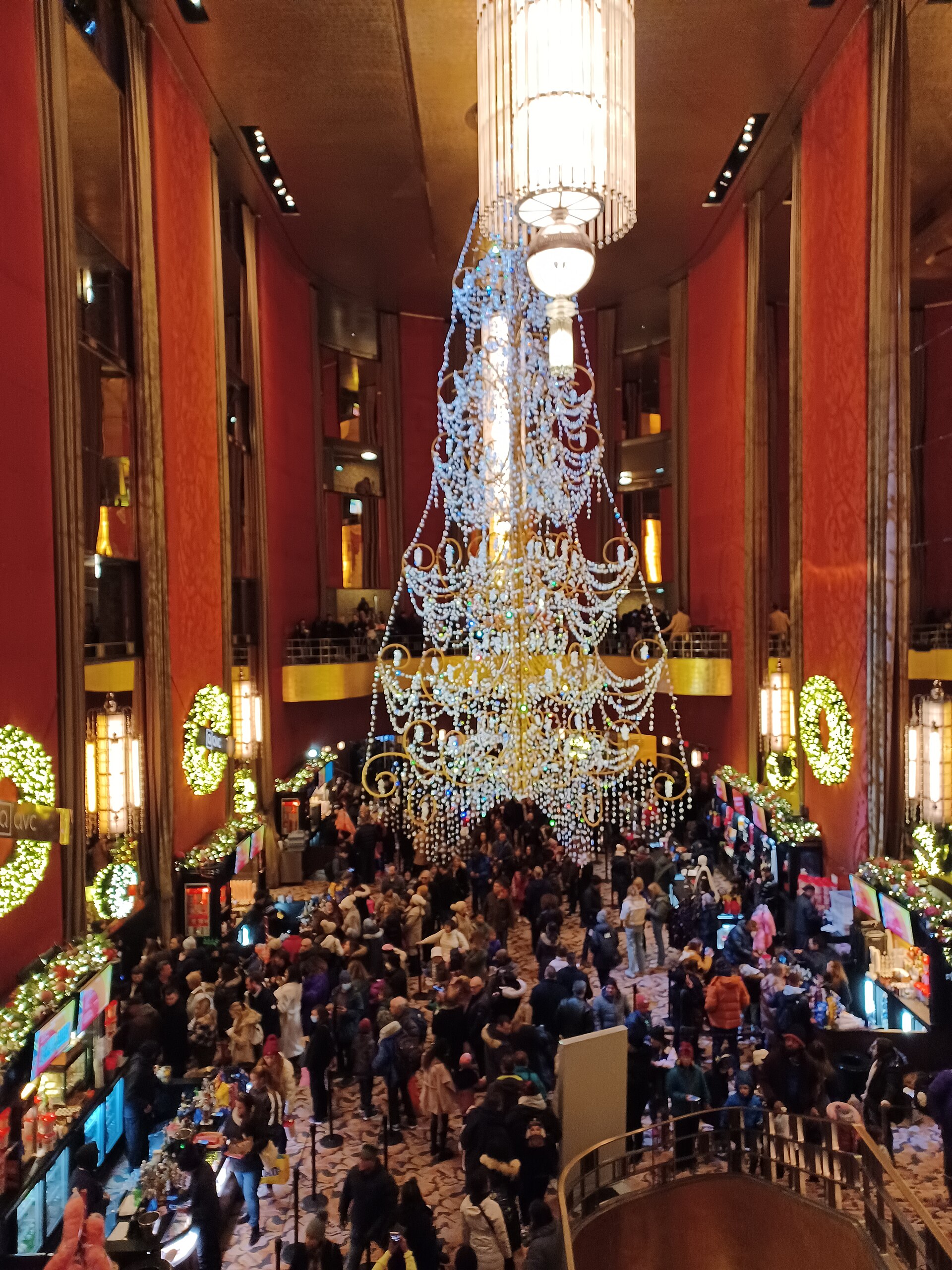
The grand foyer decorated for Christmas, December 2022. Photograph by Mx. Granger, via Wikimedia Commons. CC0.
Who owns Radio City Music Hall today?
Two parties are involved. The New York Times reported in December 1997 that Tishman Speyer, part of the group that had bought Rockefeller Center from Mitsubishi the year before, leased the hall to Cablevision, which planned a $25 million renovation. A 2021 letter filed with the Securities and Exchange Commission as an exhibit by MSG Entertainment shows the lease still running that year, between landlord RCPI Landmark Properties, care of Tishman Speyer, and tenant Radio City Productions LLC, with a renewal option. The sources used here do not include a deed or a current lease, so this article reports the landlord and tenant named in 2021.
Sources
- NYC Landmarks Preservation Commission, Radio City Music Hall, ground floor interior designation report (1978)
- New York Preservation Archive Project, Radio City Music Hall
- The New York Times, "Lease of Radio City Music Hall Keeps Rockettes Kicking" (December 4, 1997)
- MSG Entertainment SEC exhibit, lease extension letter (April 29, 2021)
- Exterior of Radio City Music Hall 20170313.jpg (image: Suicasmo, CC BY-SA 4.0)
- International Music Hall, Radio City, New York, New York. LOC gsc.5a02039.jpg (image: Gottscho, Samuel H., Public domain)
- International Music Hall, Radio City, New York, New York. LOC gsc.5a17887.jpg (image: Gottscho, Samuel H., Public domain)
- S.L. Rothafel LCCN2014715622.jpg (image: Bain News Service, Public domain)
- Radio City Music Hall on December 26.jpg (image: Mx. Granger, CC0)


