The Hudson Theatre: Harris's 1903 Playhouse, a TV Studio, a Rock Club and Its Return to Broadway
What is the Hudson Theatre?
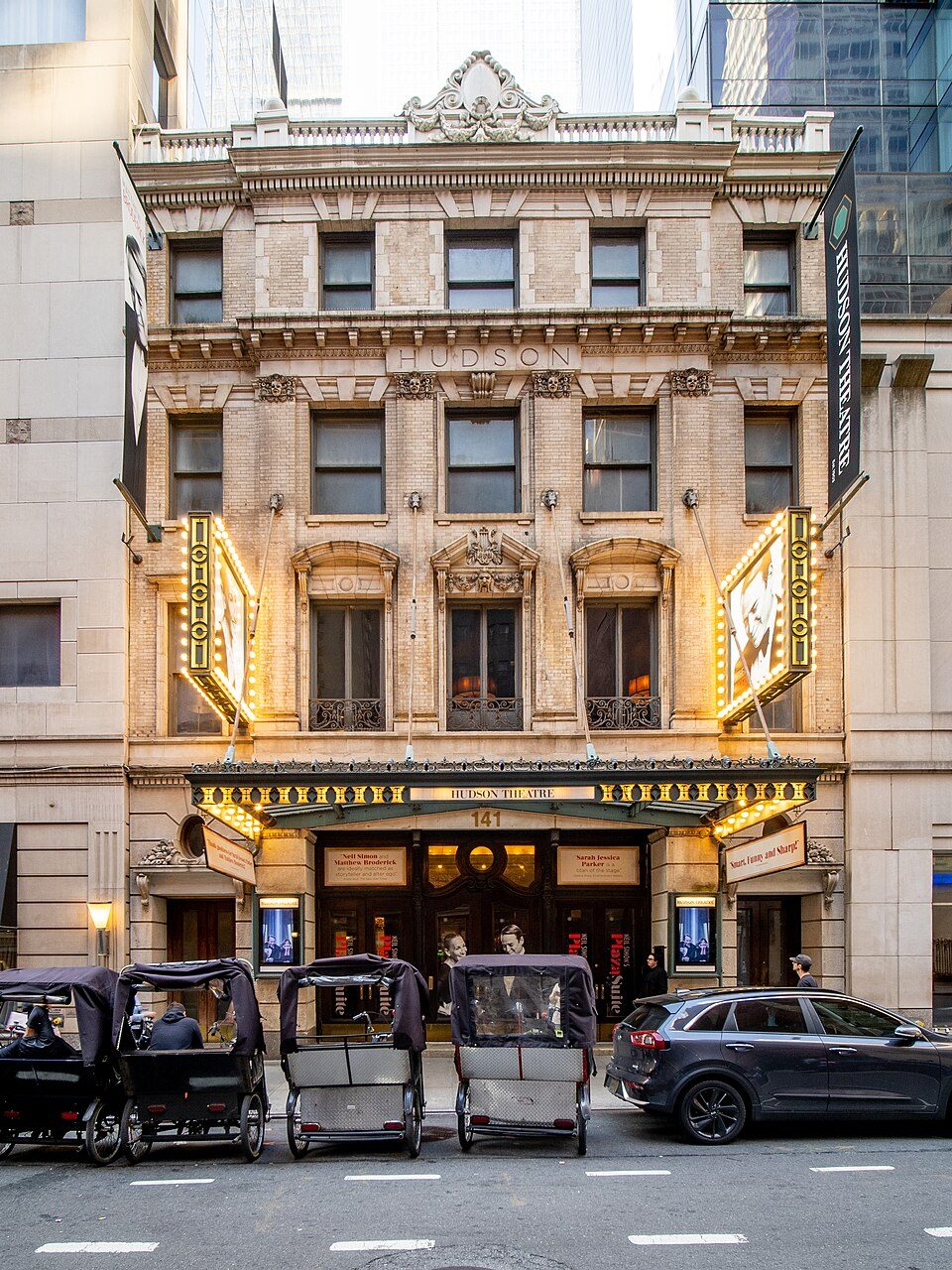
The Hudson Theatre at 141 West 44th Street opened on October 19, 1903 with Ethel Barrymore in Cousin Kate, according to both the Landmarks Preservation Commission (LPC) and ATG Entertainment, which operates it. It is one of the oldest surviving Broadway theaters. The LPC designated its exterior (LP-1340) and its first-floor interior (LP-1341) on November 17, 1987, after public hearings on June 14 and 15, 1982. The LPC's reports say the Hudson "survives today as one of the very few turn-of-the-century theaters in the Broadway/Times Square area."
The reports list the address as 139-141 West 44th Street, and the Internet Broadway Database (IBDB) and ATG use 141. They are the same building. The LPC gives the construction dates as 1902 to 1904 and notes that although the Hudson opened in late 1903, the Buildings Department did not sign off on the permit until July 1904.
Who built the Hudson?
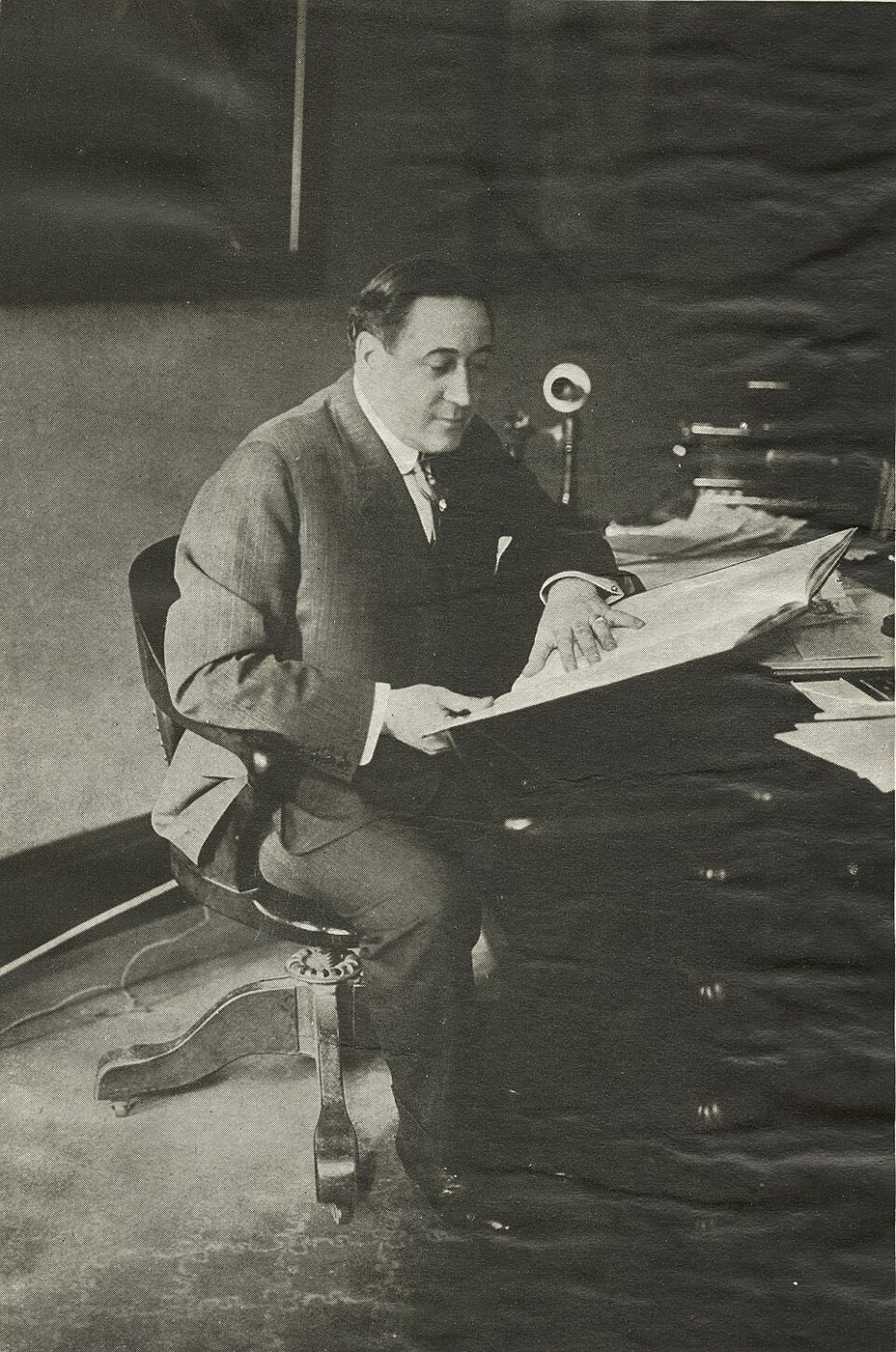
The producer Henry B. Harris did, though not alone on paper. The LPC says that technically the theater's owner was George G. Heye, but Harris was the moving force behind it, and in 1908 Harris bought the Hudson outright from Heye. Harris grew up in Boston, worked in theaters in Boston and on the road, managed stars such as Lillie Langtry and came to New York in 1900. He built the Hudson to showcase his productions and to house his offices. The LPC adds that he also built the Folies Bergere, later the Helen Hayes, which was demolished.
The architects were J.B. McElfatrick and Son and Israels and Harder. The LPC says McElfatrick and Son began the design, which Israels and Harder completed. McElfatrick was a firm of theater specialists, and the report notes that the Hudson was one of its few Times Square commissions not connected to Oscar Hammerstein. The report quotes a contemporary architectural critic who called the exterior "simple and dignified." It describes a four-story, five-bay facade in Beaux-Arts classical style with a rusticated base, a two-story portico formed by four pilasters, Medusa-head capitals, a panel inscribed "HUDSON" and a balustrade with a cartouche. The original marquee does not survive. The report says the interior received the most enthusiastic praise of the critics.
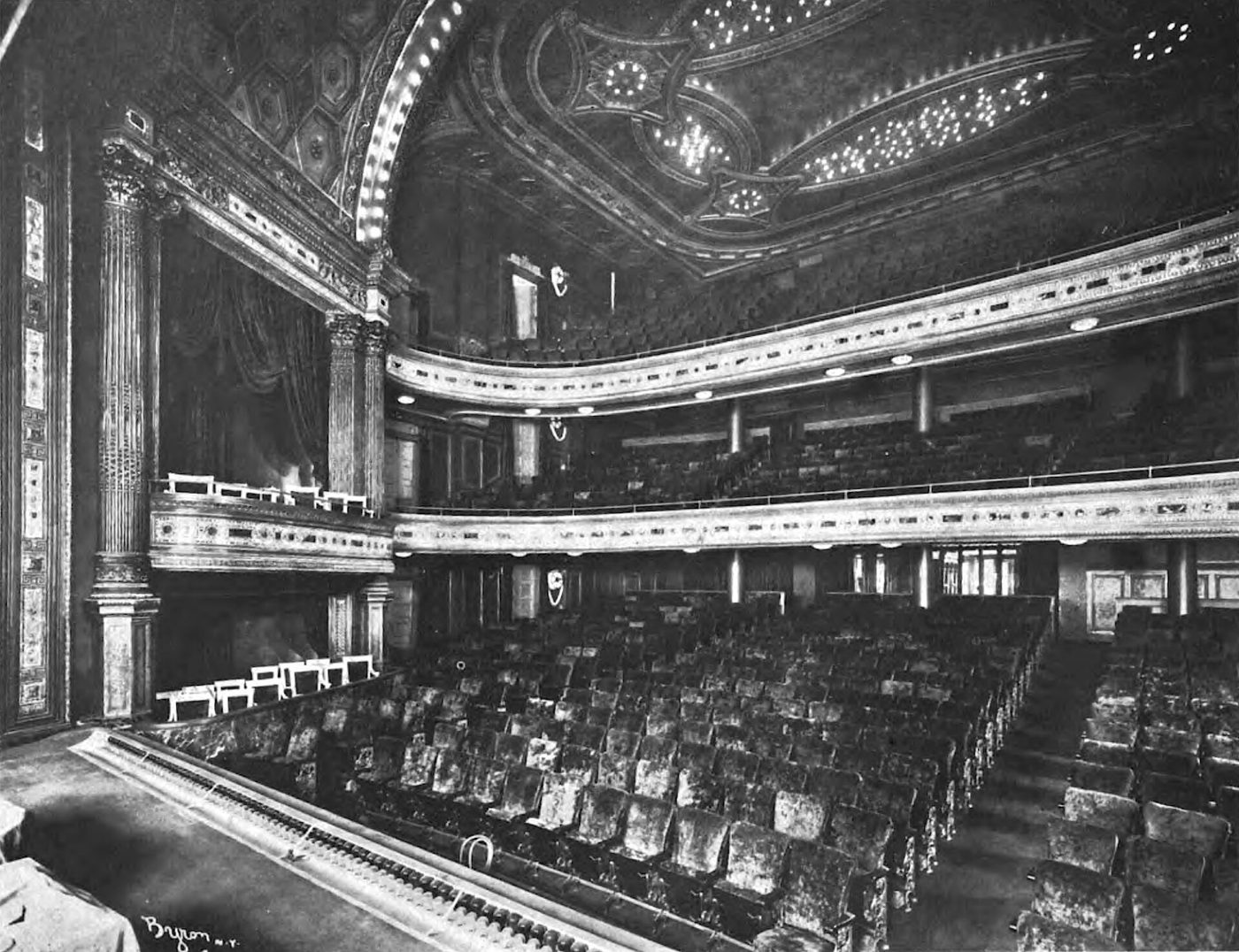
The Hudson Theatre auditorium in an early photograph by the Byron Company, via Wikimedia Commons. Public domain.
What happened after Harris died on the Titanic?
Harris died on the Titanic in 1912. His wife Renee, who survived, kept producing at the Hudson, and the New York Times describes her as one of Broadway's first female producers. The LPC says she was reportedly offered $1.2 million for the theater in the late 1920s so that an office building could replace it. She refused, and the Times says she lost the theater to foreclosure in the Depression.
The LPC's production history lists a long run of plays. Barrymore returned in 1904, Shaw's Man and Superman played in 1905 and 1906, and Booth Tarkington's Clarence, with Mary Boland, Helen Hayes and Alfred Lunt, was a success in 1920. George M. Cohan presented several productions in the 1920s. In 1934 CBS leased the theater as the CBS Radio Playhouse, and the first-floor boxes were removed for an announcer's booth. In 1937 it was again the Hudson. It had one of its longest runs with Arsenic and Old Lace in 1943 and 1944, and the LPC says Lindsay and Crouse bought the theater during that run. Their State of the Union, which the Pulitzer committee honored in 1946, opened at the Hudson in November 1945 and ran 765 performances, according to a 2015 Millennium and Copthorne Hotels press release.
How did the Hudson become a television studio?
In 1950 the LPC says the theater was converted into a television studio, and the Jack Paar and Steve Allen shows were televised there. ATG says the first nationwide broadcast of The Tonight Show, starring Steve Allen, came from the Hudson stage on September 27, 1956. The LPC says Allen's Man on the Street interviews took place outside the stage door on 45th Street, and that television use lasted until 1959. The Hudson returned to the stage from 1959. Toys in the Attic, by Lillian Hellman, won the New York Drama Critics Circle Award there, and the LPC says Eugene O'Neill's Strange Interlude, with Geraldine Page, Ben Gazzara and Jane Fonda, was the last production before the theater went dark in 1963.
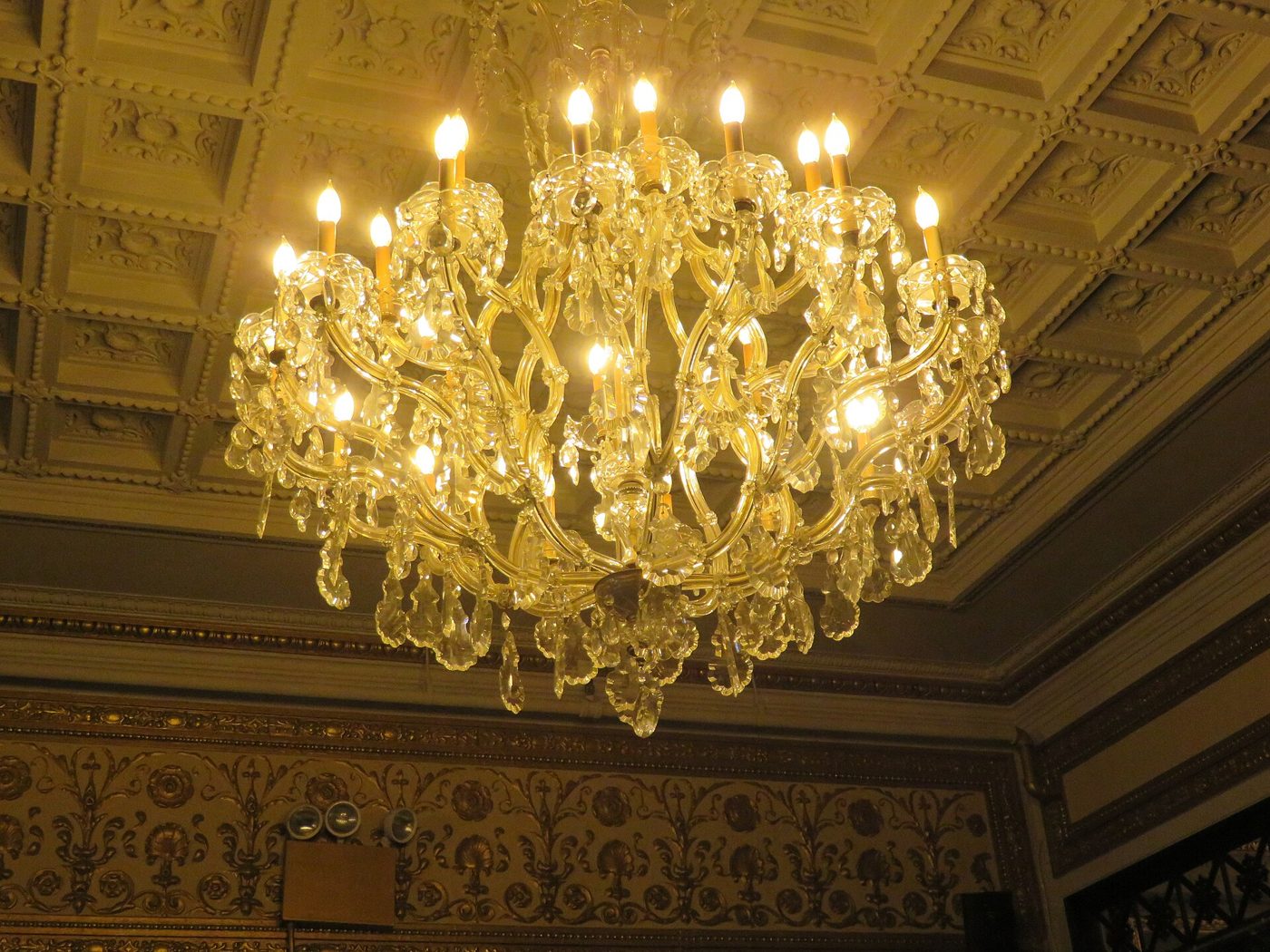
A chandelier in the lobby of the Hudson Theatre, October 2017. Photograph by Lasnydes, via Wikimedia Commons. CC BY-SA 4.0.
What about the burlesque, the rock club and the conference center?
The LPC says the theater reopened in 1965 with Ann Corio's This Was Burlesque, and that since 1965 it has had several owners and has been a burlesque house, a legitimate theater in the 1967 to 1968 season and a movie house. The Times says the Hudson had a stint as a "porn palace" in the 1960s and recalls Andy Warhol's 1967 film Bike Boy playing there. In 1981 it was renamed the Savoy and converted to a dinner theater, and the LPC lists James Taylor, Peter Allen and Miles Davis among performers. IBDB says it was a rock club from 1980. IBDB says that after the 1987 landmark designation, the owner Harry Macklowe incorporated the theater into his adjacent Millennium Broadway Hotel as a conference center and auditorium. The Times says it was an event space for Millennium Hotels for about twenty years before 2017.
The sources differ on dates. IBDB dates the rock club to 1980 and the LPC dates the Savoy to 1981. A 2015 press release from Millennium and Copthorne Hotels says it acquired the Hudson from Macklowe in 1995, while its chairman is quoted in a separate report as saying the company acquired the Millennium Broadway Hotel in 1994.
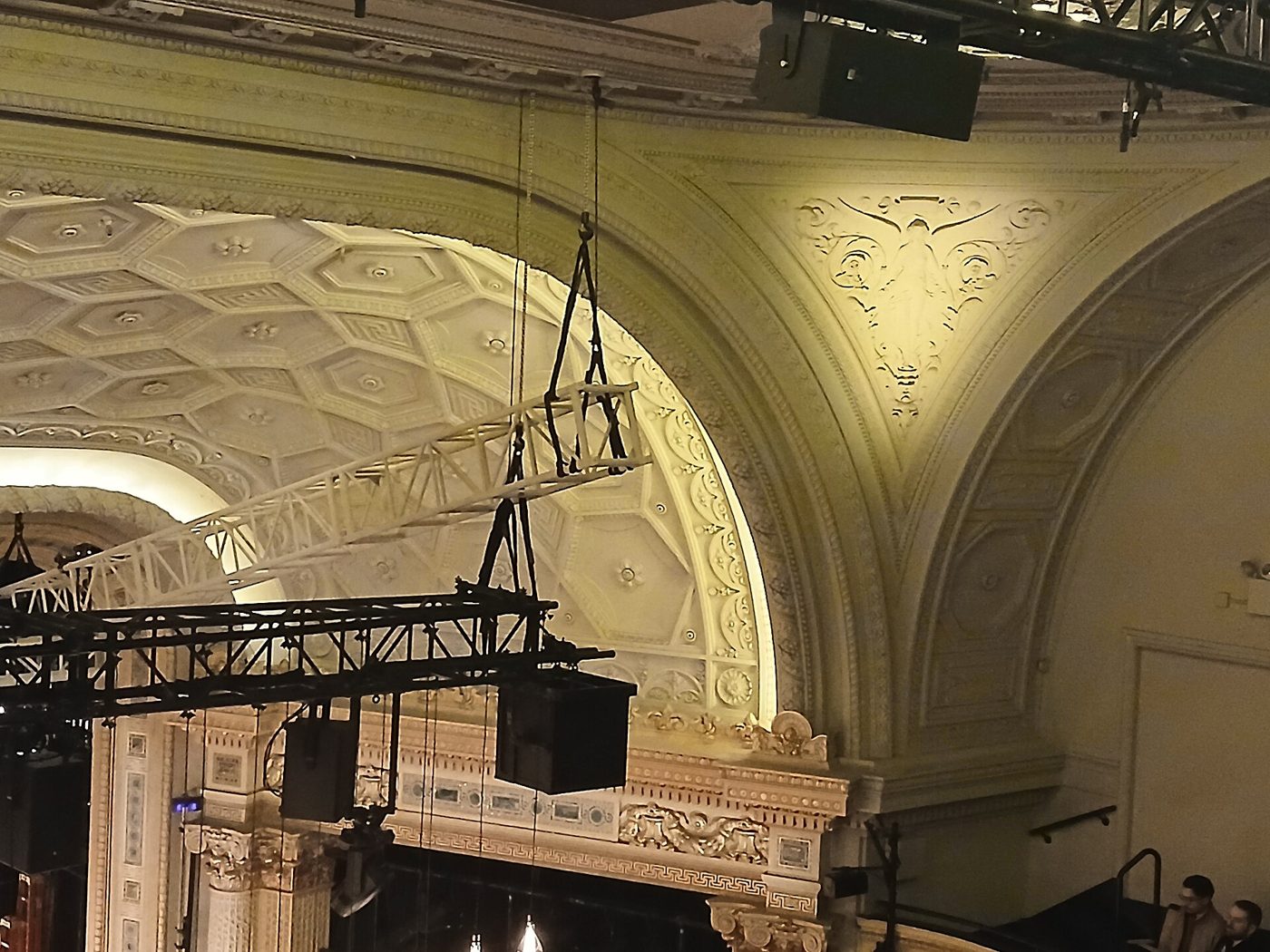
Ceiling and balcony detail inside the Hudson Theatre, March 2026, during Every Brilliant Thing. Photograph by Epicgenius, via Wikimedia Commons. CC BY-SA 4.0.
How did the Hudson return to Broadway?
In December 2015 Millennium and Copthorne Hotels announced that Ambassador Theatre Group (ATG), through its subsidiary Hudson Theatre LLC, had entered a long-term lease. The Times said the renovation was estimated to run $10 million, though ATG declined to give the final cost. The Hudson reopened on February 11, 2017 with Sunday in the Park with George, starring Jake Gyllenhaal and Annaleigh Ashford, as Broadway's 41st theater, per the Times and ATG. The Times called it "one of Broadway's oldest surviving theaters" that was now "its youngest." In 2023, IBDB says, ATG merged with Jujamcyn and rebranded as ATG Entertainment.
How many seats does it have?
ATG lists a seating capacity of 977. IBDB lists approximately 970. ATG's accessibility page says the Hudson has a "grand 100-foot-long lobby." It also says there is elevator access to the Dress Circle, with some steps to the Dress Circle bar and seating, and no elevator to the Balcony.
What has played at the Hudson recently?
IBDB lists Death of a Salesman (October 9, 2022 to January 15, 2023), Merrily We Roll Along (October 10, 2023 to July 7, 2024), Once Upon a Mattress (August 12 to November 30, 2024), Waiting for Godot (September 28, 2025 to January 4, 2026) and Every Brilliant Thing (March 12 to August 9, 2026). IBDB lists a revival of Other Desert Cities from October 18, 2026 to January 17, 2027.
Where can you eat or drink at the Hudson Theatre?
ATG's accessibility page says the Hudson has two bars, in the Tiffany lobby and the Dress Circle lobby. ATG's lounge page describes an Ambassador Lounge, an add-on with a welcome drink, table service, a private coat check and its own restrooms, which opens 60 minutes before the performance. Entry is sold with a ticket package or, subject to availability, through the host in the foyer after security check. This article found no official source on whether outside food is permitted, and bar hours and menus can change with each production, so check ATG before you go.
Who owns the Hudson Theatre today?
The sources agree that ATG operates it and disagree about title. The 2015 press release from Millennium and Copthorne Hotels says ATG took a long-term lease from a subsidiary of the hotel company, and the company's own chairman said it had "proudly owned and maintained" the theater as a conference venue. American Theatre's headline of the same month said ATG "now co-owns" the theater. Millennium's website still describes the Hudson as part of the Millennium and Copthorne family. This article could not find a current property record, so it treats the hotel company as owner and ATG as lessee and operator, and flags that as not confirmed.
Sources
- NYC Landmarks Preservation Commission, Hudson Theater designation report, LP-1340 (November 17, 1987)
- NYC Landmarks Preservation Commission, Hudson Theater first floor interior designation report, LP-1341 (November 17, 1987)
- Internet Broadway Database, Hudson Theatre
- ATG Entertainment, Hudson Theatre
- ATG Tickets, Accessibility at Hudson Theatre
- ATG Tickets, Hudson Theatre Lounges and Experiences
- The New York Times, The Hudson Theater Is Back on Broadway (February 2, 2017)
- Millennium and Copthorne Hotels, press release (December 16, 2015)
- Deadline, Ambassador Theatre Group Acquires Hudson Theatre For Broadway (December 2015)
- American Theatre, Hudson Theatre to Reopen on Broadway (December 18, 2015)
- Millennium Hotels and Resorts, Hudson Theatre
Visiting the Hudson Theatre
- Address: 141 West 44th Street, New York, NY 10036 (ATG).
- Box office: ATG lists Monday to Saturday 10 AM to 8 PM (or until evening showtimes) and Sunday 12 PM to 6 PM.
- Accessibility: elevator access to the Dress Circle, with some steps to the Dress Circle bar and seating, and no elevator to the Balcony (ATG).
- Tickets: inquiries (855) 801-5876 (ATG).
Checked against ATG Hudson Theatre page and ATG accessibility page. Confirm hours and ticket rules there.