Federal Hall: The Greek Revival Custom House on Washington’s Inaugural Site
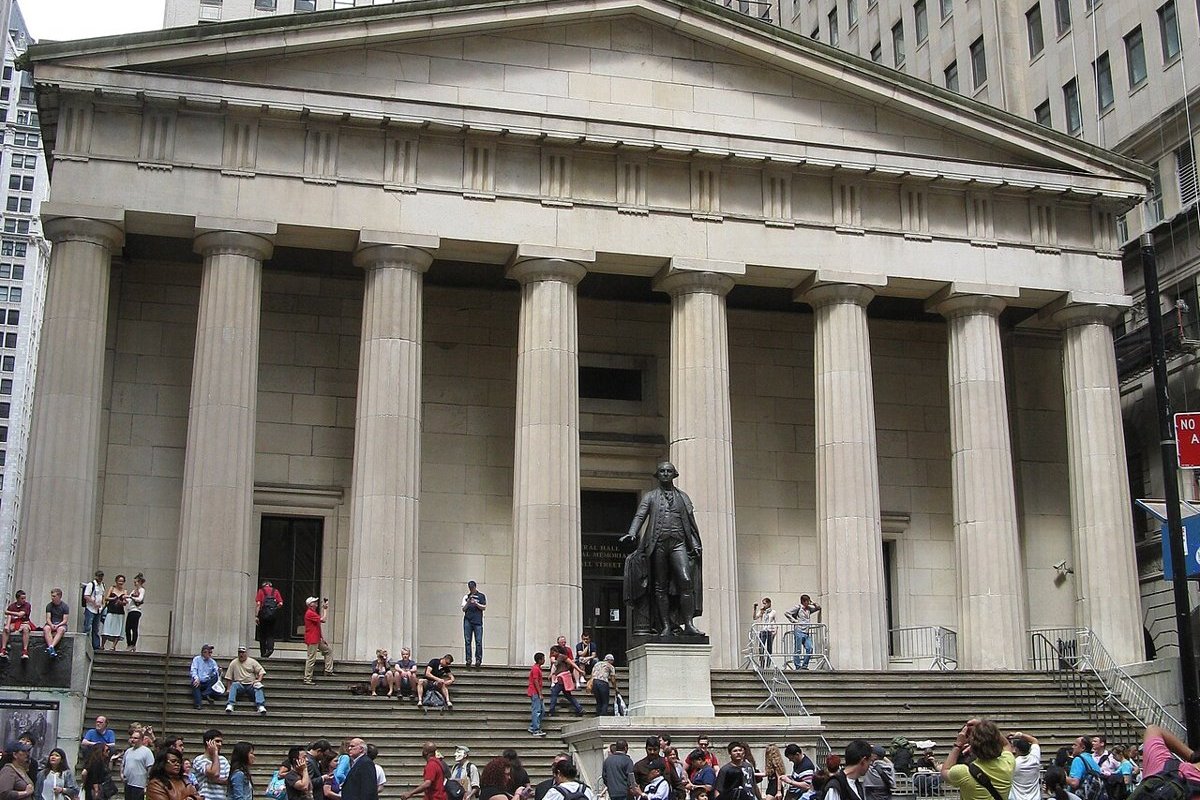
Photograph by Yair Haklai, via Wikimedia Commons. CC BY-SA 4.0.
Federal Hall looks like a Greek temple dropped on Wall Street, and its story begins before the temple. The site is where George Washington took the oath of office as the first President of the United States on April 30, 1789. The building standing there now is a different structure, built to collect customs duties.
The Landmarks Preservation Commission's interior report traces the site's earlier buildings. New York's second City Hall was begun in 1699 and demolished in 1812. In 1788-89 Major L'Enfant remodeled it as Federal Hall, and it was on that building's balcony that Washington was sworn in.
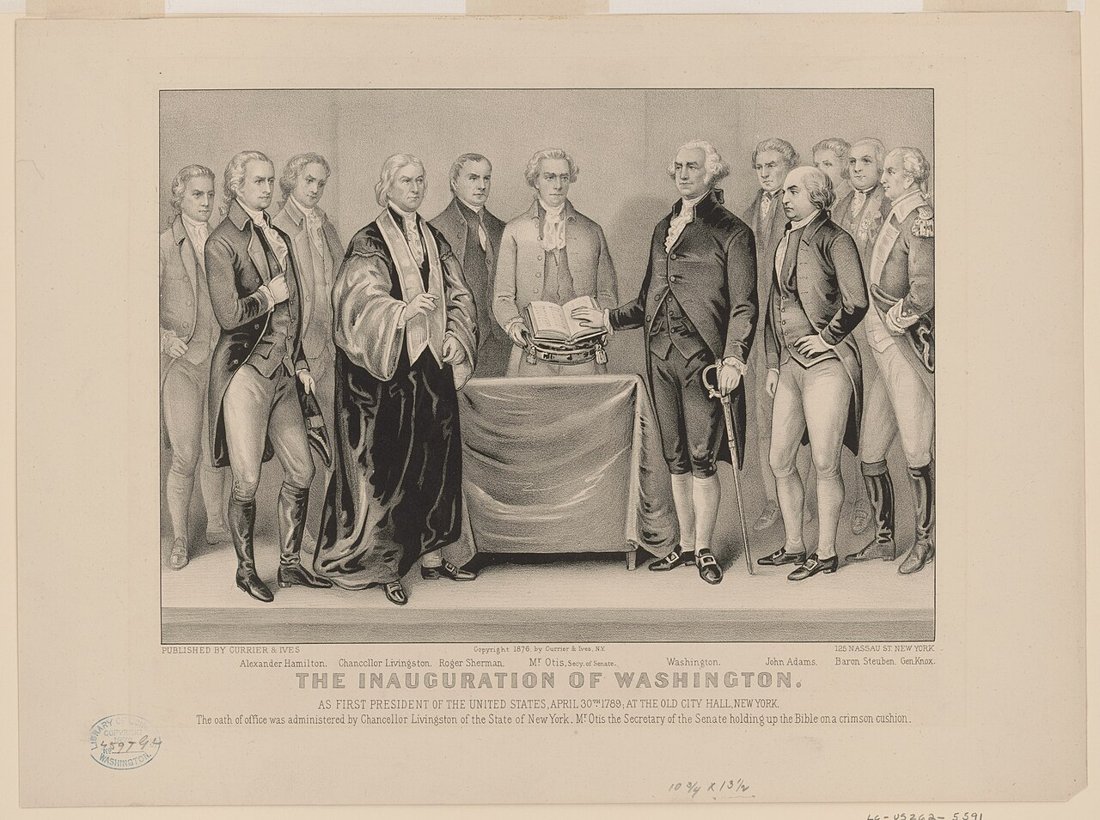
"The inauguration of Washington: as first President of the United States, April 30th 1789; at the old city hall, New York," a lithograph. Popular Graphic Arts, Library of Congress, via Wikimedia Commons. Public domain.
The present building was begun in 1834 and completed in 1842 as the New York Custom House. The commission says the firm Town & Davis won the design prize in August 1833. Its design called for a Greek temple in the image of the Parthenon, with a low central dome in the Roman tradition. The history of the work was complicated: the report says several successive architects carried it out under the Treasury Department, with John Frazee and Samuel Thomson among them.
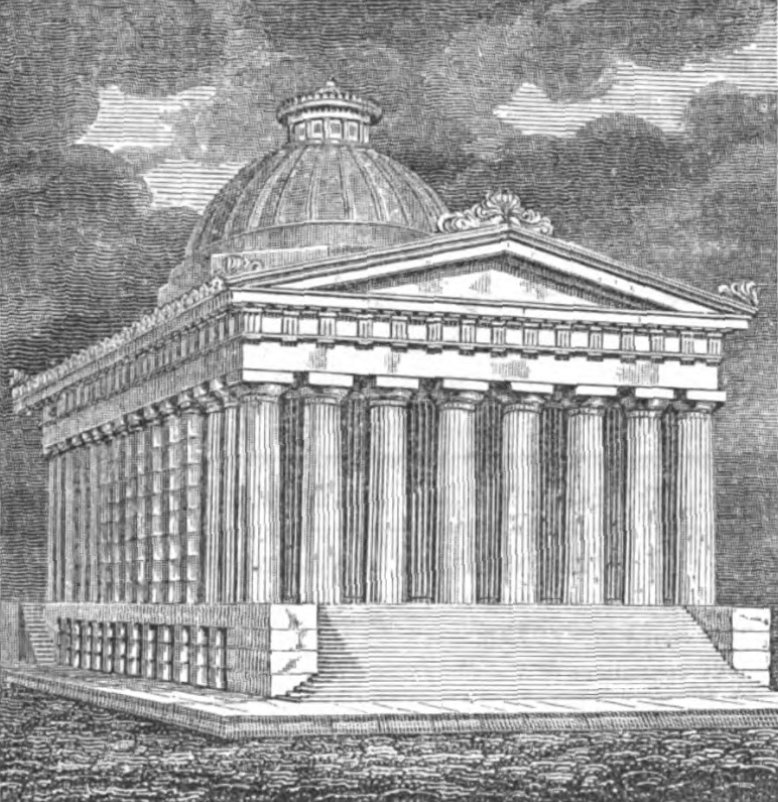
The commission describes it as a remarkably pure example of the classical temple form, unusual in the United States for its columned porticos at both ends. It also notes the Greek Doric columns with their wide, shallow flutes, and the masonry vaults inside, which it calls a notable example of the only known fireproofing method of the period.
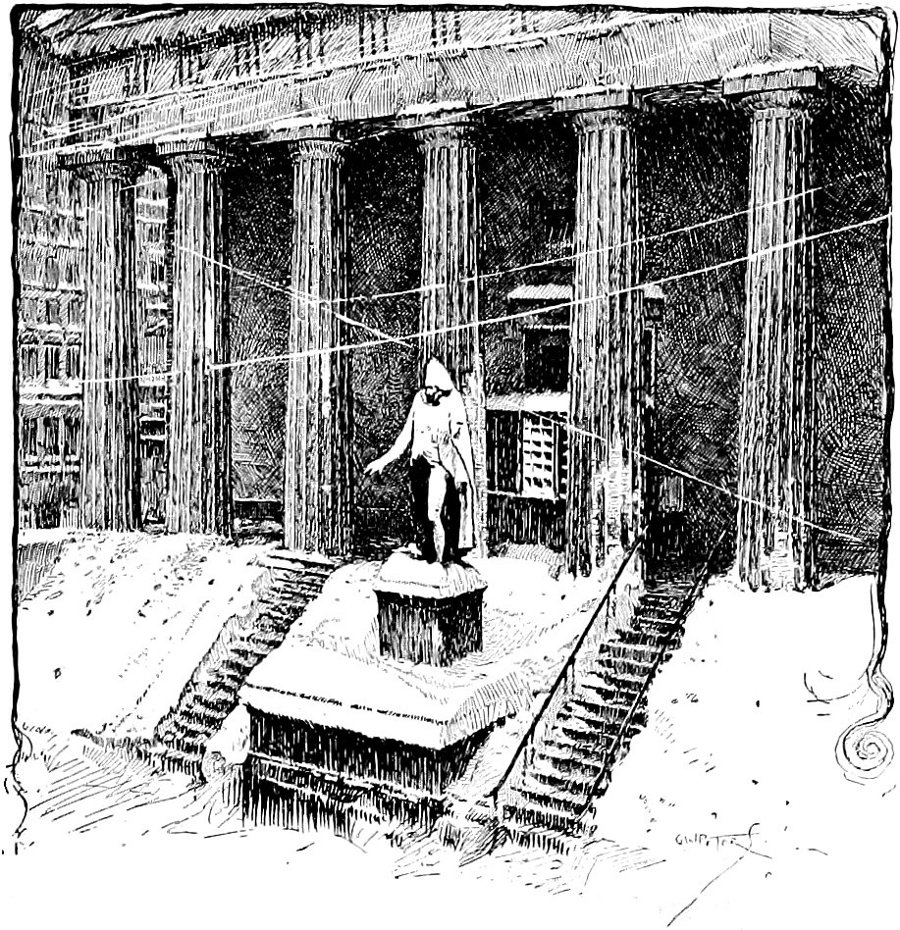
The building served as the Custom House from 1842 until 1862, when it became the United States Sub-Treasury. The National Park Service says gold and silver bullion were stored in the basement vaults. The commission notes that the New York office handled 70 percent of government money. The sub-treasury system ended in 1920 when the Federal Reserve Bank replaced it.
The rotunda is the building's showpiece. The commission says it is modeled on the Pantheon in Rome, with soaring Corinthian columns, a polished marble floor and a large dome. The same report says the stone slab on which Washington stood in 1789 is preserved in the center of the rotunda.
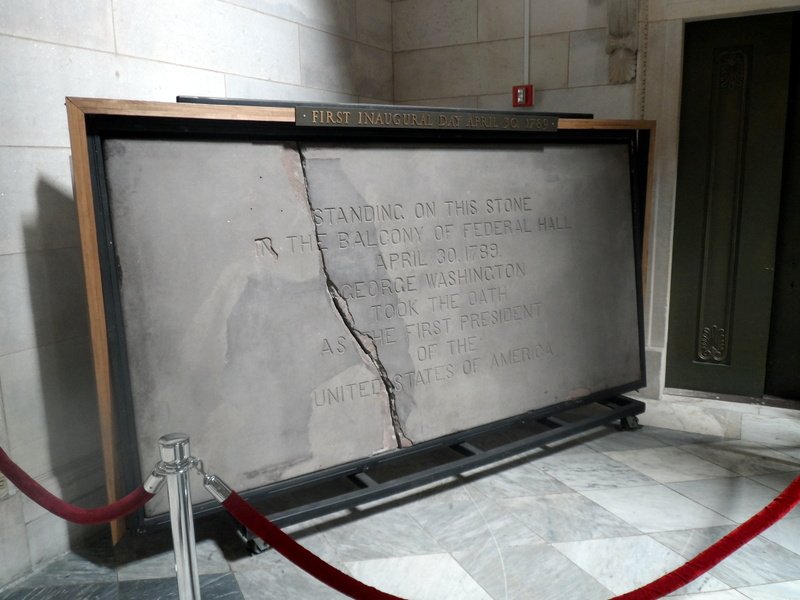
After 1920, a number of agencies occupied the building until 1939, when it became a national historic site. It was redesignated Federal Hall National Memorial in 1955. The commission designated the exterior a city landmark in 1965 and the interior rotunda in 1975.
Who owns Federal Hall today?
The National Park Service runs it. The park service describes the building at 26 Wall Street as a museum and memorial to Washington and the beginnings of American government, and the commission's report likewise places it under the National Park Service in the Department of the Interior. John Quincy Adams Ward's bronze statue of Washington stands on the front steps, where the park service says it marks the approximate spot of the inauguration.
Sources
- NYC Landmarks Preservation Commission, Federal Hall National Memorial designation report (1965)
- NYC Landmarks Preservation Commission, Federal Hall National Memorial, Interior Rotunda designation report (1975)
- National Park Service, Federal Hall National Memorial
- National Park Service, Federal Hall National Memorial Foundation Document Overview
- Exterior of Federal Hall.jpg (image: Yair Haklai, CC BY-SA 4.0)
- United States Custom House (New York City).png (image: Drawn by Alexander Jackson Davis; engraved by Mason, Public domain)
- The Sub-Treasury in Wall Street (G. W. Peters).jpg (image: George W. Peters, Public domain)
- The Washington Stone Federal Hall.JPG (image: Jared Kofsky, CC BY-SA 3.0)
- The inauguration of Washington- as first President of the United States, April 30th 1789; at the old city hall, New York LCCN2002699702.jpg (image: Popular Graphic Arts, Public domain)

.png)
.jpg)

