Did Trump Build Trump Place? The Riverside Boulevard Towers That Dropped His Name
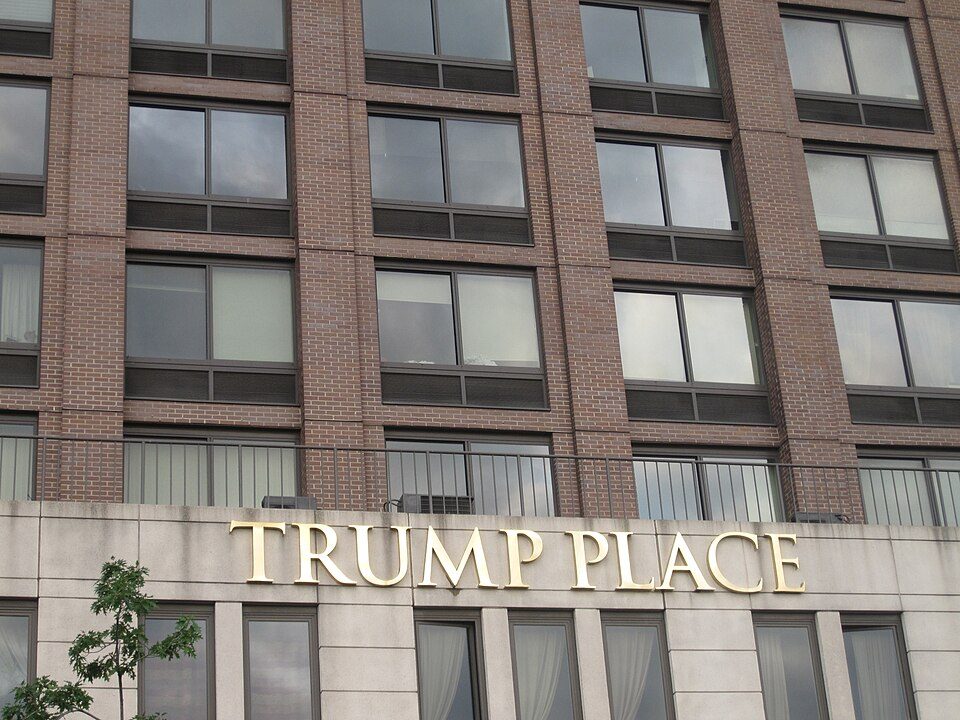
The Trump Place lettering on a Riverside Boulevard building before the signs came off. Photograph by Billy Hathorn, via Wikimedia Commons. CC BY-SA 3.0.
Did Donald Trump build Trump Place?
Not in the way the name suggests. Trump Place was a row of apartment towers on the Hudson River side of the Upper West Side, along Riverside Boulevard. Trump spent years trying to build something far larger on the same land, lost the fight over it, and then brought in Hong Kong partners who financed the towers that went up. He kept a management contract and a licensing deal for the name. All six buildings later dropped it, between 2016 and 2019.
The sources differ on how much Trump developed. The Guardian wrote in 2016 that he developed the apartment buildings in the 1990s. The New York Times said he was involved in the development. The Washington Post and Equity Residential give a more precise picture, which this article follows.
What was on the site before?
The land was the New York Central Railroad's 60th Street Yard, which NYC Parks says was once the main freight area for Manhattan's only all-freight line. The yard's 69th Street Transfer Bridge, which let loaded rail cars roll onto barges, still stands in Riverside Park South. The New York Central merged into the Penn Central in 1968, and Penn Central went bankrupt two years later. Parks says the yard was abandoned in 1976.
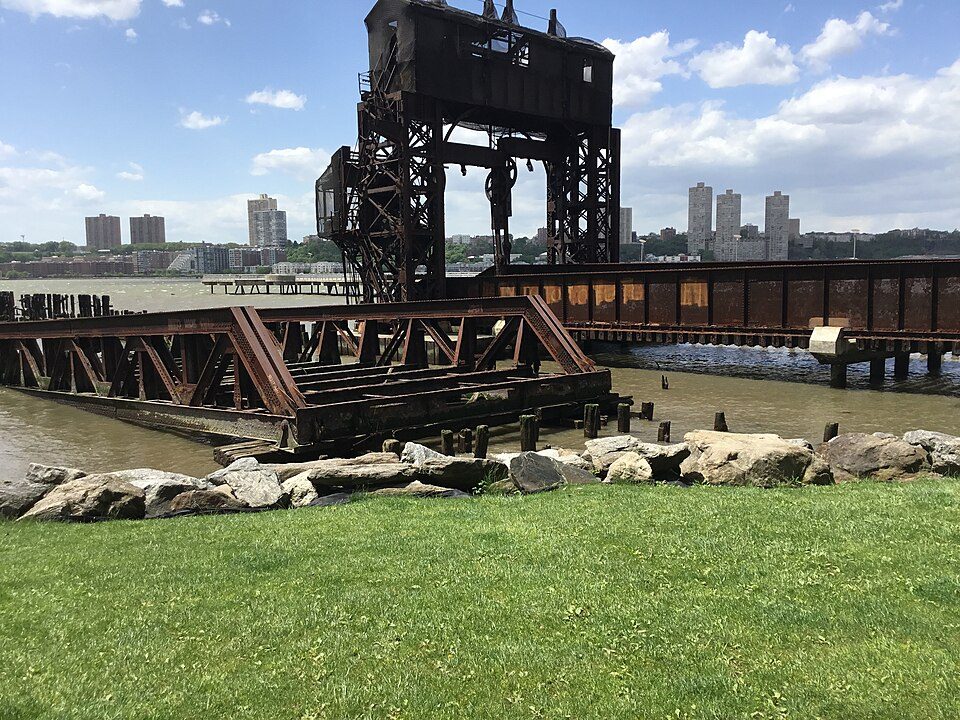
The 69th Street Transfer Bridge in Riverside Park South, a relic of the 60th Street rail yard. Photograph by Kidfly182, via Wikimedia Commons. CC BY-SA 4.0.
What did Trump plan, and what happened?
NYC Parks says Trump bought the rights to the property in 1985 and pursued plans called Lincoln West, Television City and Trump City. The Observer recalled in 2008 that Television City called for 7,600 apartments and a 150-story headquarters for NBC on the Penn Central rail yards, and that the fight that followed was what Trump called a war to the death. The Washington Post gives an earlier start, saying he obtained an option to develop the railroad yard in the 1970s. The sources do not agree on the date. None of those large plans was built. The Observer says opposition scared away NBC.
In 1991, six civic groups, including the Regional Plan Association and the Municipal Art Society, persuaded Trump and his majority partners to adopt a smaller alternative called Riverside South, according to NYC Parks. It proposed moving the elevated highway under a new Riverside Boulevard and creating a waterfront park. The city approved the plan in 1992.
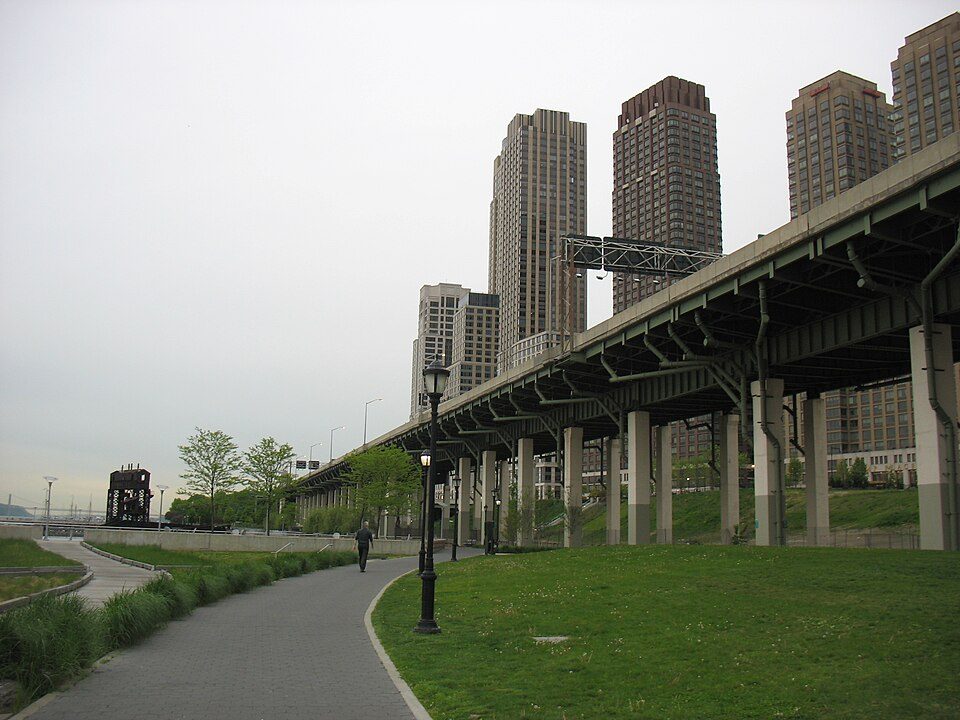
Riverside South looking north toward the Trump Place towers and the elevated West Side Highway. Photograph by Roger Rowlett, via Wikimedia Commons. CC BY-SA 2.5.
Who paid for it?
UPI reported on June 30, 1994 that Trump had reached an agreement with a group of Hong Kong investors to finance the project, which then called for 5,700 apartments in 16 high-rise buildings and a 25-acre park. The consortium was led by Henry Cheng of New World Development and Vincent Lo of Shui On Group. The Washington Post says Trump sold most of his stake to the Hong Kong executives, who built the residential buildings along the river starting in the 1990s, and that Trump kept the contract to manage most of them.
Equity Residential's 2005 release says the three rental towers at 140, 160 and 180 Riverside Boulevard were built between 1998 and 2003. They hold 1,325 apartments in about 1.06 million square feet, with about 40,000 square feet of retail and 424 parking spaces.
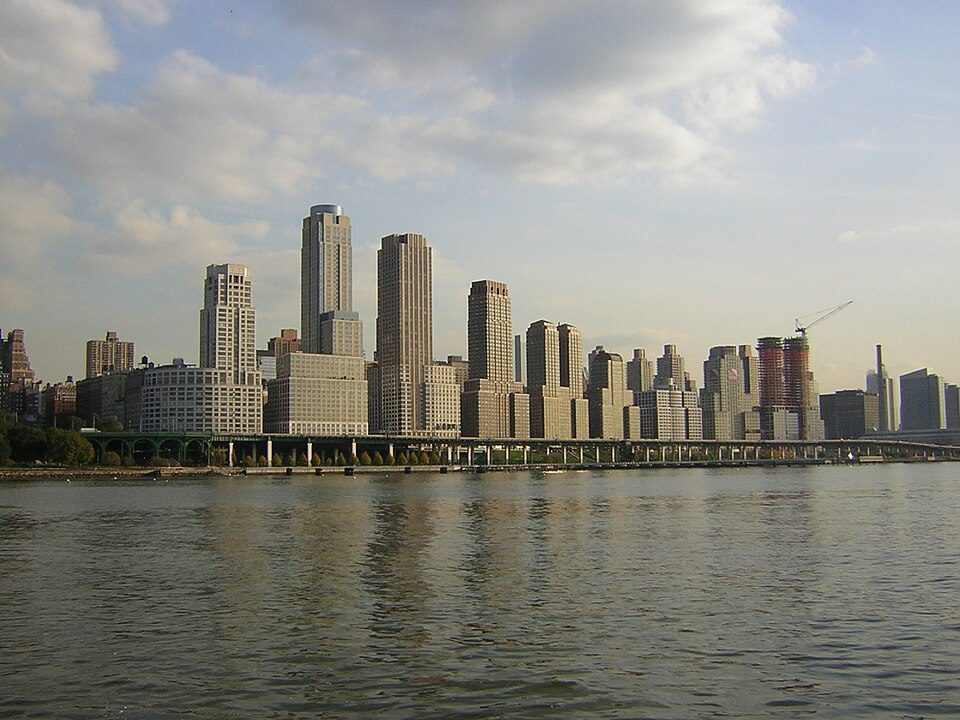
Riverside South from the Hudson River. Photograph by Jim.henderson, via Wikimedia Commons. CC BY-SA 3.0.
What happened when the land was sold in 2005?
The New York Times reported in June 2005 that the Hong Kong consortium and Trump were selling land and three buildings for about $1.8 billion, the largest residential sale in city history at that point. Extell Development and the Carlyle Group were the buyers. Carlyle's own release gives the price as $1.76 billion. The Times first reported that Extell would buy the three rental buildings along with lots for more apartment houses. Equity Residential's release says it bought the three rentals itself, in a simultaneous deal, for about $809 million, closing in November 2005.
Trump sued his Hong Kong partners in July 2005. He said they sold for about half what others had offered, and that Colony Capital had bid $2.9 billion and Richard LeFrak $3 billion. He conceded he would receive about 30 percent of the price, roughly $500 million. The Times reported the claims as allegations in the lawsuit. The sources read do not say how the case ended.
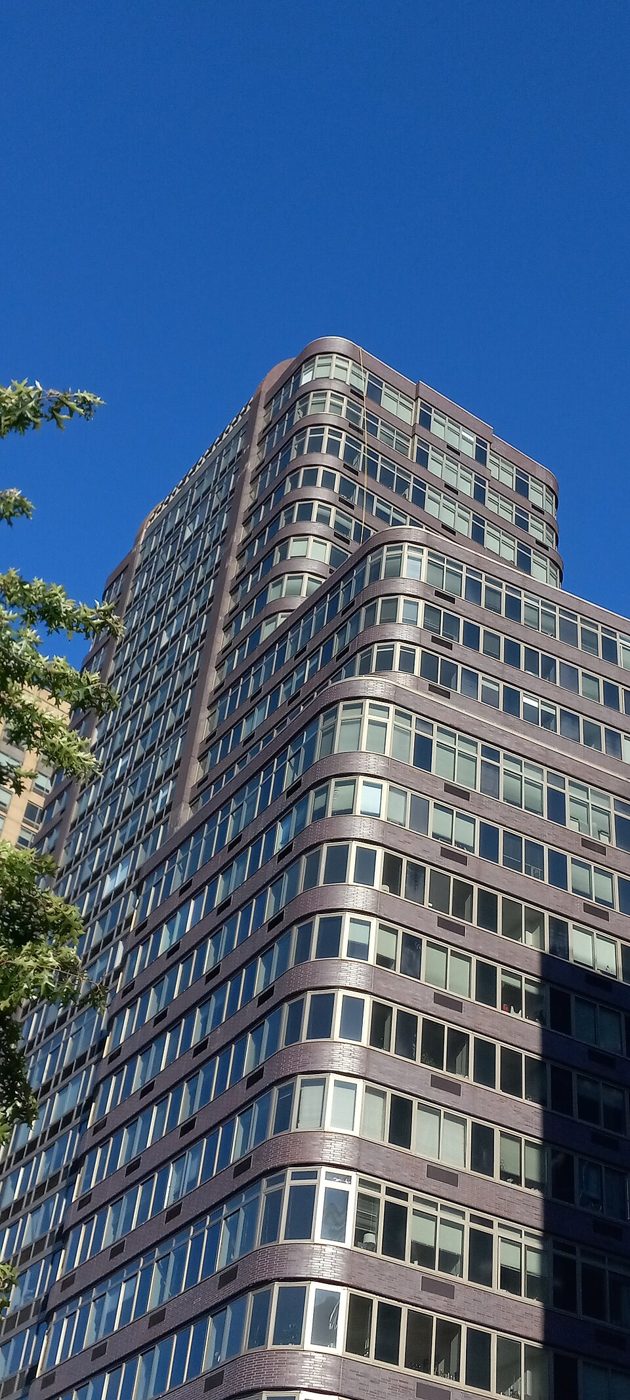
140 Riverside Boulevard, formerly 140 Trump Place. Photograph by Kidfly182, via Wikimedia Commons. CC BY 4.0.
When did the Trump name come off?
November 2016. The three Equity Residential rentals at 140, 160 and 180 Riverside Boulevard dropped it first. The Times reported on November 15, 2016 that the gold letters would come down the next week. Hundreds of tenants had signed a petition to "Dump the TRUMP name." The Times counted 300 signers in under 10 days in October, and the Associated Press later said about 600 residents signed. The Times noted that Equity, not Trump, owned the buildings. Equity's spokesman said the goal was a more neutral identity. West Side Rag reported that Equity and the Trump company called the change a mutual decision tied to the contract, not a result of the petition. Workers took the letters off on November 16.
October 2018. The condominium at 200 Riverside Boulevard, a 46-story building between 69th and 70th Streets, bought the right to use the name in 2000 for $1 under a four-page license, the Times reported. Its owners voted 158 to 59 in February 2017 to remove the sign, according to The Real Deal. A Trump lawyer threatened to sue, and the board asked a judge. Judge Eileen Bransten ruled on May 3, 2018 that the license did not require the building to keep the name. The letters came off in October 2018.
February 2019. The Washington Post reported that the boards at 120 and 220 Riverside Boulevard voted to remove the signs. At 220, 74.7 percent of the votes cast were to remove it, and the board said the Trump Organization still holds a management contract there. On Election Day 2016, six buildings called Trump Place stood in the row.
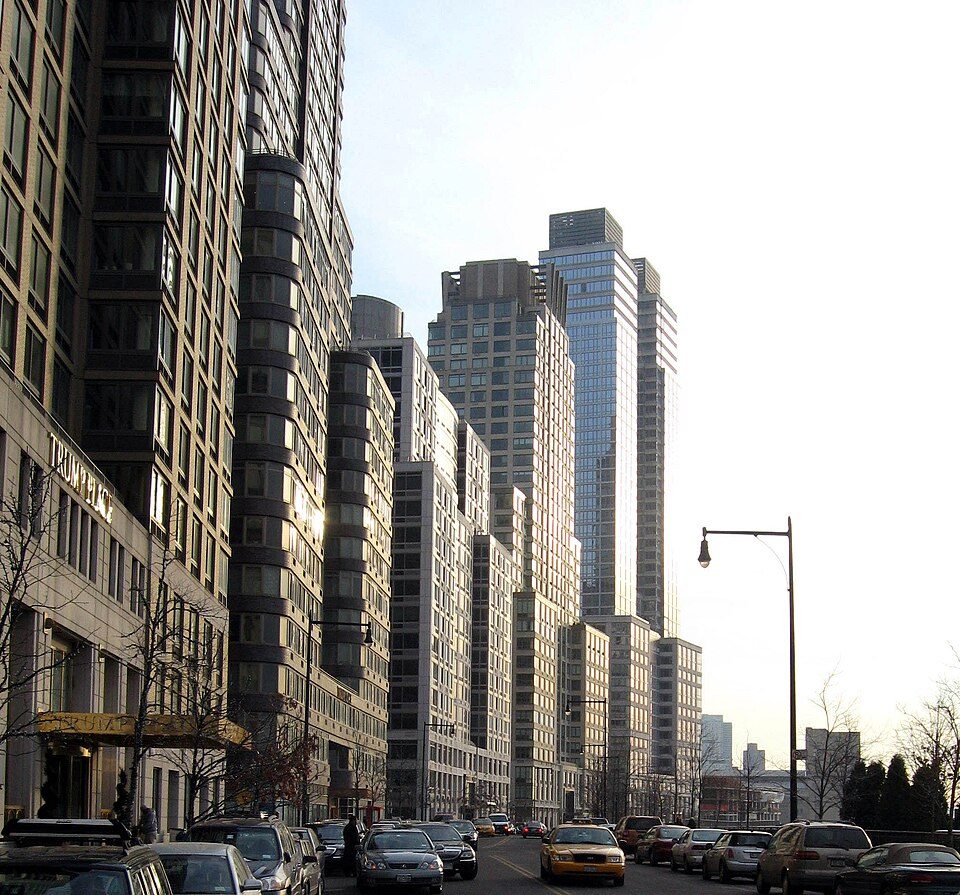
Looking south along Riverside Boulevard at the Trump Place buildings. Photograph by Jim.henderson, public domain, via Wikimedia Commons.
Where can you eat or drink at the former Trump Place buildings?
This article found no public restaurant, bar or lounge inside any of the six buildings. They are apartment buildings. Equity Residential's 2005 release counted about 40,000 square feet of retail across the three rentals, but the sources read do not name the current retail tenants, so this article does not either. For waterfront space nearby, Riverside Park South sits just to the west. Check each venue's own website for current hours.
Who owns the former Trump Place buildings today?
The three rentals at 140, 160 and 180 Riverside Boulevard were owned by Equity Residential as of the November 2016 Times report. This article could not confirm who owns them now. The buildings at 120, 200 and 220 Riverside Boulevard are condominiums, owned by their unit owners and run by condo boards. The Trump Organization still held the management contract at 220 as of 2019, according to the Post.
Sources
- NYC Parks, Riverside Park South Highlights (historical sign)
- UPI, Trump gets financing for NYC project (June 30, 1994)
- Observer, Remember Trump City? (August 5, 2008)
- The New York Times, Trump Group Selling West Side Parcel for $1.8 Billion (June 1, 2005)
- The New York Times, Trump Sues Asian Partners Over Sale of West Side Site (July 12, 2005)
- The Carlyle Group, release on the purchase with Extell (June 20, 2005)
- Equity Residential, Closes on Premier New York City Assets (November 3, 2005)
- The New York Times, What's in a Name? When It's Trump Place, It's a Revolt (October 24, 2016)
- The New York Times, Trump Won the Election, but 3 Manhattan Buildings Will Lose His Name (November 15, 2016)
- The Guardian, Trump's name to be removed from New York buildings (November 15, 2016)
- West Side Rag, Workers remove Trump Place signs from Riverside Boulevard (November 17, 2016)
- The Real Deal, Residents voted to remove Trump signage from Manhattan condo (March 28, 2018)
- The New York Times, Trump Place Does Not Have to Be a Forever Name, Judge Says (May 3, 2018)
- The New York Times, Liberal Upper West Siders Get Their Revenge (October 2018)
- The Washington Post, A building called Trump Place decides to take down the president's name (February 22, 2019)
Visiting the Trump Place
- Where: Riverside Boulevard between about West 59th and West 72nd Streets, Upper West Side, Manhattan. The six former Trump Place buildings are 120, 140, 160, 180, 200 and 220 Riverside Boulevard.
- Access: The buildings are private apartment buildings. Nothing in the sources read lists tours or public interiors.
- Nearby: Riverside Park South, designed by Thomas Balsley and Associates, runs along the river and keeps the 69th Street Transfer Bridge from the old rail yard.
Checked against NYC Parks Riverside Park South page. Confirm hours and ticket rules there.