The Apollo Theater: From Harlem Burlesque House to Black Music’s Great Stage
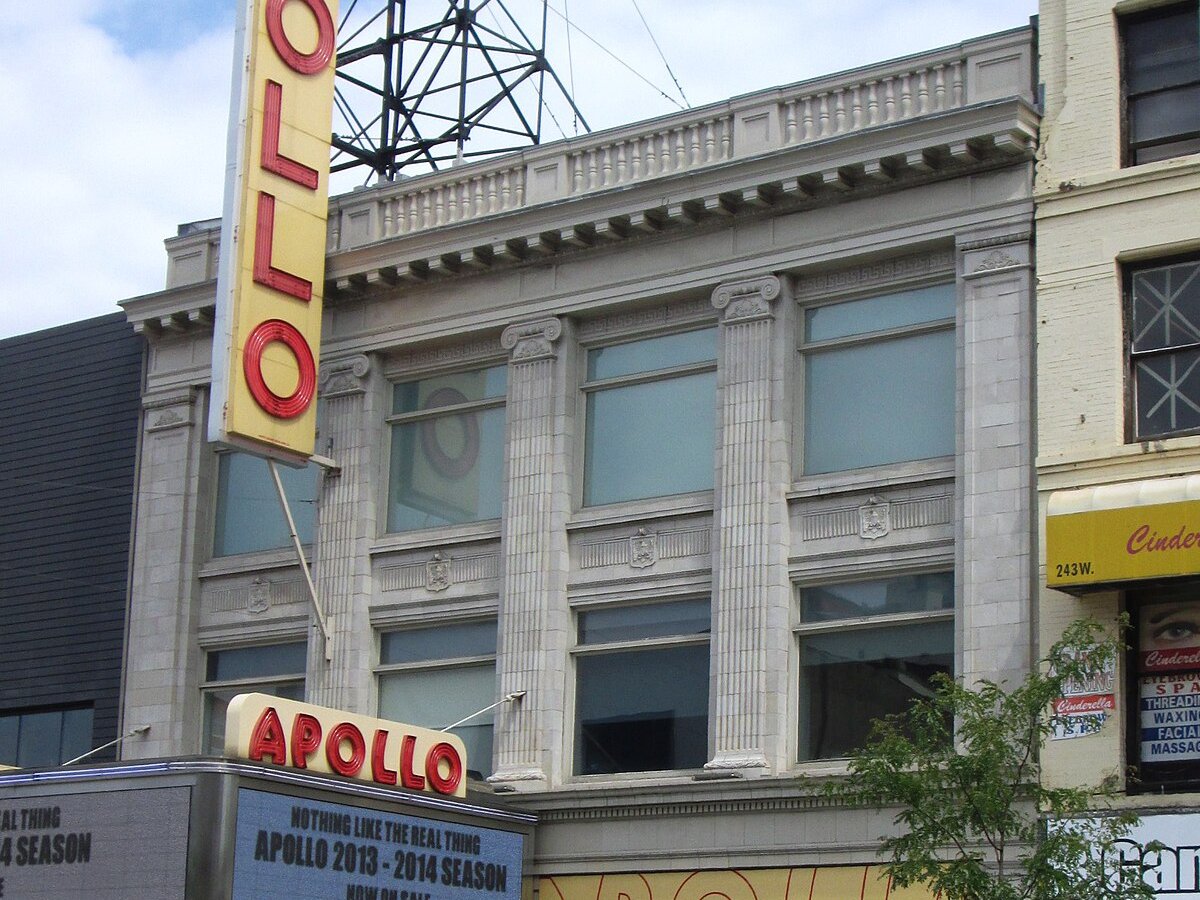
Photograph by Beyond My Ken, via Wikimedia Commons. CC BY-SA 4.0.
The Apollo Theater did not begin as the home of Black American music. It opened in 1914 as a burlesque house for white patrons, on a Harlem block that was changing around it. By the 1930s it had become the stage where careers were made in front of the toughest audience in New York.
The Landmarks Preservation Commission records the original building as Hurtig & Seamon's New (Burlesque) Theater, a neo-classical design by George Keister, built in 1913-14 at 253 West 125th Street. Harlem Magazine announced the $600,000 project in February 1913, and the theater was completed in March 1914. It was built and owned by the Charles J. Stumpf & Henry Langhoff Company of Milwaukee, on land owned by Lit Brothers of Philadelphia. Jules Hurtig and Harry Seamon were the lessees.
Keister was a busy theater architect, though the commission says surprisingly little is known about his life. Its report lists the Belasco Theatre on West 44th Street and the Selwyn Theatre on West 42nd Street among his work.
The theater was one of nine in New York on the Columbia Wheel, a burlesque circuit. As Harlem's Black population grew, the neighborhood's entertainment changed. By the 1920s Harlem burlesque had turned to more boisterous shows. In 1928 Billy Minsky took over the Apollo, and the commission notes that his financial partner was the contractor Joseph Weinstock.
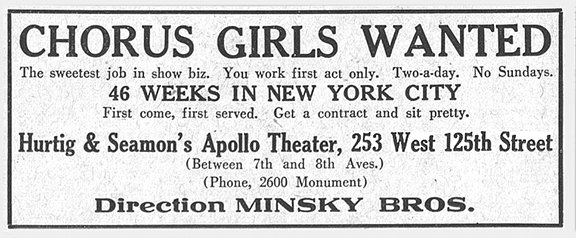
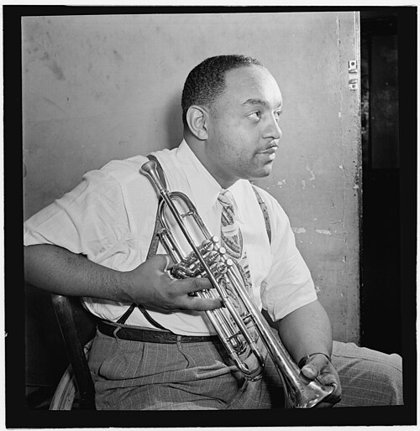
Minsky died in 1932, and the theater was sold to Sidney Cohen. The commission says the Apollo then became a Black vaudeville house, reflecting the change in Harlem entertainment. The theater's own history says the 125th Street Apollo reopened on January 26, 1934, with the show "Jazz a la Carte" headlined by Benny Carter and his orchestra, Ralph Cooper and Aida Ward. In 1935 Frank Schiffman and Leo Brecher took over. The commission says they set up a permanent variety-show format built around leading Black entertainers.
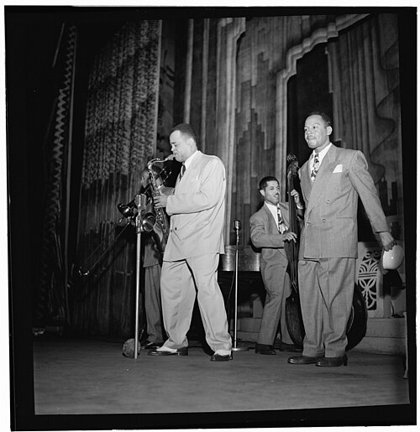
The report describes a typical 1930s bill as a jazz band, an acrobat or tap dancer, a singer, a comedian and a star. It says nearly every important Black American performer played the Apollo at some point, from Bessie Smith and Louis Armstrong to Aretha Franklin and James Brown. Its Wednesday amateur contest gave a week's engagement to the winner, and the report credits it with launching singers including Billie Holiday, Ella Fitzgerald and Sarah Vaughan. The commission also describes the audience as part of the show: quick to boo, quick to cheer.
The Apollo had other lean years. The theater's history says it reopened briefly in 1978 and closed again in November 1979, and that Percy Sutton and a group of private investors bought it in 1981. The commission designated the building a landmark on June 28, 1983. The New York Times reported in 1991 that Sutton's family had presided over a renovation budgeted at $5.7 million that cost more than $20 million, and that a new nonprofit would take over the theater.
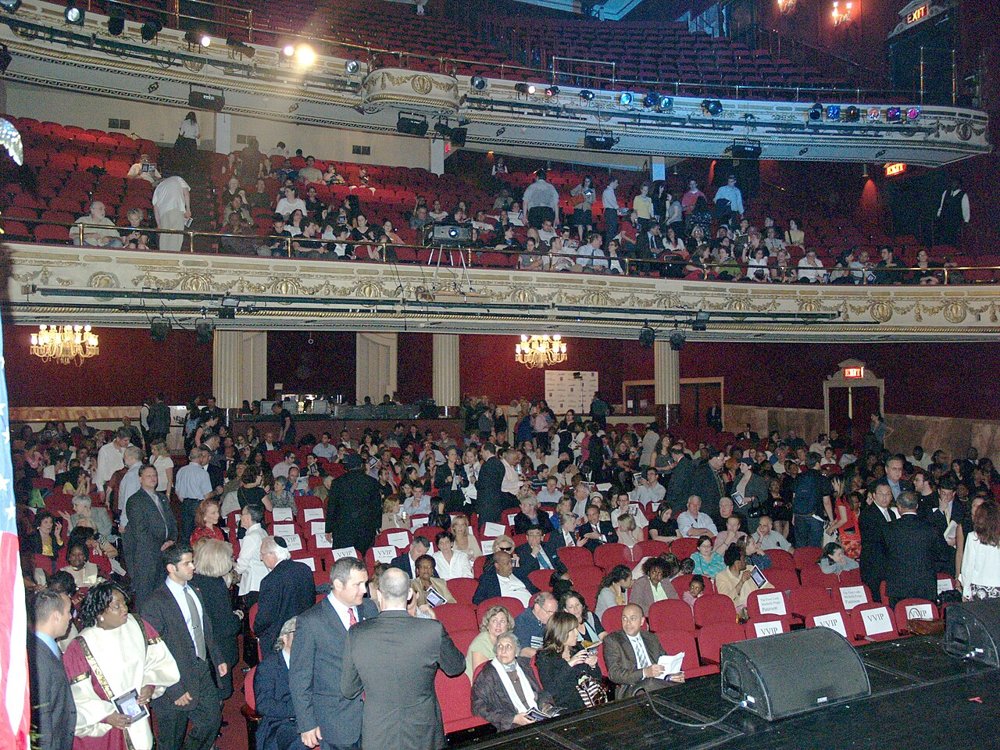
The Apollo's auditorium seen from the stage during a 2008 event. Photograph by David Shankbone, via Wikimedia Commons. CC BY 3.0.
Who owns the Apollo Theater today?
The nonprofit Apollo Theater Foundation runs the theater. The Apollo's own history says the foundation was established in 1992 to manage, fund and oversee programming, and ProPublica's records list its tax-exempt status from November 1991. The Apollo also operates the Apollo Stages at The Victoria, a few doors down on 125th Street, since 2024. The sources used for this article do not include a deed, so this piece says who runs the theater, not who holds title to the building.
Sources
- NYC Landmarks Preservation Commission, Apollo Theater (originally Hurtig & Seamon's New (Burlesque) Theater) designation report (1983)
- Apollo Theater, history
- The New York Times, "Apollo Goes Nonprofit to Survive" (September 27, 1991)
- ProPublica Nonprofit Explorer, The Apollo Theater Foundation Inc
- Apollo Theatre from east.jpg (image: Beyond My Ken, CC BY-SA 4.0)
- HSApolloMinksy.jpg (image: Minsky Brothers, Public domain)
- Benny carter loc.jpg (image: William Gottlieb, Public domain)
- (Portrait of Arnett Cobb and Walter Buchanan, Apollo Theatre, New York, N.Y., ca. Aug. 1947) (LOC) (4843123369).jpg (image: The Library of Congress, Public domain)
- Apollo Theater from the stage.jpg (image: David Shankbone, CC BY 3.0)


_(LOC)_(4843123369).jpg)
