Is the Stonewall Inn Actually a National Monument? Stables, a Speakeasy and a Bar That Changed History
The Stonewall Inn is part of the Stonewall National Monument, but the historic bar is privately owned, not federal property. The inn at 51-53 Christopher Street is a National Historic Landmark sitting inside the monument's boundary; what the federal government owns is Christopher Park, the small triangle across the street, while the boundary wraps around the inn and the surrounding streets without making them federal property. The bar is still a private business in a pair of buildings that began as horse stables in the 1840s, spent three decades as a neighborhood restaurant, and became, in 1967, a Mafia-run gay bar with blacked-out windows. A police raid there in the early morning of June 28, 1969, set off days of resistance that reordered gay politics in the United States. Here is how two stables became the most famous bar in the country, and who owns it today.
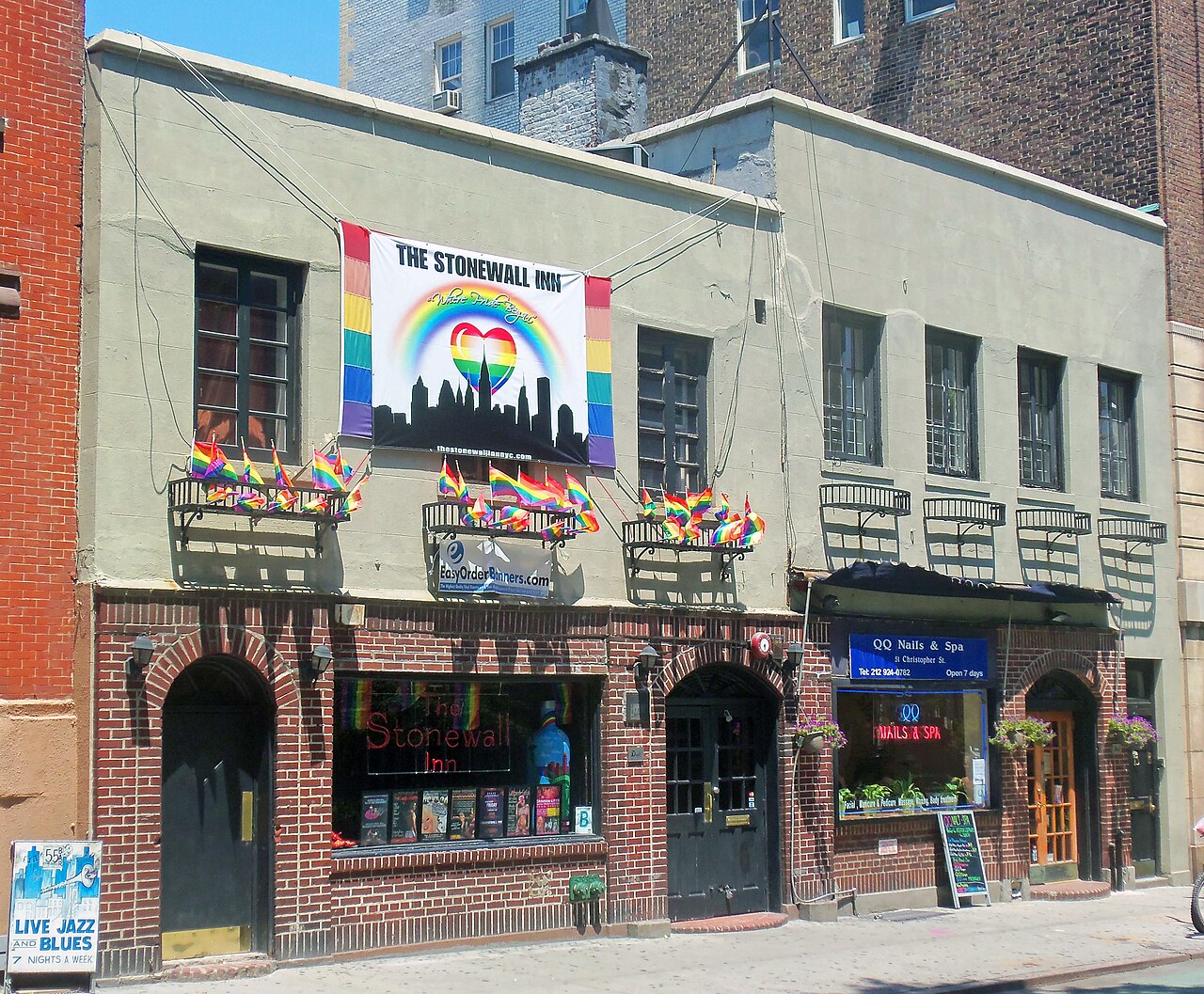
The Stonewall Inn during Pride in June 2012. Photograph by Daniel Case, via Wikimedia Commons. CC BY-SA 3.0.
What stood at 51-53 Christopher Street?
Long before it poured a drink, the address kept horses. The Landmarks Preservation Commission's designation report dates the building at No. 51 to 1843, erected by a man named A. Voorhis, and No. 53 to 1846, built for Mark Spencer, who owned a large mansion nearby. Both were two-story stables, and they worked as stables for roughly half a century, back when this part of Greenwich Village was a neighborhood of houses, yards and small commercial buildings rather than nightlife.
In 1898 the stable at No. 51 found a new trade. It became the bakery of Baptiste Ycre, a French baker who lived with his family in the apartment above the ovens. The bakery was still there when the two buildings were physically joined in 1930. The architect for the job, William Bayard Willis, removed the top story of the old livery stable at No. 51 and gave both buildings a single Arts and Crafts facade of brick below and scored stucco above, with small storefront windows set over high brick bulkheads. That 1930 face is, in essence, the face the bar still shows the street. Ycre's bakery carried on in the combined ground floor until early 1933, which means the room where the 1969 uprising began spent its first commercial life smelling of bread.
How did a speakeasy named Bonnie's get involved?
The name arrived before the bar did. In 1930, a restaurant called the Stonewall Inn, sometimes known as Bonnie's Stonewall Inn, presumably for its proprietor Vincent Bonavia, opened at 91 Seventh Avenue South, a short walk away. It claimed to be a tearoom serving light meals and soft drinks; it was, in fact, a speakeasy, and in December 1930 Prohibition agents raided it along with several other Village spots. When repeal came in December 1933, Bonavia's operation could finally sell alcohol openly, and in 1934 the Stonewall Inn Restaurant moved into the combined ground floor at 51-53 Christopher Street.
The restaurant that Village diners knew for the next three decades advertised cuisine described as American and Continental, and its bar was decorated to resemble a hunting lodge. A large vertical neon sign reading Bonnie's Stonewall Inn went up at the corner of No. 51, the sign whose supports still sat on the roof decades later. The place was an unremarkable neighborhood restaurant with a long run, serving the Village through the Depression, the war and the suburban 1950s. Business faded in the 1960s, and the Stonewall Inn Restaurant closed in early 1966. The neon sign and the word restaurant were about to be inherited by a very different operation.
Gangsters and Organized Crime
Later in 1966, four men who had grown up together on Mulberry Street and were affiliated with the Genovese crime family invested a total of $3,500 to reopen the space as a gay bar. It was a cold-eyed business decision. New York's State Liquor Authority treated bars that served gay customers as disorderly houses and refused them liquor licenses, so gay bars were illegal almost by definition, and illegal bars were an opportunity for people who already operated outside the law. By the mid-1960s, according to PBS's American Experience, the Genovese family controlled the majority of the gay bars in Greenwich Village.
The man who ran the Stonewall for the family was a young Genovese member named Tony Lauria, known as Fat Tony. He had bought in when the place was a low-earning straight restaurant, renovated at minimal cost and reopened it in mid-March 1967 as a gay club, keeping the Stonewall Inn name and the old neon sign, though food was never served again. Lauria controlled everything from the jukebox to the cigarette machine. The windows were painted black and backed with plywood and two-by-fours, and the wooden storefront doors were reinforced with steel doors and interior locks, all of it meant to slow down the police long enough for patrons to scatter. In return for peace, American Experience reports, Lauria paid the Sixth Precinct about $1,200 a month in bribes, and the money bought advance warning of most raids. The water was famously dirty, the glasses were washed in stagnant tubs, and the drinks were watered, but the Stonewall was the largest gay bar in the city, and for its regulars, who had nowhere else to dance, it was worth it.
Deputy Inspector Seymour Pine, who led the 1969 raid, later told historian David Carter that the official justification went beyond liquor. Detectives were chasing stolen negotiable bonds moving through Europe and suspected the Mafia was blackmailing gay Wall Street employees into supplying them; the police theory, as Pine recalled it, was that if they closed the Village gay clubs, they would see what happened to the bonds. The mob's investment in the Stonewall ended with the uprising it provoked.
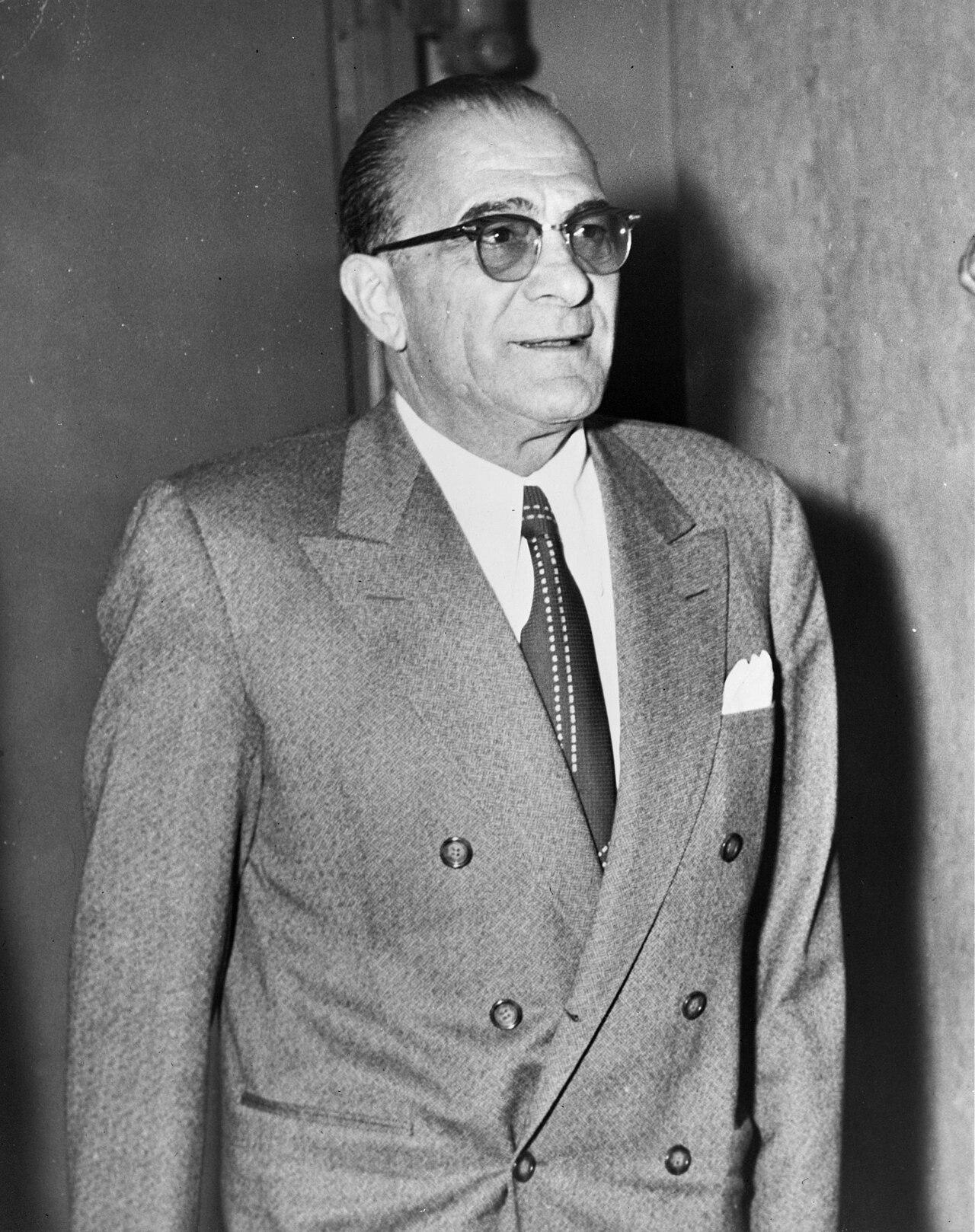
Vito Genovese, head of the crime family whose members owned and operated the Stonewall Inn in 1969. Photo: Phil Stanziola, New York World-Telegram and Sun, public domain, via Wikimedia Commons.
What happened in the early morning of June 28, 1969?
The uprising did not come out of nowhere. As part of a crackdown on gay bars, the Public Morals squad had already raided the Stonewall on Tuesday, June 24, confiscating its liquor and arresting its employees. The bar reopened the next day, as it always did, so the police planned a surprise return for the weekend, when the club would be crowded. They came back around 1:15 in the morning on Saturday, June 28, according to the presidential proclamation that later established the national monument; the Landmarks Preservation Commission's report says about 1:20 a.m. The raid itself was routine. What happened next was not.
Instead of showing identification quietly and disappearing into the night, customers refused, and those released did not leave. They waited on the sidewalk across from the bar, joined by friends and passersby, cheering when friends emerged from police custody and shouting "Gay Power!" and "We want freedom." The crowd threw pennies, then bottles and cobblestones. Someone uprooted a parking meter and used it as a battering ram against the reinforced doors; burning trash went through the broken windows. The police, including Pine, were driven back inside the bar they had come to empty, and were eventually extracted when two fire engines and the Tactical Patrol Force, the city's riot-control unit, arrived around 3 a.m. The TPF cleared Christopher Street in formation, but the Village's crooked colonial street grid defeated them: demonstrators simply turned a corner and re-formed behind the police line, and at one point a chorus line of street youths kicked and sang "We are the Stonewall girls." The first night wound down about 4:30 a.m. Protests and confrontations flared again over the following nights, until nearly midnight on Wednesday, July 2.
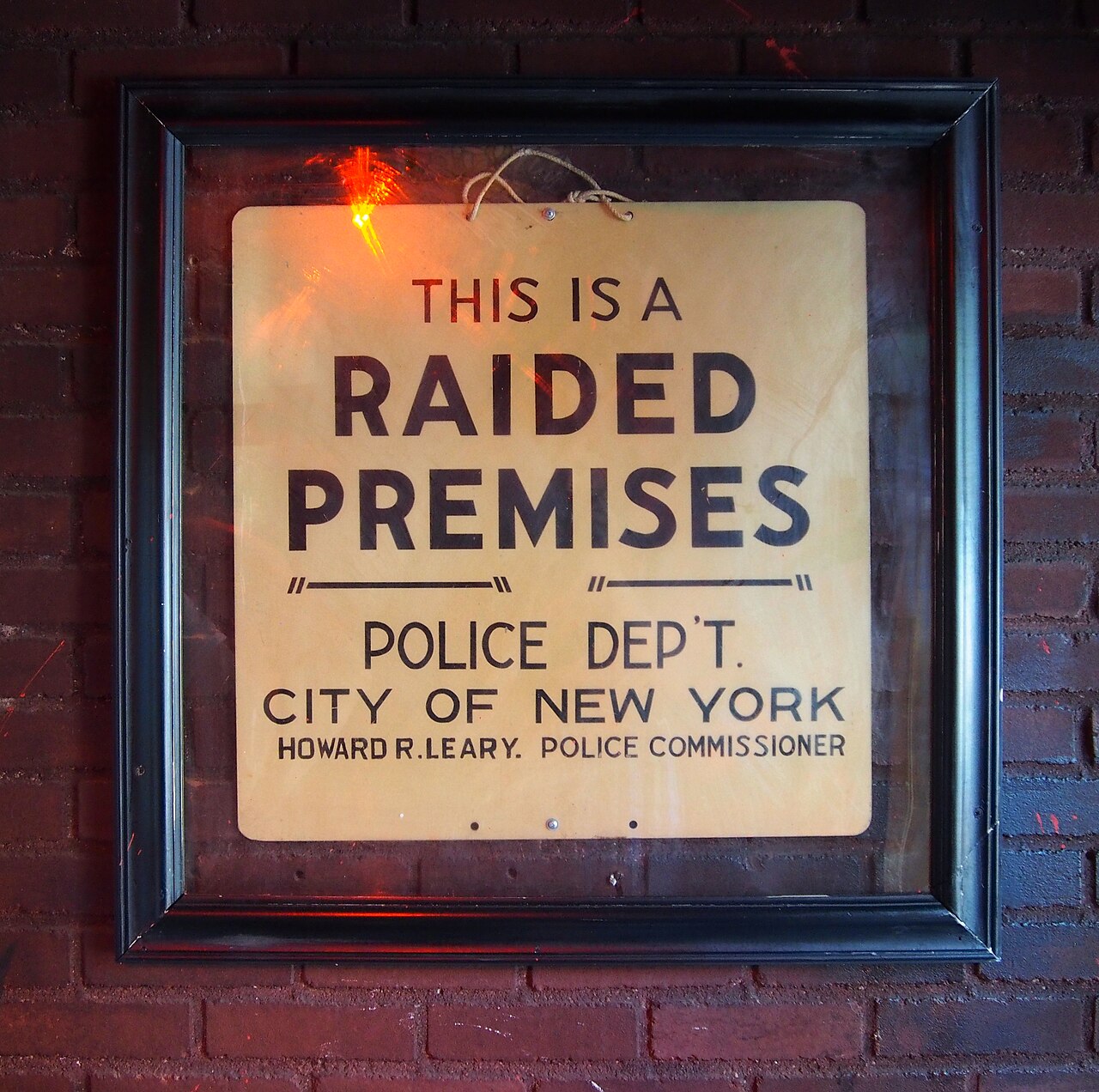
A "raided premises" sign of the kind the police posted on gay bars, preserved inside the Stonewall Inn; it carries the name of Police Commissioner Howard R. Leary, who held the office from 1966 to 1970. Photograph by Rhododendrites, via Wikimedia Commons. CC BY-SA 4.0.
What did Stonewall set off?
Within months, the uprising produced organizations that turned protest into politics: the Gay Liberation Front, the Gay Activists Alliance, the Radicalesbians, and the Street Transvestites Action Revolutionaries were all founded in New York in direct response. The scale of the change is easiest to see in a single number from the 2016 proclamation: in the year after Stonewall, the count of gay and lesbian organizations in the country grew from around 50 to at least 1,500. On June 28, 1970, the first anniversary, thousands marched from Greenwich Village to Central Park for Christopher Street Liberation Day, with sister marches in Los Angeles, San Francisco and Chicago. Those anniversaries grew into the Pride marches and Pride Month now observed around the world. The bar that closed that fall had already done its work.
So is the Stonewall Inn actually a national monument?
The distinction is worth getting right. In 2000, the Secretary of the Interior designated the Stonewall Inn, Christopher Park and portions of the surrounding blocks a National Historic Landmark, the federal register's highest historical recognition, and the first such designation made for LGBT history. On June 23, 2015, the Landmarks Preservation Commission made the inn an individual New York City landmark, again the first designated specifically for LGBT history. Then, on June 24, 2016, President Obama used the Antiquities Act to proclaim the Stonewall National Monument. What the federal government owns is Christopher Park, the 0.12-acre triangle across the street, which the City of New York donated for the purpose. The monument's boundary wraps around the park, the inn and the surrounding streets: the National Park Service describes the 7.7-acre site as encompassing both public and private property, including the privately owned Stonewall Inn, which remains a private business operating as a bar. On June 28, 2024, the fifty-fifth anniversary of the raid, the Stonewall National Monument Visitor Center opened at 51 Christopher Street, in half of the bar's original 1969 footprint; run by the nonprofit Pride Live with the National Park Service, it is the first LGBTQ visitor center in the National Park System.
What happened to the building after 1969?
The uprising's bar did not survive the year. Historian David Carter found that the Stonewall Inn closed by October 1969, when a for-rent sign went up, though plans for a new restaurant and bar were filed with the city in the autumn of 1970. The two halves of the old stable then went separate ways. Around 1982, No. 53 became the Szechuan Cottage Restaurant. No. 51 held a series of bars, one of which widened the storefront entrance in 1975 to match its twin next door, and its incarnation as a bar called the Stonewall closed in October 1989, when the altered neon sign came down for good. In the late 1990s the space was renovated into a multi-floor nightclub that drew a young gay crowd for several years before closing. By 2006 the bar had closed again, and the building was in rough shape: its next owners described rat holes, debris and a metal detector at the door.
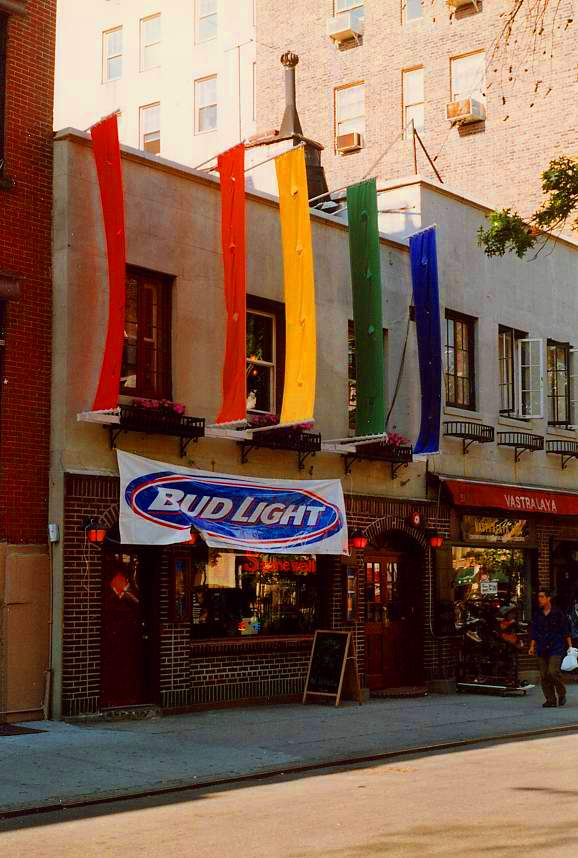
The bar in June 2000, the year of its National Historic Landmark designation. Photograph by Elisa Rolle, via Wikimedia Commons. CC BY-SA 3.0.
In 2007, Kurt Kelly, an actor who had performed at the Duplex, and Stacy Lentz, a Kansas transplant working in recruiting, bought the bar with fellow investors and restored it. Under their ownership the Stonewall has operated continuously as a gay bar, and it was their tenure that saw the landmark designations, the national monument and the visitor center arrive around it.
Who owns the Stonewall Inn today?
Two different answers sit side by side, because the business and the buildings are owned separately. The Stonewall Inn bar is owned and operated by Kurt Kelly and Stacy Lentz, who led the 2007 purchase and still run it, along with the bar's events and its role as a national symbol. The buildings at 51-53 Christopher Street are a landlord's affair, and their present-day owner could not be independently confirmed for this article. The most recent public identifications are years old: the landmarks designation report of 2015 records the owner as Duell LLC, whose principal wrote in support of landmarking, and reporting in 2021 identified the building owner as a similarly anonymous entity, Christopher and Seventh Realty LLC. No sale of either building has been publicly reported since, but a years-old LLC name in a public filing is not the same as a verified current deed, and this article does not present either entity as the confirmed owner today. The honest statement is that the bar's operators are public and proud, while the buildings' ultimate owner sits behind a limited liability company whose current identity remains unverified.
Where can you eat or drink at the Stonewall Inn?
The Stonewall Inn is a bar, not a restaurant, and it has not served food since 1966. It is open seven days a week, Monday through Friday from 2 p.m. to 4 a.m. and Saturday and Sunday from 1 p.m. to 4 a.m., with a weekday happy hour; admission is 21 and over with ID. Downstairs is the historic barroom with its jukebox and pool table, and there is an upstairs room used for drag shows, karaoke and dance parties. Across the street, Christopher Park is open daily, with George Segal's 1992 sculpture "Gay Liberation" at its center, and the Stonewall National Monument Visitor Center at 51 Christopher Street is open Tuesday through Sunday, 10 a.m. to 4 p.m., free to enter.
Sources
- NYC Landmarks Preservation Commission, Stonewall Inn Designation Report (LP-2574), June 23, 2015
- Presidential Proclamation, Establishment of the Stonewall National Monument, June 24, 2016
- PBS American Experience, Why Did the Mafia Own the Bar?
- National Park Service, Stonewall National Monument: Plan Your Visit
- National Park Service, Christopher Park, Stonewall National Monument
- Pride Live, Stonewall National Monument Visitor Center grand opening announcement, June 2024
- Village View, Saving the Stonewall: Kurt Kelly and Stacy Lentz, June 5, 2023
- Towleroad, reporting on the Stonewall Inn building owner, June 2021
- The Stonewall Inn, official site
Visiting the Stonewall Inn
- Address: 53 Christopher Street, New York, NY 10014, between Seventh Avenue South and Grove Street.
- The bar: Open seven days a week; the official site lists Monday to Friday, 2 p.m. to 4 a.m., and Saturday and Sunday, 1 p.m. to 4 a.m., with happy hour on weekdays. Twenty-one and over with proper ID.
- The visitor center: The Stonewall National Monument Visitor Center, 51 Christopher Street, is open Tuesday through Sunday, 10 a.m. to 4 p.m.; admission is free.
- The park: Christopher Park, across the street, is city parkland and holds the Gay Liberation sculpture and interpretive signs about the uprising.
Facts above were read on the official pages on October 31, 2026. Bar hours and event schedules change, so confirm on thestonewallinnnyc.com before you go.